Monday, May 15, 2023

Bike to Work Week Diary 2023: It's Not Going to Work

poster with schedule of events

My first Bike-to-Work Week in Cedar Rapids since 2019--I was in Belgrade last year--comes with much anticipation, though mingled with concern. The incredible weather forecast and four years of deprivation have me utterly psyched for this. However, this year's schedule is visibly thinner, missing some of the highlights of earlier years, and oriented more to trail riding than commuting. (More on the importance of this distinction later.)

The disorientation started early. The traditional mayor's proclamation was moved from  Monday morning downtown to the previous Thursday evening at New Bo City Market, and was delivered in the absence of the actual mayor by City Council member Ann Poe.

woman reading into microphone
Ms. Poe read it like a pro, having done it once before in 2016

The proclamation was attended by maybe three citizen cyclists, along with city staff promoting various initiatives...

People gathered outdoors in front of poster displays
city displays included posters for Connect CR
and a planned intergenerational center

...and some rather puzzled citizens who were there for weekly Jazzercise. Later came the regular weekly bike ride connected to Meet Me at the Market, which I was not able to attend. (I also had to miss Saturday's MPO Ride.)

I had shown up to the proclamation 45 minutes early--did I mention I was psyched?--in a bright neon Bike to Work Week t-shirt. The young city staff setting up their displays had not seen this artifact. "From back when there was money," one said. Oh boy.

crowd of people eating breakfast at long tables
May 2019: Post-proclamation breakfast at Jimmy Z's

Monday, May 15

cyclist and others at information table
Cedar Valley Nature Trail pit stop at 2nd Avenue SE,
about 8:30 a.m.

Bike to Work Week started chilly and gray this morning, though the forecast for the week remains ideal. Pit stops around town return as a key feature of the week. I got to the downtown location about halfway through the 6:45-8:45 morning shift and, frankly, did not see much action. The guys at the pit stop, Steve Hershner from the city and a young man from Hall Bicycle whose name I didn't catch, reported more people coming through during the half hour before I got there, and a fair-sized group of trail riders at about 7. Steve was resplendent in his BTWT shirt from 2019, the one with the bike map of Cedar Rapids that long-time readers will remember I didn't get, albeit in the chill he had several layers over it.

snacks and fliers on white tablecloth
snacks available at the morning pit stop

This afternoon, I visited the pit stop at Collins Aerospace. Getting there from Coe College was a little tricky through the after-school/rush hour traffic, but I made it. (I prefer side streets to main streets, even if there are bike lanes, so I forsook the chance to try out some of the newer bike infrastructure.)

People, bikes, and display boards

By this time, the sun was out and the air was considerably warmer than the morning had been. We saw quite a bit of traffic on the Lindale Trail that runs along the north edge of the Collins campus. Derek Stepanek from Northtowne Cycling and Fitness was helping people test ride e-bikes. He was kept busy the whole time I was there. 

man, woman, electric bicycle

Betsy Borchardt was there from the City, and it turns out she's also in charge of coordinating the bikeshare program, which gave me the opportunity to mention there's been a scooter in front of my house...

electric scooter on a sidewalk

...since Friday night, and another one two doors down, which I can't report through the app because it won't allow me to upload the picture it insists on having. She suggested I try the phone number, and pointed out other people are reporting wayward scooters without this problem.

I have problems other people don't have? Story of my life...

Tuesday, May 16

bicycles and food trucks

Today's Bike to Work Week event was the Bike to Lunch Business Challenge, initiated in 2019, and this year timed to coincide with the New Bo City Market's weekly Food Truck Tuesday. I enjoyed West African peanut and sweet potato stew, the weekly special from The Full Bowl.
people gathered at food stand
(Note: this is not a truck)

Roman Kiefer from the Corridor MPO and Haley Sevening from the City were on hand to answer people's questions about trails...
people gathered around display boards

...particularly the planned completion of the Lindale Trail (in 2024) and the CeMar Trail (in 2025), which when completed will not only be useful for commuters but for recreational riders will create a huge loop between downtown Cedar Rapids and Uptown Marion.

Visitors left a fair number of wishes as well, mostly related to trail riding.

Not everyone in the considerable turnout was there for Bike to Work Week, but the level of interest in cycling, particularly trails, was encouraging.

This morning I joined a webinar this morning on safe streets hosted by Gilbert Penalosa's organization, 880 Cities, featuring guests from Hoboken and Seattle. Ryan Sharp, director of transportation and parking for Hoboken (pop 60,000), which has had no traffic deaths in 6+ years, credited "a lot of good fortune" but also 13 years of deliberate preventive actions like protected bike lanes, curb extensions, "daylighting" parking areas, road diets, pedestrian islands to reduce pedestrian crossing distances and vehicle speeds. Allison Schwartz and Brad Topol from the Seattle (pop 730,000) dept of transportation noted that despite that city's increase in pedestrian and cycle deaths since 2019, where there have been separation and slowing vehicles those have gone down. 


The Seattle presenters stressed shifting away from consideration of isolated individual blame to system accountability. (On the contribution of design factors see also Sheppard 2023). The core goal is to go beyond reducing tragedies, and to design a system where everyone feels safe moving around the community--regardless of transportation mode, race, sex, and income level.

Getting there requires more than trails, and more than bike lanes. This morning I drove--heretic!!--from my house to the YMCA, which is a little more than a mile, and spotted three cyclists (all white men). What would it take to get three to, say, thirty? with more diversity to boot? Is the city mentally prepared for this to happen? Can we help it happen? Do we even want it to happen? (The last is meant ironically, of course. I may be a backslider but I'm no heretic!)

people in bike gear in front of office building on sunny day
May 2016: Bike to Lunch with the mayor at Kickstand

Wednesday, May 17

man in bike helmet speaking

The Ride of Silence is where Bike to Work Week shows its serious side, commemorating those who have been killed in road crashes, typically from being hit by motor vehicles. Roman Kiefer of the Corridor MPO (pictured above) began the ride by citing recent statistics from the area: no one killed so far this year, one serious injury, with four last year in 267 collisions. It shows the frustrating limitation of infrastructure; even with a network of connected trails and protected lanes, sooner or later one has to cross paths with motor vehicles, and as those get bigger and faster (see Benfield 2023) tragedies will happen unless something can be done to address that.

Car-dependence is also bad for nature and public health. Last night's The War on Cars podcast featured an interview with Amy Westerveldt, host of the podcast Drilled. She is currently reporting on environmental damage and political corruption caused by Exxon's oil extraction in the South American nation of Guyana. This week ProPublica has a story on the aftermath of oil extraction in California, which has left a bill so large that neither industry nor government can cover it (Olade 2023). Our thirst for oil has all sorts of harms, which makes the promotion of bicycle commuting all the more vital.

gathering of people in biking gear

The ride began and ended at City Square in Marion, wending 5.6 miles through the streets of Marion and far northeast Cedar Rapids. We had a Marion police car before...

police car with lights on

...and a Cedar Rapids police car behind. We rode Marion Boulevard to Blairs Ferry Road to C Avenue to Boyson Road, then back on Central Street. Those are some serious stroads. I don't recommend doing any of that without a police escort!
cyclists riding on street with car traffic coming the other direction
Riding east on Boyson Road in Cedar Rapids

The ride really did happen in silence. Most other people we encountered were respectful, and we got some cheers from people sitting outdoors at Villa's Patio. Coming back in on 10th Street, I heard a little girl ask her father, "What is that? It looks like a parade." I thought particularly of Dan Lehn, my Coe College colleague who was hit by a truck in July 2016. Dan loved people--his family, his friends, his students, and everyone else, too. How tragic to have such a sweet spirit taken from us too soon.

Scenes from earlier today:

people, bicycles, rubbish bins
Morning pit stop downtown

sidewalk, pond, buildings in distance
Afternoon bike ride: Transamerica campus

Also today, the Veo scooter disappeared from in front of our house, after four-plus days. It happened without our intervention, as I never did get the app to work.

Thursday, May 18

bike lock that has been cut
Bad news for someone in Czech Village this morning

This morning I rode across the Bridge of Lions into Czech Village to meet a friend for coffee. I found this sad remnant pictured above as I locked my own bike. If nothing else, the theft shows infrastructure is far from being the only or even the primary existing obstacle to confident bicycle commuting on a mass scale. 

Another issue is the size and speed of vehicle traffic, which is unusually high on 16th Avenue these days because of the major construction project on the 12th Avenue bridge. As motor vehicles get bigger, streets are more crowded and cyclists, pedestrians, wheelchair users, and others are less confident of even being seen.

people with bicycles gathered around information table outdoors

Today's Bike to Work Week events included a pit stop at New Bo City Market, sponsored by Goldfinch Cyclery.
people with bikes gathered around outdoors information table under tent
I chatted with Lillian Pope from Goldfinch, who in addition to bicycle expertise has a passion for social justice, but is unsure how bicycling can help. It seems cycling can speak to economic and racial equity--and the viability of small local businesses--as well as environmental sustainability, but it doesn't happen automatically. It will take intentional effort, along a path that is murky at best.

Lillian also suggested a fix for my floppy handlebar grip, which involved walking my bike over to the shop and getting a new cap put on the end.
bicycle handlebar with new end cap
Good as new! Thanks, Goldfinch!!

At 6:00 the weekly Meet Me at the Market ride departed. Eight of us took the Cedar River Trail south to Hoover Park and back, about 15 miles in all.
cyclists on wooded trail

The suburban subdivisions sprouting on the southwest side have rather nice trail access to the core.

After the ride, there was a small Corridor Urbanism meetup at Kickstand in New Bohemia.
patrons gathered outdoors at a bar

The beer and conversation were good, but I was stunned by the number of bikes at the bar on a Thursday evening.
dozens of bikes at racks

Maybe we should change it to Bike to the Bar Week!

What we've been missing, by failing to keep the focus of the week on bicycle commuting, are the sorts of events held in earlier years that were specifically focused on commuting, such as how to encourage more of it...

people around office table in front of display screen
May 2017: Nikki Northrop Davidson, Bike2Work Consultants
presents "Bike to Work 101" at the Metro Economic Alliance

...and bike-friendly workplaces (featuring the building where I am now writing!).
people in bike gear in front of three-story brick building under construction
May 2014: Geonetric's bike-friendly building under construction
(destination of group ride with the mayor)

Maybe these aren't exactly the ticket, though as an academic I'm always up for a panel, particularly if there's coffee! And with all the construction going on in the core, and elsewhere in the city, it would be nice to feature what architects and employers are doing.

It is good to celebrate the increase in the size and connectivity of our metro's trails networks, but trails won't save the world. Bike commuting could save the world, if we wanted it to.

Friday, May 19

people gathered at outdoor shed

Bike to Work Week culminated, as always, in an after-party, tonight at Sag Wagon, a bike-themed bar overlooking Cedar Lake.
view of lake through small trees


Ron Griffith pointed out the Sag Wagon has a trail map painted on one outside wall.
map of Cedar Rapids trails with Sag Wagon logo

We gathered at 5, mingled among the other bar patrons; I sat with fellow BTWT enthusiasts Chase and Desiree. At 6 they started handing out prizes. Based on the number of cross-outs on my Bike to Work Week bingo card...
Bike to Work Week bingo card

...I had first crack at the prize table, and I scored a water bottle from Goldfinch and a t-shirt from Hall Bicycle. Other than the fact that the t-shirt appears to say "Smack me," which I certainly don't want to encourage, this was arguably my best Bike to Work Week ever from a materialistic standpoint.
cheerful man holding t-shirt and water bottle
(photo by Haley Sevening)

Bike to Work Week 2023 was a lot of fun, but also missed opportunities. This will take another blog post to work out, however, as it is high time I closed this one.

See also:

"Trails and Bikeways Ideas," 19 February 2023

"Bike to Work Week Diary 2019," 13 May 2019 [includes links to earlier posts]

Kaid Benfield, "CARZILLA: Are Huge SUVs and Trucks Hurting Pedestrians and Walkable Communities," PlaceMakers, 5 May 2023

Alec Davis, "Can You Live a Car-Free Life in Des Moines?" Waste of Space, 6 May 2023 [includes ref to bike neighborhoods]

Bill Pugh, "Bike Bike Baby: How Greater Washington Can Boost the E-Bike Revolution," Greater Greater Washington, 10 May 2023

David Zipper, "Bikeshare's Proud Past and Shaky Future," Paved with Good Intentions, 8 May 2023

Tuesday, May 9, 2023

Iowa: You're on the Menu

Iowa House chamber
Iowa House chamber on a weekend in March 2023

(5/9/2023) The Iowa legislature wrapped up its session last week, so it's time for my annual pan-the-legislature post. Again this year, the Republican majority took a pass on the problems of their economically-stressed, brain-drained parts of the state, while using the legislative process to target people they don't like. From larger cities to public schools to the transgendered, the majority had plenty of wrath to throw around, and the Governor was only to happy to sign it all. So, kind of the same story as 2022, 2021, 2019, or any year since the Republicans achieved the electoral trifecta (Governor, Senate, House) in 2016. Judging from the election results since then, their crowd is very pleased, even if their places continue to decline. 

Jack Whitver
Jack Whitver, Iowa Senate majority leader

This year, however, felt special, no matter which side you were on. Senate majority leader Jack Whitver (R-Grimes) argued: "If you look at that list of agenda items laid out [by the Governor], we were able to accomplish every single one of them. So I think overall it was a very successful session" (Murphy, Barton and McCullough 2023).

Maybe it was the sheer volume of culture wars legislation that passed? Maybe because this year's barrage is likely to have real impacts on, for example, state government operations and the public schools? Maybe because the efforts Iowa legislature is echoed in other states and the U.S. Supreme Court? When Florida governor and likely presidential candidate Ron DeSantis visited Iowa to test the waters, he and Governor Reynolds remarked on the similarity in the legislation passed this year in the two states. Perry Bacon Jr. writes from Kentucky:

The just-completed session of the state’s legislature was full of new laws that won’t fix any of Kentucky’s problems but instead seem aimed at annoying Democratic voters.... Perhaps the worst bill of all was one that the pro-LGBTQ rights Trevor Project called “among the most extreme anti-trans pieces of legislation in the nation.” 

He could have been talking about Iowa, or Florida, or Texas. a whole lot of other states (see Radcliffe and Rogers 2023). Iowa hasn't silenced a transgendered legislator like Montana, or expelled two black legislators like Tennessee, but it all seems connected to the same war going on here. Maybe, as Texas Democrat James Talerico suggests, this is all "the death rattle of a dying worldview" (quoted in Waldman 2023). In the meantime, though, problems are going unsolved, and people are getting hurt, or at the very least pushed away.

Here then are the principal laws passed in the 2023 Iowa legislative session (list from McCulloch 2023, and Opsahl 2023, with my comments in parentheses):

  • Education savings accounts (promoting private religious schools mostly in urban areas)
  • Government reorganization (for greater control by the governor over state departments)
  • Restrictions on 
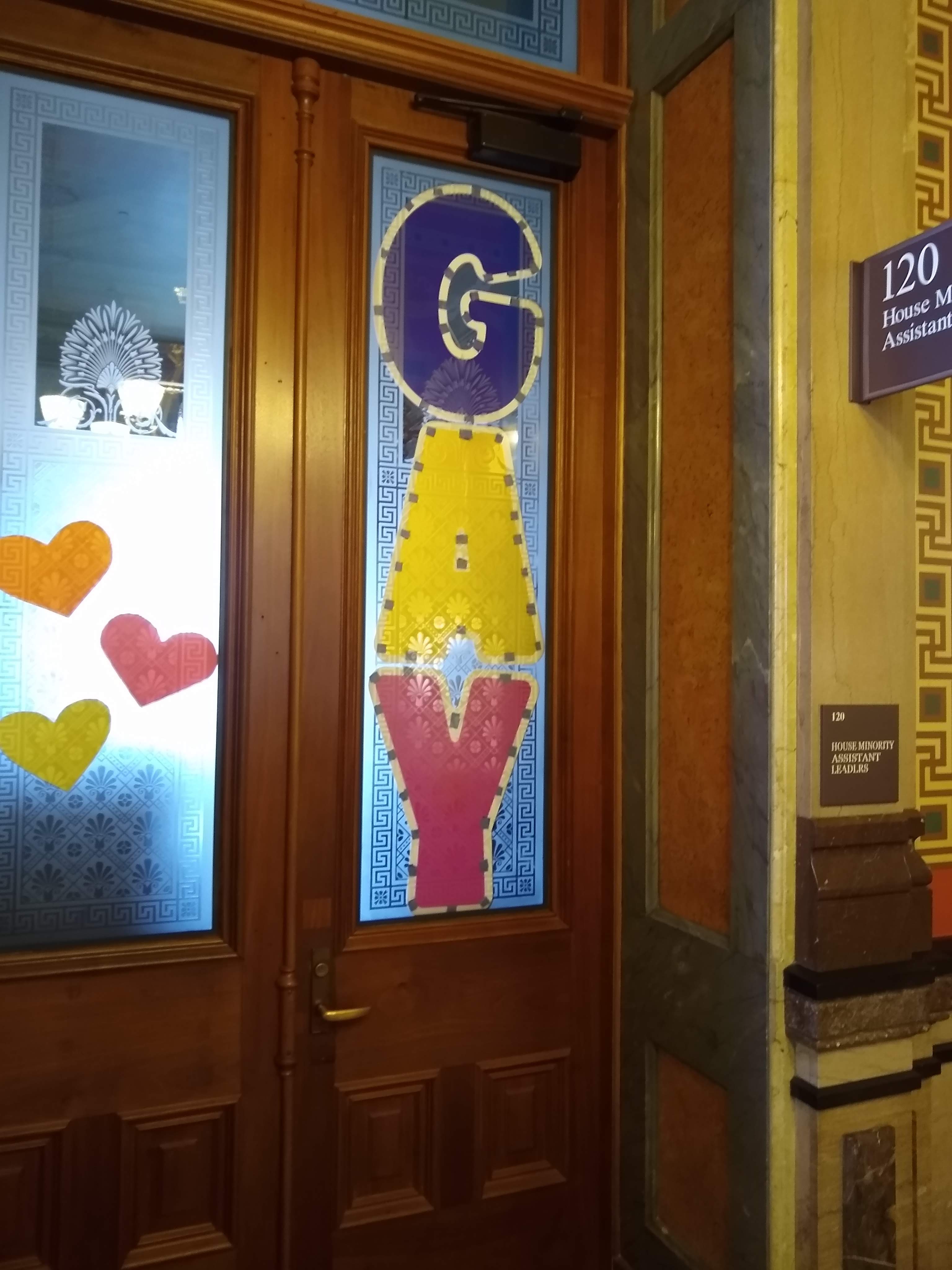
    • LGBTQ topics in public schools and library books (don't say gay or you're a "groomer")
    • gender-affirming care for minors (we support parents' rights but only to do or say things the majority likes) 
    • transgender students' restroom use ("We don't look at it as going after any one specific group," said House speaker Pat Grassley (R-New Hartford) (Murphy, Barton and McCullough 2023))
  • Property tax cuts (the major revenue source for cities and school districts)
  • Loosened regulations on teenage employees' hours and tasks
  • Restricted eligibility for Medicaid and food assistance (when food banks are already seeing record numbers)
  • limits on civil suits against corporations in medical malpractice and trucking accidents 
  • cuts to public universities (obviously important to their Democratic-dominant home counties, but active all around the state so this helps no one)
  • requiring presidential nominating caucuses be held in person (defending what is essentially a homey myth while attacking Democrats who are trying to add a mail-in option for '24)
(And this is just legislation. The list does not include budget cuts for water quality monitoring, nor  does it include executive actions, like Attorney General Brenna Bird's suspension of a state program providing emergency Plan B and abortions to rape victims (Rappard 2023), or the University of Iowa encouraging research engineer Chris Jones to retire because his environmental blog posts might threaten the university's state funding (Lenz 2023, Strong 2023).)

wooden office door with frosted glass windows, paper hearts and letters G-A-Y
Iowa House Democratic leadership office, March 2023

Some of these measures can be argued individually, and some of their parts like property tax transparency and over-the-counter birth control are genuinely good. On the property tax and labor bills, minority Democrats were able to win concessions, so those weren't just rammed through. It's the entire collection I'm calling out--what's in, who gets benefits and who pays the costs--and calling it hateful. The thread that unites all the legislation listed above is it's doing something to people the majority would like to do stuff to, because they're the majority and they can.

cartoon restaurant menu
(Source: clipground.com)

"If you're not at the table, you're on the menu" is practically the political equivalent of a Newtonian law, and this year transgendered people especially youth, public school employees and students, the Democratic state auditor, and the poor were on the menu, just as in other years immigrants, abortion providers, and racial minorities have been on the menu, for the entertainment of Republican constituents.

Opportunities to rebuild our communities, unleash the innovative power of cities, ensure environmental and fiscal sustainability, and welcome people who are different from us... all not taken. Instead we send all manner of signals that we don't like you, while the majority consolidates power and rewards its political allies. Our legislature, as usual, is doing the opposite of what it should be doing. This year just had a whole lot more of it.

[Finally, much of the media coverage of the session, and comments like leader Whitver's quoted above, focus on the central role of Governor Reynolds in making all this happen. I'm not as clear on that, though surely her pugnacious Condition of the State speech in January did much to frame perceptions of the session. To be sure, I wasn't there, so I can't comment on her personal day-to-day role in policy formulation and coalition-building. But it seems that if Iowa is doing pretty much what other Republican-controlled states are doing, then the value added by any individual leader is zero. No matter who was Governor, as long as the Governor was Republican, a legislature with this big a Republican majority in both houses would have produced this exact pile of legislation.]

large apartment building under construction
New Bo Lofts, May 2023

I'm writing this while, outside my window, another building is going up in New Bohemia. Make no mistake, a lot of good things are happening here. The economic vitality of Cedar Rapids and other Iowa cities is keeping the state afloat. The legislature can help spread the wealth (see Zaluska 2023 for a hopeful example), or it can squander these successes by taking cities for granted and promoting intolerance towards the people we need to sustain it all. Stop selling nostalgia and resentment for political points, and start building places of value.

MAIN SOURCES

Perry Bacon Jr., "I'm a Progressive in Kentucky. I Think Republicans Want Me to Leave," Washington Post, 30 March 2023

Caleb McCullough, "Impact of This Year's Legislative Session," Cedar Rapids Gazette, 7 May 2023, 1A, 7A

Erin Murphy, Tom Barton and Caleb McCullough, "Lawmakers Conclude 'Historic' Session," Cedar Rapids Gazette, 5 May 2023, 1A, 8A

Robin Opsahl, "Lawmakers End 2023 Legislative Session with Most Republican Priorities Met," Iowa Capital Dispatch, 4 May 2023

Mary Radcliffe and Kaleigh Rogers, "Red State Voters Support Anti-Trans Laws. Their Lawmakers Are Delivering," FiveThirtyEight, 18 April 2023

Monday, May 1, 2023

10th Anniversary Post: MedQuarter and Westdale

Cedar Rapids Public Library's temporary downtown location,
where ideas for my earliest posts were hatched

(5/1/2023) In May 2013, I continued the momentum from starting Holy Mountain a month earlier. I posted 12 times, down from 14 the previous month, but not equaled since. I included three photo essays--on downtown construction (while noting the sudden departure of union picketers), my sabbatical spent partly in and around the temporary downtown library in the Armstrong's building, and the installation of the skywalk across 1st Avenue between the Doubletree hotel. I liked being where stuff was happening.

Another type of post I haven't employed as much since is commentary on national politics. I had complaints about scandalmongering, misrepresentations of the Affordable Care Act, and overall dysfunction in Congress. The posts reflected the underlying rationale for concern with place, rather than with place making itself: "The real losers in all this are the poor, the sick, the vulnerable, the "other" and the environment," I wrote on May 15.

I was hardly less grumpy about place making in Cedar Rapids, as the month presented two major development projects that looked nothing like urbanism: the development of a medical quarter anchored by our two hospitals adjacent to downtown, and the redevelopment of the former Westdale Mall site into a massive strip mall.

Plans for Westdale, printed in the Cedar Rapids Gazette on May 10, 2013, showed a senior center, a hotel, offices, and "mixed use" development, where there had once been a 1970s-era shopping mall.  Mostly, however, 

This is definitely old stuff. What they're essentially going to do is rearrange the many many parking spaces, and reconfigure the stores. Beyond the parking lots, the new Westdale will be no better integrated into the city than the old one was.... The designers' schematics all show happy people walking, but they all got there by car. Technically you could walk or bike to the new Westdale--just as you can now--but you would be foolish to make the attempt.

The city, for its part, was kicking in $10 million to make this happen.

Some of what they planned has come to pass. I was out there last fall to do Black Friday Parking. It's pretty much a sea of parking and big stores, though.

Westdale, Black Friday 2022

I also saw apartments and a hotel under construction, within easy walking distance of the big stores, but hardly walkable.

The MedQuarter event was mainly to solicit public comment. Their big plan full of promises would come later in 2013. Their goal seemed to be to be more attractive to visitors to the medical facilities, regardless of the impact on the broader community. "This would be done with better signage, prettier landscaping, and clearer branding." And plenteous parking. In 2013 I described the area between 5th and 12th Streets SE as "a large swath of large buildings and large parking lots." And that's still what's there, a great blankness instead of connection between the east side neighborhoods and downtown.

Medical parking lots, January 2018

The development of the MedQuarter and Westdale show that Cedar Rapids remains all in on the car as the normal way to get around. This is understandable--the city is built on cheap real estate and easy access to anything by car--if not commendable. Carrying that forward, and meeting the expectations of current residents, are stronger incentives than adapting to an uncertain future. The density and connections that make walkable areas vibrant and sustainable continue to be afterthoughts, but those are what will get us to a sustainable future for all, not bigger cars and easy parking.
MedQuarter businesses and the city share interests in sustaining viable businesses and job creation. But the city's interests extend beyond that set, and I'm not hearing that the businesses consider that theirs do. I hope the SSMID will do more than turn an empty quarter into an empty quarter with a brand and better signage, but is there any reason to anticipate they will?
Not yet.

Ten years ago, it was enough to revel in my new knowledge and criticize the old ways of doing things. In time, though, the euphoria of the new wears off, and one comes to realize the depth of the challenge in making change. Change is difficult, and slow. Yesterday's Gazette featured a letter to the editor wondering why the city doesn't provide (even) more parking in New Bohemia. Like most of the country, we in Cedar Rapids are used to getting around by car, and if gas is up to $3.50 a gallon, and the weather is occasionally wacky, well, we can get used to that, too. The long haul required of urbanists seems to be considerably longer than a mere ten years!

SEE ALSO: Ellen Dunham-Jones TED talk on "Retrofitting Suburbia"

End of May 2013: the river was up again!

Sunday, April 23, 2023

Greetings from New Carlisle!


Michigan Street (US 20), main street of New Carlisle

My recent conference experience in Chicago included a side trip to New Carlisle, Indiana, where a longtime friend has returned to the place she grew up. I don't know what I expected, but I found a pleasant burg with many of the admirable qualities of traditional small towns. 

"I live in a 15-minute city," my friend said, and she does. She lives a block from the center of town, which contains restaurants and coffee and ice cream, but also--and this is a key quality of walkable areas--groceries and hardware as well as a Walgreen's. Ben Kaplan wants vegetables with his urbanism--New Carlisle has vegetables, within a short though not particularly friendly walk from anywhere in town. 

Groceries By Joe is at the edge of town, where there are no sidewalks,
but they do have vegetables (Google Earth screenshot)

New Carlisle's population in 2020 was 1891, up exactly thirty over 2010: 91 percent are white, 2 percent black, and the rest other or multiple races. 39 percent are between ages 25 and 54, 14 percent are over age 65, on the young side of average for the State of Indiana. Median income and educational attainment are lower than Indiana as a whole, but so is poverty (data.census.gov). The town is bisected by U.S. 20 a.k.a. Michigan Street, but it is only two lanes wide through town, which at least by my brief observations seemed to slow the traffic whether local or passing through. So people on either side of the highway can walk to a terrific park:

Memorial Park, 300 W Michigan St
(Google Earth screenshot)

The middle and high schools are outside of town, but the elementary school is close to the center of town at the south end of the park...

Olive School, 300 W Ben St
(Google Earth screenshot)

...and the library is across the street from the school.

Olive Township Library, 408 Bray St
(Google Earth screenshot)

The most distant house I could find that qualified as in town was only 15 minutes' walk away from the library, according to Google, with sidewalks all the way.

A glossy brochure I scored in town offers a self-guided tour of New Carlisle's history and architecture, with 31 properties listed (23 residential, eight commercial) along with some good basic information on architectural styles. Anyone interested in functional historic preservation would not be out of place here.

building facades, 100 block of East Michigan Street,
showing Queen Anne (1892) and Italianate (1874) styles

New Carlisle is about halfway between Michigan City (pop. 32,075) and South Bend (pop. 103,453). Transportation out of town is probably going to be by car. Chicago is 2+ hours away by train, though; the South Shore Line train to Chicago stops at Hudson Lake, a 5-minute drive, and there's talk of moving the station to New Carlisle.

Would I like it here? I can't say for sure, as I've never lived in a town under 10,000 population, and I've spent my entire adult life in towns with at least one college. There is coffee to be had on Michigan Street, at both Carlisle Coffee and New Age Baking Company. And the accessibility of most things can't be beat.

Carlisle Coffee and Sweets, 203 E Michigan St
(Google Earth screenshot)


SEE ALSO:
"Downtown Decorah," 25 September 2013

Tuesday, April 18, 2023

Local Policies for Inclusion


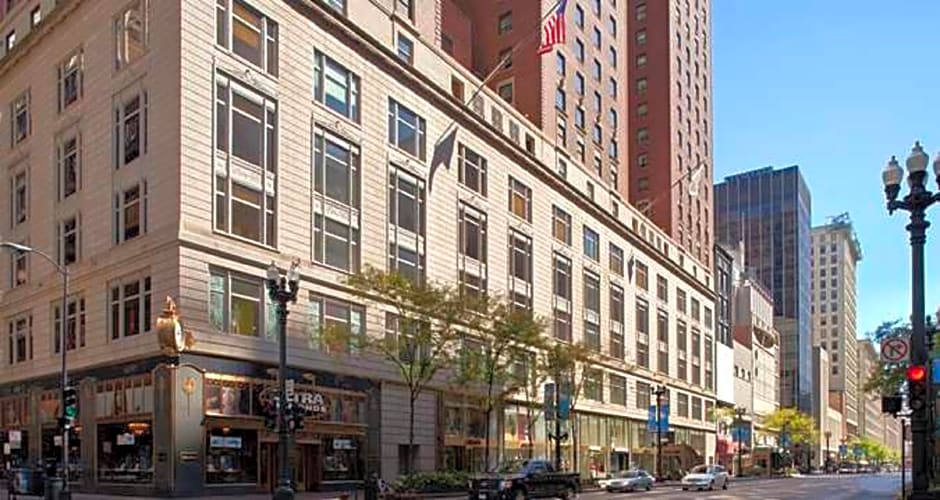
large hotel building, corner shot
Palmer House Hilton, site of the Midwest Political Science
Association conference

Policies adopted by local governments directly impact the inclusion of immigrants into political life, according to a paper by Samantha Chapa, a Ph.D. student in political science at the University of Houston, presented at the 2023 meeting of the Midwest Political Science Association. Ms. Chapa analyzed 31 policy choices of various cities, and found mixed but positive impacts on first and second generation immigrant participation in the 2020 general elections. She argued that pro-inclusion policies can provide both resource effects (e.g. jobs/employment) and interpretive effects (e.g. communicating a sense of welcome), both of which increase community ties for newcomers. 

Samantha Chapa
Samantha Chapa (from uh.edu)

Her work is pertinent in this era of increased diversity and attention to immigration, and the expectation that these will only increase with future economic and environmental developments (See Steuteville 2021). Most places in America today reflect a historically white majority in their political and economic power structure. Some of our most diverse cities are also the most stratified--Washington, D.C., for example, where the median wealth of white families is something like 50 times that of black families. These cities can choose to try to maintain or broaden the voices in their community. (They can also try to be an enclave or a fortress, but let's not go there.)

Samantha Chapa commended the work of Welcoming America, a Georgia-based organization that advocates "inclusive communities becoming more prosperous by ensuring everyone belongs." They go on:

Whether it's due to the economy, immigration policies, or climate disasters, communities experiencing an influx of newcomers may not be prepared, causing misunderstanding and tension, and in some cases, outright violence and hostility. But when communities recognize the value [in] being truly welcoming and intentionally work toward the inclusion of newcomers, they can create a culture and policy environment where all residents feel empowered to work with each other in strengthening the social, civic, and economic fabric. When we find strength in our diversity--and actively resist fear and division--we can build a resilient community that fully harnesses the talents, skills, and contributions of every resident so that all can thrive.

Statue of Liberty
Source: welcomingamerica.org

In other words, you can spend scarce resources keeping newcomers down and out, or you can work with them to build strong resilient places--a point I've made here, more than once. Welcoming America's Welcoming Standard includes seven goals, including attention to "leadership and democratic spaces," full use of the education system, leveraging all talents in the local economy, and diversity training of public safety staff.

That genuine inclusion requires more than merely ending policies of exclusion was shown the following night at the Gene Siskel Film Center, mere blocks from the site of the MPSA conference. The Australian documentary film "You Can Go Now" highlighted the struggles of aboriginal peoples after generations of usurpation and exclusion. 

Artist and activist Richard Bell, portrayed in "You Can Go Now,"
speaks to the audience after the film

One longtime activist stated towards the end of the film that there had been genuine legislative progress, particularly during the administration of Prime Minister Paul Keating (1991-1996), but that now many conditions were worse than ever for aboriginals. It's one thing to change laws, and by no means a small thing; but it's quite another matter to address socially ingrained alienation, suspicion, fear, and concentrated poverty. 

Other papers on the MPSA's Race and Local Politics panel--held Friday morning at 8, but well worth getting up for!--explored areas of local government policy where cities could opt (or not) for inclusion. Aliyah Jenille Mcilwain of Michigan State University found that support among long-time black residents of Detroit was not as high as one might expect for a state project to replace I-375 with a more urban-style development. I-375 when constructed displaced 130,000 mostly minority residents; maybe current residents see the new project as another chapter in policies being imposed upon them from outside? This is a widespread problem with planning and land use policy making, documented in a new study by the Urban Institute (Lo, Noble and Freemark 2023).

Gustavo Francisco Novoa of Columbia University and E. Grant Baldwin of UCLA (with three co-authors) looked at districting for city council elections. Most local government use at-large elections, with 8 percent (including Chicago) using districts and 9 percent (including Cedar Rapids and Washington, D.C.) using a mix of at-large and district seats. Nonwhite representation on city councils increases with the use of districts, but as Novoa showed with a Monte Carlo simulation, a lot depends on how local governments choose to draw the districts.

Which is pretty much where those of us with some power and privilege stand now: a choice of how we're going to face the future. Competitively or cooperatively? Inclusively or exclusively? Sustainably or exploitatively? For the time being at least, the choice is ours.

PAPERS CITED

E. Grant Baldwin, Dan Butler, Adam Michael Dynes, and Michelle Torres, "At-Large Elections and Descriptive Representation in U.S. Municipalities"

Samantha Chapa, "Inclusion and Participation: How Local Policy Affects Political Participation"

Aliyah Jenille McIlwain, "Reconstructive Reparations? A Survey of Government Performance and Perceptions in Southeastern Michigan"

Gustavo Francisco Novoa, "Coloring in the Lines: The Determinants of Majority Minority Districts and Descriptive Representation in U.S. City Councils"

Other panel participants were Athena M. King and Paru Shah.

SEE ALSO:

"The Neighboring Movement Comes to Cedar Rapids," 19 July 2022 

"Can Cedar Rapids Be a 'Receiver City?'" 28 December 2021

Tuesday, April 4, 2023

Coffee feelings

Two men standing at coffee counter
At 787 Coffee in Greenwich Village, the coffee is pricey but the epiphanies are free

(4/4/2023) Coffeehouses are more than places to buy coffee. The best ones are places to linger, to encounter both friends and strangers, supports for the local community as well as the local economy. In chapter 10 of his landmark The Great Good Place [DaCapo, 2nd ed, 1999], which popularized the concept of "third places," Ray Oldenburg describes the origins of democratic coffeehouse culture in London and Vienna:

In the coffeehouse, men from all parties and stations could mingle in innocence of the old traditions. In the absence of an established press, face-to-face discussion in the permissive atmosphere of these second-story halls represented a single and vital mode of democratic participation. In the process of this unprecedented mingling, people became sensitive to one anothers’ situations and found common interests and sympathies. They soon discovered, as well, the strength of their numbers and their mutual stake in individual freedom. (1999: 189)

London coffeehouses were also centers of business entrepreneurship, and headquarters for literary lions like John Dryden, Joseph Addison, and Daniel Defoe. At the same time, those coffeehouses, like pubs and bistros, could be oases for their customers, “correctives” from “whatever mental and emotional states the daily struggle induces” (1999: 184). 

Cafe tables with flowers, trees
The splendid courtyard at Topolska 18, Belgrade

At their best, coffeehouses are places to be, not just places to buy. Achieving this in America, however, is hindered by our car-centered design, which makes life in public into a series of errands, and/or the cost of real estate in major cities, where proprietors can’t afford the space or the time for customers to hang out. 

I was visiting coffeehouses in New York City last month when I had a flash of clarity about what it feels like to be in a coffeehouse. The first two places I went had very little seating relative to the stream of customers, clearly designed for grabbing and going rather than lingering. We did stay awhile, but I was always conscious of the preciousness of the seat I occupied. The third had plenty of seating but was messy and aesthetically unappealing. Only in the fourth was I able to linger un-self-consciously, to watch and listen to the stream of people coming in, and to write most of the blog post on Greenwich Village. Maybe it was because it was Monday as opposed to Saturday or Sunday? The counterman did describe business as “slow,” though it seemed steady to me.

interior coffeehouse with seated customers
Sunday morning at Brewhemia, Cedar Rapids
(truth in blogging: 15 minutes later the line was out the door)

I know some people are in a hurry, and I’m certainly not one to tell anyone how to run a business or survive in the city, but the coffeehouse experience requires enough space and the right ambience to relax, enough other customers to provide interest (and income for the proprietor), as well as good things to eat and drink.

muffins and coffee cake in glass display case
Selection of baked goods at Cafe St. Pio 
 

Ideally the place also should be in a walkable area, with its own footprint adding at most a small parking lot. (Come to think of it, my list resembles Jeff Speck’s criteria for walking that should be purposeful, comfortable, interesting and safe.) 

Friendliness and whimsy are bonuses. 

Men's room at the Early Bird downtown,
which space is now occupied by the equally amusing Craftd 

Although we at Coe College lament the 2020 closing of our beloved Brewed Awakenings Coffeehouse, expanding our horizons just a bit to the core of Cedar Rapids gets us by my count eleven local coffee places. I patronize all eleven, because research, and am here to tell you each has its distinctive features that enhance a guest's experience. The four best of them feature:

·         Enough Space: not so big that you feel like an atom, but not so small that you can’t relax, with a warm ambience. Two of my faves are located on street corners; all have large front windows none of which face east, so there’s the right amount of natural light in the morning.
shop exterior with large windows and door
Facing northwest and southwest, Cafe St. Pio anchors a key block in Czech Village

·         Customer traffic: I don’t have data, but my hunch is that my two favorites do somewhat less business than the other two. As with the previous category, I’m groping for a sweet spot, enough to be interesting but not so much that the space can’t handle the crowd.

·         Closing time: I like my coffee breaks mid-morning, but sometimes you want to meet someone in the afternoon. 2:00 p.m. seems early to close, but it’s pretty typical of Cedar Rapids. One of my favorite four is open til 4:00, and the other, bless it, til 6:00. Three are open Saturdays, three Sundays, with earlier weekend closing times.

Craftd downtown is closed Saturdays, but open Sundays

·         Moderately priced coffee: Cheap is for c-stores, but by big city standards prices at our coffeehouses are eminently reasonable, about $3-3.50 for a 16-ounce drip coffee. (Your humble blogger likes his coffee humble as well.) Most places offer free or discounted refills as well, which encourages hanging out.
payment jar for coffee refills
payment jar for refills at Brewhemia

For sociability, refreshment, and support for the local economy, you can't beat a good, accessible, reasonably-priced, ambient coffeehouse!

SEE ALSO:

"Coffee and Community in Belgrade," 29 May 2022

"Early Bird Cafe Closes," 8 March 2020

"Letter from Washington (V): Coffee on Capitol Hill," 2 April 2018

Jacob's Coffeehouse in Washington's Capitol Hill neighborhood:
cozy but not crowded

"Coffee in Cedar Rapids," Facebook note from 2011
Addison Del Mastro, "Coffee Shop Kind of Day," The Deleted Scenes, 24 May 2022
Ben Kaplan, "Downtown Cedar Rapids' Coffee Shops Ranked," Corridor Urbanism, 3 February 2019

Sunday, April 2, 2023

10th anniversary post: The Place Where I Live


big orange colored buildings facing major street
Rebuilding hotel/entertainment complex, 2013

I began Holy Mountain ten years ago this month, in the middle of a sabbatical semester studying the phenomenon of place. I must have had a lot of thoughts stored up... I wrote 14 posts in April 2013, a number I've never since matched. Heck, I'm glad to have done at least one for each of the next 120 months. 

During that first heady month, I wrote about my encounter with New Urbanism--I'm now a CNU member, and will be attending my first in-person conference next month--and my fundamental value of community, both of which became thematic staples of the blog. 

I went to Chicago in April 2013...

three-lane one-way street with auto traffic
Jackson Boulevard, Chicago Loop (2013)

...and got two posts out of it. I yawped out my frustration at the persistence of racial prejudice, despite my efforts to reduce societal conflict to economic class. Little did I know what was coming, though I probably should have had more of an inkling. 

I wrote three posts on religious or sacred place, which I still think about, but haven't written about so much. Now that I've settled into familiar patterns, it's interesting to revisit a time when I could have gone any number of directions. 

people seated outdoors in twilight under commercial awning
McGrath Amphitheater downtown
hosting Jazz Under the Stars in 2014

After my first post introduced the project, I wrote about Cedar Rapids, Iowa, where I have lived for 34 years. I stated its population as 110,000, which was an old figure; the 2010 Census count was 126,326, and it grew to 137,664 in the 2020 Census. I talked about our "plenteous" cultural amenities, Downtown's recovery from the flood five years earlier, and the wonderful parks system, while dinging the city on historic preservation and walkability. 

Because we're a small city in a sparsely-populated state, we've felt rather free to sprawl.... It's very difficult to get anywhere in town without a car. Grocery stores are few and tend to be enormous, surrounded by enormous parking lots. The sidewalks in our neighborhood are nice, and the city has undertaken a sidewalk construction project.... But there's nothing within a five-block walk from our house except more houses and Brucemore [National Historic Site]. A lot of bars, restaurants, and stores are concentrated in hellish strips on Mt. Vernon Road SE, 33rd Avenue and Edgewood Road SW, and Collins Road NE, as well as around the two malls.

mostly empty commercial parking lot
Black Friday 2021: Fleet Farm is the newest big-box arrival,
accessible from the Highway 100 extension

In another post later in April, I wrote about CRST's plans to build a large office building on 1st Street SE. And they did!

river in front of large office building
201 1st Street SE, with Alliant Building in the background

Most of my ten-year-old description of my city still applies. The MedQuarter area northeast of downtown remains "pretty much a dead zone except for the medical complexes." New Bohemia and Czech Village have been aggressively developed, with more core development to be facilitated by the construction of flood walls along the Cedar River. Right now commercial development in those places far outpaces residential, and what residential there is inclines to expensive condominiums, so these walkable core areas currently tilt to drive-to shopping and bars. (See Kaplan 2023, a piece that got a shout in Deleted Scenes, not that anyone here on Holy Mountain is at all jealous.) 

Despite these criticisms, I still spend a lot of time in those neighborhoods. And construction is well along on a number of apartment buildings downtown. More residential population can be the catalyst for a 24-hour downtown with stores and schools within easy walking distance. 

multistory construction project in process
Construction continues at 4th Avenue and 5th Street SE

On the other hand, maybe it won't be... there is a large Hy-Vee Grocery Store with a generous parking lot five or six minutes' drive away. Auto-centric development tends to replicate itself: lots of people with cars need lots of parking, which takes up space that makes fewer places within easy walking distance.

Ten years have also seen substantial additions to the trails network, on-street bike lanes with some protected lanes, and extensive conversions of one-way streets back to two-way. It has been a privilege to watch the town develop, and I will continue to watch future development with interest.

SEE ALSO: "The Place Where I Live," 1 April 2023

Next Page Books, 2020:
A landmark in New Bohemia

Justice in the World Today

  Hope he gets some of that coffee: Statue of Thucydides in Vienna, Austria (7/31/2026)  A long time ago, according to the ancient Greek his...