Showing posts with label Midwest Political Science Association. Show all posts

Thursday, April 18, 2024

Can there be too much of a good thing?

busy street and skyline of Barcelona
Barcelona (from Wikimedia Commons)

I've never been to Barcelona--in fact, I've never been to Spain--but Barcelona, like Amsterdam, Copenhagen, and Paris, has emerged as a bucket list destination for urbanists. Not only does it have the massive but neighborly Sagrada Familia, an eye-popping Gothic Quarter, and at least 23 other wonders plugged by Earth Trekker, but in the mid-2010s a new city administration undertook an ambitious Urban Mobility Plan based on superblocks.

Superblocks were intended to improve quality of residential life and decrease the environmental impact of motor vehicles by routing vehicles to the exterior of neighborhoods. (See Kohlstedt 2017 for description and diagrams.) The idea was to take maybe nine square blocks, and restrict through traffic from the interior of that area, allowing more pedestrian and commercial activity on narrower park-like streets. 

Earlier superblocks had been effective but tended to produce rapid gentrification; the more aggressive approach taken by the new administration in 2015 seemed more haphazard and produced more pushback (Roberts 2019). The administration of Mayor Ada Colau recalibrated, incorporating more amenities as well as more consultation with the neighborhoods. Subsequent projects incorporated "everything we learned," Port of Barcelona President Lluis Salvado told Vox, so that in what "should have been a more hostile area... the implementation process was almost unanimously accepted" (Roberts again).
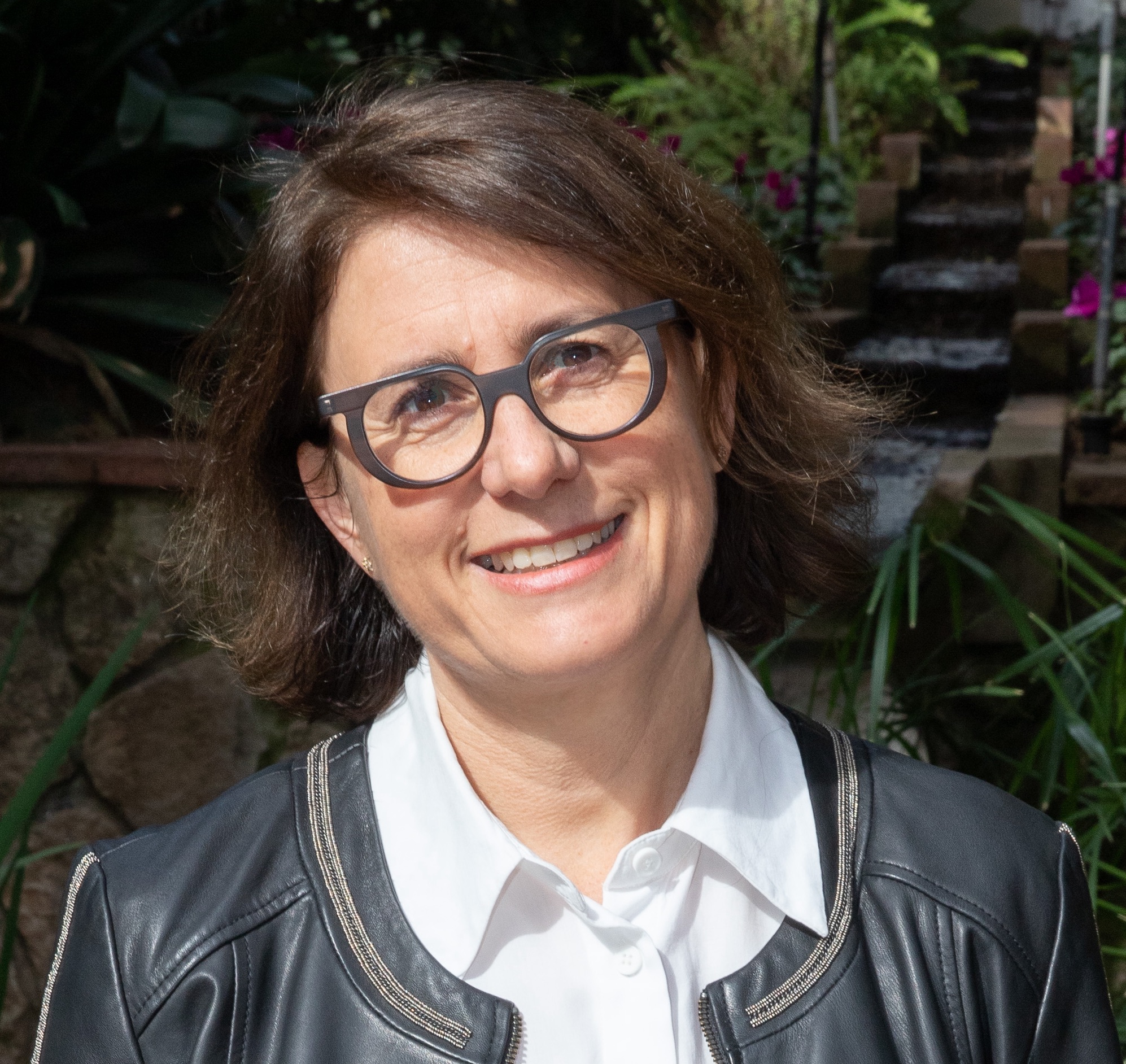
Elisabet Viladecans-Marsal

But all is not now blissful in Barcelona, reported Elisabet Viladecans-Marsal at this month's Midwest Political Science Association meeting in Chicago. Viladecans-Marsal is an economist at the University of Barcelona, among other appointments, and has been cited on City Observatory for a co-authored 2022 paper on induced traffic demand. Presenting a work in progress entitled "The Electoral Effects of Banning Cars from the Streets: Evidence from Barcelona's Superblocks," co-authored with Cèlia Estruch, Albert Solé-Ollé & Filippo Tassinari, she said the superblocks continued to show immediate local positive effects, but that the vehicle traffic they displaced were creating more problems around streets designated for through traffic. The experiences of people living along the throughways were so negative that it tipped the political balance of the city: Mayor Colau's party lost their Council majority, and the new Council announced a plan to undo the superblocks.

Viewed from the perspective of people on the throughways, the superblocks of Barcelona sound less idyllic and a lot more like... Cedar Rapids, Iowa. A lot of our houses in Cedar Rapids are built along streets with very low traffic, albeit without the public amenities, shops, and active use of the space that appeared in Barcelona. Our vehicles, doubtless like those in your town, are funneled onto arterials, which function a lot like the throughways around the Barcelona superblocks i.e. they're noisy, unpleasant, and periodically congested. The mess created by this approach to traffic engineering is carefully detailed by Chuck Marohn in chapter 6 of Confessions of a Recovering Engineer (Wiley, 2021).

Inclined as I am to despair anyway, it is easy to conclude that in our complicated world with all of its sunk costs and vested interests, we just can't have nice things. The whole MPSA panel on "International Governing Institutions," on which Viladecans-Marsal appeared, was full of fuel for such despair. Connor O'Dwyer of University of Florida and Vaclav Orcigr of Charles University reported on a well-funded Spatial Plan in the Czech Republic creating fertile ground for state exploitation, while Yooil Bae of Dong-A University reported on the Republic of Korea's failed attempt to restore a region's flagging fortunes by merging three cities into a megacity. Even where injustice and unproductivity are widely-acknowledged, as in the cases of interstate highways plowed through urban neighborhoods (Reimagining the Civic Commons 2024), the people who remain after the sacking now rely on the highway to get places.

Perhaps the lesson of the superblocks is not to proceed too quickly, that great big "game-changing" projects are likely to be rife with unintended consequences. Even when undoing massive auto-centric sacking of our cities, the best approach is to be slow and cautious, and to have a backup plan when things don't go as planned. (If I sound like a charter member of Strong Towns, it's because I am.) Incrementalism can be hard to stick to, though, when--as in Barcelona--the problems you're addressing are widespread, or when markets can move so much faster than your cautious self. 

Catalan flag

Closing disclaimer: Residents of Barcelona will argue they are not in Spain, or if they are it's only under duress. I feel a song coming on...

I've never been to Catalonia/But if I go perhaps I'll see ya...

Pity Hoyt Axton's not still around to finish this.

Tuesday, April 18, 2023

Local Policies for Inclusion


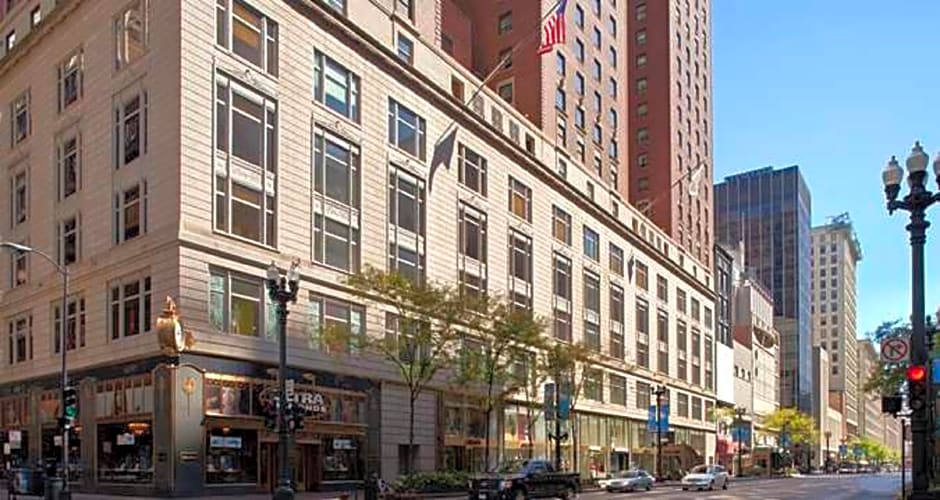
large hotel building, corner shot
Palmer House Hilton, site of the Midwest Political Science
Association conference

Policies adopted by local governments directly impact the inclusion of immigrants into political life, according to a paper by Samantha Chapa, a Ph.D. student in political science at the University of Houston, presented at the 2023 meeting of the Midwest Political Science Association. Ms. Chapa analyzed 31 policy choices of various cities, and found mixed but positive impacts on first and second generation immigrant participation in the 2020 general elections. She argued that pro-inclusion policies can provide both resource effects (e.g. jobs/employment) and interpretive effects (e.g. communicating a sense of welcome), both of which increase community ties for newcomers. 

Samantha Chapa
Samantha Chapa (from uh.edu)

Her work is pertinent in this era of increased diversity and attention to immigration, and the expectation that these will only increase with future economic and environmental developments (See Steuteville 2021). Most places in America today reflect a historically white majority in their political and economic power structure. Some of our most diverse cities are also the most stratified--Washington, D.C., for example, where the median wealth of white families is something like 50 times that of black families. These cities can choose to try to maintain or broaden the voices in their community. (They can also try to be an enclave or a fortress, but let's not go there.)

Samantha Chapa commended the work of Welcoming America, a Georgia-based organization that advocates "inclusive communities becoming more prosperous by ensuring everyone belongs." They go on:

Whether it's due to the economy, immigration policies, or climate disasters, communities experiencing an influx of newcomers may not be prepared, causing misunderstanding and tension, and in some cases, outright violence and hostility. But when communities recognize the value [in] being truly welcoming and intentionally work toward the inclusion of newcomers, they can create a culture and policy environment where all residents feel empowered to work with each other in strengthening the social, civic, and economic fabric. When we find strength in our diversity--and actively resist fear and division--we can build a resilient community that fully harnesses the talents, skills, and contributions of every resident so that all can thrive.

Statue of Liberty
Source: welcomingamerica.org

In other words, you can spend scarce resources keeping newcomers down and out, or you can work with them to build strong resilient places--a point I've made here, more than once. Welcoming America's Welcoming Standard includes seven goals, including attention to "leadership and democratic spaces," full use of the education system, leveraging all talents in the local economy, and diversity training of public safety staff.

That genuine inclusion requires more than merely ending policies of exclusion was shown the following night at the Gene Siskel Film Center, mere blocks from the site of the MPSA conference. The Australian documentary film "You Can Go Now" highlighted the struggles of aboriginal peoples after generations of usurpation and exclusion. 

Artist and activist Richard Bell, portrayed in "You Can Go Now,"
speaks to the audience after the film

One longtime activist stated towards the end of the film that there had been genuine legislative progress, particularly during the administration of Prime Minister Paul Keating (1991-1996), but that now many conditions were worse than ever for aboriginals. It's one thing to change laws, and by no means a small thing; but it's quite another matter to address socially ingrained alienation, suspicion, fear, and concentrated poverty. 

Other papers on the MPSA's Race and Local Politics panel--held Friday morning at 8, but well worth getting up for!--explored areas of local government policy where cities could opt (or not) for inclusion. Aliyah Jenille Mcilwain of Michigan State University found that support among long-time black residents of Detroit was not as high as one might expect for a state project to replace I-375 with a more urban-style development. I-375 when constructed displaced 130,000 mostly minority residents; maybe current residents see the new project as another chapter in policies being imposed upon them from outside? This is a widespread problem with planning and land use policy making, documented in a new study by the Urban Institute (Lo, Noble and Freemark 2023).

Gustavo Francisco Novoa of Columbia University and E. Grant Baldwin of UCLA (with three co-authors) looked at districting for city council elections. Most local government use at-large elections, with 8 percent (including Chicago) using districts and 9 percent (including Cedar Rapids and Washington, D.C.) using a mix of at-large and district seats. Nonwhite representation on city councils increases with the use of districts, but as Novoa showed with a Monte Carlo simulation, a lot depends on how local governments choose to draw the districts.

Which is pretty much where those of us with some power and privilege stand now: a choice of how we're going to face the future. Competitively or cooperatively? Inclusively or exclusively? Sustainably or exploitatively? For the time being at least, the choice is ours.

PAPERS CITED

E. Grant Baldwin, Dan Butler, Adam Michael Dynes, and Michelle Torres, "At-Large Elections and Descriptive Representation in U.S. Municipalities"

Samantha Chapa, "Inclusion and Participation: How Local Policy Affects Political Participation"

Aliyah Jenille McIlwain, "Reconstructive Reparations? A Survey of Government Performance and Perceptions in Southeastern Michigan"

Gustavo Francisco Novoa, "Coloring in the Lines: The Determinants of Majority Minority Districts and Descriptive Representation in U.S. City Councils"

Other panel participants were Athena M. King and Paru Shah.

SEE ALSO:

"The Neighboring Movement Comes to Cedar Rapids," 19 July 2022 

"Can Cedar Rapids Be a 'Receiver City?'" 28 December 2021

Tuesday, April 16, 2013

Race matters, damn it


large hotel building, corner shot
Palmer House Hilton, site of the Midwest Political Science
Association conference

Among the panels I attended at last weekend's Midwest Political Science Association conference was one entitled "Geography and Political Behavior." Three of the four papers dealt in some way or other with the effect of race on people's actions. One of the participants recalled the quote, "If you're a scholar of American politics sooner or later you become a scholar of race politics."

I have taken quite the opposite view. For all race mattered through America's long, sad history of slavery and Jim Crow, most people alive today were born since the passage of the Civil Rights and Voting Rights Acts and the institution of affirmative action. They are used to seeing blacks in positions of prestige and authority, residing in middle class neighborhoods and attending top colleges. The real American divide, in my view, was social class. (Not the only divide, of course... I do study religion and politics, after all.) We live in an era of ever-widening inequality, with economic groups living more and more apart from each other, evolving different norms of behavior and signs of identification. I vividly illustrated this last fall in a class discussion: Imagine, I instructed the class, I'm walking down the street with a black colleague, and we pass a house where a few white drunks are throwing bottles off the porch and shouting racial epithets. Am I suddenly going to identify with my white brothers? I think not!

And yet, in spite of my naivete and bad hypotheticals, some pretty careful research concludes that race is very much with us. Jason Anastasopoulos of UC-Berkeley presented "The Big Sort: Diversity, White Flight and Polarization in Neighborhoods and Cities." He tracked the impact on neighborhoods in Houston, Texas, of the influx of hurricane refugees from New Orleans in 2005-07. As the mostly black refugees moved in, a sizeable portion of existing residents, mostly white, relocated out of those neighborhoods. Relocation decisions were predictable by ideology--conservatives moved, liberals didn't--resulting in a more liberal neighborhood overall. This supports the argument of authors like Bill Bishop (The Big Sort, 2008) that Americans are moving to be with like-minded people, resulting in strongly conservative and liberal areas that elect strongly conservative and liberal representatives who then have trouble agreeing on policy decisions. The racial lesson is ambiguous: any influx that massive is likely to be destabilizing for the neighborhoods, and it's certain (given how the damage affected different areas of New Orleans) that the refugees were mostly lower class.

Findings in "The Primacy of Race in the Geography of Income-Based Voting" by Clayton M. Nall of Stanford and Eitan Hersh of Yale are more difficult to explain away. Nall and Hersh analyze the relationship between family income and a voter's choice of candidate. (Survey research going back to the 1930s shows the probability of voting Republican increases with with income, though the relationship has been less strong since the 1960s.) In congressional districts that are predominantly white, income remains strongly predictive. But for whites in racially-mixed districts, the wealthy still vote Republican but the less-well-off tend not to vote Democratic as much as similar voters in predominantly white districts (or blacks in racially-mixed districts); this is particularly true in the South.

Race, then, still motivates political behavior. Perhaps one can explain nonwhite racial solidarity by the legacy of discrimination and minority status. For whites, though, that reason doesn't wash. We--particularly people like me who have been rather naive about the topic--need to acknowledge the lingering presence of racial motivations in American political behavior. And we should commit ourselves to working for a better life for all, rather than acting to protect ourselves from spurious threats.

Bruce

Justice in the World Today (II)

Rising rents are just one obstacle to opportunity today (Source: Joint Center for Housing Studies of Harvard University ) Some time ago, Fir...