Showing posts with label Chicago. Show all posts

Tuesday, December 9, 2025

Subterranean Chicago


Building access door with Pedway logo
Office building entrance near State and Randolph

(12/9/2025) My ignorance of the Chicago Pedway was inexcusable but real. Despite being born in the city, living most of my young life nearby, and continuing to make several trips per year from nearby Iowa, I had never been in the Pedway until last week. I found out about the Pedway from my son Eli, who joins me in my love for the Windy City, and who found out about the tunnels from a video made by University of Illinois-Chicago architecture professor Stewart Hicks:

"The Bewildering Architecture of Indoor Cities" (13:11; discussion of the Pedway begins about 3:15 in)

So, on a bitterly cold December day, Eli and I sought out the Pedway. In the course of the morning, we covered maybe 1/3 to 1/2 of its five miles. The Chicago Pedway is neither as well-marked nor as well-equipped as the Minneapolis Skyway, though it has more commercial spaces than Cedar Rapids' Skywalks. 

The first trick is finding your way in. Entry points aren't well-marked at all. Even when you locate an access point, that's no guarantee of access; the Pedway is not maintained by the city, but by individual property owners, which means availability is not easy to predict. 

Armed with maps downloaded from the Internet, we eventually found a few entrances...

office doorway, no Pedway access
La Salle Street: employees only

...only to find our way blocked.

Pedway logo on locked door
Lake Street: another no go

This skywalk across Clark Street is an unusual section of the Pedway, most of which is underground. 

skywalk, 150 block of North Clark Street
Clark Street: another no go

Alas, it too was closed.

Eventually, we found a way in through the basement of Macys department store, formerly Marshall Field's, at 111 North State Street. In this part of the Pedway, there are wayfinding maps...

Pedway map posted on wall

...and signs:

wayfinding sign, under the 100 block of North State Street

...and art!

stained glass exhibit, Chicago Pedway
stained glass exhibit near the Macys access

Barbara's Bookstore is in the basement of the Macys building.

Barbara's Bookstore entrance: glass door with shelves full of books behind it
Barbara's is a Chicago-based bookseller with mutliple locations

Once through a rudimentary passage across Randolph Street...

hallway with wayfinding sign

...the action really begins. There are some fast-food restaurants in a fancier section across Michigan Avenue. 

brightly lit Pedway near Randolph and Michigan
Pedway getting bougey

fast food spots near train station
fast food collection near train station

(Note that the space on the left is for rent. If you've always wanted to own an underground business, now's your chance!)

There was even an Amazon Go store, which surprised me. I didn't realize they were still around, much less underground!

Amazon Go store entrance
130 East Randolph Street

The restrooms were a little scary, but sometimes in a storm any port will do.

restroom entrance
restrooms, Chicago Pedway

The Pedway also connects to two train lines, the Metra Electric which serves the south side of Chicago, and the South Shore Line which serves commuter stops between Chicago and South Bend, Indiana. Both the waiting areas...

decorated waiting area for Metra Electric line
festive waiting area

...and the tracks themselves...

tracks with holiday lights
South Shore Line

...were very seasonally festive. Kind of a Polar Express vibe, which I don't get at the larger stations at the west end of downtown. 

If you come in on a train that stops at Millennium Station, finding the Pedway is easy. It's also easy to find from some parking garages as well as Lower Randoph Street, where there are more entrances/exits.

Randolph and Michigan, lower level
Lower Randolph Street near Michigan Avenue

Urbanists like Jeff Speck criticize skyways, and by extension pedways, for taking foot traffic off the streets. While that's a fair criticism in Minneapolis, I didn't observe that here. At least around Randolph and Michigan, there were many more people at the surface level than in the Pedway, even with the bitter wind.

Overall, the Pedway was a novelty, but a bit chaotic for the first-time visitor. Along the way, I spotted a Dollop Coffee, but when I tried to return I could not find it a second time. Here phone apps are no help, because the addresses don't distinguish between surface and underground levels. One Dollop Coffee location (150 North Michigan Avenue) led us to a very corporate building, with security guards who looked like they wanted me to buy coffee there only so they could shove it up my... I settled for a surface level Stan's Donuts at 181 North Michigan, which was very satisfactory.

We couldn't find how to get beyond where we ended. Referring to the map above, we could get to #25 but not to #37 or #50. After surfacing, we made a couple halfhearted attempts to rejoin the Pedway north of Millennium Park, but eventually saved that for another visit. I'd call it a fun prowl, worth doing if you know Chicago well, but hard to navigate and dubiously functional.

Monday, July 21, 2025

National Public Housing Museum


National Public Housing Museum, 919 S. Ada St., Chicago

Of all the wicked problems facing western countries these days, housing may be the wickedest. The latest report from the Harvard University Joint Center for Housing Studies shows (1) rental and owner-occupied housing prices at record highs, (2) unprecedented levels of homelessness, and (3) record amounts of claims from natural disasters (McCue 2025). Even in places where housing prices are in retreat, writes Strong Towns' Charles Marohn (2025), the result has not been great joy, but widespread pulling back by builders and financial institutions. 

In other words, the new National Public Housing Museum could not have opened at a better time. Located in Chicago's Little Italy neighborhood, near the University of Illinois Chicago campus, it exists on land once occupied by the Jane Addams Houses, the first public housing constructed in the United States (in 1938). Four residences from various decades of the Jane Addams Houses are recreated in part of the museum.

Admission to the museum is free.

wall display of brochures promoting public housing developments
Public housing brochures from around the country

assorted artifacts from public housing including a small frying pan
Some possessions of public housing residents

There are a number of exhibits still under construction...

site of future exhibition, including stepladder, dolly, and electrical cord

...but you can see the activism room, highlighting organized efforts of residents to improve conditions and/or prevent eviction...

protest posters from NPHM activism room
Activism room

...and the music room, a library of recordings by former public housing residents. These include Miles Davis, Marvin Gaye, Kenny Rogers, and Barbra Streisand.

displays of records and a performance picture in the NPHM music room
Music room

The heart and soul of the museum, however, is found on the tours of recreated public housing residences. These cost $25 (lower for seniors and students), and require reservations on the museum's website. There seem to be three tours, and I can't remember whether mine was "A," "B," or "C;" anyhow, your tour may have different content. (That's also the case at the Tenement Museum in New York.)

doorway to recreated 1940s apartment
1940s: entrance to the Turovitz apartment
recreated living room from the 1940s
Turovitz family living room
recreated kitchen from the 1940s
Turovitz family kitchen

Displays are enhanced with oral histories; members of two of the families were present for the museum's grand opening earlier this year.

In the 1950s recreations, we saw a shadow play that included a crisp explanation of how housing policy, both public and private. through much of this period worked for whites and against blacks.

shadow play depicting mid-century housing issues
1950s: anti-integration protests

1960s: record player and 45s

living room TV console showing test pattern
(both the Sears Tower and the station's call letters are from the 1970s)

The biggest message of the Public Housing Museum experience was to humanize public housing residents. We meet real people, who have to deal with school and work and love and child-rearing just like everyone else, except more precariously. This is something worth remembering as government programs are mauled by the Trump administration gang, and as we collectively struggle with housing policy.

As seen above, the museum doesn't ignore public policy, but as a policy guy, I could have used a lot more. Public housing has gone through historical phases, from the early mid-rises to the infamous high rises to Section 8 vouchers, but the museum says very little about this history. It begs rather than addresses the question: Could public housing be the answer to some of the housing problems we face today?

It is bad form to critique any work based on what you wish it did, rather than what it does. Yet here I am, doing just that. I hope I've communicated that what the museum does, it does exceptionally well. It may be that future exhibits address policy more; that's an important part of the story, too.

MUSEUM WEBSITE: Welcome to the National Public Housing Museum in Chicago

RELATED POSTS:

"Everything is Connected, Including Housing Issues," 14 November 2024

"Metro Housing Update," 7 February 2024

SEE ALSO:

Charles Marohn, "What Happens When Housing Prices Go Down? (Because They Are)," Strong Towns, 21 July 2025

Daniel McCue, "A Year for the Record Books: The State of the Nation's Housing in Perspective," Joint Center for Housing Studies, 9 July 2025

"Supportive Housing Offers High-Impact, Cost-Effective Response to Homelessness and Opioid Use," Stanford Report, 27 June 2025


Tuesday, July 16, 2024

Film review: "Cooked: Survival by Zip Code"


Cooked poster

Cooked: Survival by Zip Code. Directed by Judith Helfand, 2020.

The documentary Cooked: Survival by Zip Code had its genesis in telling the story of a tortuous heat wave in Chicago in July 1995, in which 739 people died. Filmmaker/narrator Judith Helfand observes early that this event is "not part of our collective memory" the way that 9/11 or Hurricane Katrina are. Author Eric Klinenberg, who served as content advisor for Cooked, called the heat wave a "disaster in slow motion," which might have made it less memorable.

Judith Helfand
Judith Helfand (from pbs.,org)

For urbanists, the Chicago heat wave is recalled mainly thanks to Klinenberg's book, Heat Wave: A Social Autopsy of Disaster in Chicago (University of Chicago, 2003), which investigated the effects of place ("zip code") on mortality in the event. Klinenberg's book is plugged by Jane Jacobs in Dark Age Ahead (Random House, 2004), which I had just finished rereading before I saw the film. Jacobs praises Klinenberg for pursuing the trail of evidence to make significant connections, rather than fitting the catastrophe into a convenient existing narrative. 

As Helfand spins out the story, we see the City of Chicago's improvised response, including a bunch of refrigerator trucks full of corpses that were parked outside the coroner's office for weeks until they were able to sort through all the bodies. We see Mayor Richard M. Daley at press conferences doing rather obvious blame avoidance. It took years for Klinenberg's research to clarify what a lot of people already suspected: the deaths during the heat wave were predominantly occurring in neighborhoods that were largely nonwhite and poor. It is in those neighborhoods--Englewood and North Lawndale are two examples--where large numbers of people don't have air conditioning, have their windows nailed shut to thwart home invasion, lack nearby grocery stores where they could buy ice, and lack places to gather (like public libraries or senior centers) where they might find relief during hottest part of the day. (Some police stations made themselves available, but not surprisingly there were few takers.)
Grocery store and McDonald's on busy street
Getting better in Gage Park? Pete's Fresh Market, 57th and Kedzie
(Google Earth screenshot)

Cooked draws the obvious conclusion: Those who died in that heat wave almost 30 years ago, like those who died or lost their homes in Hurricanes Katrina and Sandy, died of heat or some other proximate cause, but what killed them was the systemic racism and poverty. "This disaster was man made," Helfand concludes. (For the disproportionate impact of urban heat islands on poor people, see Fitzpatrick 2024 and Anderson and McMinn 2019.) Here Jacobs, following Klinenberg, makes the additional point that black neighborhoods with better urban fabric had a lot fewer deaths than North Lawndale.) 

There is some though not very much attempt to describe how racism in particular is responsible for so much death and misery: there is a brief discussion of redlining, and how that influenced blacks' ability to buy and maintain their homes; there are some pictures and memories of a vibrant business district in Englewood that no longer exists since manufacturing employment dried up; and research showing segregation (both racial and economic) has devastating lifelong effects on people consigned to the underclass. 

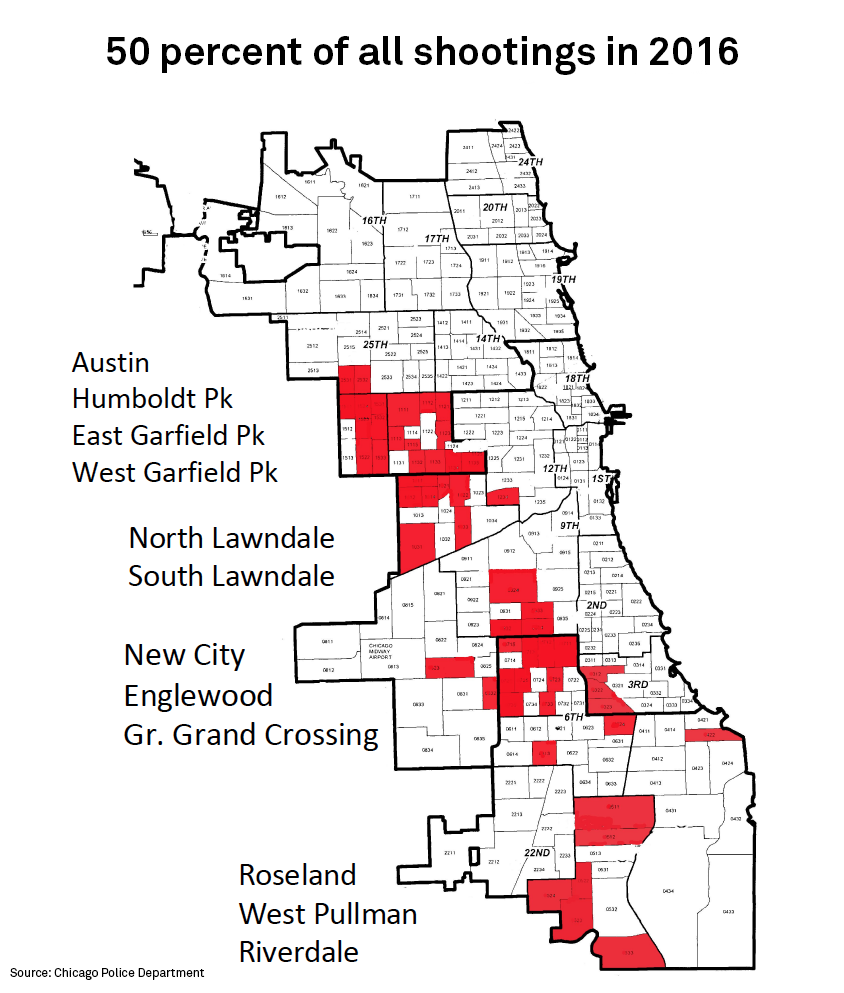
Chicago shootings by neighborhood 2016
Concentrated poverty affects crime victimization, too
(Source: Pattillo et al. 2018)

Helfand spends too much time staging "gotcha" questions for people who provide disaster preparedness equipment and services. (The city now has its own refrigerator truck for corpses, so it no longer will have to use trucks owned by private firms!) Given the accumulated evidence, it's fair to ask why we spend so much on equipment and flood walls to reduce damage from extreme weather, but don't address the poverty and racism that are at the root of disaster mortality ("extreme social fault lines"). I just don't think it's fair to ask people who are immersed in other things. 

16th and Central Park in North Lawndale, 2022
(Google Earth screenshot)

Late in the film we meet Michelle Dauber, author of The Sympathetic State: Disaster Relief and the Origins of the American Welfare State (University of Chicago, 2012), who argues that those impacted by natural disasters are seen as deserving of help, but "our history and tradition" is that the poor do not. She speculates that people with resources can imagine being impacted by a weather event, and want and expect to be protected, but they can't imagine being black or extremely poor. I would add that we know how to build flood walls and levees, and how to mitigate the effects of urban heat islands (Kingson 2024), but even expensive engineering is less complicated than solving racism. So the film shows us the irony of a lavishly-funded tornado response drill amidst the abandoned and derelict buildings of Englewood. (I make the same argument about Bike to Work Week.)

As a social scientist, I would have liked more discussion of the ways in which racism and poverty have informed and been replicated by policy choices, and how those choices have differentially affected people's life prospects. I don't remember them even mentioning the Interstate Highway System, or antiblack riots, of which Tulsa's is the best known but Chicago had one, too, two years earlier, in 1919.

Houses and shops that got bulldozed for the Dan Ryan Expressway
(my photo at the National Museum of American History, Washington, D.C.)

The coverage in Cooked of how the heat wave played out in poor black neighborhoods is eye-opening and shocking to the conscience. There's not a lot about what needs to be done about racism and poverty, only that it needs to be done. So it's too easy for a viewer to say, well, I'm not racist, so what can I do? Many people know about slavery (which ended in 1865), and Southern Jim Crow laws, but it's less widely known how racial preference has pervaded American society since then, and even racial preferences that have ended (like in housing) have persistent effects. One of the things that keeps your humble blogger humble is that as a white person born to a middle class family in suburbs that were long closed to nonwhites, he has had opportunities that others have not had.

Undoing those advantages is not going to be easy. I think part of it is going to be to create a broader social safety net, so that social goods are not zerosum i.e. the perception that any remedial gains made by blacks are going to come at the expense of whites. Neoconservative economic policy and loose inheritance taxes have been good for a few but have created vulnerability for the many--of all races--that has constrained social justice (and made a lot of young people cynical about capitalism in general) while limiting opportunities for anyone not a "knowledge worker." Most people who oppose housing integration are worried about their property values, which comprise the larger part of their life savings.

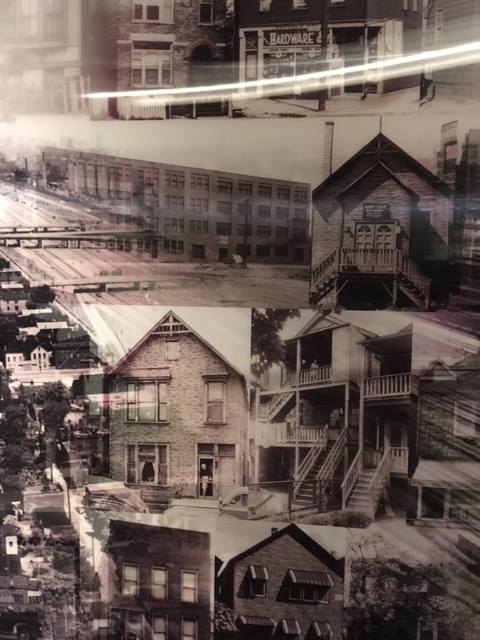
row of rooming houses
Poverty is complex: housing matters, but so do transportation
 and connections to opportunities

If we can tamp down the widespread and mostly accurate feeling that if you fall no one is going to be there to catch you, then we can move on to undoing the effects the policies that have favored white people for years, which means... reparations. We need some intelligent, inclusive way of compensating for years of thwarted opportunities.

Short of that, and I admit these goals seem overly ambitious these days, we need to make policy with more attention to second-order consequences, specifically how it will affect poor and other vulnerable populations. The good news is the double-win of addressing poverty and racism means, not only we do right by the ideals we profess like equal justice and opportunity, but also, everyone is better off. Pete Saunders, whom I quote at every opportunity, argues on his Substack (as well as in Crain's Chicago Business) that "inequality is inefficiency," and "the industrial cities of the north have long been hamstrung economically by the most intense racial divides in the country," in part because "white Northern community leaders aggressively worked to keep the races apart."

If we can make inclusive opportunity the focus of broad public policy, we make a lot of social goals achievable. Helfand's documentary vividly shows the awful human consequences of not doing that.

SEE ALSO: 

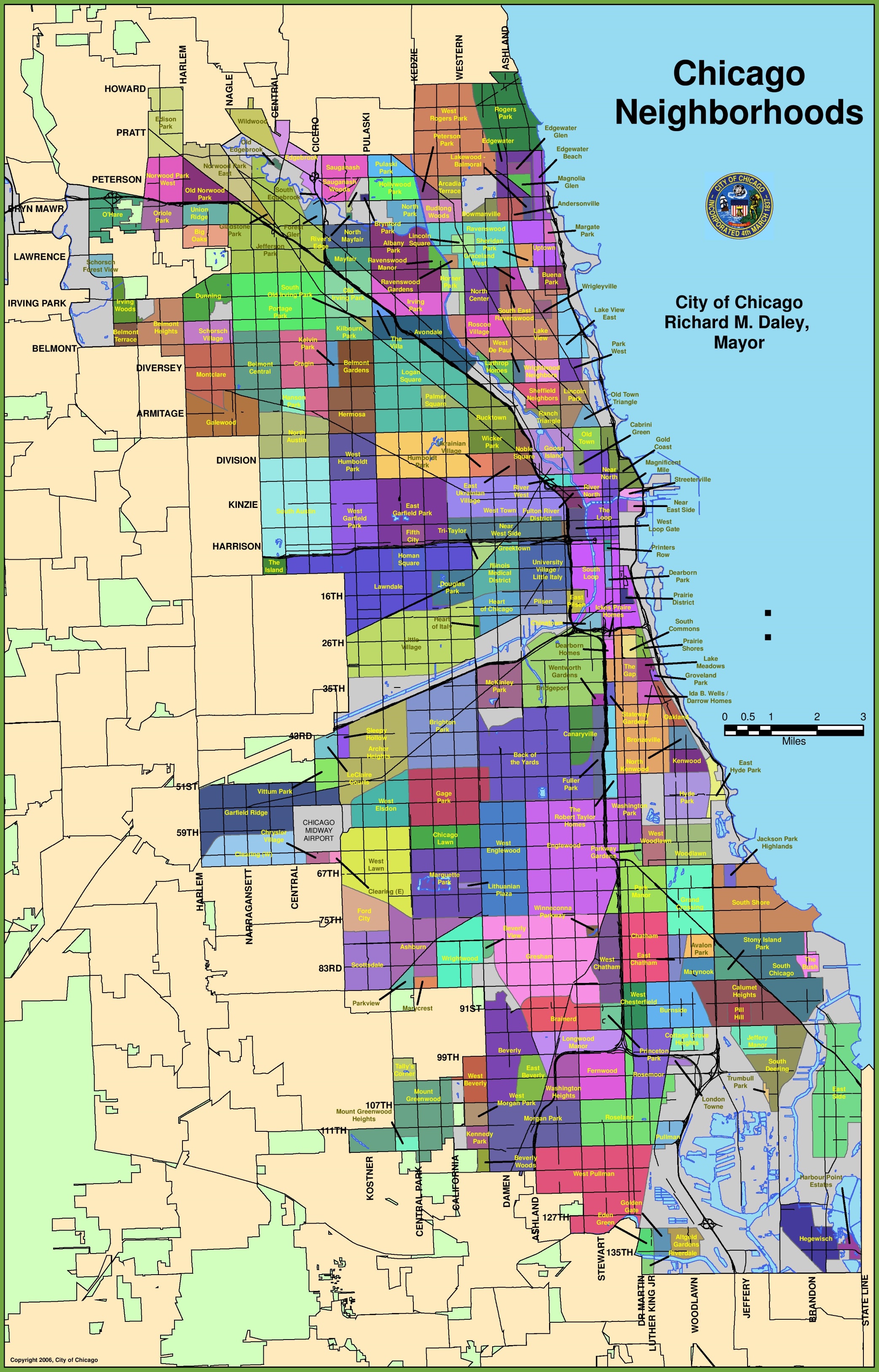
"Map of Chicago Neighborhoods," map-of-chicago-neighborhoods.jpg (2086×3255) (ontheworldmap.com)

For the role of large retailers in concentrated poverty, see Susan Holmberg, Power Play: How Monopolies Leverage Systemic Racism to Dominate Markets, and What We Can Do to Democratize Economic Power (Institute for Local Self-Reliance, 2024). Maybe we should start by vigorously pursuing anti-trust enforcement, instead of dismantling the regulatory apparatus. In the meantime, communities are often at the mercy of megaretailers, megabanks, and megawaste disposal firms. A video presentation by Holmberg is available here.

For efforts at inclusive investing, see Lynne Richardson and Tracy Hadden Loh, "Helping Community Leaders Buy Back the Block," Brookings, 11 July 2024. "Redefine what kinds of projects are considered good when evaluating impact and return on investment. If a small project brings new and/or additional needed goods, services, and amenities to a community and performs financially to be sufficiently profitable and self-sustaining, that is good. If such a project is led or owned by a local resident or a person of color (inclusive economic development) and is not extractive (as opposed to businesses offering check cashing or furniture rental at predatory rates) and is not detrimental to residents’ life expectancy, that is even better. If such a project checks all of these boxes and is also desired by residents, that is the Holy Grail."

Sunday, November 20, 2022

CURL at 25


academic buildings, sidewalk, lawn
Cuneo Hall (swiped from luc.edu)

Three alumni from the Center for Urban Research and Learning shared recollections and advice via Zoom last week. The Center is located at Loyola University on the north side of Chicago, and recently celebrated its 25th anniversary, having been founded in 1996. From the beginning its focus has been on seeking knowledge that is practical and helpful. The Center funds faculty and student research that is "action-oriented," with "linkage with Chicago communities" is at the core of its activity. Its mission statement states the goal of developing "innovative solutions that promote equity and opportunity in communities throughout the Chicago metropolitan region and beyond." 

woman in classroom speaking from notes
Ellen Shephard at CURL in 2016

I first encountered the Center's Friday Morning Seminars in the fall of 2016, when I was searching for some gathering in the Chicago area that would support my study of cities. I saw Ellen Shephard of Community Allies speak memorably on the economic contributions of local businesses; I still refer to the notes I took that day. Subsequently I attended talks by graduate student Bill Byrnes in 2017 on law enforcement and the black middle class, alumna Dr. Sophia Rodriguez of the University of Maryland in 2018 on the role of public libraries in orienting recent immigrants, and Jennifer Axelrod of the Chicago Community Trust in 2019 on philanthropic efforts to address the racial wealth gap. 

Then came the coronavirus pandemic, which kept me away for two years When I returned this year, I saw that things weren't quite back to normal; most people including the presenters were on Zoom, while I shared the seminar room with the two people who were producing the Zoomcast. Oh well. Maybe next year, we will all be in person, and can enjoy one of those marvelous spreads virtually everybody on the panel remembered from past CURL events.

Zoom screen with faces

Sophia Rodriguez, who received her Ph.D. from Loyola in 2014, recalled that once she got connected to CURL, "things seemed more real there" than in her graduate department where she felt herself losing touch with the education communities where she had worked and which she was now studying. The "ethical community-based work" of the Center spoke to her, so in addition to her graduate assistantship she worked on a CURL project bringing organizational leaders together around early childhood education policy proposals.

Asma Ali, specialist master at a major consulting firm--supposed to be unnamed but pretty quickly revealed to be Deloitte Touche--noted the variety of projects in which she was involved with CURL, in contrast to the focused specialization of the Ph.D. program. She commended CURL's founding attention to cultural responsiveness. "The stop-and-listen part is getting more attention" from programs today, she noted, but "CURL was doing it 20 years ago." Talking and listening to under-represented communities is not "just a soft skill that anybody can pick up." CURL not only taught her how to do that, but inspired her to push for it in her various jobs since.

Amy Kerr, director of evaluation at the for-profit consulting firm Professional Data Analysts, agreed that "learning to build trust" is essential to the work of CURL. She advised current students to "think about what you want your life to look like" after graduation.  She said she had always admired top university researchers, but knew she could not be "a happy human being" in such a job. She advised students to stay open and keep learning on the job, but also to keep asking whether they were where they wanted to be and whether their life looked like they wanted it to look. "Are you living your values day-to-day?" 

The emphasis on the values that infused the work of the Center and its fellows came up again and again on the panel--quite a contrast to the phrase "value-free" which was all in vogue when I was in graduate school. In this way they are not just "contributing to understanding," the felicitous phrase used by my graduate adviser, but they contribute continuously to the possibility of common life.

The panel was moderated by Teresa Naumann, operations manager and senior researcher at the Center.

lake with rocky shore
Loyola University is located right by Lake Michigan,
as in right by.

Wednesday, November 6, 2019

Philanthropy vs. the racial wealth gap in Chicago


Can philanthropic giving be focused to combat the racial wealth gap? The Chicago Community Trust, at 104 years old the 4th oldest community foundation around, is going to try. Jennifer Axelrod of the Trust's new learning and impact division presented a sneak preview last week at Loyola University's Center for Urban Research and Learning.
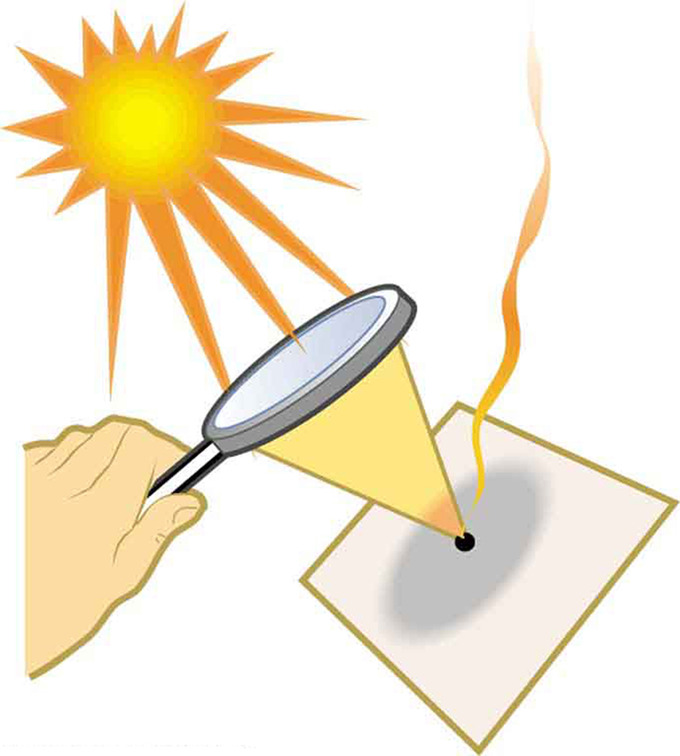
See the source image
Source: Lumen Learning

The Trust recently adopted a new vision statement pointing towards "a thriving, equitable and connected Chicago region where people of all races, places and identities have the opportunity to reach their potential." While they work with a variety of donors and causes, Axelrod says they hope to "draw them towards" addressing the racial wealth gap, because it is at the root of so many of the social ills they combat.

Race by census tract, Chicago (Source; Folded Map Project)
Axelrod cited a 2017 study by the Metropolitan Planning Council concluding that Chicago's economic growth would be 2.5 percentage points higher if the metropolitan area were less segregated. Nationally, median family wealth for whites is ten times that of blacks, eight times that of Latinx; according to the Federal Reserve Board whites held 89 percent of the $87 trillion of wealth in the United States, compared to 3 percent each for blacks and Latinx. [I know it's greater than that in Washington, D.C., and probably is less here in Iowa, where we have lower incidence of great wealth.] There were a lot of data to show the connection between the racial wealth gap and myriad social problems:
  • liquid asset poverty: 65 percent of black and Latinx Chicagoans are "living on the financial edge" i.e. would be below the poverty line if they lost three months' income, compared to 28 percent of whites
  • Chicago people of color live in communities where more than 50 percent of debt is delinquent, 40 percent of loans are subprime, and 20 percent are unbanked. They are thus at the mercy of payday lenders, who charge average annual interest rates of 404 percent.
  • people of color lag far behind whites on all kinds of assets, particularly homeownership, which is the most common source of individual wealth. 35 percent of black and 43 percent of Latinx Chicagoans own their own homes, compared to 54 percent of whites. Much of this is due to the legacy of contract buying in Chicago decades ago, which disproportionately affected blacks; because contract borrowers lose their entire equity when they miss a payment, this arrangement cost blacks as much as $4 billion in assets.
  • people of color have differential health outcomes, too, particularly infant and breast cancer mortality
Audience members added different parent-teacher interactions, food deserts (even comparing different stores in the same chain), school quality, access to public transit, and greater police presence. One community member plugged the Folded Map Project, where residents try to meet those with similar coordinates--in his case, 4900 N/S 9000 W--on opposite sides of the city.

Jennifer Axelrod and Dan Tollefson talk to audience members after the presentation
The racial wealth gap originated in slavery, of course, but as horrible as that was, it has been exacerbated over the years by Jim Crow laws, redlining and exclusion from housing programs, and the decline of labor wages. Today, an American child's life prospects are heavily determined by the circumstances into which they are born, and to the extent that people of color are identified in the public mind with poverty and crime, the racial wealth gap gets replicated for each new generation. The case for reparations may rest on the history of slavery (Myers 2019), but the urgency rests in injustices since then, and the inequalities they have perpetuated.

The CCT plans "to engage donors more thoughtfully," with the intent of addressing critical needs (services as well as long-term systemic change), building coalitions and networks, and promoting community driven investment. Those are ambitious goals, as much at the engagement stage as at the more outcomes-based stages. (Are donors ready to be talked into this?) There is the ever-present danger of unintended consequences, such as when better transportation services facilitates displacement by gentrification. But if ten years from now they have helped achieve "real integration," however incrementally, they'll have made yeomanlike contribution towards our common life.


Thursday, December 29, 2016

What the hell, Chicago?

Source: Chicago Tribune
(12/29/2016) Eleven people were shot to death in Chicago over Christmas weekend, bringing the total number of murders in the city in 2016 to over 750 (Bosman and Smith). It has been a distressing year, to say the least, in the Midwest's largest city, and it casts doubt on the whole urbanist project.

The murder epidemic comes after a 25 year decline in violent crime in the United States, including in the State of Illinois, where the rate per 100,000 population dropped from 1039 in 1991 to 370 in 2014. Nationally, violent crime in 2014 was 51.3 percent of the 1990 rate (Source: FBI Uniform Crime Reports, aggregated at disastercenter.com). As I wrote in August, there are at least 11 explanations for this decline, which is too many to be encouraging, particularly when crime comes roaring back as it has in Chicago this year. And if that's not enough to worry about, consider this: the number of people shot in Chicago in 2016 exceeds 3,500 (Bosman and Smith again). Were it not for advances in medical science the number of deaths by murder would be much higher, wouldn't it?

Confoundingly, but happily for the rest of America, Chicago's year has not been replicated across the country, and indeed most of the homicides have occurred on the South and West sides. The Times article notes that neither Los Angeles nor New York has had anything like Chicago's experience; in fact Chicago's 2016 total exceeds those of the two larger cities combined. Smaller cities, too, have had widely varying experiences. So, what is going on? And what can be done?

Arthur Lurigio of Loyola University, cited in the Times article, suggests Chicago's suffers from a combination of easily available guns, persistent poverty, and escalating gang violence exacerbated by social media. One of my students who grew up on the South Side has written feelingly of how his neighborhood became increasingly unsafe beginning around 2006, when he would have been eight; his conversations with law enforcement suggest that a mid-decade scrambling of public housing residents put members of rival gangs in close and dangerous proximity to each other. Meanwhile, the police feel hamstrung by politicians critical of police shootings of black youth.

Chicago's experience is of national interest, because when a lot of people hear "urban" the image they get is not walkable, sociable neighborhoods with opportunity for all--or the commercial meccas of Michigan Avenue and New Bohemia--but the image of crime-infested, dirty streets filled with drug addicts. Whether the issue is sidewalks or affordable housing, design form or corner stores, at the root of pushback is: Don't bring the city to my neighborhood. Because we know what cities are like! (See above.) I can relate to this, having spent an embarrassing proportion of my suburban youth scared to death of Chicago. And, frankly, if there are going to be 750 murders somewhere, I'd rather it not be in my neighborhood.

But the deadly ghettos of Chicago are not examples of urbanism; their people are suffering from the lack of it. The poor areas of America's inner cities and first-ring suburbs are the flip side of the suburban development pattern that created well-off areas on the metropolitan edge. Those left behind need urbanism as much or more than anyone else.
People struggle, and on top of that, in many instances, people have lost hope in their government. They've lost hope that something is going to change for them. And if we can't keep hope alive, then you don't have to wonder whether things are going to get better or worse: They'll get worse. --ALD. DANNY DAVIS, quoted in Bosman and Smith
Everyone needs access to economic opportunity--a difficulty even for the middle-class in these times, much less for the poor who have been cut off for decades by the suburban development pattern. That means redesigning, or undoing a lot of the design of the last several decades, in order to make our cities more inclusive. That means, in part, breaking down barriers and encouraging more spontaneous interaction. There are dangerous people out there, and they should be in jail, but even justifiable fear does not justify cutting off huge chunks of the population. And then blaming them when they don't prosper.

Investment in our cities is fine, but must be aimed at ensuring opportunity for all. Which brings us to the the interesting case of City Center DC...
Source: citycenterdc.com 
...a development in downtown Washington with high-end shopping, fancy restaurants and super-luxury condominiums. Backers of the project point to the flow of tax revenue to the city from sales and rents; apparently at these prices it doesn't take many of either to generate some nice cash flow. But, as a discussion last week on WAMU's "Kojo Nnamdi Show" pointed up, the area has not seen the foot traffic you'd expect from a successful retail area. But more popular stores would not be "driving value upstairs," because condo buyers would rather live above Louis Vuitton than above McDonald's or Wal-Mart. All this proves, I guess, is that a lot of people don't want to live around a lot of other people, and some are able to pay handsomely for the privilege. I hope they're paying very handsomely, enough for Washington to upgrade its education, transportation, small business resources and social services.

But CityCenterDC is not a model for urban development. It's another example of what Michael Mehaffy (cited below) calls the "trickle-down" approach to development--"concentrating attention at the top and in the core, in the hopes that it will 'trickle down' to all"--albeit CityCenterDC was financed by a Qatari sovereign wealth fund rather than the local government itself. He calls, in the spirit of Jane Jacobs, for cities to shun quick fixes and instead
to diversify geographically and in other ways--to move into a system of polycentric complete neighborhoods, and find ways to catalyze more beneficial growth there... In addition, diversity in types, ages and conditions of buildings is also important to maintain diversity in populations and incomes.... Furthermore, while public investment is still important under this approach, it is not used as a way to "socially engineer" problems like affordability through direct expenditures, but rather, it is a catalyst for an alternative kind of pervasive growth that is more beneficial. This is an approach that treats the city as an organic whole, rather than a top-down money-making machine that can be tinkered with at will. (non-italics mine)
I'll admit to being often the pessimistic voice in the crowd, but I think, in spite of such Chicago-specific factors in this year's upsurge in homicides, that Chicago is probably just the first sign of fraying in our national fabric. President-elect Trump's bluster notwithstanding, we can't shoot our way out of this mess. Nor, the urbanists argue, can we blast our way out through big civic projects, no matter how many jobs they allegedly create. The only way out is by making great places by solving the puzzles of economic opportunity and inclusion. Maybe we could start with ice cream?

SOURCES

Julie Bosman and Mitch Smith, "Chicago Tallies Grim Accounts of Violent Year," New York Times, 29 December 2016, A1, A13

Michael Mehaffy, "A Tale of Two Futures," Public Square: A CNU Journal, 15 December 2016

Jonathan O'Connell, "D.C. Got Everything It Wanted Out of CityCenterDC--Except the Crowds," Washington Post Magazine, 8 December 2016

Pete Saunders, "Something Amiss in Chicago," Corner Side Yard, 1 April 2016

City Center DC is located on H Street NW between 9th and 11th Streets.

Sunday, July 12, 2015

Chicago: Bloomingdale Trail and Bucktown


This week marks the first "monthiversary" of Chicago's Bloomingdale Trail, also known as the 606, which opened with great fanfare and no coincidence on June 6. It's a high-trestle trail, constructed along abandoned railroad tracks, running east-west for 2.7 miles on the west side of Chicago. As can be seen on this map, it runs alongside Bloomingdale Avenue (1800 N)--hence the name--between Ashland (1600 W) and Ridgeway (3750 W) Avenues. No doubt it was inspired by New York's High-Line Trail. 80,000 people live within ten minutes' walk from the trail.

We walked on the morning of what would become a hot, humid Monday. The trail was well-used by people of all ages and physical conditions--mostly pedestrians, with some cyclists. My friend Mary Scott-Boria, who lives nearby and is a tireless evangelist for the trail who has been on it at least four days a week since it opened, reports it gets more crowded towards mid-day and stays so well into the evening. Use is particularly heavy on weekends. The trail seems mainly oriented to recreation, but it would give someone in Humboldt Park or Logan Square at least a start on their commute downtown.

The trail is nicely landscaped, with inviting entrances (here, at Milwaukee Avenue near the CTA blue line) :

...and this stylin' bridge over Milwaukee Avenue:

A more basic entrance, but handicapped-accessible, at Damen Avenue:

Maps are posted along the trail near major streets:

The east end of the trail is flanked mainly by condominiums...

...and (here) artists' lofts; about Rockwell Avenue the built environment switches abruptly to houses.

The trail seems to have stimulated development, or at least the search for synergy. If you lived here, you'd be home now:

There's a nice overlook of Humboldt Boulevard (the large Humboldt Park is two blocks south of the trail).

A number of public and private schools are convenient to the trail...

...and indeed we met a group from a summer school program on their way to the park for some fishing:

At the west end of the trail, near its terminus at Lawndale Avenue, there is a sort of curlicue track around a hill, which makes for an elaborate turn-around if trail users so choose.


Along with construction of the trail, four new neighborhood parks are being developed at street level. This is the play space at the enlarged Kimball Park:

Trees and shrubs are being planted along the trail--we saw numerous park district employees at work on various projects. This is clearly a project in which the City of Chicago is heavily invested, but I expect the amount of effort needed to keep the plantings watered and weeded is not sustainable by the city alone. The 606 website is soliciting donations through the Trust for Public Land; perhaps local outdoor organizations could also contribute volunteer efforts.

The trail begins at Ashland Avenue in the Bucktown neighborhood; west of Western Avenue it runs along the boundary between Humboldt Park and Logan Square. According to entries in the encyclopedic Chicago Neighborhoods and Suburbs: A Historical Guide, edited by historian Ann Durkin Keating of the esteemed North Central College:
  • Bucktown is believed to be named for goats that used to graze there in the 19th century. It was annexed to the city in 1863. After that it was a Polish working-class neighborhood, and now is gentrifying (Essig 117). Parts of this area are also considered parts of Logan Square, West Town and Wicker Park. For example, both Bucktown and Wicker Park lie between Ashland and Western Avenues. Wicker Park extends from Bloomingdale south to Division; Bucktown extends from North north to Fullerton. All of these areas south of Bloomingdale are within the official boundaries of West Town (Essig 117, Essig 301, Best 307). One's best approach as an Iowan is to smile and nod knowingly. I guess this is why we need banners.
  • Humboldt Park has been part of Chicago since 1869, and is named for the 207-acre flagship park, which in turn was named for Prussian naturalist Alexander von Humboldt (1769-1859). Then it was ethnically dominated by Danes, Germans and Norwegians; today it is primarily Dominican, Mexican and Puerto Rican, as well as African-American. In contrast to the condos of Bucktown, Humboldt Park is mostly small, single-family homes (Badillo 174-175).
  • Logan Square is more upscale than Humboldt Park, but also primarily Latino. It was annexed in three stages between 1863 and 1889. Milwaukee Avenue was once to be a farm-to-market road. It's a mix of single-family homes and apartments (Patterson 199-200).
The east terminus of the trail is in the clearly-gentrified Bucktown neighborhood, convenient to two establishments I'd been advised to check out. Ipsento Coffee, 2035 N. Western Avenue, near the CTA blue line, was named one of the twelve best independent coffeehouses in the U.S. by Culture Trip.

I can't comment on that level of comparison, but I can say the coffee was smooth and delicious, and the interior was cozy.

Decorative shelves built from books, including the autobiography of the notorious Donald Trump, were a quirky and creative touch.
 
Quimby's Bookstore, 1854 W. North Avenue, is near the Damen stop on the blue line.

They stock a variety of offbeat selections, including comics and zines by local authors. 
Quimby's is at press time the only place you can purchase It's Still Happening: A Sequel by Theora Kvitka.

We finished our morning in Bucktown with lunch at Goddess and Grocer, 1649 N. Damen.
 
BACKGROUND MATERIAL: Ann Durkin Keating (ed), Chicago Neighborhoods and Suburbs: A Historical Guide (University of Chicago, 2008). Entries by David A. Badillo ("Humboldt Park"), Wallace Best ("Wicker Park"), Steven Essig ("Bucktown" and "West Town") and Elizabeth A. Patterson ("Logan Square")

The Value of Incidental Contacts

  Incidental contacts can happen on sidewalks, but only if there are people going places Places like the Stroget [in Copenhagen] carry an in...