Showing posts with label public policy. Show all posts

Tuesday, June 16, 2026

What is the future of Iowa's small towns? (II)

extremely attractive young people dancing at a bar
The lives we should all be living:
"Texas Two-Step," a movie on the Hallmark Channel,
offers romance and country music in a small town third place
(swiped from hallmarkchannel.com)

(6/16/2026) In my last post, I noted the reputation of the 1990s TV series Friends has as a contributor to the "back to the city" trend earlier in this century, and wondered not only whether that trend has ebbed, but where today's friends are leading. Hannah Nuss, an entrepreneur and speaker at the recent EntreFest put on by NewBoCo, suggested we might spend some quality time pondering an infamous theme of made-for-TV romance movies: the young woman in the big city returning to her small town roots and finding true love and entrepreneurial happiness.

Hannah Nuss at podium
Hannah Nuss presents at EntreFest
(Outrageous laptop borrowed from Robbie Nesmith)

Nuss, of Denver, Iowa, is founder of a shop and a publishing company, both of which are called Local. She cited small town/rural advantages such as low startup costs, low rents, "super-low" cost of living, neighborly culture, and a small enough population that word of mouth spreads faster. She argues that the death of rural Iowa is a "false narrative people accept," and that "entrepreneurship is here" along with the happy endings of all those romance movies where the heroine chooses love over the big city.

Delaney Howell-Guth by screen and NewBoCo brand
Delaney Howell-Goth on stage at the Englert Theater

Also at EntreFest last week, two other female entrepreneurs from small towns touted advantages for business and economic development. Marketer Delaney Howell-Groth (AgCulture Marketing), who farms with her husband near Rhodes, Iowa, said women entrepreneurs are already active enough to create more than half of all jobs created in small towns. Even more people could be shown the way--or the way back, if they've already left--if there were a supportive entrepreneurial ecosystem providing access to resources, training, and knowledge, which is what the conference she started, She Creates Rural, aims to be.

Stephanie Grutz at the podium
Stephanie Grutz presents at EntreFest

A third business owner, Stephanie Grutz, mostly talked about her personal journey, but has just moved the headquarters of her healthcare businesses from Dubuque to Peosta, in part because she lives there, but also because she wants rural residents to have access to the types of therapies more commonly found in larger cities.

The river that ran through these three presentations was the contrast between an overwhelming big city full of action and people and wealth and the perception (illusion?) of economic opportunity, against a small arena with less wealth and fewer people, but a less frantic pace, and a chance for stable and "deep relationships" with the people you do encounter. A smaller, less crowded stage allows a person to be impactful and known. 

Both the movie plot and the death-of-rural paradigm rely on stereotypes, of course, which however exaggerated also reflect some important truths. Lyz Lenz (2026) sees the same phenomenon at work in the popularity of Ballerina Farm, a Utah farm, store, and social media phenomenon created by Hannah Neeleman, a self-styled "trad wife." Lyz notes that the women interviewed by The New York Times "don't want to be Hannah Neeleman, exactly. What they want is a glimpse at an easier life." She continues:

They all seem very aware of what must go on behind the scenes to raise and school all those children while building a business empire and staying thin and breaking bread. But it's that idea of something simple and easier.... A nice husband, a bit of land, some chickens, and some kids? Isn't that so much easier than this modern world, where you sit at a computer and create value for a company that is actively plotting to sell your flesh to AI?
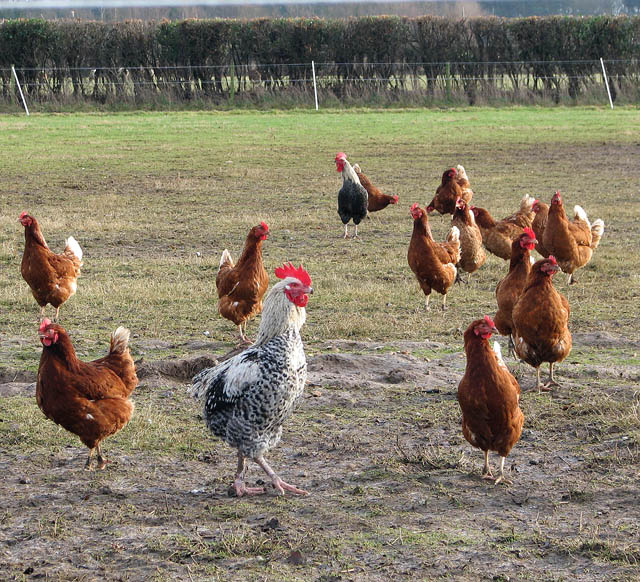
chickens in an open grassy area, bushes in background
Yes, they're cute, but my laptop smells better
© Copyright Evelyn Simak and licensed for reuse under this Creative Commons License.

Of course the trad wives and romance movies are selling fantasy, just like Friends, whose characters had an unbelievable Upper East Side lifestyle considering they worked at a coffeeshop.

If the rural young are hearing messages that they must leave to thrive, as our speakers suggested, those messages are landing for a reason. I'm not from a small town, but I'm from a state where small town representatives have run the government for years. And the messages they are bringing from their towns to the state in legislation and executive action pulsate with resentment. They snarl at immigrants, they snarl at transgendered people, they snarl at people who are concerned about the environment. If you are a young person who is different, or seeks a different truth, or whose mind is not slammed shut, these sorts of messages are not encouraging you to do anything but flee.

Back to reality: In a world with only two alternatives, corporate big city overstimulation or quiet old white small town, choosing either is going to be painful, because you'll be required to give up something you value. But are there really only two alternatives? More Americans live in suburbs than any other type of place. I grew up in the western suburbs of Chicago, with great schools and a big public library. Does no one dream of living in a suburb? When I go back, everything's different and no one knows me. Maybe not.

narrow street lined with shops with apartments above
Prince Street, 2018: Boston's North End neighborhood
is urban without being noisy and frantic

It may be that in the contrast of extremes can be found there's a combination of attributes many Americans desire in their places but have difficulty finding: walkable neighborhoods, deep relationships, a variety of economic opportunities, and a variety of people with interesting perspectives. A few small towns seem to have achieved this, as have a few urban neighborhoods. But the more we as a country rely on cars to get us anywhere, and low prices at big-box stores to get us by, those places will continue to be hard to find, or to build. 

bicycles in rack across the street from commercial buildings
Water Street, 2013: Decorah is small but has 
a great commercial street an easy walk from residential areas

Small towns that can apply urbanism, and celebrate diversity and inclusion, may find themselves the objects of a lot of people's desires. And that, along with the positive examples and mentoring offered by people like our three speakers, would do wonders for their entrepreneurial ecosystems. And "big" cities that create some real neighborhoods will find they too can ride out whatever fantasies the media are selling us, even if their residents aren't handsome cowboys running Christmas tree farms.

SEE ALSO: 

Kiva website for small capital loans

Produce Iowa web site for small town Iowa film makers

ORIGINAL POST: "What is the Future of Iowa's Small Towns?" 3 July 2018

a llama, an alpaca and their human companion
Prairie Patch Farms Llama Experience: 
If you've read this far, you deserve a picture of a llama

Thursday, May 7, 2026

Iowa's Legislative Session Ends, To Everyone's Relief


skeleton in the law library
Some of us have to live with the consequences of
another legislative session

(5/7/2026) Iowa's public approval of President Donald Trump has dipped to 42 percent in 2026, according to the World Population Review; that puts us only slightly above the national average, and in the middle of the pack of states. That's pretty remarkable, given that our politics have flowed bright red since the 2014 cycle. We can't even gerrymander our congressional districts to help Republicans, because they already hold all four U.S. House seats. Yet early polling--which should be read tentatively, as the election of 2026 is six long months away--shows Democrats with a legitimate shot at the governorship, as well as one or more U.S. House seats, and if that's the case, they might capture a house of the state legislature for the first time in over a decade.

That might account for the particular intensity of the legislative session just concluded. Members of the Democratic minority reported a chaotic closing weekend. My senator, Liz Bennett, reported on the final Saturday morning:

In 12 years, this is the worst and most disorganized I've seen the Iowa legislature. Over 24 hours in this building, here overnight, HOURS between votes, and some of the mot important bills haven't even been agreed upon yet. The majority party (who is in control of the entire government) should've adjourned last night, allowed people to rest while their leadership got things together, and called legislators back when they were ready.

Another senator, Art Staed, a member of Corridor Urbanism back in the day, told KCRG-TV:

This Session was under Republican leadership only, Republicans fighting amongst themselves while the rest of the Capitol suffered. Iowans also suffered with very little public input into these final bills.... Drafters were making mistakes which caused delays. I am absolutely certain we will need to correct some of these poorly thought-out bills next Session (which doesn't begin until January 2027). Why on earth were we working on all of those policy bills that late in Session? Should have been focused on the budget and key areas only.

Once legislators were back on the floor, one Republican bill sponsor cited the source of his information as "AI."

Republicans seemed especially eager to consolidate their policy gains and remind their supporters that their hatred for other people remains as unbridled as ever. A more constructive approach might have been to show that they recognize and care about economic, health, and environmental problems affecting the state, especially the parts of the state where their support is strongest. But maybe it's too late for that.

This is what they did this year at the Capitol (more coverage and longer lists at Barton 2026, Opsahl and Draisey 2026):

  • Clear public good 
    • water quality initiatives [definitely a problem, though questions about adequacy and whether a restart is better than pursuing previous policy cf. Dorman 2026]
    • funds for pediatric cancer research, requiring radon mitigation systems in new homes
    • better access to subacute mental health care
  • Helping their friends
    • tax exemption for nuclear power companies
    • shifts money from school districts to charter schools
    • omnibus agriculture bill including tax relief and increased support
    • bans Chinese, Russian, or North Korean ownership of health care facilities
    • looser training requirements for foster parents, regulations on homeschooling
    • allows health care practitioners and organizations to opt out of procedures for reasons of conscience
    • state officials can carry firearms anywhere on Capitol grounds
  • Sticking it to people they don't like
    • "three strikes" minimum sentences for prior criminal offenders
    • forbids local governments from enacting civil rights protections beyond what's in Iowa code, or issuing identification cards, or having revenue growth above 2 percent
    • limits access to abortion drug mifepristone
    • restrictions on WIC and SNAP benefits
    • requiring universities invest in state innovation programs
    • English proficiency required for truck drivers
    • Limits lawsuits against farmers for greenhouse gas emissions
    • removes availability of HPV vaccine to minors without parental approval
    • restricts access to bail

At the end of this session, we're at the same place when I wrote this last year, or when I wrote this in 2019. Iowa faces persistently low economic growth, despite cutting taxes every year. Incidence of cancer is increasing. Population is growing slowly, but in most of the state it's shrinking. Educated young people are leaving the state. Add on global issues like climate change, economic inequality, and control of new technology. Yet year after year, session after session, our Republican-dominated legislature pulls this grandstanding.

Maybe electing some Democrats will focus everyone's minds. Maybe it won't. It could be that, as Jonathan V. Last argues on a national level in The Bulwark this week, American politics has become so "enshittified" that any policy action to improve the "user experience" has become politically impossible.  It could be argued that any party with a 33-17 edge in the state Senate and a 67-33 edge in the state House, 16 years in control of the governorship, along with control of almost every executive position, is doing something right. And yet things don't get better.

NEWS COVERAGE:

Tom Barton, "Five Issues That Defined Iowa's 2026 Legislative Session," Cedar Rapids Gazette, 4 May 2026

Robin Opsahl and Brooklyn Draisey, "The 2026 Legislative Session is Over. Here's What Passed, Failed, and What is Already Iowa Law," News from the States, 4 May 2026

Friday, February 6, 2026

10th anniversary post: Mass Transit


line of passengers waiting to board city bus
boarding the #7 to the southwest side, September 2025

(2/6/2026) My friend Randy turns 65 today, which makes him eligible for a senior pass entitling him to a lifetime of free rides on Cedar Rapids transit. He is an experienced bus rider, but not so much in his only-recently-adopted home of Cedar Rapids, so I wish him well on the adventures ahead of him.

author's bus pass
Sample transit pass. Any resemblance to actual persons,
living or dead, is purely coincidental.

Ten years ago this month, Cedar Rapids transit was going through an intensive self-examination. The Corridor Metropolitan Planning Organization (Corridor MPO) hosted the first of two public open houses at the Ground Transportation Center. We saw pictures of bus shelters, and a demonstration of the new RideCRT app. We saw route maps that showed four of the twelve routes had averaged more than 2500 riders per week over the previous five years; three more averaged 1500-2500 riders per week, with the remaining five coming in under 1500. (The #2 line averaged less than 1000 riders per week.)

My comments back then envisioned a dramatically different system, aimed at increasing ridership within what I imagined was an emerging urban core: shrinking the coverage area to the innermost 25 percent of the city, making routes direct along major thoroughfares, and trying out express routes from downtown to important locations on the periphery. I still think this would be a very good system, but it would be getting far ahead of where the city and its people are right now.
three people discussing mass transit in front of display boards
Transit open house, February 2016

These days, the transit operation is not dramatically different, but continues to try new ways of making optimal use of limited resources. In the last ten years, low-ridership routes 4 and 9 have been eliminated; routes 20 and 30 have been instituted as circulator routes for the adjacent towns of Marion and Hiawatha, respectively; and a truncated route 5 now runs every 15 minutes up and down 1st Avenue East. Some bus stops have been removed in order to speed travel (cf. Vejendla 2026). Weekday service now extends into the evenings, with the last stops made about 8:00 p.m. And the RideCRT app has been replaced by TransLoc, which I confess I'm still getting used to.

[Thanks to data supplied by the Corridor MPO, we can see that ridership in fiscal year 2024 had returned to the 4000+ per day typical of the 2010s. Route #5 leads all with more than 5300 riders per week--good call!--followed by west side Route #8 the only other route topping 2500. Six routes average 1500-2000 per week, two routes and the Marion circulator come in between 1000 and 1500, and the Northeast/Hiawatha circulator has less than 1000.]

So, for Randy, and anyone else of a certain age who's thinking of taking advantage of our city's bus system, here are some pointers from an experienced user:
  • The transit system works best the closer you are to the center of town, specifically the Ground Transportation Center (400 1st Street SE). My house is 1.9 miles away, Randy's is under a mile. It also helps to be close to 1st Avenue East, which sees buses running each way every 15 minutes. Being close by makes connections easier, and missing the bus less costly. Relying on the bus on the periphery is more difficult; the routes (except for #5) are circuitous, routes that far out are widely separated, and missing the bus is catastrophic when it only comes once an hour.
  • The transit system works best when your destination is along the same route on which you start. The attractions of New Bohemia, a little over two miles from my house, are easy to get to on the #2 line. The Oakland Road Hy-Vee is about the same distance in the opposite direction, but would be a long slog on multiple routes. If you're planning to go to multiple places in different parts of town, getting to those places by bus is going to be a time-consuming, logistical challenge.
  • There are some covered bus stops, but not many. The one on C Street in Czech Village has an uncovered bench. The one nearest to my house is just a sign. I hope the adjacent homeowner isn't worried about a weirdo blogger lurking on their sidewalk, and appreciates my efforts to stay off their lawn by the sign until the bus arrives.
  • Bus arrivals are pretty reliable, given they must contend with all the car traffic and stop for trains. I'm getting used to TransLoc, which shows bus locations and estimates when they'll arrive at a given stop. For example, as I write I see the #2 bus which runs by my house has just turned onto Mount Vernon Road at 19th Street. 
TransLoc display showing bus locations

It will be at the stop nearest my house in about 14 minutes.
TransLoc display showing expected bus arrival time

Transit is an app which will allow you to plan your trips, but I find any maps app, like Apple Maps on my iPhone, works just as well.

Apple Maps display showing suggested transit directions

  • All bus routes leave the GTC at 15 minutes past each hour, and they all return at about the top of the next hour, so depending on where you are on the route, you can make a decent ballpark estimate of when the bus will arrive near you. Some routes run more frequently, particularly during peak hours during the school year, but nothing makes me feel like a newb more than anticipating a bus that wasn't going to come.
  • Boarding is pretty uncomplicated, especially if you possess a pass. If you don't, individual rides are $1 (cash only with no change given), and all-day passes $2, so if you're going to ride more than once in a day just ask the driver for a pass. Crowded buses are rare, but they happen, particularly if someone has a wheelchair (takes three seats near the front), a stroller, or a dog. Iowans live in a sparsely populated state--the same population as the City of Chicago, in an area the size of the entire State of Illinois--so are neither used nor inclined to share seats. Even so, riding the bus is way more sociable than solo driving (Ramirez 2026).
  • Buses can accommodate up to two bicycles, which can be handy. I have seen people pop bikes on and off the bus, and have practiced it myself, but have a powerful mental block against doing it in real time.
  • Once you arrive at your destination, thank your driver, and debark. That's it. No searching or paying for a parking space. You've arrived. (Just keep an eye on the time so you don't miss your return trip.)
This is an urbanist blog, and your humble blogger cherishes urbanist dreams of viable, reliable public transit, even in small cities like mine. We could have it, says one study, for less than half of what we spend annually on highways (Brey 2026). Such a "moonshot" may not be the most fiscally sustainable approach (cf. Marohn 2025), but it would surely be an improvement over our current moonshot against immigration (Ray and Sanchez 2026).

ORIGINAL POST: "Mass Transit, Here and There," 17 February 2016

CEDAR RAPIDS CITY BUSES WEBSITE: Bus Routes

Thursday, January 8, 2026

10th anniversary post: What's up in Uptown Marion?


storefronts
7th Avenue storefronts

(1/8/2026) Uptown Marion has been a work in progress for more than a decade, so it was time for another visit. Two things stand out to me:

1. Developments have made good use of historic buildings, and new construction is compatible with the overall feel.

Someone who hasn't been to Marion in 20 years would definitely notice changes, but at the same time the place would feel familiar. Even where I'm not sure the project costs will be returned, like the redone City Square Park, the results are excellent.

vacant commercial building
Former location of Irwin's Clothing, 2016

commercial building with dental office
Restoration Dental, 2026

strip mall parking lot with snow piles
Strip mall, 2021

block-long three story commercial/residential building
Mixed use building, 2026

large church building, corner view
First United Methodist Church, 2016

large church building, front view
condominium project, 2021


park with trees and building
City Square Park, 2016

park with Christmas tree, ice skating loop, building
City Square Park, 2026
entrance to mens restroom
Hooray: it even has restrooms!

2. There are several residential neighborhoods that connect directly to Uptown.

In multiple directions, Uptown businesses are located directly by houses. That means a lot of people can walk easily to Uptown, so the effort required to get people there can be less intense, and parking facilities don't have to be intrusive. 

houses, bank parking lot
12th Street looking north from 9th Avenue
large historic houses
8th Avenue looking east from 13th Street
houses, parked cars, part of a restaurant
8th Street looking south from 6th Avenue
by the West End Diner
(where I had breakfast)

The businesses in Uptown tend towards consumption--there is a lot of hair, and a lot of bars--but the public library is here, too, and schools are nearby, so nearby residents can do a lot without a car. (Truth in blogging disclosure: I personally take what hair I have to Trims salon in Uptown.)

3. Other observations

Public transportation options are not great...

bus shelter with brown canopy
I miss this bus stop: 1100 7th Avenue, pre-2017

...but there is an east-west trail through Uptown that goes a long way in both directions, and soon (this year or early 2027?) the CeMar Trail connection to Cedar Rapids will be complete.

The Art Alley, a concept ten years ago, has been fully realized, and is great.

alley between commercial buildings
Ordinary and unassuming alley, 2016

musicians under tent
Fall: outdoor performance by Red Cedar
alley between commercial buildings, holiday lights
Holiday lights, 2026

First Presbyterian Church has been in Uptown way before it was Uptown. When 140+ years old I am, look this good I will not.

First Presbyterian Church

Uptown is home both to the new public library...
Marion Public Library, 1101 6th Avenue

...and the vacant lot where the old one was:
vacant lot, view of distant buildings
1000 block of 6th Avenue

SEE ALSO:

Tuesday, December 16, 2025

10th anniversary post: Sidewalks

wide sidewalk, Hiawatha City Hall in background
Wide sidewalk on Emmons Street approaching downtown Hiawatha

(12/16/2025) Of my three posts in December 2015, two were on the subject of sidewalks. We must not have had a white Christmas that year, because none of my pictures showed snow, nor did I mention the difficulty of walking in snow and ice. (I've done that elsewhere, though!)

Dan Burden speaking in front of screen showing Blue Zones logo
Dan Burden at CSPS Hall, December 2015

Early in December, Dan Burden, author and Blue Zones director of innovation and inspiration, spoke at CSPS Hall, who praised Cedar Rapids' just-begun sidewalk construction program. Not only do "complete streets" perform better economically, he proclaimed, but sidewalks provide the opportunity for individuals to get exercise and encounter other individuals, which auto travel does not. The key, he stressed, is "completing the system," providing a network of sidewalks that get people to "places to go." In the years since, Cedar Rapids has effectively linked people to parks, stores and schools, albeit some neighborhoods were able to reject new sidewalks, and all the new sidewalks haven't stemmed the outward movement of people and places.

wide sidewalk with tree and bench, next to park
10 foot sidewalk on 3rd Avenue SE
 by Greene Square, December 2015

The city had also begun installing wider sidewalks in high-traffic areas, usually about 10 feet wide, as opposed to the old standard of 4-6 feet. I surveyed a number of sidewalks in the core, as well as a number of urbanists commending the use of wider sidewalks. The Change Lab Solutions guidebook Move This Way: Making Neighborhoods More Walkable and Bikeable (n.d.: 48) noted Generally, two couples or two wheelchairs should be able to pass each other comfortably on a sidewalk, which requires about 10 to 12 feet across.... Ideally, sidewalks should also be wide enough to allow benches for older adults and families to stop and rest or relax. 

wide sidewalk in front of Brewhemia coffee shop
Very wide sidewalk in New Bohemia, November 2025

The Cedar Rapids zoning code requires sidewalks in all new developments, but without respect to width except the usable part of the sidewalk must be not "less than five feet wide" (2024: 154). 

Wide sidewalks are becoming more common, in some cases accommodating bicycle traffic as well. My perception is that the metro's initial forays into bike lanes in the 2010s has been mostly replaced by wide sidewalks. This can create confusion about whether bicycles are supposed to go, as on the Grant Wood Trail where it runs along 6th Avenue in downtown Marion:
wide sidewalk, with instructions for cyclists to move to the street
bicycles will please divert: 1300 block of 6th Avenue, Marion

Having been surprised by a cyclist as I stepped out of the Marion Public Library, I applaud the intent anyhow.

When a planned shared path connecting to Washington High School raised concerns among elderly residents of Cottage Grove Place, the bike and pedestrian parts were separated in 2021.
sidewalk divides into bike and pedestrian lanes
sidewalk divides across from Washington High School
(Google Earth screenshot)

Sometimes there is signage that indicates... an aspiration to being a shared use path?

narrow sidewalk with "Bikeway Narrows" sign. It isn't a bikeway, and it's already narrow.
This is not a bikeway, and it doesn't narrow

(The cognoscenti will recognize this as Emmons Street west of I-380, about a quarter mile west along the same sidewalk as the picture at the top of this post. They will also know that the Linn County Trails Association, as per the latest Trail Connections, is raising $100,000 towards an improved bridge to get Hiawathans to the Cedar Valley Nature Trail.)

Even that sidewalk is better than no sidewalk, however, which is the problem with Boyson Road in Hiawatha near the Cedar Valley Nature Trail, and more curiously, the north side of Twixt Town Road in Mairon where riders board the Marion Circulator (the far side of the street in this picture).
buses and passengers at transfer station with sidewalk on the near side but not the far side
bus transfer station, Twixt Town Road

And, since we've had more than 15 inches of snow since Thanksgiving, it's worth adding that any sidewalk is only as wide as it's plowed.
sidewalk with snow encroaching

In this picture: it appears the sidewalk was cleared before the street was plowed. 

sidewalk covered in snowplow debris

Part of the problem is the proximity of the sidewalk to the street (which puts pedestrians right next to traffic even in fair weather). In any case, don't attempt this stretch in a wheelchair or with a stroller!

Tuesday, December 2, 2025

I Wish This Parking Was... (II)


200 block of Johnson Ave NW
"T3": 200 block of Johnson Av NW (Google Earth screenshot)

(12/2/2025) Work continues apace on Cedar Rapids' casino, due to open at the end of this month. In time, when it is a fabulous success and we are all rolling in prosperity, you can tell me how dumb I was back in 2025 for my negative outlook.

There are three reasons to oppose casinos. The first two relate to the morality of gambling and the class distribution of gambling losses (which fall much more on the poor). There are also doubts, given the rise of Internet gambling, whether brick and mortar gambling still has a future. I'll take all those as read, but my specific complaint about this casino has to do with its use of land. We are taking several blocks close to the center of the city, which should be used for more intense development, and using it for what is ultra-suburban development.
casino under construction
Casino, under construction, F Avenue view

Andres Duany, one of the earliest new urbanists, described traditional development patterns as a transect that gradually tapered from the most intensive development at the urban core ("T6") to agricultural ("T2") and natural ("T1") areas at the edge of town. (See the discussion at Steuteville 2017, as well as Andres Duany, Jeff Speck and Mike Lydon. The Smart Growth Manual [McGraw Hill, 2010], 1.4) 

This ordering is "useful" (Steuteville's word), because it preserves space in urbanist design for nature and agriculture, enables people not to be completely dependent on cars, provides a unified concept of development, and allows that development to proceed in harmony with surrounding areas. 
future parking lot
Future casino parking. I-380 in background

Development according to the transect is more inclusive by centering economic opportunity on the urban core. Kevin Klinkenberg (2015) wrote about why urbanism matters most in urban cores: If we truly care about the less fortunate in society, we would want them in places of maximum opportunity for access to jobs at low cost--not scattered about in suburbia. Less need to drive, and more green space at the edge of town, is also better for the natural environment on which we all depend. And making intense use of the most valuable land is better for city finances.
casino under construction
Casino construction, from 1st Street NW

Cedar Rapids, like most towns, was built according to the transect long before Duany coined the term. Downtown looks like "T6" and the core neighborhoods look like "T3." The problem is that, in the decades since the town was built, the area around town that was once "T4" and "T5" was gutted and remains a doughnut of emptiness. Instead of small but intense development that could provide customers and clients for downtown businesses as well as property tax revenue for the city, we have what we have, making for a car-dependent city and lots of complaints about parking.
future parking lot, interstate in background
Future casino parking

City officials are enthused about the advent of the casino--scheduled to open 12/31/2026--because they know the political value of a flashy project that gets a lot of attention and promises fun for all. But I wish the casino campus, parking lots and all, would look more like the stretch of Johnson Avenue pictured above, which I called in 2022 one of my favorite streets in the city.  The nine blocks of this project could be a neighborhood with workers and shoppers for downtown as well as neighborhood businesses, and students for nearby schools if we ever decide to build schools near the center of town again (another sore subject, for another day). The tax value of an individual property would be small, but collectively they would likely provide more city revenue than the casino will.

If one of the residents meets with misfortune, the neighborhood will survive, and the house will survive under new ownership. If the casino fails, I think we're looking at a big box with a long term vacancy.

If we must have a casino, put it out on Route 100.
casino from across the street
One last look, from the trail along the Cedar River

SEE ALSO

"I Wish This Parking Was...," 27 November 2020

"Cedar Rapids' Big Bets," 17 January 2025

10th Anniversary Post: Linn County's First Bicycle Boulevard

  Marion portion of Linn County Trails and Bikeways Map (downloaded from linncountytrails.org) (8/18/2026)  Linn County's first designat...