Showing posts with label Donald Trump. Show all posts

Thursday, September 17, 2026

Donald Trump and the Future of the Presidency

Donald Trump at White House desk with 'Trump 2028' hats displayed
President Donald Trump (Wikimedia commons)

(9/17/2026) On September 24 I will present the concluding lecture in a four-part series on "The History of the Presidency" at Coe College. The history ones were easy, because "hindsight is 20/20."  The present and future of the presidency are complicated, so the concluding talk needs some sorting out, which I will try your patience by attempting to do here.

Donald Trump turned 80 this summer, and given his age, physical condition, and public approval in the mid-to-upper 30s, his time in the White House is likely to be over in a little over two years. Even before then, his influence is likely to diminish. But his impact is likely to be lasting. In terms of our common life, we are likely to be living a long long time with four aspects of his distinctive presidency: checks and balances, corruption of the economy, threats to free elections, and world politics. None of these challenges originated with Trump's presidency, but with his approach they have exploded in magnitude. It's the difference between having a leaky roof over your house, and having no roof at all. (This is not to overlook his policies, his manner of expression, and his ghastly taste in decorating, just to say those will be easier to overcome.) 

I. Checks and Balances
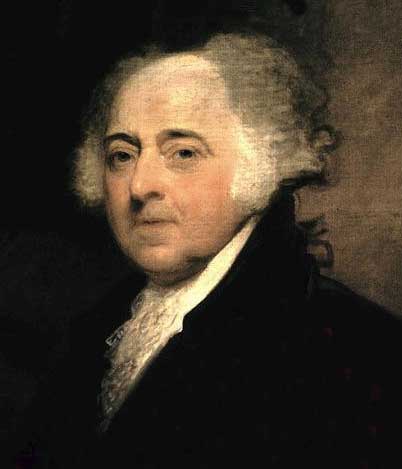
John Adams
"Checks and balances, Jefferson... are our only security"--
JOHN ADAMS

How did we get here? Checks and balances were under pressure before Donald Trump was even born. The Framers of the U.S. Constitution devised these mechanisms to ensure accountability in the national government, presuming that each branch would have the incentive to oversee the others in order to protect its own powers. With the modern presidency, however, a variety of factors have driven the presidency to the center of the national government, and partisan legislators have increasingly seen their fates bound up with that of their party's Presidents. 

What has Trump done? Under Trump, though, the challenges to checks and balances have expanded as ideological allies have seen unilateral presidential action as the fastest way to get what they want. On Trump's authority alone, the American security state has focused on immigrants, violently occupying cities and acting as a secret police force seizing people off streets, at airports, at hospitals, and even at immigration centers. Thousands, including some American citizens, have been imprisoned in squalid conditions and/or deported to countries like El Salvador and Liberia that are not their countries of origin, but that have agreed to cooperate with the Trump administration (Putsch and Seagbeh 2026). An executive order redefining citizenship contrary to the 14th Amendment was at least struck down by the Supreme Court in Trump v. Barbara. Similar brutal displays of executive authority have been used on tariffs, as well as governmental reform via the Department of Governmental Efficiency (DOGE, Sollenberger and Rozell 2026). 

In order to prevent reviews of his actions, Trump has decimated safety mechanisms within the executive branch. In his first week in office, he fired 13 inspectors general, the departmental officers in charge of internal oversight (Haberman, Savage and Karni 2025; Broadwater 2026). He also fired the judge advocates general in each of the military branches (MLT staff 2025), the entire Foreign Influence Task force in the FBI (Penn 2026), the Director of Governmental Ethics, the head of the National Archives and Records Administration, the head of the Office of Special Counsel, and 34 of 36 members of the Public Integrity section within the Department of Justice. He also fired all Democratic members of several independent regulatory agencies. Whatever the merits of the individuals involved, the systematic nature of these actions is difficult to miss.

Congressional Republicans' incentives have been to protect Trump, not their own prerogatives or good policy, and the Supreme Court has, with some exceptions, by and large upheld Trump's assertions of authority, notably in the Slaughter v. Trump case that expanded presidential authority to fire independent regulators (Jouvenal 2026).

What happens next? It's possible that future Congresses and courts will act to restrain presidents, particularly if they were of the opposite party. (See the Court's striking down Joe Biden's forgiveness of some college student loans.) But for this to stick, there must be some way for future presidents to act in cooperation with Congress and the courts, rather than running into pure partisan opposition.

The bad scenario is that future presidents use Trump's precedents to justify their own unilateral actions, making all presidents into temporary (we hope!) dictators. In that case, it's up to voters to choose presidents as responsibly as possible.

II. Corruption and the Economy
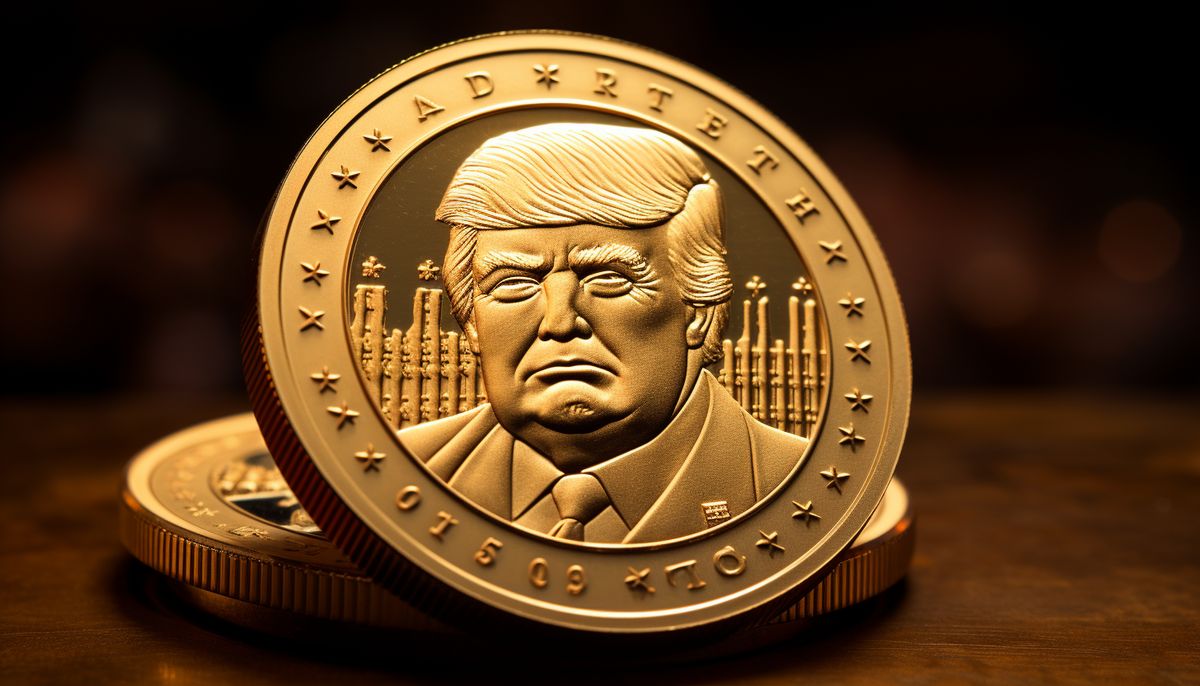
Donald Trump memecoin
Trump memecoin (swiped from cryptonews.com)

How did we get here? Corruption has probably been endemic to governments since humans first formed states, but at least in America, it has never risen to such a level as to distort the economy. If anything, the rise of civil service and the decline of political machines has made American politics increasingly clean. Professional oversight, in secretary of state's offices across the country as well as the Civil Rights Division of the U.S. Department of Justice, have ensured that votes are counted as fairly as humanly possible. Trump's various challenges to 2020 vote counts were swiftly dismissed in court. But his innate sense of grievance was clearly communicated to his supporters as well as opportunistic job-seekers.

What has Trump done? Trump's personal corruption is on a staggering level. For one example, he has reaped more than $1.4 billion since returning to office from cryptocurrency alone--and those are numbers he's copped to on federal forms, so the reality could be even greater. His crypto ventures have been pitched to those seeking influence with the administration, such as the government of the United Arab Emirates, which poured $500 million into Trump's World Liberty Financial Venture (Morse, Allison, and Tran 2026; Yaffe-Bellany and Lipton 2026). The ventures are not good business investments, being structured so that Trump gets his money up front while everyone else takes their chances. Investors had lost $3.81 billion on Trump's meme coin by mid-2026 (Lipton, Fuller and Yaffe-Bellany 2026). Trump has also monetized early access to his statements, which have moved markets, particularly during the Iran war (Uberti 2026).

Trump has returned the financial favors, too, with donors to his campaign, his various projects, and his sons' ventures being rewarded with federal contracts, presidential pardons, eased economic sanctions, and access to top officials (Yourish Vogel and Smart 2025, Halper 2026, Vogel and Aleaziz 2026, Sonne and Lipton 2026, Kaplan Elliott and Mierjeski 2026, Edwards 2026). Transportation companies have prudently sponsored Transportation Secretary Sean Duffy's reality-TV show as well as his son-in-law's campaign for a Wisconsin congressional seat (Hartnett 2026). The Department of the Treasury announced last month that it will eliminate a unit established to track financial misdeeds. Even presidential pardons have been exchanged for favors or political support (Vogel and Craig 2026).

As Trump uses the power of the federal government to reward friends (and punish enemies), it increases the risk that business investment will be driven by what will please the President rather than what will bring a return in the marketplace. At the same time, important government data that investors use has been compromised by Trump's retribution against news that he feels makes him look bad (Grossman 2025, Rampell 2026a). As Trump violates economic rules and norms without facing any consequences, it encourages more such behavior.

What happens next? The best case scenario is that Trump has given corruption a bad name, and that future presidents will be angelic because they fear being compared to Trump. It is possible that Congress will close some loopholes, but I wonder if the lesson of the 1970s reforms post-Watergate is that the law is a clunky instrument where the incentive to self-regarding official behavior is strong enough. The worst case scenario is that the modicum of trust that underlay Western capitalism has been badly damaged, and that prosperity will be more difficult to achieve and particularly to spread, because people will be loath to risk capital when they might be subject to the capricious actions of others.

III. Electoral interference

Bethany Lutheran Church
Bethany Lutheran Church in Cedar Rapids,
where your humble blogger casts his humble votes

How did we get here? Twenty years ago, Republican control of Congress was threatened by the unpopularity of the President. How much that would affect congressional candidates was unknown until Election Day, but there was never any suggestion that Republicans would not honor the result, and their graciousness in defeat was symbolized when Dennis Hastert (R-IL) handed the House Speaker's gavel to Nancy Pelosi (D-CA). 

The historical tendency of leadership selection processes to be corrupted or end in violence was well-known to the American Framers. They would have been aware of two European continent-wide wars, the War of the Spanish Succession (1701-1714) and the War of the Austrian Succession (1740-1748), as well as all the many machinations documented by Niccolo Machiavelli in The Prince. That awareness informed Article II's weird design of presidential elections by an Electoral College, which itself was never to gather in one place. Then when President John Adams lost his bid for reelection in 1800, and voluntarily yielded power to his rival Thomas Jefferson, it was a watershed moment in American history. Even with some of the sketchiest election results--in 1876, and arguably 1960 or 2000--the winner was allowed to govern, and the loser waited for another day. Trump, by contrast, complained about being cheated before votes were even cast in 2016, and has never stopped insisting that he was the rightful winner in 2020 (Zakrzewski 2026).

What has Trump done? Unfortunately, non-stop complaining has been only the beginning of Trump's attacks on electoral democracy. He has actively intervened in the 2026 elections, including calling for states to change congressional district lines, limit voting by mail, and aggressively cull their voter rolls (Marley and Binday 2026, ProPublica 2026, Marley and Sanchez 2026). He has disabled or taken over the Election Assistance Commission as well as election security agencies including the Cybersecurity and Infrastructure Security Agency at Homeland Security, the public corruption team and Foreign Influence Task Force at the FBI, and the Civil Rights division voting team at the Department of Justice (Marley 2026).

This month, it emerged that hundreds of personnel from the Department of Homeland Security have been trolling through state election files, ostensibly in search of illegal voters, often without the state's consent, and always with access to off-limits personal identification data (Corasaniti and Aleaziz 2026). He has raised the possibility of sending Immigration and Customs Enforcement agents to polling places, which at least one Republican candidate (Bobby Charles in Maine) have endorsed. Other candidates, including Rick Jackson in Georgia and Mike Rodgers in Michigan, have called for similar voter intimidation tactics (Hausmann 2026). Even if he is not successful in perverting the outcome, barring a big wave day for Democrats he has cast dangerous doubt on their legitimacy.

What happens next? Trump's claims of electoral fraud in 2020 were all laughed out of court, and none of his emulators have been taken seriously. So far, so good, and maybe that will continue, and the 2026 and 2028 elections will be accomplished with a modicum of fairness. The second-worst case scenario is anything that works in 2026 will be redoubled in 2028, and elections will feature candidates choosing voters--through constant efforts to redistrict, disenfranchise, and make voting more difficult--rather than the other way around. The worst case is that American elections become arenas for displays of raw power--think of what would have happened if J.D. Vance had been Vice President on January 6, 2021--and decreasingly free or fair.

IV. America in the World


George H.W. Bush and Mikhail Gorbachev
The U.S. won the Cold War, and then managed the aftermath
(Wikimedia commons)

How did we get here? America's historic distance from European conflicts--"We go not abroad in search of dragons to destroy," said John Quincy Adams--wobbled by the late 19th century with the temptation to get ourselves an empire like all the cool kids had. Fifty years later, World War II showed clearly isolation was no longer an option, and America suddenly became the leader of the free world. For all our faults and poor decisions, America served as the backbone for world order, macroeconomic stability, and the spread of democratic values.

Trump and the world. It is not clear that President Trump values any of those goals. His language is that of dominance and "winning," so there is a constant concern that our allies are taking advantage of us, and need to be put in their places. Cooperation and multilateral approaches are inherently suspect, while he openly admires autocrats like Xi Jinping, Vladimir Putin, and even Kim Jong Un. Probably the most emblematic picture of this facet of the Trump presidency is when he and Vice President J.D. Vance sat on either side of Ukrainian President Volodomir Zelensky and took turns berating him (neither one making any sense as they did).  

Trump has brandished tariffs as a weapon against trading partners, highlighted by "Liberation Day" on April 2, 2025, and implemented erratically since; talked about annexing Canada and the Danish territory of Greenland; favored politically-connected ambassadors over career diplomats; and captured the Venezuelan leader, installing a puppet regime that made substantial oil concessions to Americans. The Iran war has been an ongoing bizarre spectacle, with unclear objectives and constantly shifting pronouncements during the course of the war.

Trump is not the U.S., but he has made us harder to trust. Now these things are happening, as international actors realize they need to plan for a very different United States:
  • Finland became the tenth European country to join the French Forward (Nuclear) Deterrence program, begun in March 2026 to be an independent alternative to the U.S. (Last 2026)
  • The Netherlands announced it is shifting its gold reserves from America to London, and other countries are considering similar moves. "Trump is erratic and one cannot rule out that someday he will come up with creative ideas how to treat foreign gold reserves," explained Markus Ferber, a member of the European Parliament (Rampell 2026b).
  • Saudi Arabia has been described as stuck between an assertive Iran and a disengaging United States. "In some sense it's their worst-case scenario," said former U.S. ambassador Michael Ratney (Nereim 2026).
  • The European Union has invited Canada to seek "associate member" status. "We must urgently reexamine our partnerships," said leading EU official Ursula von der Leyen (Smialek and Stevis-Gridneff 2026).
What happens next? I'm spitballing here, but there is no one who can fill the world role the United States has played since 1945. China is less principled and more self-serving. The European Union has an inherent collective action problem. Who else ya got? It is difficult to imagine a world without American ballast being other than unstable, more expensive, and more violent.

***

In 2020 and 2021, after Trump lost his bid for reelection, I thought we could quickly return to something like normality. Clearly, I was wrong. I didn't reckon with the pandemic, or the deeply-seated emotions and interests among the general public that gave so much air to Trump's pretensions. Now, even if 2026-2028 go as well as can possibly be expected, I am not nearly as sanguine. The underlying trust in America that made so much of our lifestyles thinkable is shattered, and can't just be snapped back into place. International trading partners, allies, immigrants, domestic political actors, jobseekers, any Americans with life challenges--they have all been bitten not once but twice, they know the MAGA attitudes remain, and that a few votes in a few states could bring it all back. I expect us to be dealing with this mess for the rest of my life.

SEE ALSO:

"The Authoritarians' War on Cities is a War on All of Us," 26 August 2025

"Constitution Day: Whatever Happened to the Separation of Powers?" 17 September 2020

"Priests, Prophets, and the Fourth of July," 3 July 2019

Wednesday, January 28, 2026

Stoning Stephen, again

Stoning of St. Stephen painting
Stoning of St. Stephen, by Paolo Uccello (1397-1475)
(Source: Wikimedia commons)

And Saul approved of their killing him--ACTS 8:1

(1/28/2026) According to the Acts of the Apostles in the New Testament, the first Christian apostle to be killed for his faith was Stephen, "full of grace and power," who "did great wonders and signs among the people" (6:8). Summoned before the council of religious leaders, he has a vision of Jesus in heaven, sitting at the right hand of God, which infuriates them.

But they covered their ears, and with a loud shout all rushed together against him. Then they dragged him out of the city and began to stone him; and the witnesses laid their coats at the foot of a young man named Saul. While they were stoning Stephen, he prayed, "Lord Jesus, receive my spirit." Then he knelt down and cried out in a loud voice, "Lord, do not hold this sin against him." When he had said this, he died. (7:57-60)

I'll leave to others whether Stephen's theology, quoted at length in chapter 7, was on point. As described in Acts, he is inspired and inspiring, and not the least bit shy about appearing in public. The religious leadership sees people like him as a threat to their power, however, and he is killed. Maybe he had a target on him all along, or maybe he just was in the wrong place when they'd had enough of this new preaching, but he was cut down.

Stoning was an official sentence, though the members of the religious court are described as being in a state of rage when they carry it out. But support for this action went beyond the immediately enraged. There was the group of people who threw the rocks, of course, but also a number of "witnesses" mentioned in verse 58. Among the witnesses was Saul, who kept track of the coats. These were they who saw Stephen as a threat, such a threat that he needed killing. Though they did not do the killing, who knows what distorted picture of Stephen they held in their minds that allowed them to justify it? Saul at least accepted some measure of responsibility, as he later recalled: "And while the blood of [Jesus's] witness Stephen was shed, I myself was standing by, approving and keeping the coats of those who killed him" (22:20). After some serious life changes (ch. 9), he became able to see the ministry of Stephen, as well as his own role in Stephen's death, from a different perspective.

Tuesday, August 26, 2025

The authoritarians' war on cities is a war on all of us

row houses, brick sidewalk, and parked cars on city street
Capitol Hill neighborhood, Washington, January 2018

Strongman rule is a fantasy.  Essential to it is the idea that a strongman will be your strongman.  He won't.  In a democracy, elected representatives listen to constituents.  We take this for granted, and imagine that a dictator would owe us something. But the vote you cast for him affirms your irrelevance.  The whole point is that the strongman owes us nothing.  We get abused and we get used to it.--TIMOTHY SNYDER (2025), quoted in Richardson (2025) Emphasis in original.

(8/26/2025) I'm taking the Trump administration's military occupation of Washington, D.C., a lot more personally than I took the occupation of Los Angeles earlier this year, or of Portland, Oregon in his first term. This is only because I lived there for a few months in 2018, not because it's more important. If James Madison (1785) was correct to write "It is proper to take alarm at the first experiment on our liberties," we should be fully alarmed by now at any of these displays of hostile force. It's certainly gone beyond the "experiment" stage.

Trump and his coadjutors like U.S. Attorney Jeannine Pirro have presented a false picture of violent crime in Washington (Qiu 2025). Like most of America, really, Washington has seen dramatic declines in violent crime since a spike in the latter half of the pandemic years (Lopez and Boxerman 2025, Altheimer Douglas and Contreras 2025). The U.S. as a whole is mostly back to the long-term nationwide decline in violent crime that began about 1990. 

The capital city is far from pacific, though, as Washington Post columnist Megan McArdle (2025) notes: "The problem isn’t as big as it was a few years ago, but with crime, as with cancer, 'somewhat less of a problem than it was' is not really very good news." Shadi Hamid (2025) adds:

Homelessness is worse today than before the pandemic. We don’t need data to tell us that. The encampments are impossible not to notice. And though they might not be the end of the world, they make D.C. feel more dystopian than it actually is, creating the sense of a governance vacuum. No one wants to feel that way about their city, least of all when their city happens to be the capital of the richest, most powerful nation in the world.

Still, the homicide rate in June 2025 was lower than that of St. Louis, Missouri; Richmond, Virginia; Memphis, Tennessee; Little Rock, Arkansas; and Atlanta, Georgia, some of whose governors have opportunistically sent National Guard troops to assist the occupation. In 2024 Washington was less violent than Cleveland, Ohio, or New Orleans, Louisiana, two more states with governors who are sending guardsmen to Washington while not deigning to attempt similar tactics at home. I'm calling bullshit. 

Entering downtown Providence:
Mayor Brett Smiley says "I know my colleagues around the country
are very concerned [occupation] could happen to our cities" (Bendavid 2025)

So, what's the emergency? If crime in Washington is an improving though ongoing serious problem, what's left to justify the occupation? Is the real emergency that Trump's public approval is flagging (Pew Center 2025)? Or that people won't stop talking about Trump's association with sex criminal Jeffrey Epstein?

People like my Senator Joni Ernst, who say they want to reign in "out of control" spending, will want to know this occupation is costing us taxpayers upwards of $1 million per day. And today they're picking up trash and spreading mulch--some awfully expensive landscapers!

And now he's got Chicago in his sights (Saunders 2025b, Lamothe 2025). (Saunders links to this Wikipedia page showing Chicago ranking 92nd among U.S. cities in violent crime though as high as 22nd in homicides.)

street scene with coffee shop entrance
Two Shades Cafe in Chicago's Little Italy:
Cities have coffeeshops. We like cities.

If the occupation of D.C. were a serious crime reduction effort, we would have seen some planning that included city officials; a mix of enforcement and prevention methods (Hohmann, McArdle and Mangual 2025); and attention to areas like the Southeast where crime is concentrated. Instead we see prominent appearances in tourist areas like the National Mall, and assaults on food delivery workers (Schulze 2025). Everyday life for residents has been complicated if not outright scary (cf. Lerner 2025, Silverman Benn and Lumpkin 2025). Fox News has some dramatic video for its followers to devour (Wiggins 2025), while normal people doing normal things get pushed around by masked secret police who make no pretense of their political mission (Kabas 2025), and homeless people just get pushed around to different streets (Wild 2025).

It should be noted that National Guard troops are in D.C. to make a show of force, not to actually reduce crime. It’s not an effort to help residents of Southeast D.C., for example, who live with higher rates of violent crime than I, or most readers of this, do. It’s an effort to let people who are fearful of the crime over there that someone’s doing something about it. (Saunders 2025a)
Poster, National Public Housing Museum:
Hating on cities is a way to ignore the legitimate demands of their residents

If we've learned nothing else ten years into Donald Trump's political career, we've learned that:

  1. He has no policy commitments whatsoever, making him unique among American presidents in my lifetime. This lack of interest extends to criminal justice (Green 2025).
  2. He has no vision for America, or if he does it's rooted in gauzy nostalgia for the post-World War II years. He does make exceptions for stuff like meme coins, the sales of which have gotten him richer through an appalling pay-for-access scheme (Sigalos and Collier 2025)
  3. His principal objectives seem to be attention and praise, material wealth, and sexual gratification (though maybe the latter has declined in importance over the years)
  4. Losing face is to be avoided at all costs. This leads to false statements on a regular basis, sometimes on the most trivial matters, retribution against anyone who questions him, and the appalling injustices being visited on the accidentally-deported Kilmar Abrego Garcia.
  5. His hatred for anyone who obstructs his access to any of those objectives is deep and enduring (cf. Stein Jacobs Goba and Roebuck 2025, Jacobs Rizzo Roebuck and Stein 2025, Siegel 2025)
  6. He relies on drama and display as means of gaining attention, and is adept at using the power of his office for the purpose of creating spectacle.
Nevertheless, Trump has retained considerable political support, and the Republicans who control Congress and the Supreme Court find it prudent to support his actions and personal aspirations regardless of merit or practical consequences. As I suggested when he was reelected, his sizable public support is likely a mix of opportunism (how else do we get to conservative policy outcomes?), fantasy (he is a great leader making America strong), and hatred (he wants to hurt X Group and so do I). It's disturbing that there's so much of these attitudes out there, but it's hard to account for the Trump phenomenon otherwise. As of today he's still at 44 percent in the New York Times polling average.

rows of plants in community garden
Not blood-soaked: Community garden, South Ada Street, Chicago

So am I just complaining? My candidate didn't win the last election, boo hoo. My Cubs haven't won a single measly postseason game since 2017. And I have a nagging feeling I personally could be more popular.

Am I just whinging? Does any of this matter?

The Cubs and my popularity, no. But Trump's fondness for what blogger Jennifer Schulze calls "made for TV authoritarianism," and indeed his whole approach to the Presidency, matter deeply and dangerously.
  1. Authoritarian approaches represent the failure of the American project. The U.S. Constitution was written over 200 years ago, by imperfect people in a very different world. Its tenuous balancing act between governmental capacity and individual liberties was rooted in a system of checks and balances, which was mostly rooted in a Biblical conception of universal human sinfulness. Unchecked power is antithetical to the whole fabric, and will only end in tears.
  2. He appeals strongly to hatred of cities. At issue is not about where you personally would rather live; it's about defending access to vibrant urbanism for all. Urban areas generate the vast portion of American gross domestic product, and are where people go for economic and social opportunity. When Trump claims "the cities are rotting, and they are indeed cesspools of blood," full of "roving mobs of wild youth, drugged-out maniacs, and homeless people," the truth is not in him. He is speaking to a decades-old stereotype, that to be frank was largely fueled by federal and corporate policies. In the words of Kansas City mayor Quinton Lucas, "They are looking to exploit issues for political gain, not to solve them" (all quotes from Bendavid 2025). You can't find common humanity in people you never see, which is why...
  3. Cities are fundamentally about association with others. Pete Saunders recently pointed to an interview with anthropologist Anand Pandian, who has a new book about American society that looks interesting. In his travels Pandian noted the walls Americans keep building around themselves: The US is a vast country, and things look very different in various parts. Yet there are certain patterns in how everyday life is changing that I document in the book: the rise of fortress-like homes, patterns of neighbourhood isolation and segregation, new developments in American automotive and roadway culture that reflect a more defensive orientation concerning others, body cultures that lead people to think of their bodies as needing armouring and protection, and what I call walls of the mind, separating people into different information ecosystems, into completely different realities (Radhakrishna 2025). The more we bury ourselves in fortresses, whether physical or social, the scarier cities seem.
  4. We need cities in order to solve our most serious problems. In a world full of seemingly intractable problems--climate change, housing, immigration and refugee flows, the costs of health care and education, and the future of employment, to name a few--we need cities. It's precisely the rollicking diversity of cities that make them places where problems get solved. Freedom, and conversation across differences, lead to innovation. Encounters across social differences make progress possible. Urban living arrangements are more environmentally and financially sustainable, not to mention better for public health. 
Whether you live on a noisy downtown street or by yourself in the woods, the quality of life you enjoy depends on cities. Trump's attack on them is an attack on all of us.

SEE ALSO: 

"Portland: Authoritarianism, or Nothing to See Here?" 24 July 2020

Theodore R. Johnson, "Trump's National Guard Deployment Echoes Hurricane Katrina Mistakes," Washington Post, 27 August 2025

VIDEO: Illinois governor J.B. Pritzker responded to Trump's threats to occupy Chicago in a magnificent speech August 25 (14:59):


Tuesday, March 25, 2025

Book review: On Tyranny


Snyder, Timothy. On Tyranny: Twenty Lessons from the Twentieth Century. New York: Tim Duggan, 2017. 127 pp.

These are weird times in America. This month President Trump dusted off the Alien Enemies Act of 1798 in order to deport hundreds of immigrants to prisons in El Salvador; when federal district judge James E. Broasberg issued a temporary restraining order, Trump called Broasberg a "Radical Left Lunatic" and called for the judge's impeachment, while "border czar" Tom Homan said, "We're not stopping... I don't care what the judges think (Caputo 2025). Meanwhile, a number of American citizens as well as legal residents have been caught up in the administration's zeal for deportation and reckless disregard for due process (Foy 2025). At Trump's and/or Musk's behest, years of research data (Shendruk and Rampell 2025) and references to nonwhite troops (Warner 2025) are being removed from government websites. The Voice of America is gone, and the Federal Trade Commission disabled by (illegal) firings (cf. Mitchell 2025). And that's just this week. Congressional Republicans have approved everything Trump and Musk have done after the fact--including joining the effort to intimidate Judge Broasberg--while congressional Democrats seem baffled and helpless.

All this has been justified in the language of "emergency," against which Yale historian Timothy Snyder warns us in chapter 17 ("Watch for dangerous words"). Has America in 2025 become a tyranny? Is the elected President fomenting a coup? Whatever is going on, it's not the democratic constitutional system I taught about for decades. We need a new guidebook for a new regime.

Professor Snyder wrote On Tyranny after the presidential election of 2016, when no one knew what to expect of the newly elected President. Given Trump's petulant, hate-spewing campaign, and his disregard for either facts or norms, it wasn't unreasonable to expect him to try to do some very bad things once in office. And he certainly did try, but--thanks in large part to "babysitters" like Secretary of Defense James Mattis, Attorney General William Barr, and ultimately Vice President Mike Pence--he didn't get as far as some had feared. Republicans lost control of the House of Representatives in the 2018 midterms, and Trump lost his bid for reelection in 2020. The American constitutional system seemed to survive four years of Trump, and while the COVID epidemic kept threatening to spiral out of control, it too eventually subsided.

Now, after an improbable series of events, Trump is not only back, but with a plurality of the 2024 vote--an achievement that escaped him in 2016, and making him only the second Republican to do this since 1988. Trump brought the hate back with him, but not the "babysitters." The two months-plus of Trump's second term have been chaotic and destructive, with particular animus directed at political opponents, regulatory agencies, minority groups, and Ukraine. Public approval has dipped a little of late, but so far is nearly ten percentage points higher than during his first term. It seems quite a few of us like Trump's promises, or are entertained by his antics (though see Morris 2025 for the complicated polling picture).

So it seems timely to pick up Snyder's little volume of advice again. He suggests, from observing authoritarian regimes in Europe, several ways that ordinary citizens can respond to what's going on with maybe some degree of effectiveness.

The first is Do not obey in advance, acting in ways that accommodate the regime before they even give a specific order. For towns, educational and medical institutions, arts organizations, private firms, and anyone else who relies on federal funding for much of their income, this can be difficult, especially when the regime is erratic or vague in their demands. Anyone trying to keep up with the Trump administration's many and varied threats might understandably do whatever they can to minimize the uncertainty. Iowa's laws about "obscenity" in school libraries came with similar lack of clarity, probably in hopes the librarians would overcomply.

The second "lesson" is Defend institutions, which leads into the next lessons on elections, symbols, professional ethics, the military and police. Trump has replaced the leadership of the military and FBI, all inspectors general, and Justice and Homeland Security officials, while gagging or defunding regulatory agencies. Before hobbling the FCC, he fired Democratic members of the Privacy and Civil Liberties Oversight Board, National Labor Relations Board, and Equal Opportunity Commission to bring those panels below the number needed to act. And on and on. Snyder calls actions like these flashing red warning lights, but so far they have not visibly alarmed many people who weren't already opposed to Trump. Someone in our book group asked "How could we support" those who are being sidelined or who are being ordered to carry out Trump's orders? Maybe pointing out the trend and its significance can be a start, but pretty much anything you can say about Trump has already been said.

Some of us have less power than others, but we also might be less exposed, and so in a position to take more risk. The middle chapters of the book deal with taking personal responsibility. We are responsible for how we use language, treat others, and process information (especially when Internet rumors are too delicious to check out). Particularly poignant was his urging those in law enforcement to "be reflective." It is important to remember that Trump in his first term didn't tear children away from refugee families (in some cases losing track of them), charge into Portland and Seattle to use violence against protestors, or deport COVID-infected immigrants to countries that were ill-prepared to treat them. He ordered those regrettable actions, but somebody--a lot of somebodies, really--had to agree to carry them out, putting their jobs ahead of their humanity.

Chapters 12-15 discuss everyday life, particularly using our time (ch. 13) and social skills (ch. 12) and money (ch. 15) to build strong communities that can support vulnerable people. He concludes chapter 12: Having old friends is the politics of last resort. And making new ones is the first step toward change. Be out in public, but maybe keep your electronic profile lower (ch. 14; see also Ingram 2025, cited below.) Chapter 15 also talks about building civil society by associating with people who share our interests. A group of amateur brewers or cyclists can sustain vulnerable members, while also softening the attitudes of those who now seem indifferent or even supportive of tyranny.

On Tyranny is brief and direct. Those who wish more comparative political context can hunt up Steven Levitsky and Daniel Ziblatt's How Democracies Die (Crown, 2018, and discussed here); those seeking more insight into the tyrannical mindset will be rewarded by Martha Nussbaum's The Monarchy of Fear (Oxford, 2018). But for a quick basic introduction to the inflection point that is 2025 in America, with pointers on how to respond, On Tyranny is an excellent start.

SEE ALSO: 

Anthony Faiola, "Autocrats Roll Back Rights and Rule of Law--And Cite Trump's Example," Washington Post, 24 March 2025

Matthew Ingram, "Be Careful What You Put on Social Media, They Are Listening," The Torment Nexus, 13 March 2025

"Constitution Day: Whatever Happened to the Separation of Powers?" Holy Mountain, 17 September 2020

Free online version: On Tyranny

Monday, January 20, 2025

Music for urbanists: Lift Every Voice and Sing

James Weldon Johnson in tophat
James Weldon Johnson (from www.jamesweldonjohnson.org)

Sing a song full of the faith that the dark past has taught us,
Sing a song full of the hope that the present has brought us...

--JAMES WELDON JOHNSON

(1/20/2025) The African American Museum of Iowa stepped up in a big way this Martin Luther King Day. For the second year in a row, observance in Cedar Rapids was at risk of being overshadowed by events: last year by the Iowa precinct caucuses, and this year by the presidential inauguration. The A.A.M.I. provided reduced admission and child-friendly programming all day long, including displays and video documentaries.

For many years, most recently in 2023, Cedar Rapids commemorated Martin Luther King Day with an evening service at St. Paul's United Methodist Church. The highlight for me was always when everyone in attendance stood to sing "Lift Every Voice and Sing," one of my all-time favorite hymns that deserves wider usage. Like "Joy to the World," it's tied by tradition to a particular season, but its message is timeless.

Anne Harris Carter presents Mike and Toni Loyal with the 2025
Who is My Neighbor Award, as Pastor Jonathan Heifner looks on
(Sunday 1/19 at St. Paul's United Methodist Church)

"Lift Every Voice and Sing" began as a poem composed by James Weldon Johnson on the occasion of Lincoln's birthday in 1900 (PBS 2013). It was Johnson's brother, John Rosamond Johnson, who later set the poem to music with its distinctive dual melodies. 

James Weldon Johnson (1871-1938) was 29 when he wrote the poem that became such an enduring song. His was no "cockeyed optimist" (South Pacific reference) about racial conditions in America as he wrote his song, either; he spent much of the following two decades lobbying the federal government fort a national anti-lynching law, which was finally passed in 1919.

Johnson must have been a whirl of talent and energy, for at various times in his life he was an elementary school teacher, founder of a high school, a lawyer, a prolific composer (collaborating with his brother) for Broadway shows, author, college professor, diplomat to Venezuela and Nicaragua, and civil rights activist for the NAACP ("Civil Rights Leaders: James Weldon Johnson" n.d.).

Here is a 2009 choral version of "Lift Every Voice and Sing" by the Metropolitan Baptist Church choir (5:00):

And here is a hip-hop version from Austin, Texas, performed by Doughboy the Midwest Maestro and DJ Kool Rod. A casual Internet search reveals dozens of versions in a variety of genres. It is one versatile song.

Its repeated references to past tribulations seems particularly appropriate to oppressed groups i.e. not suburban white bloggers. But the lyrics, like King's often-articulated vision, are all-inclusive: "Lift every voice and sing, let earth and heaven ring" (italics mine). We all live in hope of seeing unity; we all stand in need of redemption. It is hope well-placed, too, because only unity produces the social peace and prosperity we need to live well.


We have come over a way that with tears has been watered,

We have come, treading our path through the blood of the slaughtered,
Out from the gloomy past, Till now we stand at last
Where the white gleam of our bright star is cast.

MLK cardboard cutout
Martin Luther King Jr (1929-1968) at the A.A.M.I.

Martin Luther King Jr. understood the hope of unity, combined with critical thinking and endurance and empathy. So did Jimmy Carter, whose mourning period is being interrupted for Inauguration Day. Pope Francis, who's made hope the theme of the 2025 Year of Jubilee (Powell 2025), understands it as well. I'm less sure about those who have used their political office to take out after diversity efforts in schools and workplaces. Understanding the perspectives of those whose life experiences differ from the majority's seems essential to attaining unity. But they're doing their best to make "diversity, equity, and inclusion" dirty words. Is understanding all this just "woke bullshit," to quote our newly reinaugurated President?
Suburbia was/is white because of inequality and discrimination;
Who will tell this story if government threatens schools?
(Display photographed at A.A.M.I.)

Donald J. Trump, triumphantly returned to office on MLK Day itself, has thrived exclusively on disunity. Even now, he is a sore winner, utterly ungracious about the (rather favorable) conditions he inherits from his predecessor. During the awful wildfires that still rage in California, he has promoted disinformation, blasted anyone taking actual responsibility as "incompetent," and called the California governor Gavin "New-scum," which insult Newsom probably last heard in 1st grade. I was tempted to see what "weird shit" (George W. Bush's 2017 characterization) Trump would produce in the inaugural address, but decided my time would be better spent at the African American Museum.

Quotation from Martin Luther King at AAMI
Resist hate with love, said King
(My picture taken at A.A.M.I.)

Building the cities of the future won't be done with name-calling; it will be done with ongoing learning and persistent hard work.


Shadowed beneath Thy hand, May we forever stand.
True to our God, True to our native land.

SEE ALSO: 

"MLK and the Winter of Discontent," Holy Mountain, 16 January 2024 

James Weldon Johnson Foundation page

Kristin Du Mez, "From the Spiritual Underground: Love and Justice for Nov. 20 and Beyond," Du Mez Connections, 19 January 2025

Kathryn Mobley, "West Dayton Exhibit Inspired by Martin Luther King Jr's Dayton Speech," WYSO, 20 January 2025

Pete Saunders, "CSY Replay #16: More on Segregation," Corner Side Yard, 20 January 2025

Friday, November 1, 2024

10th anniversary post: Turn red for what?

Trump with abnormally large muscles and boxing gloves
(Source: X. Used without permission.)

Don’t make me waste a whole damn half a day here, OK? Look, I came here. We can be nice to each other, or we can talk turkey. I’m here for one simple reason: I like you very much, and it’s good for my credentials with the Hispanic or Latino community. You know, on the East Coast, they like being called Hispanics, you know this? On the West Coast, they like being called Latinos. They said, ‘Sir, please use the term Latino when you’re in New Mexico,’ and I said ‘I’ve always heard Hispanic.’ … I take a poll, and it’s 97 percent. I was right. A free poll. As I was saying, I love the Hispanics.--DONALD TRUMP, 10/31/2024

Ten years ago, in the mid-term elections of 2014, the Republicans gained a majority in the Senate and thereby unified control of Congress. Along the way they flipped the Iowa U.S. Senate seat that had been held for 30 years by Democrat Tom Harkin, and has been held ever since by Republican Joni Ernst. Ernst came to prominence with a hog-filled primary commercial in which she promised to "Make 'em squeal" in Washington. That vividly captured the Republicans' victorious message, which was directed at voter dissatisfaction while being vague about how they would make it go away.

My 2014 post-election post was full of mystification about the Republicans' content-free success, as well as Ernst's easy victory in Iowa. Rereading it seems like finding a letter from a previous civilization, as 2014 proved to be a turning point in Iowa politics. Beginning that year, the Hawkeye State has swung sharply towards the Republicans. Democratic presidential candidates had won Iowa every election but one from 1988-2012, but Donald Trump won by 10 percentage points in 2016 and eight in 2020 (uselectionatlas.org), and he is expected to win easily again this year. Republicans now hold more than two-thirds of seats in both houses of the legislature, and all statewide offices but one (which they lost by less than a percentage point.) Iowa is a good example of politics fueled by grievances that never get solved, while politicians that play to them become more popular. Turning red, indeed.

As different as 2014 seemed to be from 2012, it's easily recognizable in the political environment of 2024. Economic data indicate we have mostly recovered from a recent blow, but many people are not feeling it. The right track/wrong track average was 28-66 then, 27-65 now (Real Clear Politics). Economic inequality in America continues to rise, which surely contributes to that apparent discrepancy: the GINI Index was 41.5 in 2014, highest on record and highest in the developed world, and was 41.3 in 2022, the last year for which there are data (FRED). That definitely affects people's worldview, including political trust, efficacy, and engagement, though of course not all in the same way (Garon and Stacy 2024). It's a dry statistic that reflects the reality that a lot of people are feeling and expressing in all sorts of ways, viz. an apparent rise in road rage.

Another dry statistic is the number of degrees (1.9 F) the climate has warmed since the pre-industrial era, which is reflected in an increasing incidence and severity of natural disasters, including (this year) major hurricanes in the southeast, severe flooding in North Carolina and Spain, and weeks without rain in the Midwest as well as an admittedly gorgeous but abnormally warm fall. (On how climate politics contributes to lack of emergency preparedness, see University of Michigan 2024.) Natural disasters too impact people's lives in ways that aren't easily coped with, starting with increasing insurance rates.

So, it may seem strange for our national reaction to frightening change to be support for a party that plans to repeal the federal health insurance program, and a presidential candidate who has called global warming a hoax. (For projected impacts of Trump's climate policies after 2025, see "Analysis" 2024.) This same candidate, Donald Trump, held a grotesque rally in New York last weekend with warm up speakers spewing hate to a cheering crowd, followed by Trump's own rambling narcissistic rage. This is how Trump has rolled since he began his political career nine years ago, so comes as no surprise, and outside of some especially inflammatory comments barely qualifies as news (Koul 2024). There may be solid arguments for Republican policies, but instead we get name calling, and lies about Ohioans eating cats and dogs, gangs taking over cities, FEMA hurricane aid being diverted to undocumented immigrants, and the 2020 election. Always the election.

As President, Trump benefited from coming to office at a time of peace and prosperity. For four years, he was an agent of chaos and cruelty, managing to break a great deal of china in the shop even before the pandemic. His campaign is full of more of this (see links at Bruni 2024), salted with self-praise and the vaguest promises of good outcomes. So how is this guy standing at the brink of returning to the Oval Office? Why is he even above 20 percent in the polls, much less the 46.8 percent in today's 538 average? 

In my capacity as political scientist, I have struggled for nine years to explain Trump's support. I feel less and less confident in my ability to assess national politics the longer this goes on. Just asking people about their political stances is often fruitless; often you get an echo of what campaigns are saying. (Why, for example, is immigration the "most important problem" facing Montana voters, and I think #2 in Iowa, two red states that are experiencing very little population influx of any kind?) So what follows is admittedly tentative. 

I think there are three broad reasons why many people find Trump continually appealing. These are unscientific impressions, based on conversations with Trump supporters I know. They aren't mutually exclusive; in other words, some Trump supporters may share more than one of these perspectives.

1. Preference for Republican policy options (Trump is awful/embarrassing, but he's our only chance to get what we need/want). Trump's own policy expressions have been characteristically erratic, but if you strongly prefer, say, lower taxes, or an end to health insurance subsidies, or a ban on abortion, you're not going to get those from the Democratic Party. You'd have to discount Trump promising to jack up tariffs or deport millions of undocumented workers or bring the Federal Reserve Board under his thumb, not to mention sic the army on protestors, and all the other undemocratic things, but he says so many weird things that probably you can hope it's all just talk and you'll get some measure of traditional Republican policies under a Trump administration. "I don't like Donald Trump," billionaire Nelson Peltz reportedly told a fundraising dinner. "He's a terrible human being, but our country's in a bad place and we can't afford Joe Biden" (Glasser 2024: 46). Nikki Haley made a similar argument in The Wall Street Journal right before Election Day (Haley 2024). I'd hope there could be a better conservative messenger; as I said about abortion a few years ago, the more these ideas are tied to Trump, the more vulnerable they are to rejection when he is finally repudiated.

2. Low information (Trump is cool. And strong.) 

If you've read this far, you probably pay more attention to politics than most people, and it's hard to remember that a lot of people are going off vague impressions. They may not know all the wacky things Trump says or does, or how many of his former staff are begging us please not to reelect this guy, because they're not paying close attention. A lot of them remember the pre-pandemic years as relatively placid, and assume Trump must have had something to do with that. Or they may hear something that Biden or Harris said and assume the hate is flowing both ways. Their support is less about a package of policies than an idea of Trump as folk hero standing against the elites--a latter day Jesse James, if you will, or a modern day Cyrus. Hence all those exaggerated images...

absurdly muscled Trump with big gun
Source: amazon.com

...of a man who in real life is 78 years old, very overweight, and has difficulty climbing into the cab of a truck. But, as Glasser's long article in the New Yorker (cited below) documents, there are plenty of elites putting their fortunes behind Trump's return to office, and they're fine with you buying whatever it is he's selling. 

3. Frustrated entitlement (Trump is fighting for me. He hath loosed the fateful lightning of his terrible swift sword. He's coming for you, and I'm glad!) 

On Day 1, I will launch the largest deportation program in American history to get the criminals out. We will get critical race theory and transgender insanity the hell out of our school. Kamala Harris is a train wreck who has destroyed everything in her path.--DONALD TRUMP, 10/27/2024

As many people out there are understandably anxious about their futures, so for some reason is Donald Trump, based on his constant bragging, insults, and lying. He also has a very comprehensive sense of grievance, with which he's managed through considerable rhetorical skill to inspire millions of people to identify. If he, and we, aren't getting what we deserve, it must be someone's fault (cf. Nussbaum 2018)! Anything that goes wrong--the pandemic, inflation, Trump himself getting shot at a rally--must be the fault of some nefarious actors who must be crushed. Trump and his allies have effectively directed the blame for economic and social anxiety towards immigrants (always from Latin America), gays and lesbians and transgendered people, feminists, protestors, city residents, political opponents, reporters, poll workers, and anyone else they find inconvenient. This is the logic of replacement theory, the idea that difference is intrinsically threatening. Those seeds have certainly found fertile ground. Thousands cheered Tony Hinchcliffe's hateful comments at Madison Square Garden last weekend, while hundreds more were outside chanting "Kamala is a whore!"

Here politics is being used as revenge fantasy (Remember "Lock her up!") rather than as a means of deciding solutions to common problems. But none of the pro-Trump rationales, frankly, is good for our common life. No policy victory is worth what Trump is putting the country through. In the real-world communities in which we variously live, we have a lot to work through, and we have to make room for a lot of people who aren't us. These were challenging even before Trump galumphed onto the scene, and will continue to be so when he finally goes away. I only wish more people could join us in building community, and be better at critical thinking instead of joining Trump in punching down.

I think the answer, for now, is not to let our national political disease run our lives. I take heart in the people in my life and my town who continue to work for better community. "Where there's life, there's hope," as Tolkien's character Sam Gamgee says, and while we're hoping, we can hope for a more loving and more practical world.

"How did you know the world was waiting just for you?"

SEE ALSO:

"The Election and Our Common Life," 8 November 2016

Susan B. Glasser, "Purchasing Power," New Yorker, 28 October 2024, 46-55

Nicholas Kristof, "I've Covered Authoritarians Abroad. Now I Fear One at Home," New York Times, 2 November 2024

Martha C. Nussbaum, The Monarchy of Fear: A Philosopher Looks at Our Political Crisis (Simon & Schuster, 2018)

Catherine Rampell, "Only Care About Your Pocketbook? Trump is Still the Wrong Choice," Washington Post, 29 October 2024, Opinion | Only care about your pocketbook? Trump is still the wrong choice. - The Washington Post

Week Without Driving Diary (III)

A very walkable block! For most of its one mile length, Washington Avenue SE is the very model of a walkable residential street. It's a ...