Showing posts with label religion. Show all posts

Thursday, June 18, 2026

Book review: The Space Between


The Space Between book cover
Source: bakeracademic.com

Eric O. Jacobsen, The Space Between: A Christian Engagement with the Built Environment (Baker Academic, 2012), 297 pp.

If Jesus's "dwelling among us" means that he lives as we typically do, he would most likely be living in a subdivision at least a few miles from where he might interact with people in a quasi public setting--like a shopping mall or a grocery store. In this case, Jesus would need to own and operate some kind of automobile simply to have the kind of diverse interaction with people that we see him having in the Gospels... Rather than asking, "What would Jesus drive?" I want to ask, "Why must Jesus drive?" (Jacobsen 2012, pp. 207-208)

(6/18/2026) I first read Eric O. Jacobsen's The Space Between in 2015, after hearing him interviewed by Chuck Marohn on the Strong Towns podcast. (That interview is here, and a subsequent appearance is here.) Dr. Jacobsen, who has been senior pastor of First Presbyterian Church (ECO) in Tacoma, Washington, since 2007, offers a good introduction to urbanist ideas from a communitarian perspective that is accessible to any reader. It is even more pertinent for his fellow Christians, for whom urbanism is presented as how we live our earthly lives as God intends.

While I've employed his ideas frequently since then, particularly when I would write about the religious architecture awards that used to appear annually in Faith and Form, I have never done a systematic review of this outstanding book. I am rectifying that now.

Dr. Eric O. Jacobsen
Dr. Eric O. Jacobsen (from fpctacoma.org)

Jacobsen begins by asserting the core importance of the built environment, which he defines as "the physical location and features of the places where you live, work, worship, and play and the way that the various places in your day relate to one another" (pp. 11-12). We should notice these features, he argues, not just move mindlessly through them on our way to some place from some other place. We should ask ourselves: "Who thought this space through, and what can you discern about their values as you interact with it?" (11). How people and stuff interact in a particular place over time--what he calls enacted space (17)--matters for our experience of community. It matters to a unified kingdom approach to Christian life, in which every human activity, not just the churchy stuff, "can be done in a way that is God-honoring" (21).

Before we get to the urbanism in Parts II and III, Jacobsen presents a sort of theology of the individual in Part I, "Orientation," albeit includes some good pictures of streets by way of example. We are human bodies (ch. 1) in specific places (ch. 2), and are meant to be in loving community with others, not autonomous individuals (ch. 3). Community means "the actual human community in which she has found herself" (89), including both voluntary (church, club, friend group) and geographic (anyone in your immediate proximity) communities, but it's the latter community is too easy to neglect.

The boundedness of place has been an important element in relational development. We know one another more deeply when proximity forces us to interact on a regular basis. The contemporary ease by which we can move from one place to another has tended to pull us further apart from one another, rather than bring us closer. (57-58)

People are bound to fall short of our ideal vision of community because of human sinfulness, so community requires grace. It also requires time, because "we cannot buy community" and "we cannot even build community" (100), because community only happens after sustained engagement. And it requires wisdom, the embedded sort of wisdom that evolved institutions contain, not sudden bursts of seemingly rational efforts to remake those institutions. Hence, urbanism good, modernism not so much (ch. 4, esp. pp. 109-118). Missoula, Montana, was saved from modernist overhauling because it was unable to afford it, and now it's glad it stayed the way it was (pp. 90-92).

outdoor dining tables in front of two story brick building
This traditional block of downtown Bentonville, Arkansas, is chock full
of "thresholds" connecting buildings with the outdoors

Part II, "Participation," gets into how the built environment affects our lives and life choices. Families become more isolated, both from relatives and from neighbors (ch. 5). Churches (ch. 7) used to be embedded in their surrounding neighborhoods, with doors open to the street, and sometimes served as community monuments; today's insular churches are set away from the street, accessible by large parking lots.

Chapter 6, "Politics," talks about how all this matters for the public realm, beginning with the ongoing skirmishes between Jane Jacobs and Robert Moses in 1960s New York City. Jacobs stood for civic virtue as opposed to top-down power for power's sake. "Civic virtue can be thought of as a measure of a person's care for the public realm combined with the local knowledge, organizational skills, and courage necessary to effect positive change in that realm" (159). Any of those four aspects is difficult to muster when the built environment is as dependent on automotive transportation as much of America is today. In this context, he discusses the problems of functional zoning, urban renewal, and visionaries like Le Corbusier. He approvingly quotes from the theoretical final chapter of Jane Jacobs's Death and Life of Great American Cities, in which she argues that cities are problems of "organized complexity," much like human bodies. 
This tells us much about how Jacobs understands transformation to take place among people and practices in the city. She sees in ordinary cities a form that is basically good and assumes the ability of residents to enact a kind of self-repair. The city and its neighborhoods occasionally need outsider intervention to fulfill this potential, but for the most part what they need is less rather than more government intervention. (173)

Modernist architect Rem Koolhaas is introduced as a foil to Jacobs, though I have to admit I like the Seattle Public Library. 

pedestrians walking past storefronts
Hudson Street, New York City,
where Jane Jacobs lived between 1947 and 1968

In Part III, "Engagement," Jacobsen uses a theological model called critical correlation to analyze our relationship with the built environment. I'm not a theologian, but I feel I was able to follow the argument. He reframes discussions of sustainability away from voluntary abstinence to seeking to achieve good goals for all (ch. 9): human thriving, environmental stewardship, and social justice. These goals can and do conflict in application (see the graphic from Scott Campbell on p. 236), but they are all served by joint efforts by urban communities rather than individual withdrawal. A sense of place (ch. 10) where one belongs is inextricable from one where strangers can become known--in this context he gives a good capsulation of Ray Oldenburg's third place paradigm (pp. 245-246)--which too turns out to be an obligation for Christians and Jews (cf. Deuteronomy 10:17-19, Exodus 23:9ff.). The chapter concludes with a discussion, from several points of view, of the role of beauty in our places.

Jacobsen's book provides an introduction to urbanist ideas for Christians and Jews, rooted in the familiar language of the Bible. For non-religious urbanists, he points to the possibility of cooperation, giving a view of religion that is different from that propounded by the loudest Christian voices out there. For everyone, he provides a second look at our surroundings that we may have taken for granted all our lives, and to consider why auto-dependency may not be serving us well.

three lanes of cars on a one-way street
Jackson Boulevard, Chicago


Thursday, January 1, 2026

Can Politics Be Christian?

Christian Century magazine, Nov 24 issue
November 2024 issue

But as it is, they deserve a better country, that is, a heavenly one. Therefore God is not ashamed to be called their God; indeed, he has prepared a city for them.--HEBREWS 11:16

(1/01/2026) I ran across this back issue of Christian Century this week, thanks to Jerry from our mens' group who is a subscriber. Christian Century was founded in 1884 in Iowa, and reflects the liberal theology and politics associated with mainline Protestant denominations. The theme of the November 2024 issue, published at the time of our last presidential election, was certainly provocative!

What would it mean for politics to be "Christian?" Christianity comes in multitudinous forms, and The Holy Bible contains a wide variety of texts written by various people in various times and circumstances. The phrase could refer to a formal 18th century style establishment, where Christians have certain legal and financial advantages over other people, or even assertive policy actions that reflect preference Christian interests over those of others. President Trump's Christmas Day bombing of Nigeria was framed as protecting Nigerian Christians, and Immigration and Customs Enforcement (ICE) posted a social media video (AI generated, of course) of Santa Claus handcuffing an immigrant. (See Anh 2025 and Richardson 2025 for more on the Trump administration, and Goldford 2012, cited below, for why the U.S. has never been an explicitly Christian nation.)

creche scene: donkey, Mary, Jesus, Joseph, cat
Jesus may not have been born in a manger,
but for sure he never voted

Alternatively, Christian politics could look to Jesus as a model for policy making and advocacy. It's not unconstitutional for people to be motivated by faith to pursue specific policy goals. However, doing what Jesus would have done is less easy than it sounds, as the historical Jesus was extremely marginal in the (autocratic) Roman Empire, and the New Testament has very little to say about how to exercise political power.

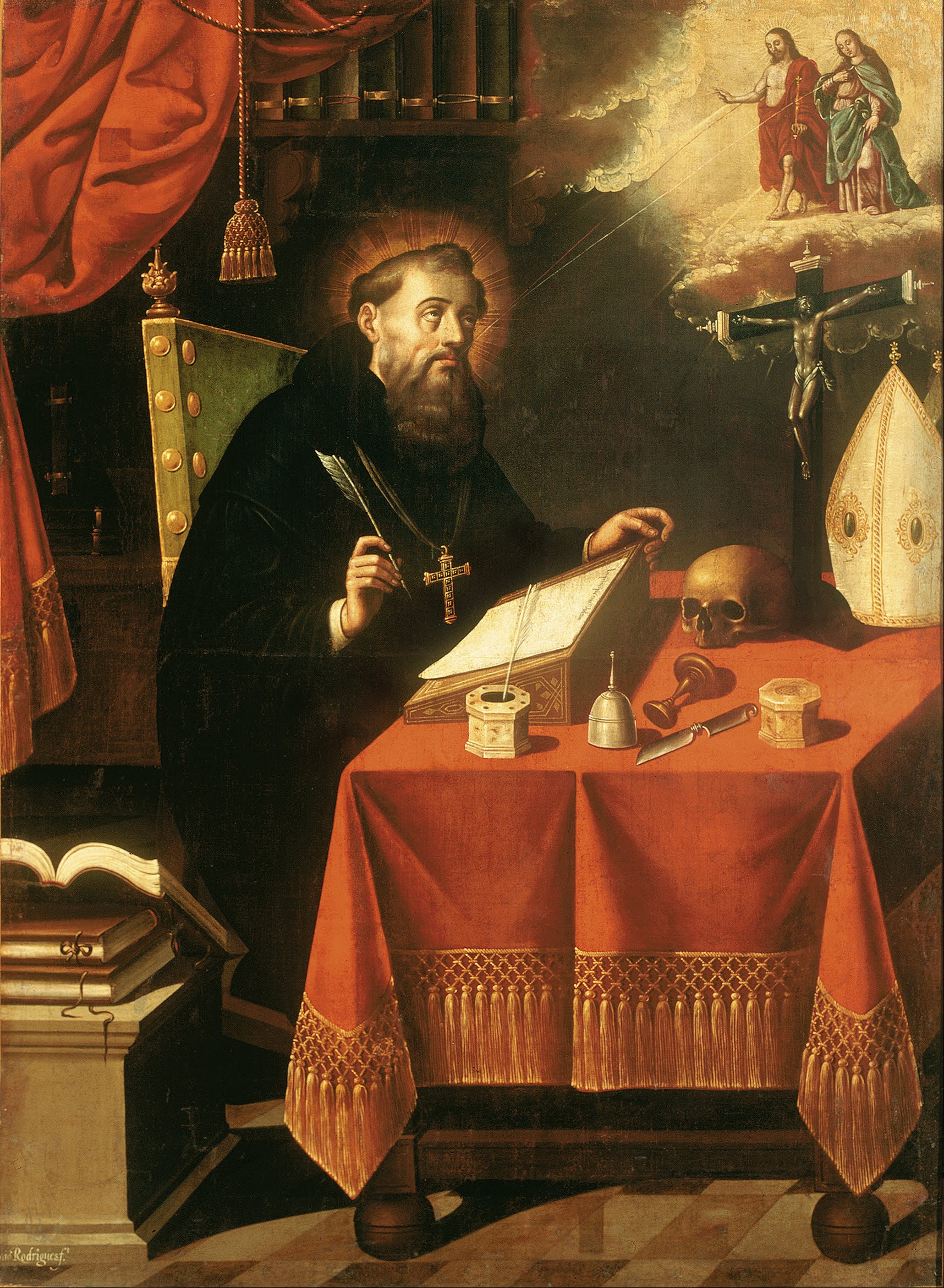
The first featured article in that issue of Christian Century, "Wisdom from Augustine in an Election Year," by Calvin College philosopher James K.A. Smith, begins, not with definitions, but by recounting his own experience as an immigrant who came to feel "invested as a member of this flawed but noble project that we call the American experiment, which welcomed me and enabled me to forge a meaningful life" (p. 42). Observing that many Christians are ambivalent about liberal democracy, while many Americans are ambivalent about Christianity, he draws on St. Augustine of Hippo (354-430) to describe a sort of tension that requires negotiation. 

Augustine writing at a desk
Augustine of Hippo
(from athanasiuscm.org)

Augustine called his time the saeculum, in which humans live on Earth, and God's promised kingdom, whatever that may be, has not yet come. We're still in it. "We ought not to want to live ahead of time with only the saints and the righteous," he wrote a Roman official named Boniface in 418 (quoted on p. 44); instead, we in the 21st century, just like those of the 5th, are charged to live in our communities with everyone else. 

How we live in our communities matters, though. In The City of God (c. 426), his most famous work, Augustine argues all earthly communities consist of both the City of Man, whose highest values are self-love and domination, and the City of God, whose highest values are love of God and neighbor. (Those values may do for a working definition of Christian politics.) Thus there is ongoing tension, which must resolved through negotiation among all (permixtum). Smith concludes that "citizens of the city of God are called, as an expression of loving their neighbors, to contribute to the common good by collaborating in the messiness of the permixtum" (p. 45). 

For Smith, Christian politics a la Augustine would not be theocracy: What currently passes for Christian politics is a sub-Christian syncretism that prays to a vaguely moralistic god who plays favorites, a deity of our making whom we trot out to license nationalism and self-interest... little more than Jesufied renditions of the libido dominandi (p. 46). (Does that ever sound familiar!) Instead, he looks to reaffirmed "institutions and practices of liberal democracy," informed by "more robust Christian political witness."

What might such a Christ-haunted, biblically saturated politics look like? Well, it looks like a lot like the civil rights movement: unapologetically biblical, rooted in the practices of the church, and speaking to the public in the cadences of the prophets.... The witnesses and martyrs of that beloved community learned to long for a better country, as the author of Hebrews puts it (Heb. 11:16), but they also imagined that this country could look more like it. That is the posture of an Augustinian politics (p. 46)

A Christian politics that is not about moral judgment and exclusion, but about building a better world for all our neighbors, looks more like what Russell Arben Fox (2025) called "universal leftism" than what the loudest voices in contemporary American Christianity are saying. It also looks a lot like urbanism! (See also Lenz 2023.)

Christian Century's other writers provide more suggestions and examples in the same issue:

  • Jeannine Marie Pitas ("Bridging the Ideological Divide") describes places where people of vastly different perspectives can meet, sometimes non-partisan (charity work) but often multipolar discussion groups where people actively listen to each other. 
  • Tony Tian-Ren Lin ("Can We Save Democracy in the United States?"), who came to the U.S. from Chiang Kai-shek's Taiwan via militarized Argentina, urges immigrants and refugees to use their experiences as well as their "voices and votes" to remind Americans not to give into easy authoritarian answers. 
  • Annalise Deal ("Cecil Williams Kept His Ear to the Ground") eulogizes the decades-long ministry of an activist San Francisco pastor (who I'm pretty sure knew my Uncle Clare).

Beloved readers, I too long for an American politics that is all-inclusive, committed both to vigorous meaningful conversations about our common life, and to sustaining even the poorest and meanest among us. Having "nice" conversations that avoid fundamental issues may avoid giving offense, but won't serve to maintain relationships, much less build communities. 

Path leading to '2026' depicted as rising sun
Source: spiritpunktransmissions.substack.com/

After this last year, though, I confess I don't know where to start. As someone whose career has been focused on the U.S. Constitution for decades, and whose future (however long) will have all the vulnerabilities of senior citizenry, America since the publication of the November 2024 Christian Century has been distressing to watch. At the same time, I'm afraid of not being taken seriously. I'm afraid of being played. I don't like tension, and despite my avid reading of Parker J. Palmer, I don't think I'm very good at holding it. I'm afraid of too quickly becoming impatient with what sound like pat answers.

Maybe a good resolution for urbanists and other community builders for the New Year would be at least to be attentive and open to opportunities to have those conversations.

PRINT SOURCE: Dennis J. Goldford, The Constitution of Religious Freedom: God, Politics and the First Amendment (Baylor University Press, 2012)


"Who Would Jesus Bomb" by Jordan Smart (3:12)

Friday, July 11, 2025

10th anniversary post: CR churches


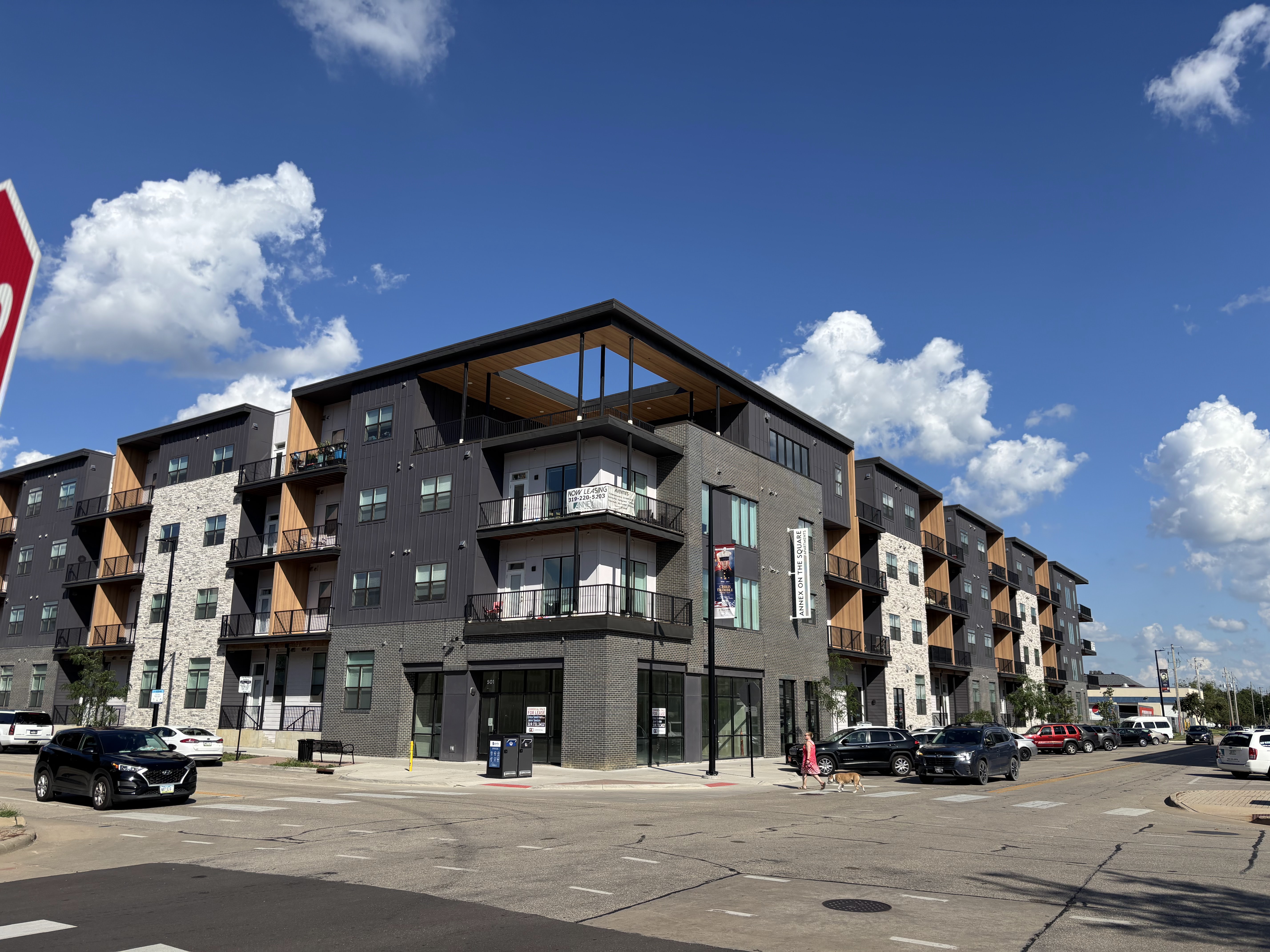
Annex on the Square, 501 4th Ave SE
Apartments across from Greene Square,
part of a surge of building in the core of Cedar Rapids

Ten years ago this month, I hosted two events featuring Charles Marohn, founder and CEO of Strong Towns: an evening public event at the Iowa City Public Library, and a meeting of the Corridor Metropolitan Planning Organization the next morning in Ely. Remarkably, I wrote nothing about those events and took no pictures; all I did was post a link to the video on Iowa City's website, which link has, alas, now expired. (A subsequent Iowa City appearance by Chuck, in 2019, can be found here:)

I did take pictures in July 2015, lots of them, of churches in the Oak Hill Jackson neighborhood. The idea was that there were a number of houses of worship remaining from the era when the core of Cedar Rapids was bustling and dense, and that when--as I anticipated--urbanism returned bustle and density to the city center, these religious institutions would be ready to support the new arrivals and be the basis for renewed community.

Since that post, three more churches have been started in Oak Hill Jackson, and I have acquired editions of Polk's Directory for 1953 and 1998 that show changes in the property uses as well as in the surrounding areas.

New Churches

Veritas is a non-denominational church that
hosts a coffeehouse on weekdays

Veritas Church, 509 3rd St SE

In 1953 this building was Nash Finch wholesale grocers (the folks who operated the Econo Foods and Sun Mart chains). There was a Sinclair station on the other side of 3rd. In 1998 there was no listing for the church's current address, while Cedar Valley Habitat for Humanity occupied the building across the street that is now their ReStore. The oldest Google Earth photo, from 2012, shows the Intermec company occupying this building.

Trinity Presbyterian Church, 1103 3rd St SE

This congregation was started in 2020, and is affiliated with the conservative Presbyterian Church of America. They hold services in the theater at CSPS Hall, a historic Czech and Slovak community center dating from the 1890s. In 1953, this block of 3rd Street had, besides CSPS, six single-family households, one duplex, and 11 businesses, as well as the Salvation Army at 1119-1123 (now Parlor City). In 1998, there were two households and five businesses sharing the block with CSPS.

Revolution Community Church, 1202 10th St SE

Revolution Community Church, 1202 10th St SE

This congregation, along with the ROC (Recovering Our City) Center, is using the building that ten years ago was occupied by Oak Hill Jackson Community Church. The sign above the door actually says "Refuge City Church," which testifies to the versatility of the abbreviation "RCC." In 1953 this was St. George Syrian Orthodox Church, which built the church in 1914; they moved to Cottage Grove Avenue SE in 1992. In the 1998 Polk's Directory there was no listing on 10th Street SE between 12th and 15th Avenues.

Older White Denominations

First Presbyterian Church, 310 5th St SE

This venerable church was built in 1869, and occupies the same block as the also-historic YWCA, opposite Greene Square Park. "First Pres" is the first of the oldline Third Avenue Churches; now, with the departure of First Christian Church and People's Church (Unitarian Universalist) in the 2010s, it is also the only mainline church on the southeast side below 10th Street.

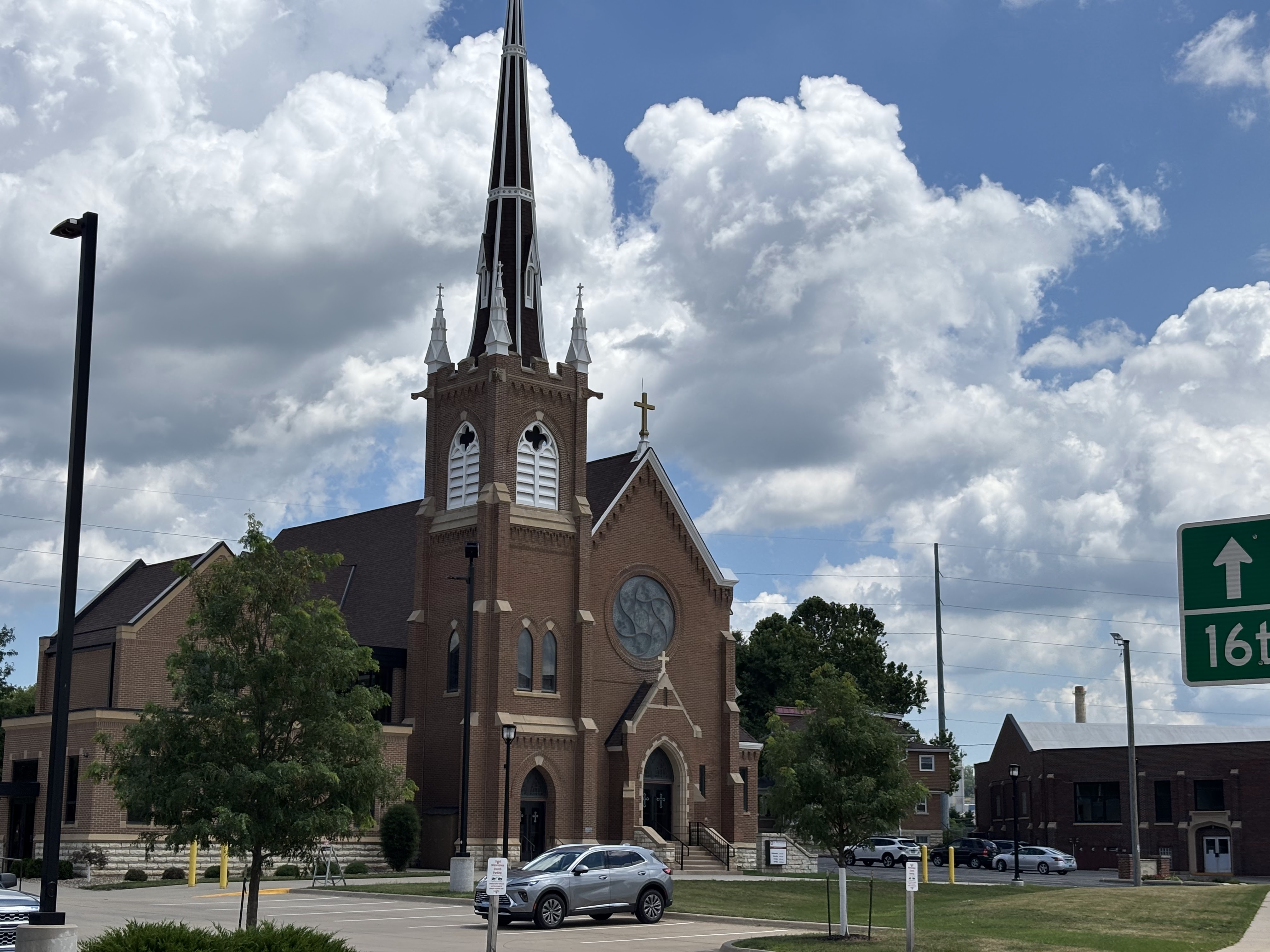
St. Wenceslaus Catholic Church, 1224 5th St SE

St. Wenceslaus Catholic Church, 1224 5th St SE

Built in 1904, this church long served the working class neighborhood around the Sinclair meatpacking plant. In 1953 just that block of 5th Street had 14 households containing 47 residents, as well as two vacant houses and the Sisters of Mercy at 1230 5th. In 1998, the block still had seven occupied residences, but all the older houses in the area were bought up and leveled after the 2008 flood. 

Historically Black Congregations


Built in 1931, Bethel AME Church has, like St. Wenceslaus, has continued its ministry after losing many of its closest neighbors. In 1953, the 500 block of 6th Street had seven single-family homes and two duplexes with a total population of 45. By 1998 it was down to two single-family homes, two vacant apartments at 514 6th, and four residences "not verified." Today there is just a vacant lot between Bethel and 5th Avenue.

New Jerusalem Church of God in Christ, 631 9th Av SE 

This church was built by Hus Presbyterian Church in 1915; Hus moved to Schaeffer Drive SW in 1973, and then closed in 2021. The 9th Avenue block had seven single-family homes and four duplexes in 1953, with a total of 68 residents. By 1998, the New Jerusalem congregation was established in the building, and the block listed five single-family homes and two duplexes.

Historically Black Congregations (possibly shut)

Fellowship Missionary Baptist Church, 1030 7th St SE 

This church was built in 1965, but it's not clear that it's still in operation. Their Facebook page last updated 2022, and they're no longer listed on American Baptist Churches website. The banner still appears on the building, and the lawn is cut, but a sign on the door says "Mask required to enter," which surely is a vestige of the coronavirus pandemic of 2020-21.

Fellowship Missionary Baptist Church, 1030 7th St SE

In 1953, this address was the home of John D. Malbrue, a factory worker for Collins Radio, and his family of five. The block had 13 homes for 45 people, as well as a grocery store at 1000 7th. In 1998, the block had three homes, the church, and a social service organization called Options; 1000 7th was vacant. (Today 1000 7th is the site of the charming Sacred Cow tavern.)

Southeast Church of Christ, 930 9th St SE 

Southeast Church of Christ, 930 9th St SE

A handsome "Church of Christ" sign has been added to the exterior since 2015, but the charming garden I noticed is gone. Its web and Facebook links are to churches in Texas. In 1953, the building contained the grocery store of William W. Krejci; the block had 10 single-family homes and five duplexes, with a total population of 68. The 1998 Polk's Directory lists the Church of Christ, nine homes, and two "not verified." It's still a well-settled block.

Here in 1998, but no longer

Mt. Zion Missionary Baptist Church, 824 8th St SE

Mt. Zion moved to the edge of town after the 2008 flood, after nearly a century in the neighborhood. Its location is now part of a parking lot for the MedQuarter. Before the move, that block of 8th Street, which once was home to 56 people besides the church and a funeral home, was down to the church and one vacant property. 

Church of Jesus Christ of the Apostolic, 916 10th St SE

In 1953 this address was the house owned by Mrs. Francis Leksa. It is now part of an apartment complex constructed post-flood.

Harris Oak Hill Apartments 906 10th St SE
Plenty of churches remain nearby: Harris Oak Hill Apartments

Holy Ghost Missionary Baptist Church, 1003 6th St SE

There is no listing for this address in the 1953 Polk's Directory, but 1001 6th was the home and store of grocer Milo Grubhoffer. What was probably the church building was for some time post-flood used for storage by the nonprofit Feed Iowa First. Something new is being constructed in its place even as we speak.

corner of 6th Street and 10th Avenue SE
Construction at former Holy Ghost site

Ten years on, the church scene in Oak Hill Jackson is different, but similar. In the meantime, there's been a lot of building.

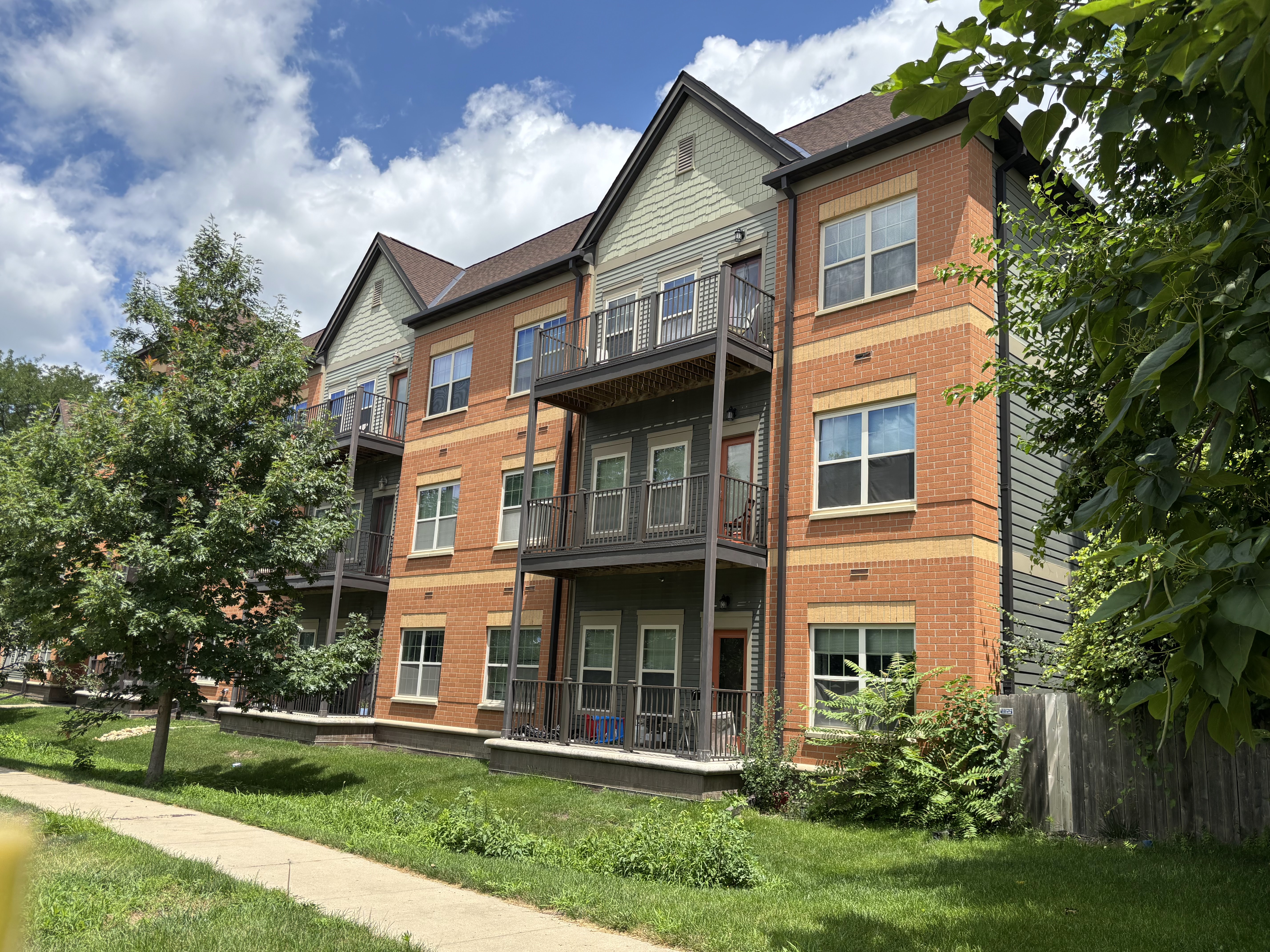
New Bo Lofts addition, across from St. Wenceslaus

Loftus Lofts, in the heart of New Bohemia

Will all this new construction be populated? Will the new residents find, or even look for, community in their neighborhood churches? Do the churches even want to play the role of community rebuilder, or are they focused on their present membership? To answer these questions, we would need data, which I famously don't have.

ORIGINAL POST (with more pictures): "CR Churches," 20 July 2015

Tuesday, March 4, 2025

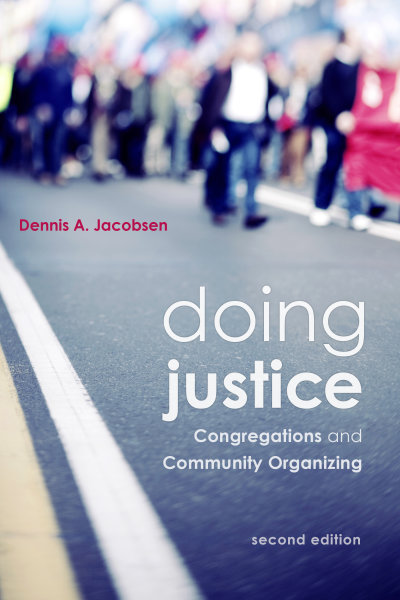
Book Review: Doing Justice

Doing Justice: Congregations and Community Organizing, 2nd Edition

Jacobsen, Dennis A. Doing Justice: Congregations and Community Organizing. 

Minneapolis: Fortress, 2nd ed., 2017. xxx + 155 pp.


Doing Justice is a challenging book. Aimed principally at practicing Christians, it uses the words

of Jesus, prophets, apostles, and the author of the Book of Revelation to attack the status quo 

as ungodly and to provoke the readers into working to transform it in the direction of God’s 

justice. An epigram to chapter 1 concludes with Revelation 18:4: Then I heard another voice 

from heaven saying, “Come out of her, my people, so that you do not take part in her sins.”


The test of this book is not so much how well it reads as much as how well it leads to 

constructive, collective social action. Its audience is rather niche: actively religious people who 

both are concerned about injustice and have a group with which they can join in acts of justice. 

For people who fit that description, Doing Justice is profoundly challenging (because my heart's 

in the right place but there are things I'd rather be doing), sympathetic (I'm also the quiet type at 

least in public), and encouraging (because wins are frustratingly few and far between).


Jacobsen, a pastor in the (mainline) Evangelical Lutheran Church in America, who spent many 

years serving an inner-city Milwaukee, sees justice as a broad context in which people have 

access to the goods of life, both material (e.g. enough to eat) and intangible (e.g. dignity, 

freedom). 

The world as it should be is in direct opposition to the world as it is. The world as 

it should be is rooted in truth, love, and community…. People are able to trust 

each other sufficiently to be transparent and exposed…. In a world where forty-

thousand children die of hunger-related causes every day, the world as it should 

be has an abiding concern for children and their right to have a playful present 

and a human future…. The world as it should be is God’s dream engaging the 

nightmare that the world has become. (2017: 11, 12, 15)


Those of us who live in a middle-class milieu may have little awareness of the nightmare that 

people outside of that milieu live on a daily basis. Some of Jacobsen’s parishioners’ personal 

nightmares are mentioned in the opening chapter. Vulnerable people are easily derailed when

their lives’ loads get one brick too many, and then the bricks just keep on coming. We are 

admonished to be aware of others’ struggles, and not to get too comfortable or too 

accommodated to the world as it is (what he calls “pseudo-innocence” (p. 16), citing Martin 

Luther King’s statement that love without power is sentimentality).

Encampment, Greene Square, 2024


We know we are not the egregious bullies Donald Trump and J.D. Vance, sneering and 

mocking as Rev. Marianne Edgar Budde asked the administration to show mercy to gays 

and Lesbians in all families, and to vulnerable immigrant farmworkers. Yet we know we 

are not King, or Fr. Daniel Berrigan, or the Detroit pastor (Rev. Bill Wylie-Kellerman) who 

wrote the foreword to Doing Justice, ministering to the outcasts, and risking freedom and theirvery lives in the quest for justice. If working within the system is so accommodating 

as to give away the store, what then must we do?


Jacobsen argues churches and their members need to engage with the “harsh realities outside 

its walls” (p. 20). That requires more from the church than creating a peaceful sanctuary, or 

even engaging in charitable works if they don’t get at the people’s underlying (human) misery. 

“The Christians who are so generous with food baskets at Thanksgiving or with presents for 

the poor at Christmas often vote into office politicians whose policies ignore or crush those 

living in poverty. A kind of pseudo-innocence permeates this behavior” (p. 29). He turns to 

the example of Saul Alinksy (1909-1972), whose concept of community organizing sought to empowerresidents of impoverished neighborhoods to influence decisions that were being 

made elsewhere, like in company boardrooms and city governments. Congregation-based 

community organizing began in the Roman Catholic Church, but has spread throughout Christianityand even non-Christian faith communities. Six broad networks, profiled in chapter 4, provide leadership training as well as engagement in public action. Engaging in 

such action requires comfort with political power–Jacobsen notes dozens of references to 

“power” in both the Hebrew Bible and New Testament–but also a willingness to share it 

(p. 67).


“Some fear the added responsibility that comes with power” (p. 61). Well, yeah.

Modern office building on large lawn
Homeland Security Investigations office, southwest Cedar Rapids


As such, the first challenge, both for individuals contemplating their part in social justice 

and community organizers recruiting and challenging them (“agitation”), is to recognize their 

self-interest. This concept is at the core of modern social science, and a strong influence on

the worldview of pretty much everyone. Yet “[k]nowledge of one’s own self-interest interest also

cannot be presumed” (p. 75). Jacobsen argues in chapter 6 that for all manner of reasons, we

need an understanding of self-interest that lies between pure selfishness and utter self-abnegation (“selflessness”). The first leads us to “nearly soulless” (p. 78) transactional 

relationships with others, such as President Trump is supposed to have; the latter leads to 

getting taken advantage of, as in the cases of Christian women who stay in abusive 

marriages because they believe it's their duty.


The process of articulation might also involve distinguishing between short-term and long-

term interests (p. 75ff.). On any given day, I might prefer to relax and/or get things done around 

the house, and certainly to avoid confrontations. People like Jacobsen’s ex-con parishioner 

Jesse are so different from me that any contact is bound to be awkward. But over the long term 

I am better off living in “a liberative community in which people can live out their values, be 

connected to a network of significant relationships, and be agitated to summon forth their God-

given power and potential,” so it is in my self-interest actively to participate in the “weaving 

together” of such a community (p. 78). (If it sounds like urbanism, loyal reader–that’s because 

it is!)


Once committed to action, doers of justice are further confronted with defining and reading 

the field of play. In chapter 9, Jacobsen articulates a metropolitan conception, adding declining 

first-ring suburbs and well-heeled exurbs to the mission field of inner city-based organizing. 

Citing law professor Myron Orfield (Metropolitics [Brookings, 1997]), he argues: 

To counter the ghettoization of poverty, Orfield proposes regional strategies such as tax-

based revenue sharing, fair distribution of low-income housing, convergence of school 

districts, and equitable spread of transportation dollars to create access to jobs (p. 105). 


Opposition to metro-wide approaches is likely to be “entrenched” (p. 106), but the strength of 

the opposition should not be exaggerated, nor should wealthy and powerful opponents be 

considered permanent enemies: Metropolitan organizing offers a chance to end the warfare

against the poor and to heal the divisions of class and race that separate this sick society 

(p. 114, emphasis mine). It’s like Peter Calthorpe and William Fulton (The Regional City:

Planning for the End of Sprawl [Island, 2001]) meet the authors of Numbers and Luke!


Succeeding at this level has a promising payoff but requires “meticulous organization, militant 

mass action, and, above all, the willingness to suffer and sacrifice” (p. 115, quoting Nelson 

Mandela, Long Walk to Freedom [Little Brown, 1994], p. 104). “There’s drudgery in social 

change, and glory for the few,” sings Billy Bragg. The mess is huge, and that can be 

discouraging: Death claims urban America for itself…. The death of decaying neighborhoods. 

The death of decimated families. The death of joblessness. The death of dreams. (p. 133)


No wonder I quail at the struggle! Now, to “take part in her sins” may seem an attractive 

alternative. But many hands make light work, or at least make the workload lighter: Into 

the courtyard of such death, congregation-based community organizing proclaims the 

resurrection of Christ, the unbending hope in the power of life, the unyielding belief that 

God, not death, has the last word (still on p. 133). It is the "holy catholic church," discussed in chapter 11, that impacts the mess, not lone toilers. It is group action that not only says

“‘no’ to social injustice… but a prophetic ‘yes’ to life” (p. 139). In the face of oppression

and misery, the church not only engages the community with patches but with affirmation

and joy as well. And dancing–towards the end of the book he quotes Emma Goldman: If

I can’t dance, I don’t want to be part of your revolution (p. 141).


In the same song quoted above, Billy Bragg also sings, “A poet with all the answers has never 

yet been built.” Apparently that goes for bloggers as well. My posts this year have been, I 

recognize, teeming with frustration and anger. All the MAGA pillaging (cf. Wilson 2025, 

Zipper 2025, or any day's post by the indefatigable Heather Cox Richardson) has certainly 

served to highlight the fragility of progress, and how much easier it is to break things than to 

build them. But there are people out there who carry on building, and they have room for me, 

and you. As long as they don’t mind that I dance like an arthritic cow.

Coffeeneuring Challenge 2026

  The leaves say: It's time for Coffeeneuring! What's the secret to our success? I say it's the autumn appeal of low-key two-whe...