Showing posts with label Ray Oldenburg. Show all posts

Thursday, May 27, 2021

Corrupting the youth 2021


The Coe Writing Center is your one-stop shop for help with papers
(Source: coe.edu; used without permission)

This fall I will be teaching in Coe's first-year experience program, which provides an introduction to the liberal arts mindset with interdisciplinary courses and a whirlwind of activities. My go-to course in the program is A Sense of Place; it is pursuing this subject matter over the years that led me to urbanism, and that has led me to you. So, yay FYE, even if I do suspect it is trying to kill me with complication.


This year, we will be focusing on third places, mostly by reading the classic The Great Good Place by Ray Oldenburg (Da Capo, [1989] 1999). Along the way, we will do three writing assignments, which I summarize here in the hopes of ginning up some feedback from you, faithful reader.

Paper 1: Reflective Essay

In The Great Good Place, Ray Oldenburg describes a number of qualities of third places, as well as various benefits they provide individuals and communities. You might be thinking that no place could possible combine all of these qualities, and you'd be right. Real-world places at best approach the qualities of ideal-types.

Write an essay about a place you know well that has some of the qualities of a third place as described by Oldenburg. How well do its qualities match the characteristics Oldenburg attributes to third places? In what ways does it differ?

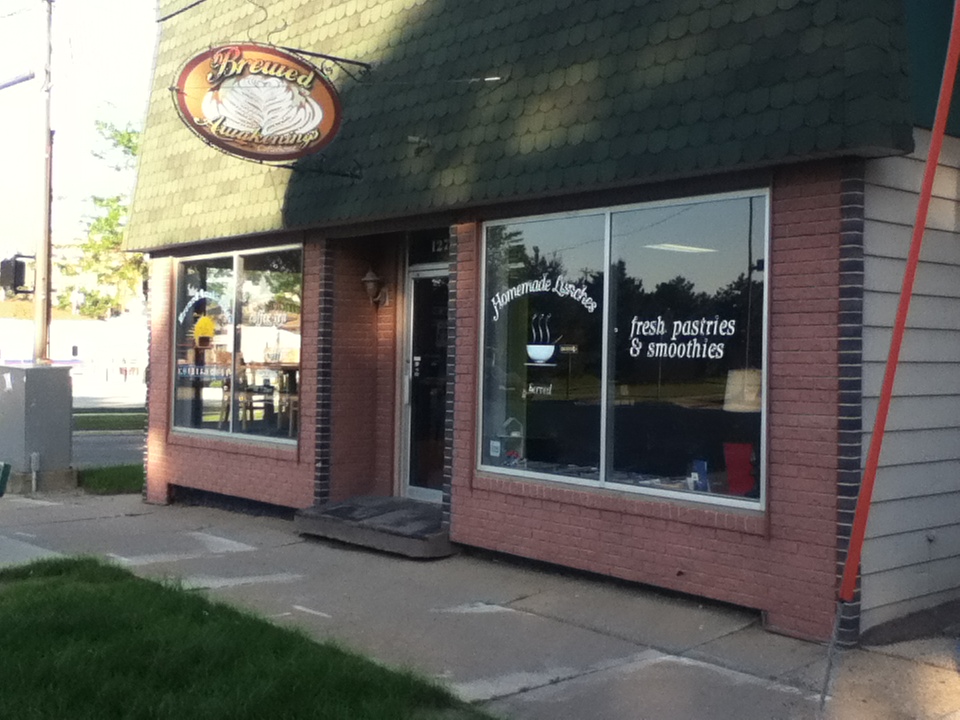
1271 1st Avenue SE, July 2020

Paper 2: Creative-Argumentative Essay

Now that you're familiar with the arguments for third places, turn your mind to a property near campus that served as a third place for many Coe faculty and students from 2000 until it closed in March 2020. What should go into the former Brewed Awakenings, and why? 

Use your imagination to consider how this building might be used for a successful business that would be a gathering place for Coe students. Then, make an argument for your idea.

Paper 3: Documented-Argumentative Essay

In the last several years, there have been a large number of projects that attempt to (re)build communities capable of supporting the sorts of third places we've been plugging in this course. This assignment asks you to identify one project that could be adapted to a town you know well.

Browse some of the following sites, and find an example of a project that would benefit your town. (I include links to Project for Public Spaces, Better Block, Human Transit, Reinventing Parking, The Urbanist, The Scenic Route, and Retrofitting Suburbia.)

With the help of the reference librarians, look for additional resources on that project. Then, write a 4-6 page paper, explaining the project, and then how a similar project would help your town.

Better Block project in Cedar Rapids, spring 2018
(photo by Ben Kaplan)

These three writing assignments should enable to students to engage with Oldenburg's concept of the third place as well as third place-friendly design projects, and to imagine their application to familiar territory.

Fellow lovers of cities and/or coffee, what do you like about these assignments? More importantly, what do you see as missing that would help newcomers to these ideas?

SEE ALSO: 

"My Letter to the First-Years," 12 July 2016

"Out of the Mouths of Babes," 23 April 2019

Friday, July 31, 2020

What should go into Brewed Awakenings?


Brewed Awakenings Coffeehouse, 2013
Brewed Awakenings in 2013

(7/31/2020) In March, two weeks after the closure of the Early Bird downtown, Cedar Rapids lost another of its great homegrown coffee houses, Brewed Awakenings, across from Coe College at 1271 1st Avenue SE. It appeared to be a temporary, COVID-related shutdown, but it never re-opened; in June, 'FOR SALE' signs appeared, then disappeared, and in July I happened upon some people collecting some effects they'd won at an auction no one I knew had heard about. The Early Bird ended with a party; Brewed Awakenings just slipped away in the night.

July 2020

Brewed Awakenings Coffeehouse nearly made it to 20, an impressive run for a small business that testifies to the devotion of its devotees. It was founded in 2000 by Deb Witte, who also started Wit's End in Marion; for maybe 10 or 12 years Brewed was owned by the Marsceau family until it was sold to Larry and Junetta Janda. "When I'm at Coe and feel the need to get out of the office for a cup of coffee, the choice is obvious," I effused in an early post on this blog. "Brewed Awakenings Coffeehouse is just across 1st Avenue and offers an impressive selection of coffee as well as a nice atmosphere." I occasionally performed here, back when they had live music, I frequently met here with the Political Science Club, and at various times it employed both of my sons and many of my students.

The building that formerly housed Brewed Awakenings is located at the intersection of 1st Avenue and 13th Street SE. Built in 1920, it is ideally constructed for a walkable neighborhood, with its front door opening directly onto the sidewalk and windows facing the street. The neighborhood is in fact nominally walkable, with a Walk Score of 77 and a Bike Score of 60. Census tract 19, in which it is located, is one of the most densely-populated in the city, and the shop is mere blocks from the two densest tracts. But except for Coe College, across 1st Avenue, a two block radius around the building has hardly any residences, and a few businesses with relatively small numbers of employees or customers, so there's not much actual walking around there. There is a lot of driving: 1st Avenue is also Business US 151 and Iowa 922, and carries about 21,000 cars a day; 13th Street is one-way north, and carries 1,950 cars per day. 

It's an 1,800-square foot building on an 8,400-square foot lot that also contains one other building that's been sporadically occupied over the years.
Vacant building at 111 13th St SE

There is some on-street parking, and a small lot accessible from 13th Street. That's a smaller footprint than the chain fast food restaurants in the area seem to need. Expansion is unlikely: to the west are two apartment buildings recently bought by Coe College, and the building across the alley to the south is home to a medical residency program. If the small parking lot between Brewed and the apartments was punched through to 1st Avenue it could conceivably be used for drive-through traffic, but that's probably a stretch.
Parking lot and potential 1st Avenue access

So the options for the corner are limited: possibly an office or another college apartment, but probably a small shop, like Brewed Awakenings or the cut-rate pizza place that was there before 2000. (Worst case scenario is someone buys it for a parking lot. Don't do it, Coe!) In contrast to 2000, any new coffeehouse would face competition: there are now two national chain coffee places in the area, and a building currently under construction is likely to be a third.
National coffee chain coming here?

Whatever goes into the Brewed space might well take advantage of the proximity to Coe College's faculty and students--in its last years, Brewed Awakenings closed at 4:30 p.m., which still seems unbelievable with all those students in search of an evening hangout--but be prepared for the four months each year when Coe is out of session.

The city might get involved in development, though I hope they won't--except to make 13th Street two-way! College Commons, a tax-incentivized mixed-use development up 1st Avenue from Coe (see Kaplan 2018 for an early reaction), crushes the surrounding properties in terms of value per acre, mainly from its two floors of apartments. But the apartments sit atop four franchise chains (Clean Laundry, H & R Block, Jimmy John's, and Scooter's Coffee), who have their main accesses to the rear parking lot not the sidewalk in front of the building. We can't beat College Commons financially, but can do better in other ways.

An older, smaller, well-worn building like the one that housed Brewed Awakenings can nurture a locally-owned small business, and depending on the occupant can help the area's walkability and, perhaps most importantly, provide a third place for the community. Ray Oldenburg's classic text, The Great Good Place, named for this short story by Henry James, makes the case for valuing places where people can be social, even across boundaries.
The first and most important function of third places is that of uniting the neighborhood.... Places such as these, which serve virtually everybody, soon create an environment in which everybody knows just about everybody. In most cases, it cannot be said that everyone, or even a majority will like everybody else. It is, however, important to know everyone, to know how they variously add to and subtract from the general welfare; to know what they can contribute in the face of various problems or crises, and to learn to be at ease with everyone in the neighborhood irrespective of how one feels about them. A third place is a "mixer." (Oldenburg 1999: xvii-xviii)

A place that could bring together and "delight and sustain" (1999: 43) college students, MedQuarter workers, gentrifiers, and long-time residents--"virtually everybody"--would be a boon to all.
The habit of association comes easier in the city, but it does [not?] come automatically. Affiliations stemming from family membership and employment are not, of themselves, adequate to either community or grass-roots democracy. There must be places in which people can find and sort one another out across the barriers of social difference. There must be places akin to the colonial tavern visited by Alexander Hamilton, which offered, as he later recorded, "a general social solvent with a very mixed company of different nations and religions." (1999: 74, citing Carl Bridenbaugh and Jesse Bridenbaugh, Rebels and Gentlemen [New York: Oxford University Press, 1962], 21)
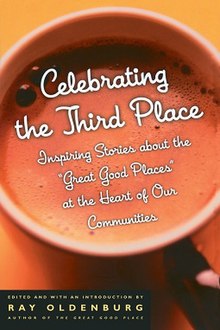
Except probably not a bar, that close to a college campus, for it is likely to take on the personality of the "horde of barbaric college students" (1999: 30) that are drawn to bars. Maybe a place where you can "have a cold one with the neighbors" (1999: xxiii) that also features live music, or artistic displays, or late-night breakfasts? Oldenburg's follow-up book, Celebrating the Third Place [Marlowe, 2001], describes an astonishingly wide variety of American third places. May the corner of 1st and 13th be the next!

Ray Oldenburg, The Great Good Place: Cafes, Coffee Shops, Bookstores, Bars, Hair Salons and Other Hangouts at the Heart of a Community (Da Capo, 2nd ed, 1999)

Appendix:

NAME

ADDRESS

LAND VALUE

IMPROVE-MENT VALUE

TOTAL TAX VALUE

ACRES

VALUE PER ACRE

TAXES ESTI-MATE

Brewed & vacant bldg

111 13th St SE

100,800

147,400

248,200

0.193

1,286,010

9,328

Via Sofia’s

1119 1st Av SE

100,800

297,700

398,500

0.193

2,064,767

14,977

Wendy’s

1314 1st Av NE

336,000

1,037,900

1,424,100

0.771

1,847,082

49,996

Irene’s Bar + apt

1323 1st Av SE

126,000

258,000

384,000

0.289

1,328,720

13,118

Arby’s

1417 1st Av SE

151,200

503,000

654,200

0.386

1,694,819

22,967

College Commons + apt

1420 1st Av NE

342,700

403,900

3,301,000

0.874

3,776,888

98,747

McDonalds

1530 1st Av NE

420,000

909,000

1,329,000

1.200

1,107,500

46,658


Sunday, July 14, 2013

Third Places in the City of Five Seasons?


Ray Oldenburg's book, The Great Good Place (Paragon House), was published in 1989. Much of its social commentary has dated, but its central message not only endures, it seems to have inspired a movement.

Oldenburg argued then that America was suffering from the loss of casual gathering places, such as the neighborhood taverns, corner stores, soda fountains and coffee shops that had been been a key part of American life prior to World War II, and are still found in much of Western Europe. He coined the phrase third place, referring to the "great variety of public places that host the regular, voluntary, informal, and happily anticipated gatherings of individuals beyond the realms of home and work" (p. 16). Personal benefits of third places (ch. 3) include an accessible set of friends, spiritual uplift, an improved and broader perspective on humanity, and the opportunity for novelty. Social benefits (ch. 4) include a forum for free association, gentle social control, "fun with the lid kept on," and modulated political discussion. Do folks even know how to do that anymore?

Such places have disappeared with the urban neighborhoods that supported them, as Americans live farther from work, work longer hours and organize their children's lives to a fault, and as commercial establishments emphasize profit and fast service. In newer areas they're often prohibited by zoning ordinances that tightly segregate residential and commercial uses. The loss of third places, Oldenburg goes on, has led to higher levels of individual stress including heretofore-unheard-of childhood depression, crime, marital stress and divorce, and the loss of public/community life that engages and sustains us. Don't even start him on the Internet--because this book was published in 1989, he has more to say about shopping malls than online gaming or social media. But it's not hard to imagine him including them in his diagnosis.

Oldenburg's book has a definite "what's-wrong-with-America-today" feel to it, but he concludes on a hopeful note. It's vaguely hopeful, but it's hopeful. He is sure that our need to associate is fundamental, and that it will eventually win out over the forces that isolate us. He quotes approvingly from Patrick Goldring's The Broilerhouse Society (New York: Heybright and Talley, 1969, p. 216):
I believe the human instinct towards real community and dignity will survive any processing and will assert itself in a crisis. Sooner or later there will be a check in the seemingly inexorable movement towards ant-like humanity, organizing for organizing's sake.
Tangible signs of hope emerged by 2001, when Oldenburg published his follow-up volume, Celebrating the Third Place (Marlowe & Co.). After a brief introduction, he presents first-person experiences of 19 third places, nearly all of them local businesses. They include taverns, coffeehouses, and restaurants, as well as a garden store, a gym and a photo shop. Many of the accounts are written by the entrepreneurs themselves, who describe how they self-consciously aimed to create community gathering places as well as profit-making establishments.


Just being a coffeehouse or a bar doesn't make you a third place. Oldenburg's introduction cites examples of establishments that claim to be third places but are not: a chain of "neighborhood" restaurants that are found in congested strips, a "friendly diner" that's anything but, a chain of coffeehouses that "are high volume, fast turnover operations" where "Seating is uncomfortable by design and customers in line are treated rudely when uncertain of their orders" (p. 3).

What makes a third place thirdy? Not all the establishments in the book share all of these characteristics, but ideally they are (my list): local, easily accessible from home, preferably on foot; comfortable, where you could drop in by yourself and feel welcome; relaxed, meaning you can stay as long as you wish, spending some but not a huge amount of money; and possessing a steady clientele, so that when you drop in you're sure to encounter people you know. The combination results in spontaneous social encounters, which in turn bring the benefits to individual and society listed above. Oldenburg adds "The best places are locally owned, independent, small-scale, steady-state business..." (p. 4). This addresses my question from an earlier post--Are local businesses really better than franchises?--by saying third places traditionally drew most of their business from a three-block radius, which would generate too little income for a chain to flourish. That's not all the story, I'm sure, but it's a start.

The third places profiled in Celebrating the Third Place may have established some beachheads, but they face a lot of obstacles. Oldenburg notes that governments all over America have for decades practiced unifunctional zoning, which means most residential areas don't have commercial establishments anywhere nearby. Where do the third places go? They have trouble competing for price with incorporated chains. In most areas, people spend the time between work and home commuting from one to the other, leaving them with no "community time." And however much we might crave community, it's hard to break the 70 years' habit of staying at home, especially when our homes are bigger, farther from the third places, and possess prodigious home entertainments systems, fitness centers and bars.

Cedar Rapids is the City of Five Seasons, because our size obviates the typical urban commute. Even so, I don't know if there's a lot of third place behavior here. There are certainly opportunities: the coffeehouses around town are friendly and outside of downtown Cedar Rapids seem oriented to long-term occupancy. (To be honest, I spent a lot of time in downtown coffee shops during my sabbatical, and even there never once felt hassled or hustled.) Some of them, like Wit's (formerly Witte's) End and Tatyana's, close at 2 p.m., which rules them out as third places for working people. I don't spend much time in bars, but have found two that seem oriented to neighborhood third place behavior. At our old house we used to walk to the nearby Tic-Toc (600 17th St NE), which welcomes children and has good beer on tap. The waiter got to know our orders, or at least Jane's, because she always got Blue Moon, and I could never make up my mind. Of course I was bringing my own company. The last few months I've attended a jam session at Little Bohemia (1317 3rd St SE), in a hardy 19th century building with a friendly host and a local beer (Roller Dam Red) I've never found anywhere else. It has at least the potential to be a neighborhood hangout once New Bohemia gets established. [Here is a video tribute to Little Bohemia after it was wiped out by the 2008 flood. It reopened in 2010.] Coincidentally, or perhaps not coincidentally, Tic-Toc, Little Bohemia and Brewed Awakenings Coffeehouse are all accessible by pedestrians directly from the sidewalk, without having to cross a parking lot.

Another obstacle to the success of third places that Oldenburg doesn't consider is whether after 70 years out of practice we still know how to behave in them. I know I don't. Whenever I go out for coffee by myself, I always bring work to do. Last week at Brewed Awakenings I saw a colleague and a former student, both sitting by themselves. I greeted them both, but then settled in with The Cambridge Companion to Early Greek Philosophy. I assumed they were busy as well, and if I did decide to cast the early Greeks to the winds either of my acquaintances would find my joining their table an intrusion. If third places are going to do their stuff, we need to come with the expectation of spontaneous meeting and the anticipation others will welcome our company.

10th Anniversary Post: Linn County's First Bicycle Boulevard

  Marion portion of Linn County Trails and Bikeways Map (downloaded from linncountytrails.org) (8/18/2026)  Linn County's first designat...