Showing posts with label parks. Show all posts

Monday, August 4, 2025

Can special events help activate parks?

crowds gather at booth, WELCOME banner
Welcome booth, Art in the Park 2024
(My brain overheated in 2025 so I took no pictures)

Sunday's exuberant Art in the Park at Redmond Park had possibly the biggest turnout yet, with the park full of people thumbing their nose at the steamy weather (while respecting it by staying hydrated). Big events like Art in the Park, Marion's Thursday night Uptown Getdown, Lisbon's Sauerkraut Days, and downtown farmers' markets can bring big crowds to parks or wherever in town they're held. For those who take the lead in planning, they are a lot of work, with the hope of a lot of reward in seeing your event pop in real time. Sophia Joseph of the Wellington Heights Neighborhood Association, who had a big hand in planning the event, posted on Facebook:

It's a lot of work, a lot of heart, a lot of community, and a lot of joy. I'm tired. After we rest up, we are excited for our 5th annual event next year, which is sure to be our biggest and best yet.
people drawing with chalk on street, parked cars along side
2024 Sidewalk chalk competition on 3rd Avenue

For one day last weekend, Art in the Park brought the crowds and the fun and the sidewalk chalk to Redmond Park in the Wellington Heights neighborhood. Marion's Uptown Getdown and Cedar Rapids's Summer on the Square do it for several summer evenings. What about the many other days in the year? A successful park is a place for neighbors to gather and play all year around. The presence of a natural gathering place, whether a park or a town square, is one element of the Strong Towns Strength Test, asked provocatively: If there were a revolution in your town, would people instinctively know where to gather to participate? More to the point: If you can't envision your neighbors gathering together in a central location, it's hard to envision coming together to solve day to day problems and build strong towns--much less demonstrating publicly for a common goal. (Strong Towns 2017)

numerous children on playground equipment, 2024
But first, play time: Packing the Redmond Park playground
after the 2024 Easter Egg hunt

As space that includes some natural elements, parks in particular provide other benefits. Nadina Galle, in her book The Nature of Our Cities--not to mention all the other aspects of her public work--commends natural spaces for providing individuals with awareness of "the extraordinary richness of life that surrounds us" (2024: 133) as well as "restoring the ability to concentrate and triggering a physiological response that lowers stress levels" (2024: 185). 

But they can't do that if we're not there. And that means that park spaces large and small must be interesting and feel safe (Jacobs 1961 ch 5, Kaplan, Kaplan and Ryan 1998), as well as providing for our toileting needs, and maybe so comfortable that one could grab a nap (Sucher 2016: 144, 219). Jacobs (1961: 135-145) talks about connection to a vibrant neighborhood outside the park, internal intricacy (appropriate for multiple uses), centering (one clear climactic point), sunshine (and shade), enclosure, and demand goods. 

splash pad at Redmond Park
Redmond Park splashpad in operation, 2014

Jane Jacobs is focused on large city parks, but the Reimagining the Civic Commons folk argue in their latest post (Reimagining the Civic Commons 2025) that the same considerations apply to small neighborhood parks as well, like River Garden in Memphis and Akron's Summit Lake Beachhead. River Garden, they note, "layers different uses within close proximity to each other to promote connection and casual conversation." Some of the places they profile offer ongoing programming; others rely on a diverse set of demand goods. 

Do big events like Art in the Park help with any of this?

I think they can, under certain circumstances.

  1. The park is connected to a successful (or potentially successful neighborhood). There should be, in short, a ready set of nearby people who could populate the park. There should be sidewalks connecting the park to its surroundings, and infrastructure (street lighting, street trees, narrow driving area) conducive to getting to the park. Ben Kaplan's 2019 photo essay on Viola Gibson Park in Cedar Rapids shows what happens when these elements are neglected.
    playground equipment and grassy area, midrise buildings in background
    Chicago's Walsh Park is accessible by street or the 606 Trail

  2. The park has a reasonable set of demand goods. Walsh Park on Chicago's north side (pictured above) has a dog park as well as a big play area. Redmond Park in CR has playground equipment, a splash pad, and picnic benches for public use, although they could use some more trees. Our city's biggest parks have a greater variety of features, including swimming pools, ball diamonds, and wooded trails.
    walking trail at Bever Park
    walking trail at Bever Park
  3. The special events serve the purpose of bringing people into contact with the park's everyday uses. Come for the chalk art, stay for the swingset. If people come to the park for a municipal band concert, and are inspired to return on their own some day soon, that's good. That's why I'm cool even with closing streets for Art in the Park and the downtown farmers market, but think having a NASCAR race in downtown Chicago is grotesque. Auto racing, whatever its attractions, prevents rather than promotes everyday public use.
  4. Commitment to regular programming. San Francisco's Noe Valley Town Square, cited by Reimagining the Civic Commons, "serves as the neighborhood's 'living room,' hosting weekly farmers' markets, concerts, yoga and dance classes, family events and more" That's great, if there are the staff and resources for it, but not necessary for successful public space.
What you need is a reason, preferably multiple reasons, for people to be there, and easy access so they can get there without great effort. Urbanism is mostly about daily life, about creating spaces that can be enjoyed in community every day. As such big special events are more of a distraction than a feature. But they too have their place, when the uniquely special contributes to the routinely special.
playground equipment and no people
On the other hand...
Redmond Park on an ordinary Sunday afternoon

MORE ON THIS SUBJECT:

Gilbert Penalosa's terrific Cities for Everyone webinar series will feature Shannon Baker of Waterfront Toronto on Tuesday 8/19 at 10:00 a.m. CT. Her topic is "Connecting Nature and the City." Register here. Recording is available a few days after the presentation at gpenalosa.ca.

PRINT SOURCES

Nadina Galle, The Nature of Our Cities: Harnessing the Power of the Natural World to Survive a Changing Planet (Mariner, 2024)

Jane Jacobs, The Death and Life of Great American Cities (Modern Library, 1961)

Rachel Kaplan, Steven Kaplan, and Robert L. Ryan, With People in Mind: Design and Management of Everyday Nature (Island Press, 1998)

David Sucher, City Comforts: How to Build an Urban Village (City Comfort Inc, rev ed, 2016)

Wednesday, July 2, 2025

Book review: The Nature of Our Cities


Nadina Galle and friend holding copies of Dr. Galle's book
Nadina Galle (left) and Lieve Mertens,
with Dutch language editions of the book
(Source: nadinagalle.com)

Galle, Nadina. The Nature of Our Cities: Harnessing the Power of the Natural World to Survive a Changing Planet. Mariner, 2024, 304 pp.

Anyone who wants to make healthy choices in America today knows how difficult it is. So many of us live in neighborhoods without green spaces to play in, without public transit or cycling infrastructure, or where temptations lurk in vending machines in every corner of our offices and schools. And suppose we manage to find the time to exercise in our stressful lives. In that case, the limitations of our outdoor spaces push us onto stationary bikes, where we either stare at news headlines that spike our cortisol levels, or "travel" through virtual landscapes from within a windowless basement gym. (2024: 194)
(7/2/2025) I finished reading Nadina Galle's book this morning on my back deck, enjoying what was an inexpressively lovely day in Cedar Rapids: the air was clear, the previous week's humidity had gone, a bee was investigating Jane's lilacs, and a variety of birds were making their presences known from high above me. It was the sort of morning where a person can revel in pure existence, regardless of personal problems or America's problems or natural disasters.

Much of the rest of the world is not as easily able to relax with a good book and a pad of paper. After the hottest-ever June in England and Spain, London experienced its hottest day of the year today. Heat deaths are reported in France, Spain and Portugal, and wildfires in Turkey have caused mass evacuations (Robins 2025, "Heatwave Across Europe" 2025). Wildfires across Canada earlier this summer produced smoke and haze even here in Iowa.  Many cities are experiencing increased rat populations as their climate warms (Simon 2025).

The Nature of Our Cities references other recent catastrophes: a record European heatwave in 2019 that was surpassed in 2022, a 2021 heat dome over the U.S. Pacific Northwest, a worldwide heatwave that began in the U.S. in 2023, the Camp Fire in California in 2018, heat wildfires and then massive flooding in British Columbia in 2021, and numerous urban tree die-offs and air quality alerts. Along the way she introduces us to a number of people working on improving their region's resilience to a climate gone haywire.

trees blown by violent wind
Even in Cedar Rapids (my backyard, specifically):
Trees tossed by derecho winds, August 2020

About halfway through the book, the focus switches to improving the public's opportunities to experience nature. The most willful climate change deniers cannot be reached, but surely there are a lot of people who already recognize the problem but don't fully realize their personal stakes. Besides, exposure to nature has many physical and mental health benefits (cf. pp. 160-161).

It's in this part of the book where we meet Menno Schilthuizen in the Dutch city of Leiden, teaching people about the enormous diversity of species in a single patch of lawn near the central train station (ch. 6); Blake Ellis, a California-based ecotherapist (ch. 7); Jared Hanley, a former financier who's developed an app that shows the extent of an area's ecosystem (ch. 8); and Richard Louv, who does public talks on the subject of Nature-Deficit Disorder, which term he himself coined (ch. 9). On each of the outdoor adventures during which these conversations occur, Galle lets her interviewees speak for themselves, with descriptions of the environs and additional amusing asides. She does not insist on herself, though it's clear she has a lot of expertise and experience in nature. (She holds a Ph.D. in ecological engineering.)

Her final chapter brings it home, because as the book neared completion, she also found out she was pregnant for the first time (ch. 9). She worries to us about bringing a child into a world that encourages screen time more than nature time. But along the way, as she discusses nature-based apps like AllTrails (p. 164), EarthSnap (pp. 149-151), iNaturalist, Park Rx America (pp. 186-188), Vira (p. 201), World Safari (pp. 234-237), and Giants of the North, a geolocated audio tour of Amsterdam (pp. 170-175), she argues that technology can help us experience nature as well as providing high-tech climate resilience tools.

path through forest
A mile from the Coe College campus, across the street
from Washington High School: Woodsy trail in Bever Park

Cedar Rapids has a rich array of parks, including two spacious parks (Bever and Ellis) with older-growth wooded areas. Going forward, ensuring access to parks and natural space is a key part of the "complete neighborhood" concept the city has announced, and is listed as an objective for 2050 in the 2023 revision of the city's climate action plan. Funding for any such initiatives is uncertain, or course, and thus far the city's biggest climate action has been (federally funded) construction of flood walls. Whatever we're doing, or say we're doing, is far from offsetting the impact of the two big data centers about which we're very excited.
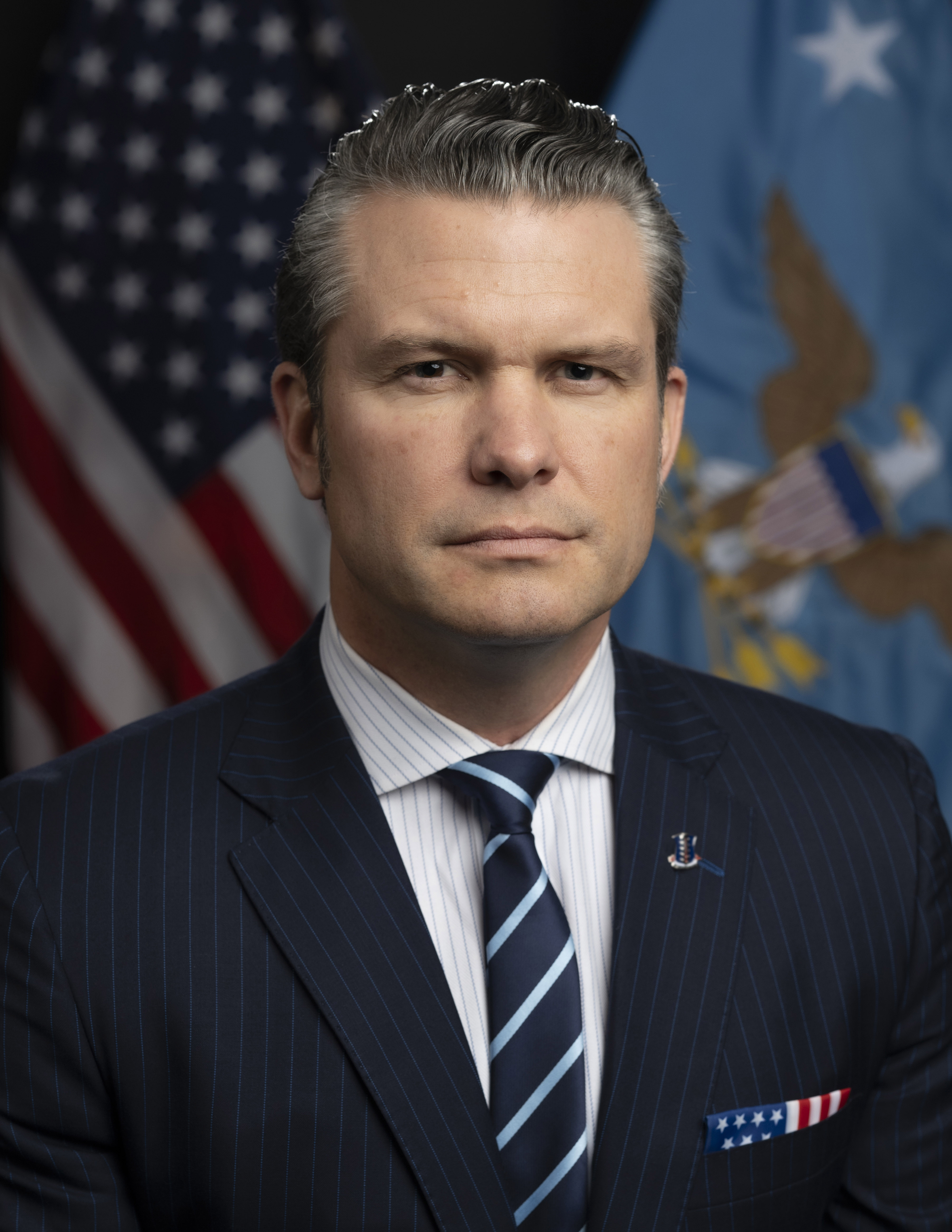
Secretary of Defense Pete Hegseth
U.S. Defense Secretary Pete Hegseth has disparaged
military research into the impacts of climate change
(war.gov)

Climate denial is in full control at the national and state levels (in this state, anyway). U.S. government websites have removed information on climate change impacts (Borenstein 2025). The Trump administration previously clawed back solar installation and climate research grants; withdrew from the Paris climate accord January 21, 2025; threatened Environmental Protection Agency employees studying climate change with firing at any time (Friedman 2025); announced plans to end Department of Transportation climate programs (Pierre-Louis 2025); and fired nearly 1000 employees at the National Oceanic and Atmospheric Administration, including all staff at tsunami warning centers (Nilsen and Luhby 2025). This week they're showing off the new federal prison camp built with Federal Emergency Management Agency funds on environmentally sensitive land in Florida's Everglades. Far-sighted public policy is just not going to happen anytime soon; the most we can hope is that they would leave cities alone to do what they can.

The climate doesn't care about politics, of course, and will continue to evolve whether we are prepared or not. Galle's engaging book, and all the people in it, provide hope that the natural world will continue to be accessible, publicly valued, and conducive to human life.

SEE ALSO:

I first encountered Dr. Galle when she was a guest on Gil Penalosa's excellent "Cities for Everyone" webinar series in July 2024. Her talk (38:15) is here.

Nadina Galle blog page

Monday, June 3, 2024

10th Anniversary Post: West Side Greenway


trees, lawn, sidewalks
Time Check post-flood, June 2014

Ten years ago this month, the City of Cedar Rapids had an open house at the Flamingo Events Center on the near northwest side to discuss plans for a greenway along the river where some of the worst flood damage had occurred in 2008. The greenway would stretch from Ellis Park, one of the largest and oldest parks in the city, to Czech Village, about four miles in length. Some of the ideas that were floated at the time included basketball courts, one or two boat launches, disc golf putting green, an ice rink, and a ropes course, as well as improvements to the riverside bike trail. At the time I concluded: The special elements... will serve as "demand goods" [term I cribbed from Jane Jacobs], drawing people from all parts of the city and beyond. But the ongoing success of these projects depend on the ability of planners to coordinate effectively with neighborhood and commercial development.

2024: distant view of Ellis Flats, 1618 Ellis Blvd NW
across field planned for trail, water play, skate/skills park

Federal support for west side flood protection was not approved until 2018, and only last week did the City Council approve the final version of the greenway plan. The next step is fundraising from the federal government and other sources (Payne 2024). The plan is divided into short-term (next five years) and medium-term (next ten years) phases. 

The future impact section of the plan anticipates 1-2 million annual visitors to the parks, with the middle estimates projecting $250-500 million in new investment, $60 million a year in economic benefit, and creation of 1300 jobs (p. 86). (These numbers should be taken with a grain or perhaps a pillar of salt. Does anyone ever go back and check these numbers later?) 

grassy area with flood wall and elevated highway
1st St and 1st Av NW: plans for whitewater rafting course

parallel sidewalks between street and river
1st St and E Ave NW: plans for trail improvements,
Fallen Forest nature play area

Plans for the middle section ("Riverfront Park," discussed on pp. 59ff. of the plan) do not discuss its interface with the latest casino proposal. (See "Cedar Rapids Casino" 2022.) That may be prudent, because approval of the casino at the state level is by no means certain, but it's worth noting the current 1st Street NW will be rerouted and converted into a park road, and that the footprint of the park, particularly near the proposed nature play area and dog run, intrudes upon the footprint of the casino. This is fine with me, since I wish the casino would go far away, but if two would-be tourist destinations are to exist cheek-by-jowl in what used to be a residential neighborhood, it will require some thinking.

intersection, plastic fencing, grassy area
1st St and F Ave NW: dog run, parking for whitewater rafting... and casino?

wide street with cars, buildings in background
1st Ave at 1st St W: still a wide, high speed highway
through the center of town 

The chain of park areas provides a number of potential benefits to nearby neighborhoods; it will be interesting to see how these considerations are balanced with the expectation of being a tourist magnet. The Time-Check Park is adjacent to development along Ellis Boulevard NW as well as existing residential areas to the west. Ellis could be a challenge for small children to cross, but overall the park should be easily accessible on foot to a lot of people. 

house with anti-development signs
Not this neighbor, though: 1426 1st St NW (and others?)
stand in the way of the canoe safari and picnic grove

Ditto the gardens, water play area, toddler area, and roundhouse in the Czech Village Park on the southwest side. Its area also has planned residential redevelopment, existing residences, and a challenging through street (C Street SW, in this case). I hope there will be some routine play equipment for the littles, but the bigs ought to find more places to explore than in a typical city park. 

grassy area with houses in distance
approximate site of B St SW woonerf
plans for toddler park, water play, playground

Accessible green spaces that are somewhat wild provide benefits to individuals as well as the overall ecology (Galle 2023). This all adds to the attractiveness of the neighborhoods. In a best-case scenario, the neighborhoods would provide steady use of the parks, with folks from farther out adding their own energy without overwhelming things, and the city will be committed to ongoing maintenance and improvement.

The big question remains from 2014: Will the Greenway project be able to evolve along with the neighborhood, while accommodating visitors from elsewhere, like our city's flagship parks? Or will it be primarily a "destination," separated and alienated from the place where it's located, like the baseball stadium, New Bo City Market, and the proposed casino (though any of these may change in time)?

MAIN SOURCES

Marissa Payne, "Cedar Rapids Will Seek Funding to Bring Greenway Plan to Life," Cedar Rapids Gazette, 29 May 2024, 1A, 8A

Greenway Parks Plan Update (City of Cedar Rapids)

Monday, January 8, 2024

Jane Jacobs goes to Greene Square


Entering Greene Square from 3rd Av by the rr tracks

(1/8/2024) Greene Square occupies one block in the core of Cedar Rapids, between 3rd and 4th Avenues SE, and between 5th Street and the railroad track. Our city's oldest park (1897), it received a gigantic makeover in 2015. Numerous trees were removed, and new landscaping and benches were added. Cindy Hadish's Homegrown Iowan blog has excellent coverage of the planning stages as well as photographs of Greene Square in the before times. I chimed in with this October 2014 post. I wondered then if I was being overwrought, and I certainly was, but my regrets about the removal of play equipment from the original proposal remains.

The park that emerged in 2015 is rather simple and open, as you can see in the pictures above and elsewhere in this post. It's a handy place for special events like the downtown farmers' markets, the Christmas tree lighting, and occasional presidential candidates.

Tom Steyer speaks in Greene Square, August 2019

It got some play that one summer (2017?) Pokemon Go was popular. The Cedar River Trail awkwardly straddles the railroad track alongside the wall of the parking garage. And on fine summer days you can see professionals eating lunch, though in the absence of much shade they probably miss the trees that got removed.

Mostly, though, it's underused. My 2014 fears that it would become an attraction for visitors at the expense of residents turned out to be silly; visitors don't use it much either. Mostly Greene Square is utilized by clusters of homeless people that make use of the benches and the shade from the parking garage.

Clutch of belongings on a January morning

II

I don't know that Greene Square is a problem, so much as underutilized potential. I believe that better days are ahead, although there might be things we could do to facilitate them.

Some mighty long trains run on the track

To understand what's happening and not happening in Greene Square, we turn to the "mother of us all," Jane Jacobs (1916-2006). Chapter five of her landmark The Death and Life of Great American Cities (Modern Library, [1961] 2011) is about city parks. Granted, her attention is to large cities like New York rather than small cities like Cedar Rapids, and she's considering parks on a much larger scale than our one-square-block Greene Square. Still, I think she can provide, or provoke, some insights.

Noting that people do not use city open space just because it is there and because city planners or designers wish they would (117), she compares four parks in downtown Philadelphia that date from the  colonial era but met "wildly different" fates (120). 

Why are there so often no people where the parks are and no parks where the people are? Unpopular parks are troubling not only because of the waste and missed opportunities they imply, but also because of their frequent negative effects. They have the same problems as streets without eyes, and their dangers spill over into the area surrounding, so that streets along such parks become known as danger places too and are avoided. (123)

Does that sound familiar, Cedar Rapids? If it does not, then I'm talking to myself, but if it does, read on!

What is the key difference between well-used, successful parks and parks that are empty and/or scary? It's their surroundings, and how they interact with them. Any park...

...is the creature of its surroundings and of the way its surroundings generate mutual support from diverse uses, or fail to generate such support.... A generalized neighborhood park that is not headquarters for the leisured indigent can become populated naturally and casually only by situated very close indeed to where active and different currents of life and function come to a focus. If downtown, it must get shoppers, visitors and strollers as well as downtown workers. If not downtown, it must still be where life swirls--where there is work, cultural, residential and commercial activity--as much as possible of everything different that cities can offer. The main problem of neighborhood park planning boils down to nurturing diversified neighborhoods capable of using and supporting parks. (128, 131)

Greene Square is surrounded by institutional buildings. I love the institutions and the buildings that face three of the four sides of the park, but they are used for only a small part of the day and week. They do not of themselves provide enough activity to infuse the park with life. 

View of the 5th Street and 4th Avenue boundaries

The most hopeful of the four is the Cedar Rapids Public Library, across 4th Avenue, which is open until 8 p.m. four days a week, and until 5 p.m. Friday and Saturday. Across 5th Street are historic First Presbyterian Church (Sunday services and free meals, some weekday events) and Waypoint Services (including child care which has some potential).

View of the trackside and 3rd Avenue boundaries

Across 3rd Avenue is the Cedar Rapids Museum of Art, of which I am a proud member, but which is open only 30 hours a week, mostly in the early afternoon. Next to the museum is a vacant parking lot formerly used by Guaranty National Bank. Across the tracks and trail from the park is a parking garage, built in the early 1960s on the site of the old train station; it is hard to imagine a deader contribution than this. Greene Square is surrounded by great institutions, but which cannot and do not provide the energy to support the park--certainly not in the numbers to overcome its current "skid row" feel.

III

We may not have to wait long for that energy, though. Look again at the picture of the park, with First Presbyterian Church at the left and the Cedar Rapids Public Library to the right. In between them, across the intersection of 4th Avenue and 5th Street, is the newly-built Annex on the Square, with 224 apartments and (possibly) first-floor retail. In the surrounding blocks, more apartments have been or are being built, and some downtown office buildings are being converted to residences as well. The downtown population of Cedar Rapids has gradually increased since the 2008 flood, without much dramatic impact on the area, but the surge in construction promises to do more. We may be approaching a 24-hour downtown, with daily needs within walking distance, and a variety of foot traffic throughout the day. This will change how and by whom Greene Square is used.

The more successfully a city mingles everyday diversity of uses and users in its everyday streets, the more successfully, casually (and economically) its people thereby enliven and support well-located parks that can thus give back grace and delight to their neighborhoods instead of vacuity. (145)

This is a positive development, and it seems inevitable that what's around the park will improve Greene Square, but I'll bet we could augment that energy with some attention to what's in the park. Jacobs refers to intricacy, which

...is related to the variety of reasons for which people come to neighborhood parks. Even the same person comes for different reasons at different times; sometimes to sit tiredly, sometimes to play or to watch a game, sometimes to read or work, sometimes to show off... sometimes to keep a child occupied, sometimes simply to see what [it] offers, and almost always to be entertained by the sight of other people. (135)

That's easier to imagine in a vast expanse like New York's Central Park, but Greene Square is begging for some reason to go there. Playground equipment could serve those child care kiddos, as well as anyone with small children living nearby. A few more trees could get us all through summers that are getting longer and hotter, and would add some texture to what is now pretty much open space.  Checkers? Charging stations? A food cart? Buskers? We all have imaginations... let's use them!


ADDED 2/16/2024: 1910 view across Greene Square Park from r/cedarrapids


Monday, June 28, 2021

Rollin' Recmobile brings the fun


Cedar Rapids Parks and Recreation's Rollin' Recmobile started its week of fun this morning at Redmond Park in the Wellington Heights neighborhood. The Recmobile van was there at 9:30, and staff had unloaded various balls, an inflatable play area...


...hula hoops, and so forth. There were also some people from Linn County Elections, with booths for mock elections, as well as information and registration forms for real elections.

Voter outreach coordinator Valerie Smith said they would be joining every Recmobile stop this week and next, and then will return for the last week in with more information on absentee ballots. (Don't tell the legislature!)

For awhile, we had the park to ourselves, but towards 10:00 the first little boys arrived. After 10:00 more people came, mostly supervised small children, but the Elections people had some business, too. There were three blonde boys with their dad doing impressive things with the soccer balls, especially considering at their age I didn't know what soccer was. The splash pads went on, though they had few takers on a morning that was cool for June.

As of 10:30, with another hour to go, I counted 14 children, about half horsing around with the balls near the splash pad, and about half gathered around the staff near the van. 

Another van pulled up just then with what looked like coolers, which might have been the lunch promised for 11:30.

How do you assess the success of a program like this? It wasn't terribly crowded at Redmond Park this morning, but that might have been more amenable to some. (It would have been for little me.) Did it get children to the park who wouldn't otherwise have been there? Did children play together who wouldn't otherwise have met? I'm not sure about actual or potential publicity, because I'm not plugged into what young families might be plugged into.

The Recmobile makes 15 stops throughout the week at 13 parks (hitting Redmond twice, as well as Cleveland Park). It also serves as a Wifi hotspot and a Neighborhood Resource Center. It runs through early-to-mid August. This year it is funded in part by a grant from the National League of Cities.

Monday 9:30 Redmond, 1:30 Jacolyn
Tuesday 9:30 Daniels, 1:30 Hayes, 4:30 Reed
Wednesday 9:30 Delaney, 1:30 Cedar Valley, 4:30 Cleveland
Thursday 9:30 Time Check, 1:30 Greene Square
Friday 9:30 Hidder, 1:30 Bever
Saturday 10 Kenwood, 12 Redmond, 2 Cleveland

Tuesday, May 28, 2019

Developing Redmond Park, avoiding type ii error


A group of residents in the Wellington Heights neighborhood, led by my friend and fellow urbanist Phillip Platz, have ambitions for Redmond Park, which occupies a half-block-sized triangle of land (1.22 acres) along 3rd Avenue, Park Avenue and 16th Street SE. It has a playground, splash pad, and picnic tables. When I studied park access five summers ago (cited below), I noted afternoon use by adults and children. I noted "Both days small groups of adults used the park as a picnic ground or meeting place." The park also serves as a path from surrounding residences to the Hy-Vee Food Store across 1st Avenue.

Could a more attractive Redmond Park serve as more of a community gathering place? The group describes its goal as "leveraging innovative programming and the arts to improve the safety, livability, and potential of the Wellington Heights neighborhood" (Redmond Park 2019). They're hitting the ground running this summer with "Stop the Violence" picnics on the last Sunday of each month, and a Back to Summer Party celebrating the end of the school year. I want to see anything that anyone can dream of, happening, Phillip told CBS2 News. But I know we gotta start small... and I know we have to start with what's the right fit (Anderson 2019).
Redmond Park - Back to Summer Party! - Umbrella, sunshine and flotation device - Celebrate the end of the school year with a neighborhood block party in Redmond Park!
Source: redmondpark.org
The racial and economic mix around Redmond Park provides both obstacles and opportunities. Redmond Park is located in  CR census tract 17, which is also more-or-less triangular, bounded on the east by Forest Drive, and on the south by Mt. Vernon Road; its northwest boundary is a diagonal going roughly from McKinley Middle School to Washington High School. Data from this census tract mask a huge range of socio-economic status--the eastern half, above 19th Street, is very different from the western half where the park is located--but here goes:
  • Its roughly one square mile area holds 5806 residents; at 5519 people per square mile it is unusually dense for Cedar Rapids. It lost 627 residents and 178 housing units between 2010 and 2016. It is 22 percent nonwhite, roughly divided between black and mixed-race, high for Cedar Rapids and especially high for Iowa. 
  • The unemployment rate is 7.6 percent; the poverty rate is 15.7 percent. Its median annual household income is $63472, low for the area but at about the national median. 
  • 80.8 percent of homes are single-family detached, 76.1 percent of residents live in homes they own, 75.1 percent drive to work alone; these figures are also low for CR but closer to the national median. The median age of housing units is an amazing 80 years (i.e. construction in 1939). 
Bottom line: the area directly around Redmond Park is a working class neighborhood with cells of poverty, but with upper-middle-class neighborhoods close by.
DJing the Stop the Violence party Sunday 5/26
Redmond Park is accessible by car or bus. 3rd Avenue SE is currently one-way out of downtown, with a 2017 average daily traffic count of 3260, down from 3750 in 2013. 2nd Avenue averages 2060; this may redistribute when 3rd Avenue becomes two-way later this year. At least traffic speeds should decrease at that time to a neigborly level, which will improve pedestrian access. Cedar Rapids bus line #3 runs by the park on its outbound run; routes #2 (4th/5th Aves) and #5 (1st Ave) are nearby.

Those in the neighborhood seem more interested in developing the park as a gathering space rather than a city destination, which is fine. Here are a couple ways urbanism can help. First, draw on the experiences and wishes of everyone in the neighborhood, white and black, newcomers and long-term residents. The community and economic benefits of a successful park (Cox and Streeter 2019, Florida 2019) only accrue to the whole community if the whole community is included. In a neighborhood where change is being driven by newer white residents, the thoughts of Pete Saunders (cited below) on the broader conundrum of gentrification are pertinent:
The essential ingredient [in gentrification management] is engagement. Residents in potentially gentrifying communities can no longer afford to simply pass each other by. If newcomers seek to retain the authentic character of the community that attracted them, and longtime residents are to obtain the amenities they desire to become a complete community once again, dialogue is a necessity.
(Some time ago I read, I forget where, about a neighborhood in another town that worked to get the city to build a play area in a local park for their many dogs. Then they noticed that only white residents were using it. Someone asked a black person walking a dog across the street whether they ever used the park, and she said, "Oh no, that's the white people's park.")

Secondly, successful parks depend as much on what's around the park as on what's in it. Jane Jacobs recommends a mixed-use neighborhood that "directly produces for the park a mixture of users who enter and leave the park at different times" (1961: 125). Are there opportunities for commercial development near the park that could create synergies, like Jacobs's hypothetical cafe across the street from the skating pond, or the Washington market cited by Cox and Streeter? I'm not suggesting knocking down any of the houses around the park, but what about allowing or even encouraging in-home businesses? What about making better use of nearby open space a block away at Park Court and 2nd Avenue, as well as at 16th and Washington? Johnson School is only a block away, too, though obviously its basketball hoops and playground equipment are going to be spoken for a good bit of the time.

It may seem uncontroversial to wish for a better, more vibrant park; doing what it takes will require a lot of tough conversations. At the Wellington Heights Neighborhood Association meeting earlier this month, there was considerable interest in park development. At the same time, there was concern about people who might cause problems: youth with guns, the homeless, car traffic speeding down residential streets. (Park Avenue SE is currently one-way west along the south end of the park; when the city announced plans to make it two-way, there was sufficient outcry from residents that those plans were cancelled. Quite a few people at the meeting seemed to think this was a good outcome.)

In an ideal world, enhancing Redmond Park would attract more and more of the "right" people, and none of the "wrong" people. In the real world, though, we usually have to choose between Type I and Type II error. You choose the error you most want to avoid, with the understanding that it will increase the chance of making the other kind of error. Features and activities that make the park more attractive to the "right" people will inevitaby draw some of the "wrong" crowd (Type I error). Tactics to keep the "wrong" people away will make the park less welcoming to the "right" people (Type II error), and then so much for building community. I'm not saying they should put up a banner saying "Welcome Gang Members and Drunks." I'm saying if that keeping undesirables away becomes the primary concern, the chance to make Redmond Park a gathering space for the neighborhood will be missed.


SOURCES:
Daniel Cox and Ryan Streeter, "Having a Library or Cafe Down the Block Could Change Your Life," CityLab, 20 May 2019
Richard Florida, "The Beauty Premium: How Urban Beauty Affects Cities' Economic Growth," CityLab, 15 May 2019
Jane Jacobs, The Death and Life of Great American Cities (Random House, 1961)
Chantelle Navarro, "Block Party Aims to Show Kids Early On There's More to Life Than Gun Violence," KCRG, 26 May 2019
Pete Saunders, "CSY Repost: The Gentrification Management System," Corner Side Yard, 10 May 2019

OLDER POSTS:
"Role of Parks: Cedar Rapids," 30 August 2018
"Is 3rd Avenue a Barrier to Redmond Park?" 25 June 2014

Thursday, August 30, 2018

Role of Parks: Cedar Rapids

Riverside Park (Google screen capture)
(8/30/2018) (A faithful reader recently found himself, lunch in hand, in a local park with no place to sit, and practically demanded I channel Jane Jacobs and condemn this omission.)

The success or failure of a city park success has mostly to do with its surroundings, somewhat to do with its features, and nothing to do with someone deciding a park needed to go there. That's the detailed argument of Jane Jacobs, who surveys urban parks in a long chapter--chapter 5, to be precise--of her seminal work The Death and Life of Great American Cities (Random House, 1961).

Jacobs essays a few generalizations about successful vs. failed parks, though she cautions that "In certain specifics of its behavior, every city park is a case unto itself and defies generalizations" (p. 117), and even individual large parks may be too complex for a single characterization. The most successful parks are those surrounded by a diverse, mixed-use neighborhood that "directly produces for the park a mixture of users who enter and leave the park at different times" (p. 125). A park in Philadelphia, drawing on its diverse rim, sees during the course of an average day a sequence of walkers-for-exercise, commuters out, commuters in, errand-runners, mothers with small children, shoppers, office workers eating lunch, and so on, concluding with people stopping before or after dining out, and couples on dates. Another park, not too far away, is surrounded by office towers; on nice days there will be workers eating lunch, but most of the day its clientele consists of a few ne'er-do-wells.
Redmond Park
Redmond Park in Cedar Rapids draws children from the surrounding neighborhood to its splash pad and playground, and adults from nearby businesses to lunch at its picnic tables. It is also a prime route for foot traffic to the nearby HyVee Food and Drug Store.

Large parks can contribute to their own problems when they feature problematic "border vacuums" between activities and the surrounding street. (See Jacobs, ch. 14.) These can be dangerous or at least uninviting, as opposed to connections between the park and the city, potentially as explicit as "a park skating rink brought immediately up to a park border, and across the street, on the city side, a cafe where the skaters could get refreshments and where watchers could observe the skating across the way from enclosed or open raised terraces (p. 348).

 Tomahawk Park

Most park facilities in Cedar Rapids are readily accessible from the street, though in the more suburban areas Cherry Hill and Noelridge Parks arguably have some border vacuums. The playground at Monroe Park, on the southeast side next to the former Monroe School, is accessible from that building but far from 28th Street.

Secondly, successful parks draw people because they don't "have much competition from other spaces... Greatly loved neighborhood parks benefit from a certain rarity value" (p. 133). The only park in an area is likely to be a neighborhood center, and to draw a variety of users if there's a variety of people around. The Garden City-type plans, which Jacobs regularly beat up on, provided so much green space that none attracted attachment, and moreover served to crowd out people from the district.
Site of the Percy and Lileah Harris Public Health Building, 2016 (Google screen capture)
This block, left vacant after the 2008 flood, proved attractive to residents of the Oakhill Jackson neighborhood even without amenities, because of "rarity value;" that is, there is not much nearby in the way of alternative play areas. Now, it is the construction site of the Linn County Health Building, scheduled to open in fall 2019. The county has promised the neighborhood access to some part of the property for recreational purposes, though how good it will be, and thus how well-used, remains to be seen.

Design elements help to attract the desirable variety of users (pp. 134ff.). Intricacy means there is a variety of places in the park facilitating a variety of uses. Centering means there is one identifiable place in the park that serves as "climax" to which the other parts of the park relate. There should be the right amount of sun, enough to be bright but also shade in summer. Surrounding buildings should provide a sense of enclosure, much as they do on a successful street.

Bever Park
Bever Park (1904), my favorite park in Cedar Rapids, certainly has intricacy, with several through routes, ridiculous topography, and a variety of facilities and settings, ranging from the main playground (pictured above) to woody trails at the north end. It's surrounded by single-family homes, but gets its enclosure from plenteous old trees in and around the park, which also help provide the right balance of sun and shade. But does it have a center? The open space in the picture above was once a wading pool that attracted young children and was ringed by the playground, the swimming pool, and the biggest picnic shelter. Decades ago, there was a concession stand on the spot where I took the picture, which might have been the park's center back then.

Parks that provide "demand goods" (p. 140) are something of an exception to the above rules: a popular swimming pool, ice rink, concert series or outdoor theater can draw people to a park even if it might be abandoned or derelict most of the time. Most of Noelridge Park is rather featureless, but the swimming pool might be the most popular in town, and August jazz concerts are huge draws.

Demand good: Skating area at Riverside Park

Incidentally, Jacobs excoriates two common rationales for parks. The environmental benefits of green space are marginal, and probably counterbalanced by spacing out housing and thus causing people to drive greater distances. Parks do not stabilize communities or enhance property values, unless they're good parks: Walk with a planner through a dispirited neighborhood and though it be almost scabby with deserted parks and tired landscaping festooned with old Kleenex, he will envision a future of More Open Space. More Open Space for what? For muggings? For bleak vacuums between buildings? Or for ordinary people to use and enjoy? But people do not use city open space just because it is there and because city planners or designers wish they would (p. 117).

Which brings us to Riverside Park, which started this line of questioning (along with Bottleworks Park, which is on private land though the public is not prevented from entering). It's bounded by a factory on the north, the river on the east, and the 16th Avenue bridge to the south, so it's not getting much help from its surroundings. Its only real feature is the skate area, which is a big draw among teenagers; beyond that there's a small playground in a rather remote area, and as my friend noted, no place to sit and/or eat. It definitely needs some working on, which it will doubtless get as the riverside greenway is developed over the next several years. Will the lengthy greenway attract enough visitors from near and far to make it successful? They could start with some picnic benches!

Tuesday, October 4, 2016

One successful triangle


A recent PBS News Hour story examined the development in three cities--Los Angeles, New York and San Francisco--of triangular spaces created by streets (like Broadway in New York City) angling across the city's grid pattern. These odd little patches have been transformed into pedestrian-friendly plazas including places to sit as well as walk.

The Japanese American Memorial to Patriotism During World War II in Washington, D.C., is another creative use of triangular space. Installed in 2000, it is located in a triangle created by New Jersey and Louisiana Avenues and D Street NW.
This 1960s plan located at the National Building Museum
shows the triangle (at left) and its relationship to the U.S. Capitol
Open on two sides, it presents an oasis to passers-by in the form of a water feature with continuous flow, creating visual interest as well as white noise against the din of the surrounding city.

Once within the memorial a person definitely feels enclosed within sacred space, apart from the street just a few feet away.


There is a soft bell to ring, albeit appeared to be tricky to operate.

Those who wish to stay awhile have the option of benches, though on this rainy day no one was using them.

Unfortunately some of the engraving is wearing away, or at least is hard to read.

Despite that unfortunate glitch, this memorial uses the irregular space in the street layout in a way that soothes passersby, offers a place apart, and is a fitting tribute to a resilient and worthy group.

Cedar Rapids, too, has successfully developed some odd patches created by diagonal streets. Anderson Park, in a triangle created by 5th Avenue, 21st Street and Knollwood Drive, was creatively enhanced about 20 years ago with the addition of playground equipment.

Whatever the histories behind streets that slash across urban grids, a number of cities have shown the potential for creative and productive transformations of the odd spaces they create.

WIKIPEDIA ARTICLE ON THE MEMORIAL: https://en.wikipedia.org/wiki/Japanese_American_Memorial_to_Patriotism_During_World_War_II

PREVIOUS POSTS ON WASHINGTON:
"Urban Images in Art: Gustave Caillebotte," 7 October 2015
"In Search of Old 45s" (Adams Morgan), 7 October 2014
"Shutdowns and Sillypants (and the Statler Brothers)," 8 October 2013

Week Without Driving Diary (III)

A very walkable block! (10/5/2026)  For most of its one mile length, Washington Avenue SE is the very model of a walkable residential street...