_(cropped).jpg/1280px-President_Donald_Trump_meets_with_Congressional_Leaders_to_Avert_a_Government_Shutdown_(G2IuGkiXEAAxfEg)_(cropped).jpg?utm_source=en.wikipedia.org&utm_campaign=index&utm_content=thumbnail "Donald Trump") |
| President Donald Trump (Wikimedia commons) |
(9/17/2026) On September 24 I will present the concluding lecture in a four-part series on "The History of the Presidency" at Coe College. The history ones were easy, because "hindsight is 20/20." The present and future of the presidency are complicated, so the concluding talk needs some sorting out, which I will try your patience by attempting to do here.
Donald Trump turned 80 this summer, and given his age, physical condition, and public approval in the mid-to-upper 30s, his time in the White House is likely to be over in a little over two years. Even before then, his influence is likely to diminish. But his impact is likely to be lasting. In terms of our common life, we are likely to be living a long long time with four aspects of his distinctive presidency: checks and balances, corruption of the economy, threats to free elections, and world politics. None of these challenges originated with Trump's presidency, but with his approach they have exploded in magnitude. It's the difference between having a leaky roof over your house, and having no roof at all. (This is not to overlook his policies, his manner of expression, and his ghastly taste in decorating, just to say those will be easier to overcome.)
I. Checks and Balances
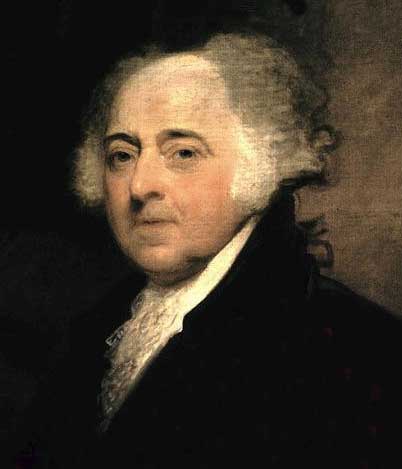 |
"Checks and balances, Jefferson... are our only security"--
JOHN ADAMS |
How did we get here? Checks and balances were under pressure before Donald Trump was even born. The Framers of the U.S. Constitution devised these mechanisms to ensure accountability in the national government, presuming that each branch would have the incentive to oversee the others in order to protect its own powers. With the modern presidency, however, a variety of factors have driven the presidency to the center of the national government, and partisan legislators have increasingly seen their fates bound up with that of their party's Presidents.
What has Trump done? Under Trump, though, the challenges to checks and balances have expanded as
ideological allies have seen unilateral presidential action as the fastest way to get what they want. On Trump's authority alone, the American security state has focused on immigrants, violently occupying cities and acting as a secret police force seizing people off streets, at airports, at hospitals, and even at immigration centers. Thousands, including some American citizens, have been imprisoned in squalid conditions and/or deported to countries like El Salvador and Liberia that are not their countries of origin, but that have agreed to cooperate with the Trump administration (
Putsch and Seagbeh 2026). An executive order redefining citizenship contrary to the 14th Amendment was at least struck down by the Supreme Court in
Trump v. Barbara. Similar brutal displays of executive authority have been used on tariffs, as well as governmental reform via the Department of Governmental Efficiency (DOGE,
Sollenberger and Rozell 2026).
In order to prevent reviews of his actions, Trump has decimated safety mechanisms within the executive branch. In his first week in office, he fired 13 inspectors general, the departmental officers in charge of internal oversight (
Haberman, Savage and Karni 2025;
Broadwater 2026). He also fired the judge advocates general in each of the military branches (
MLT staff 2025), the entire Foreign Influence Task force in the FBI (
Penn 2026), the Director of Governmental Ethics, the head of the National Archives and Records Administration, the head of the Office of Special Counsel, and 34 of 36 members of the Public Integrity section within the Department of Justice. He also fired all Democratic members of several independent regulatory agencies. Whatever the merits of the individuals involved, the systematic nature of these actions is difficult to miss.
Congressional Republicans' incentives have been to protect Trump, not their own prerogatives or good policy, and the Supreme Court has, with some exceptions, by and large upheld Trump's assertions of authority, notably in the
Slaughter v. Trump case that expanded presidential authority to fire independent regulators (
Jouvenal 2026).
What happens next? It's possible that future Congresses and courts will act to restrain presidents, particularly if they were of the opposite party. (See the Court's striking down Joe Biden's forgiveness of some college student loans.) But for this to stick, there must be some way for future presidents to act in cooperation with Congress and the courts, rather than running into pure partisan opposition.
The bad scenario is that future presidents use Trump's precedents to justify their own unilateral actions, making all presidents into temporary (we hope!) dictators. In that case, it's up to voters to choose presidents as responsibly as possible.
II. Corruption and the Economy
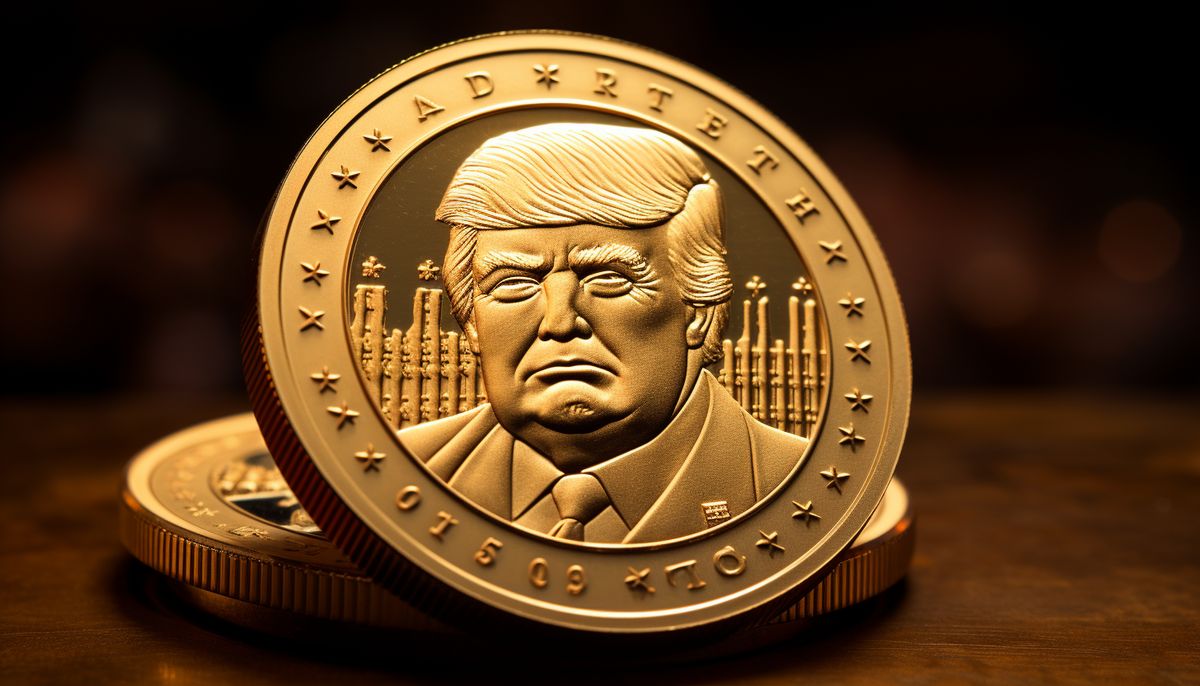 |
| Trump memecoin (swiped from cryptonews.com) |
How did we get here? Corruption has probably been endemic to governments since humans first formed states, but at least in America, it has never risen to such a level as to distort the economy. If anything, the rise of civil service and the decline of political machines has made American politics increasingly clean. Professional oversight, in secretary of state's offices across the country as well as the Civil Rights Division of the U.S. Department of Justice, have ensured that votes are counted as fairly as humanly possible. Trump's various challenges to 2020 vote counts were swiftly dismissed in court. But his innate sense of grievance was clearly communicated to his supporters as well as opportunistic job-seekers.
What has Trump done? Trump's personal corruption is on a staggering level. For one example, he has reaped more than $1.4 billion since returning to office from cryptocurrency alone--and those are numbers he's copped to on federal forms, so the reality could be even greater. His crypto ventures have been pitched to those seeking influence with the administration, such as the government of the United Arab Emirates, which poured $500 million into Trump's World Liberty Financial Venture (
Morse, Allison, and Tran 2026; Yaffe-Bellany and Lipton 2026). The ventures are not good business investments, being structured so that Trump gets his money up front while everyone else takes their chances. Investors had lost $3.81 billion on Trump's meme coin by mid-2026 (
Lipton, Fuller and Yaffe-Bellany 2026). Trump has also monetized early access to his statements, which have moved markets, particularly during the Iran war (
Uberti 2026).
Trump has returned the financial favors, too, with donors to his campaign, his various projects, and his sons' ventures being rewarded with federal contracts, presidential pardons, eased economic sanctions, and access to top officials (
Yourish Vogel and Smart 2025,
Halper 2026,
Vogel and Aleaziz 2026,
Sonne and Lipton 2026,
Kaplan Elliott and Mierjeski 2026,
Edwards 2026). Transportation companies have prudently sponsored Transportation Secretary Sean Duffy's reality-TV show as well as his son-in-law's campaign for a Wisconsin congressional seat (
Hartnett 2026). The
Department of the Treasury announced last month that it will eliminate a unit established to track financial misdeeds. Even presidential pardons have been exchanged for favors or political support (
Vogel and Craig 2026).
As Trump uses the power of the federal government to reward friends (and punish enemies), it increases the risk that business investment will be driven by what will please the President rather than what will bring a return in the marketplace. At the same time, important government data that investors use has been compromised by Trump's retribution against news that he feels makes him look bad (Grossman 2025, Rampell 2026a). As Trump violates economic rules and norms without facing any consequences, it encourages more such behavior.
What happens next? The best case scenario is that Trump has given corruption a bad name, and that future presidents will be angelic because they fear being compared to Trump. It is possible that Congress will close some loopholes, but I wonder if the lesson of the 1970s reforms post-Watergate is that the law is a clunky instrument where the incentive to self-regarding official behavior is strong enough. The worst case scenario is that the modicum of trust that underlay Western capitalism has been badly damaged, and that prosperity will be more difficult to achieve and particularly to spread, because people will be loath to risk capital when they might be subject to the capricious actions of others.
III. Electoral interference
 |
Bethany Lutheran Church in Cedar Rapids,
where your humble blogger casts his humble votes |
How did we get here? Twenty years ago, Republican control of Congress was threatened by the unpopularity of the President. How much that would affect congressional candidates was unknown until Election Day, but there was never any suggestion that Republicans would not honor the result, and their graciousness in defeat was symbolized when Dennis Hastert (R-IL) handed the House Speaker's gavel to Nancy Pelosi (D-CA).
The historical tendency of leadership selection processes to be corrupted or end in violence was well-known to the American Framers. They would have been aware of two European continent-wide wars, the War of the Spanish Succession (1701-1714) and the War of the Austrian Succession (1740-1748), as well as all the many machinations documented by Niccolo Machiavelli in
The Prince. That awareness informed Article II's weird design of presidential elections by an Electoral College, which itself was never to gather in one place. Then when President John Adams lost his bid for reelection in 1800, and voluntarily yielded power to his rival Thomas Jefferson, it was a watershed moment in American history. Even with some of the sketchiest election results--in 1876, and arguably 1960 or 2000--the winner was allowed to govern, and the loser waited for another day. Trump, by contrast, complained about being cheated before votes were even cast in 2016, and has never stopped insisting that he was the rightful winner in 2020 (
Zakrzewski 2026).
What has Trump done? Unfortunately, non-stop complaining has been only the beginning of Trump's attacks on electoral democracy. He has actively intervened in the 2026 elections, including calling for states to change congressional district lines, limit voting by mail, and aggressively cull their voter rolls (Marley and Binday 2026, ProPublica 2026, Marley and Sanchez 2026). He has disabled or taken over the Election Assistance Commission as well as election security agencies including the Cybersecurity and Infrastructure Security Agency at Homeland Security, the public corruption team and Foreign Influence Task Force at the FBI, and the Civil Rights division voting team at the Department of Justice (Marley 2026).
This month, it emerged that hundreds of personnel from the Department of Homeland Security have been trolling through state election files, ostensibly in search of illegal voters, often without the state's consent, and always with access to off-limits personal identification data (Corasaniti and Aleaziz 2026). He has raised the possibility of sending Immigration and Customs Enforcement agents to polling places, which at least one Republican candidate (Bobby Charles in Maine) have endorsed. Other candidates, including Rick Jackson in Georgia and Mike Rodgers in Michigan, have called for similar voter intimidation tactics (Hausmann 2026). Even if he is not successful in perverting the outcome, barring a big wave day for Democrats he has cast dangerous doubt on their legitimacy.
What happens next? Trump's claims of electoral fraud in 2020 were all laughed out of court, and none of his emulators have been taken seriously. So far, so good, and maybe that will continue, and the 2026 and 2028 elections will be accomplished with a modicum of fairness. The second-worst case scenario is anything that works in 2026 will be redoubled in 2028, and elections will feature candidates choosing voters--through constant efforts to redistrict, disenfranchise, and make voting more difficult--rather than the other way around. The worst case is that American elections become arenas for displays of raw power--think of what would have happened if J.D. Vance had been Vice President on January 6, 2021--and decreasingly free or fair.
IV. America in the World
 |
The U.S. won the Cold War, and then managed the aftermath
(Wikimedia commons) |
How did we get here? America's historic distance from European conflicts--"We go not abroad in search of dragons to destroy," said John Quincy Adams--wobbled by the late 19th century with the temptation to get ourselves an empire like all the cool kids had. Fifty years later, World War II showed clearly isolation was no longer an option, and America suddenly became the leader of the free world. For all our faults and poor decisions, America served as the backbone for world order, macroeconomic stability, and the spread of democratic values.
Trump and the world. It is not clear that President Trump values any of those goals. His language is that of dominance and "winning," so there is a constant concern that our allies are taking advantage of us, and need to be put in their places. Cooperation and multilateral approaches are inherently suspect, while he openly admires autocrats like Xi Jinping, Vladimir Putin, and even Kim Jong Un. Probably the most emblematic picture of this facet of the Trump presidency is when he and Vice President J.D. Vance sat on either side of Ukrainian President Volodomir Zelensky and took turns berating him (neither one making any sense as they did).
Trump has brandished tariffs as a weapon against trading partners, highlighted by "Liberation Day" on April 2, 2025, and implemented erratically since; talked about annexing Canada and the Danish territory of Greenland; favored politically-connected ambassadors over career diplomats; and captured the Venezuelan leader, installing a puppet regime that made substantial oil concessions to Americans. The Iran war has been an ongoing bizarre spectacle, with unclear objectives and constantly shifting pronouncements during the course of the war.
Trump is not the U.S., but he has made us harder to trust. Now these things are happening, as international actors realize they need to plan for a very different United States:
- Finland became the tenth European country to join the French Forward (Nuclear) Deterrence program, begun in March 2026 to be an independent alternative to the U.S. (Last 2026)
- The Netherlands announced it is shifting its gold reserves from America to London, and other countries are considering similar moves. "Trump is erratic and one cannot rule out that someday he will come up with creative ideas how to treat foreign gold reserves," explained Markus Ferber, a member of the European Parliament (Rampell 2026b).
- Saudi Arabia has been described as stuck between an assertive Iran and a disengaging United States. "In some sense it's their worst-case scenario," said former U.S. ambassador Michael Ratney (Nereim 2026).
- The European Union has invited Canada to seek "associate member" status. "We must urgently reexamine our partnerships," said leading EU official Ursula von der Leyen (Smialek and Stevis-Gridneff 2026).
What happens next? I'm spitballing here, but there is no one who can fill the world role the United States has played since 1945. China is less principled and more self-serving. The European Union has an inherent collective action problem. Who else ya got? It is difficult to imagine a world without American ballast being other than unstable, more expensive, and more violent.
***
In 2020 and 2021, after Trump lost his bid for reelection, I thought we could quickly return to something like normality. Clearly, I was wrong. I didn't reckon with the pandemic, or the deeply-seated emotions and interests among the general public that gave so much air to Trump's pretensions. Now, even if 2026-2028 go as well as can possibly be expected, I am not nearly as sanguine. The underlying trust in America that made so much of our lifestyles thinkable is shattered, and can't just be snapped back into place. International trading partners, allies, immigrants, domestic political actors, jobseekers, any Americans with life challenges--they have all been bitten not once but twice, they know the MAGA attitudes remain, and that a few votes in a few states could bring it all back. I expect us to be dealing with this mess for the rest of my life.
SEE ALSO:
"The Authoritarians' War on Cities is a War on All of Us," 26 August 2025
"Constitution Day: Whatever Happened to the Separation of Powers?" 17 September 2020
"Priests, Prophets, and the Fourth of July," 3 July 2019


No comments:
Post a Comment