 |
| The lives we should all be living: "Texas Two-Step," a movie on the Hallmark Channel, offers romance and country music in a small town third place (swiped from hallmarkchannel.com) |
(6/16/2026) In my last post, I noted the reputation of the 1990s TV series Friends has as a contributor to the "back to the city" trend earlier in this century, and wondered not only whether that trend has ebbed, but where today's friends are leading. Hannah Nuss, an entrepreneur and speaker at the recent EntreFest put on by NewBoCo, suggested we might spend some quality time pondering an infamous theme of made-for-TV romance movies: the young woman in the big city returning to her small town roots and finding true love and entrepreneurial happiness.
 |
| Hannah Nuss presents at EntreFest (Outrageous laptop borrowed from Robbie Nesmith) |
Nuss, of Denver, Iowa, is founder of a shop and a publishing company, both of which are called Local. She cited small town/rural advantages such as low startup costs, low rents, "super-low" cost of living, neighborly culture, and a small enough population that word of mouth spreads faster. She argues that the death of rural Iowa is a "false narrative people accept," and that "entrepreneurship is here" along with the happy endings of all those romance movies where the heroine chooses love over the big city.
 |
| Delaney Howell-Goth on stage at the Englert Theater |
Also at EntreFest last week, two other female entrepreneurs from small towns touted advantages for business and economic development. Marketer Delaney Howell-Groth (AgCulture Marketing), who farms with her husband near Rhodes, Iowa, said women entrepreneurs are already active enough to create more than half of all jobs created in small towns. Even more people could be shown the way--or the way back, if they've already left--if there were a supportive entrepreneurial ecosystem providing access to resources, training, and knowledge, which is what the conference she started, She Creates Rural, aims to be.
 |
| Stephanie Grutz presents at EntreFest |
A third business owner, Stephanie Grutz, mostly talked about her personal journey, but has just moved the headquarters of her healthcare businesses from Dubuque to Peosta, in part because she lives there, but also because she wants rural residents to have access to the types of therapies more commonly found in larger cities.
The river that ran through these three presentations was the contrast between an overwhelming big city full of action and people and wealth and the perception (illusion?) of economic opportunity, against a small arena with less wealth and fewer people, but a less frantic pace, and a chance for stable and "deep relationships" with the people you do encounter. A smaller, less crowded stage allows a person to be impactful and known.
Both the movie plot and the death-of-rural paradigm rely on stereotypes, of course, which however exaggerated also reflect some important truths. Lyz Lenz (2026) sees the same phenomenon at work in the popularity of Ballerina Farm, a Utah farm, store, and social media phenomenon created by Hannah Neeleman, a self-styled "trad wife." Lyz notes that the women interviewed by The New York Times "don't want to be Hannah Neeleman, exactly. What they want is a glimpse at an easier life." She continues:
They all seem very aware of what must go on behind the scenes to raise and school all those children while building a business empire and staying thin and breaking bread. But it's that idea of something simple and easier.... A nice husband, a bit of land, some chickens, and some kids? Isn't that so much easier than this modern world, where you sit at a computer and create value for a company that is actively plotting to sell your flesh to AI?
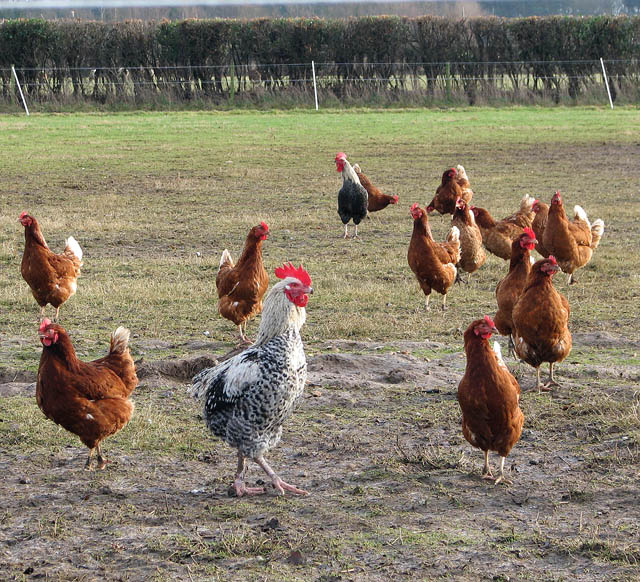 |
| Yes, they're cute, but my laptop smells better © Copyright Evelyn Simak and licensed for reuse under this Creative Commons License. |
Of course the trad wives and romance movies are selling fantasy, just like Friends, whose characters had an unbelievable Upper East Side lifestyle considering they worked at a coffeeshop.
If the rural young are hearing messages that they must leave to thrive, as our speakers suggested, those messages are landing for a reason. I'm not from a small town, but I'm from a state where small town representatives have run the government for years. And the messages they are bringing from their towns to the state in legislation and executive action pulsate with resentment. They snarl at immigrants, they snarl at transgendered people, they snarl at people who are concerned about the environment. If you are a young person who is different, or seeks a different truth, or whose mind is not slammed shut, these sorts of messages are not encouraging you to do anything but flee.
Back to reality: In a world with only two alternatives, corporate big city overstimulation or quiet old white small town, choosing either is going to be painful, because you'll be required to give up something you value. But are there really only two alternatives? More Americans live in suburbs than any other type of place. I grew up in the western suburbs of Chicago, with great schools and a big public library. Does no one dream of living in a suburb? When I go back, everything's different and no one knows me. Maybe not.
 |
| Prince Street, 2018: Boston's North End neighborhood is urban without being noisy and frantic |
It may be that in the contrast of extremes can be found there's a combination of attributes many Americans desire in their places but have difficulty finding: walkable neighborhoods, deep relationships, a variety of economic opportunities, and a variety of people with interesting perspectives. A few small towns seem to have achieved this, as have a few urban neighborhoods. But the more we as a country rely on cars to get us anywhere, and low prices at big-box stores to get us by, those places will continue to be hard to find, or to build.
 |
| Water Street, 2013: Decorah is small but has a great commercial street an easy walk from residential areas |
Small towns that can apply urbanism, and celebrate diversity and inclusion, may find themselves the objects of a lot of people's desires. And that, along with the positive examples and mentoring offered by people like our three speakers, would do wonders for their entrepreneurial ecosystems. And "big" cities that create some real neighborhoods will find they too can ride out whatever fantasies the media are selling us, even if their residents aren't handsome cowboys running Christmas tree farms.
SEE ALSO:
Kiva website for small capital loans
Produce Iowa web site for small town Iowa film makers
ORIGINAL POST: "What is the Future of Iowa's Small Towns?" 3 July 2018
 |
| Prairie Patch Farms Llama Experience: If you've read this far, you deserve a picture of a llama |


No comments:
Post a Comment