Friday, April 22, 2022

Young people of today, embrace walkable urbanism!


Suburban Nation cover

An invitation to speak to Coe's Topics in Environmental Studies class gave me a chance to explain walkable urbanism to a group of informed college students. As Jeff Speck argues in his essay, "The Wrong Color Green," walkable urban design is a more effective way of reducing greenhouse gas emissions than switching to electric cars and LEED-certified buildings without lifestyle changes--what he calls "Gizmo Green" (Speck 2012: 51-63). Speck's book also pointed me to this Center for Neighborhood Technology site showing--more or less--that transportation emissions in metropolitan areas come from car-dependent suburbia.

So how do we get people out of their cars and on their feet (or bicycles)? Speck and his co-authors had already described the prerequisites for most people: meaningful destinations, safe streets, comfortable streets, and interesting neighborhoods (Duany, Plater-Zyberk, and Speck 2010: 64-83).

The meaningful walk

Most people do not walk for the fun of it: "The first rule is that pedestrian life cannot exist in the absence of worthwhile destinations that are easily accessible on foot" (Duany et al. 2010: 64). The Mound View neighborhood northeast of Coe's campus has a grocery store, two parks, and several pubs all within an easy distance from most people's homes. When we lived in Mound View, we made regular summer strolls to this Dairy Queen:

Downtown Cedar Rapids is evolving into a walkable place, albeit with less in the way of life's necessities like groceries. (The pub pictured has closed, but there are plenty to take its place.)

The proximity of this grocery store to the Wellington Heights neighborhood means that a lot of people walk to it, in spite of the perilous crossing at 1st Avenue:


Walkable areas mix residential and commercial uses--take that, Euclidean zoning!--and are best based on a critical mass of locally-owned businesses. For some starter tips, check out the work of Stacy Mitchell at the Institute for Local Self-Reliance.

The safe walk

Most people will not walk where they do not feel safe. People feel safe from cars when streets are narrow and/or there is a buffer between cars and pedestrians. People feel safe from cars when buildings are designed to facilitate "eyes on the street" (a phrase made famous by Jane Jacobs) i.e. windows not walls. In downtown Fairfield, people crossing the main street from the park to the shops have a short hop where they and the crossing area are both clearly visible. 


Photo courtesy of Ben Kaplan

Streets through Cedar Rapids's Wellington Heights neighborhood were widened and made one-way in the 1960s to facilitate the speedy movement of cars. Thankfully, the streets were redesigned in 2019--though still wide--slowing the cars, and making the neighborhood more walkable and neighborly.


The very suburban area around Westdale doesn't feel safe to walk. Cars are fast and loud, and there are many places where they turn onto and off of the main drags. Streets are difficult and dangerous to cross.

Edgewood Road, pictured above, is a classic stroad. Pete Saunders is hopeful stroad design can be repaired, improving housing supply as well as walkability: This kind of suburban infill could relieve pressure on hot urban neighborhoods, thus reducing the displacement of poorer families. If developers include affordable housing in the mix, it could bring more people closer to the jobs in suburban office parks that are currently out of reach for many city residents. Maybe, but it's expensive, unlike toning up a core neighborhood where the grid pattern already exists.

Jeff Speck has specific design recommendations for safe walking (2012, ch. 5). Slip lanes are not safe... period!


The comfortable walk

Flat, simple, continuous front walls, narrow streets, and rows of street trees create a "degree of architectural enclosure--the amount that it makes its inhabitants feel held within a space.... Whatever the cause, people are attracted to places with well-defined edges and limited openings, while they tend to flee places that lack clear definition or boundaries" (Duany et al. 2010: 74-75). The comfortable feeling of 8th Street SE, even though this section is largely comprised of parking lots, comes almost entirely from the strategically-placed trees.

Waterloo artist Michael Broshar brilliantly captures how the design of this Chicago street feels both comfortable and interesting:

The same feeling comes from Gustave Caillebotte's beloved "Paris Street-Rainy Day," even though Caillebotte intended it to depict alienation.

This intersection on the north end of campus does not feel comfortable or safe, which has hampered development in that neighborhood.


The interesting walk

"For people to walk," write Duany and colleagues, "a neighborhood has to be interesting: not terribly so, but enough to convey some notion of human activity" (2010: 80). I love discovering little side-yard gardens, like this one in Oak Hill-Jackson:

16th Avenue SW, the historic commercial street of Czech Village, features shops built to the sidewalk, generous windows, and occasional benches:

 
A mural brightens an alley in Iowa City. They had to get an exemption for the sign, too.

 
Another downtown mural doesn't quite do the trick. The tunnel creates a wall effect in spite of the whimsical colors, and doesn't feel safe.

 
What is not interesting? Garages. And parking lots. The Med Quarter is full of parking lots that create distance between destinations (anti-meaningful), do not show signs of human activity (anti-interesting), and when in active use are trickier to cross than even busy streets (anti-safe).

The most effective way to keeping the planet habitable is to get people out of cars and onto streets. For most people, that requires re-thinking how we design streets, neighborhoods, and towns.

SEE ALSO:

Andres Duany, Elizabeth Plater-Zyberk, and Jeff Speck, Suburban Nation: The Rise of Sprawl and the Decline of the American Dream (North Point, 10th anniversary ed., 2010)

Diana Ionescu, "Cleveland Mayor Wants a 15-Minute City," Planetizen, 18 April 2022 

Charles Marohn, "To Fully Observe, We Need to Walk," Strong Towns, 25 April 2022

Jeff Speck, Walkable City: How Downtown Can Save America, One Step at a Time (North Point, 2012)


Thursday, April 14, 2022

Post No. 450: Nine years in


I began writing Holy Mountain nine years ago this month. That spring I was on a sabbatical leave from Coe College, gorging myself on literature about the phenomenon of place.  I needed somewhere to park my ideas, to help me process all the stuff I was reading.

At the same time I was encountering for the first time the school of urban design known as new urbanism. Writers such as Jane Jacobs, James Howard Kunstler, Chuck Marohn and other seemed to be on to something, to have found both explanation and antidote for a world gone mad. I listened to podcasts, read books and blog posts, and walked the familiar streets of my town while seeing them through new eyes. Things were awry, for sure, and had been going awry since the end of World War II, but there were ways to start making them right. A housing crisis, rising gasoline prices, falling crime rates, and some popular TV shows were causing young people to consider the attractions of urban life. America, particularly young America, seemed to be discovering the keys to a better, communitarian, inclusive, environmentally- and fiscally-sound future at the same time I was.

In those heady days, I teamed up with a friend and former student, Ben Kaplan, to start a local discussion group which came eventually to be known as Corridor Urbanism (not coincidentally the title of Ben's blog). I got in on the ground floor of Strong Towns' blog roll, which enabled me to exchange ideas with a number of virtual members. Corridor Urbanism hosted Chuck Marohn in 2015, and in 2017 ginned up a grand day in the Mound View neighborhood. Every time I turned around there were new concepts, new insights, new possibilities.

street scene with tents and people
2017: Imagine Mound View, 1600 block of F Avenue NE

I'm still blogging nine years later, and Corridor Urbanism has survived the pandemic shutdowns and is now in its eighth year. In fact, we meet next Wednesday 4/20 at Thew Brewing in Cedar Rapids, and Wednesday 5/18 probably in Marion. Come join us! We are persisting!! Our city has converted one-way streets back to two-way, and added considerable amounts of sidewalks and bike infrastructure. New housing concepts are emerging, at least in the core neighborhoods on the west side of the river.

Nevertheless, something is missing from the early days: A sense that the way forward was simple, and if we explained it enough it could be achieved? That the arc of the design universe was bending towards urbanism? That these ideas, which seemed away around the bitter dualities of national politics, have been incorporated into the conservative movement's pantheon of demons? Or merely the excitement of novelty is no longer with us?

I wrote 14 posts that first month, and 77 posts in what was left of the year 2013. I haven't approached that since. I seem to have less to say. Maybe I can find a book in the piles of words that I've written? Or maybe it's time to stop writing and get involved? 

Kharkiv before Putin moved in (from travelafterkids.blogspot.com. Used without permission.)

It was empowering in 2013 to think that we had found a way to build communities on a local level, while ignoring the political theater of national politics. That was before Donald Trump took political theater way past the threshhold of pain, and begat Ron DeSantis, Greg Abbott, and their painful ilk. But are our local conversations about missing-middle housing, roundabouts, or scooters any better? I see my state being run on the politics of bilious cultural rage, my metropolitan area focused on building and widening highways, and a promising urban district devolving into a clot of greasy burgers, hair salons, and condos that cost more than my house. My favorite coffeehouse across the street from my office closed in March 2020. Meanwhile, teaching has its benefits, but I mostly seem to be annoying students who would rather be doing something else.

The core ideas remain. We are better in every way when we live in genuine community. There is value in difference, and virtue in welcoming the stranger. Natural and financial systems work according to their own rules, so we had best learn to live with them. And maybe my thinking gets sharper when I realize how non-obvious is the road ahead.

Most read pieces, 2013-2022:

(1) A Silent But Needful Protest, 1 November 2016: "At Coe College, where I teach, nearly 100 members of the community responded yesterday to a call by the student organization Multicultural Fusion to stand in silent protest during the noon hour." 

(2) Snout Houses? In Oak Hill Jackson?? 16 October 2016: "Oak Hill Jackson is a historic neighborhood located south of downtown Cedar Rapids."

(3) Crime and Our Common Life, 1 August 2016: "Republican presidential candidate Donald J. Trump is asserting a dark, dystopian portrayal of America in 2016 as overwhelmed by predatory criminals and terrorists, in spite of data that show the national violent crime rate has steadily fallen for 25 years."

(4) Let's Hear It for Cedar Rapids, 5 September 2016: "A great city has places to go and ways to get there, and Cedar Rapids celebrated both this Labor Day weekend." 

(5) Gentrification: What Do We Know, 26 July 2016: "A number of forces--economic, ecological, health and fashion trends--are driving middle-class Americans back to the central cities many of their own ancestors abandoned decades ago." 

Least read pieces, 2013-2022:

(1) I Think This House Will Be OK, 18 March 2021: "It's not often my neighborhood makes the news, but last week the Board of Adjustment was called in to grant a zoning waiver to a house on my very block."

(2) Dear America Brings Light in the Heat, 8 July 2021: "The U.S.-Mexico border right now is a mess, which is not new."

(3) Theater Review: "Respect," 15 June 2014: "Cedar Rapids's marvelous arts venue, CSPS, hosted the premiere Saturday night of the University of Iowa's Summer Rep production of "Respect: A Musical Journey of Women"."

(4) Rollin' Recmobile Brings the Fun, 28 June 2021: "Cedar Rapids Parks and Recreation's Rollin' Recmobile started its week of fun this morning at Redmond Park in the Wellington Heights neighborhood."

(5) Nothing Says Community Like..., 13 January 2014: "...a great big pile of Christmas trees!"

Stronger in community:
Volunteer at the 2022 Maple Syrup Festival

Friday, March 18, 2022

What we can do about housing

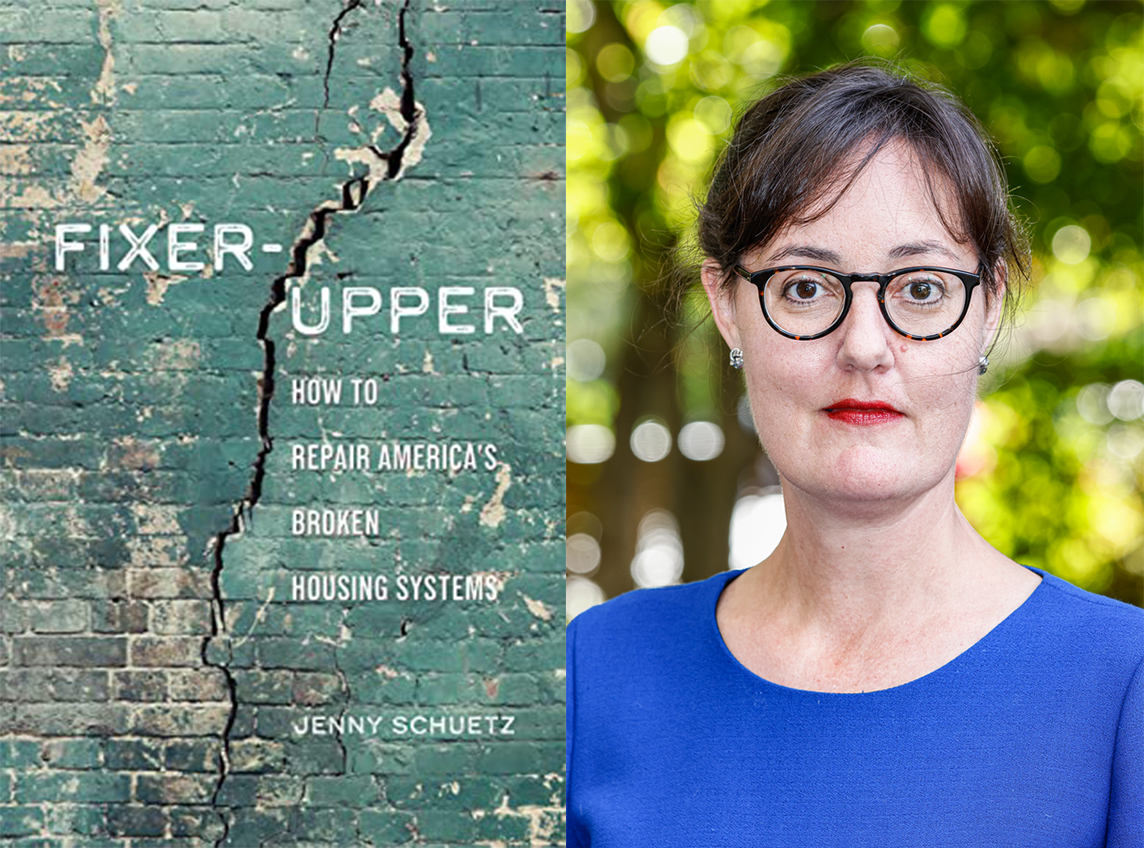
 Jenny Schuetz and her book "Fixer-Upper."

While the politics of housing remain "wicked," issues of supply and affordability are getting more attention than ever, and there are some signs of progress in places around the country, according to Jenny Schuetz, senior fellow at Brookings Metro and author of Fixer Upper: How to Repair America's Broken Housing Systems [Brookings Institution Press, 2022]. She spoke to a webinar hosted by the Harvard Joint Center for Housing Studies.

Schuetz summarized the housing policy problem in America: production has not kept pace with population growth, especially since 2008 and especially in high-demand places (cf. Sisson 2021). Where houses are being built, they're often in "the wrong places," the outskirts of metropolitan areas where people face difficulty getting to their jobs, and where they face greater threat from environmental catastrophes like forest fires. Commuting from the outskirts exacerbates traffic congestion and climate change. Everywhere in the United States, whether in Silicon Valley or small-town Iowa, the lowest income renters have little cash left after paying rent, even for housing that is barely structurally-sound. Homeownership is the root of the racial wealth gap, due to accumulated effects of past discrimination, so that even homeowners of color have half or less the household wealth of white homeowners in the same area (cf. Perry 2020).

Housing problems are widely-recognized, but strong systemic disincentives prevent addressing them, she noted. Most people in America rely on homeownership to build wealth, meaning their well-being is fundamentally threatened by new construction that might negatively affect their property values. Cities, too, rely on their property tax bases to fund services, and few if any can risk seeing that base eroded. As a result, zoning codes allow only single family detached housing, sometimes specifying large minimum lot sizes, and motivated neighbors are allowed "veto power over new development." (Older middle-class homeowners are typically more politically engaged than their poorer and younger would-be neighbors.) Historic preservation ordinances are also used to prevent change. 

Schuetz assembled an integrated set of recommendations for governments at all levels to address the issue. Local governments should reform rules for housing production, and allow more diversity of prices and types across the city (cf. Cortright 2017). They may find that they get more for their housing dollar when they acquire and rehabilitate existing buildings than when funding new construction. State governments should facilitate regional revenue and cost sharing among localities in the same metropolitan area, and nudge towns towards removing legal obstacles to housing. The federal government should provide more financial assistance to low-income people to increase their choice of housing, and encourage ways of wealth-building besides homeownership. She noted the 2021 infrastructure bill included more discretionary money for the Department of Housing and Urban Development for competitive housing grants outside of central cities.


In response, Christian Dorsey, vice chair of the Arlington (VA) county board and a member of the D.C. regional council of governments, agreed with the political challenge of local housing policy. He called it the "third rail" of local politics, akin to Social Security at the national level, because of the fear it creates among existing residents ("more for others means less for me"). He urged housing advocates to engage neighbors "with grace," suggesting they will find they are motivated by (1) liking the communities in which they live (which is a good thing, and can be addressed by pointing up how new housing will benefit those communities) and (2) fear they will personally bear the cost of the new infrastructure required. The latter can be addressed by making infrastructure "part of the regular program" of city services rather than adjunct to housing policy.

Schuetz suggested three political arguments for smaller denser housing: (1) businesses can choose from a bigger pool of nearby talent; (2) easier on the climate; and (3) rectifying past racial discrimination. She noted there has been little systematic study of the economic impact of modest upzoning, because there have been as yet only a few recent cases on a citywide base. Dorsey added that Arlington's housing reforms have seen "no corresponding decline in property values," nor in consumer demand, suggesting the negative impact on family wealth is "more of a canard" than established truth.

I'm all for hopeful noises on seemingly intractable issues!

SEE ALSO:

"Housing Policy," 1 July 2021

"Onlining About Redlining: MLK Day 2022," 18 July 2022

Tuesday, March 15, 2022

Does anybody really know what time it is?


Having just endured the semi-annual changing of the clocks, remembering to "spring forward in the spring," I am detecting a disturbance in our collective mood, if we can take any indication from the fact that both our state legislature and the U.S. Congress are working on legislation to abolish this ritual. Iowa's House passed a bill this week to enact year-round daylight saving time. If they can find a way to make this measure hurt transgendered people and/or public school teachers, which seem to be the paramount policy goals of the legislature this year, it's as good as done.

I've gotten used over the years to springing forward and falling back, and it doesn't bother me that much. I also will say that decades of life in the upper Midwest has given me a sense of when the sun rises and sets, and if we mess with that I don't know where I'll be. Here's the thing: my town is at 42 degrees north latitude, which means summer daylight lasts about 15 hours, and winter daylight about half that. Optimizing the distribution of that daylight over the twenty-four hour day is tricky.

To attach some numbers to this, note that most AM radio stations either power down at sunset or go off the air altogether. These times change every month, so tracking them is an easy way to smooth out fluctuations in sunrise and sunset times. If we stayed on daylight saving time all the time, this is how our year would look:

EASTERN IOWA AM RADIO POWER UP AND DOWN TIMES, ASSUMING YEAR ROUND DAYLIGHT SAVING TIME

January

8:45 a.m.

6:00 p.m.

July

5:30 a.m.

8:30 p.m.

February

8:15 a.m.

6:45 p.m.

August

6:15 a.m.

8:15 p.m.

March

7:30 a.m.

7:15 p.m.

September

6:45 a.m.

7:30 p.m.

April

6:30 a.m.

8:00 p.m.

October

7:20 a.m.

6:25 p.m.

May

5:30 a.m.

8:15 p.m.

November

8:00 a.m.

5:40 p.m.

June

5:15 a.m.

8:30 p.m.

December

8:30 a.m.

5:45 p.m.

You'll notice the sun rises awfully late in the morning in the winter months, though we'd get an extra hour of daylight at the end of the day. I was in high school (in Illinois) during the 1970s energy crisis, when the nation went on daylight saving time in January 1974. It didn't get light until second period, which was strange. My history teacher, Mr. Lindvall, a great teacher whom I completely failed to appreciate, was essentially teaching a night class, for which he deserves even more credit. 

Illinois is to our east, while most of Nebraska, to our west, is also on Central Time. That would mean some late mornings in, say, North Platte in mid-winter.

Back to Iowa: If we go on standard time year-round, this is how our year would look:

EASTERN IOWA AM RADIO POWER UP AND DOWN TIMES, ASSUMING YEAR ROUND STANDARD TIME

January

7:45 a.m.

5:00 p.m.

July

4:30 a.m.

7:30 p.m.

February

7:15 a.m.

5:45 p.m.

August

5:15 a.m.

7:15 p.m.

March

6:30 a.m.

6:15 p.m.

September

5:45 a.m.

6:30 p.m.

April

5:30 a.m.

7:00 p.m.

October

6:20 a.m.

5:25 p.m.

May

4:30 a.m.

7:15 p.m.

November

7:00 a.m.

4:40 p.m.

June

4:15 a.m.

7:30 p.m.

December

7:30 a.m.

4:45 p.m.

Where now we have twilight past 9 in the summer, under this scheme we'd lose it at 8. We could start fireworks shows earlier, but maybe other kinds of outdoor activity would suffer? 

But this blog is here to ask: Which arrangement would be best for the community? Maybe having the daylight last longer throughout the year would encourage more outdoor activity in the winter, while the later sunrises would make coffeehouses cozier. It would be interesting to study the effect of either change on worker productivity. I'm definitely a morning person, but would that change if the sun rose later?

It's really hard to think of a public purpose to moving summer daylight from the evening to the 4:00 hour of the morning. The city and homes and businesses would all be using electric lights when awake, and sleeping when the sun is out. So I'll just leave it at that.


10th Anniversary Post: The Election and Our Common Life

  Your humble blogger with KGAN reporters on election night 2016 (from Eric Wylie's Facebook page) (11/6/2026)  A recent New Yorker  car...