Thursday, July 18, 2019

The choices parking forces

walkers on urban pedestrian plaza
Pedestrian mall by Baruch College, New York City (Swiped from patch.com)

(7/18/2019) What kind of city are you? A big draw with densely-populated mixed-use downtowns? A large city with a natural barrier to growth like a mountain range or an ocean? A legacy industrial city with miles of under-performing areas? Or a small city without a big name but with plenty of cheap land and no natural barriers to expansion?

Where you sit strongly affects where you stand on issues like traffic and parking. Some cities, like New York, San Francisco or Seattle have the crowds and the confidence to consider closing streets, instituting congestion pricing for auto traffic (see also Trumm 2019 on Seattle), and charging market rates for parking (Shoup 2005).

The brilliant work of Professor Donald Shoup, and articles like this one from Grist with the headline "Cities Finally Realize They Don't Need to Require So Much Damn Parking," are centered in this first category of towns. Grist's examples are Chicago, New York, Seattle and Washington, D.C.--though they also note Buffalo and Fayetteville have eliminated ordinances requiring parking minima for development. Shoup, a professor at UCLA, does a lot of his empirical research in his hometown of Los Angeles.

Legacy industrial cities, on the other hand, are staring into the abyss of obsolescence; they need more traffic, and have plenty of parking. Ditto many small towns and rural areas.

Surface parking lot on a Tuesday afternoon, New Bohemia neighborhood
Towns like mine (pop. 132,228) are in neither of those categories: We have some demand, but are nervous about sustaining it, and are without physical--or, for the moment, economic--barriers to spreading. Land is cheap, and it's easier to overdo the parking and out of anxiety there might one day be too little.

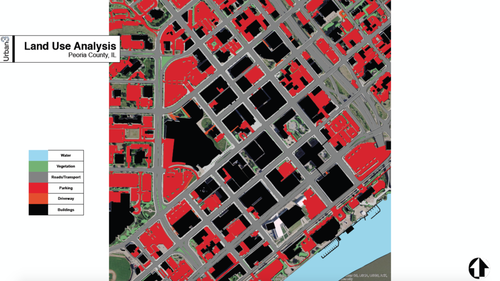
This map of downtown Peoria, IL shows the enormous amount of land devoted to parking. (Source:  Urban3 )
Parking areas in downtown Peoria, Illinois (Source: Urban 3)
Too many people in and out of city government place too much concern about parking, preferably free-of-charge and easy to find. How many people express this concern is hard to say without doing opinion research, which I have not done--not even a measly focus group. But it's a lot: The subject of parking inevitably comes up in conversations about development, even about areas where there are already huge swaths of surface lots.

Strip mall parking lot, Black Friday 2015
Note that the problem is really not city-imposed parking minima, where the city demands private developers provide more parking than the developers would otherwise provide, but a more generalized anxiety. We are not LA or New York, and we know it. I have had someone tell me with a straight face that parking in downtown Cedar Rapids is a "disaster;" resident concerns about parking, along with traffic and noise, frighten the City Council away from infill development (see Kaplan 2017); and parking lots have caused the destruction of historic structures in potentially-productive parts of town (see SaveCRHeritage 2013a, 2013b). Parking lots predominate in our core areas, and of course are ubiquitous along our commercial stroads like Collins Road, Edgewood Road, Mt. Vernon Road, and 16th Avenue. And yet there's never enough.

I would characterize the pro-parking argument this way: The city needs to provide the largest amount of parking space it can, free of charge, because: (1) shoppers, employees and those who attend events have come to appreciate the convenience of door-to-door driving; (2) Cedar Rapids consumer businesses are mostly competing on price and convenience (with the strip malls and big-box stores, with the Internet) rather than on vibe or experience; and (3) there's no particular reason not to.

Shoup's empricial study of the Westwood Village area of Los Angeles found drivers spending an average of 3+ minutes looking for parking. His answer is to charge the market price for parking, which he defines as the price that leaves one meter free on every block. Cedar Rapids residents, goes the argument, have a market price for parking that is near zero, and little appetite to search for spaces, because they have choices. So anything other than plenteous free parking will doom businesses and piss off voters.
Free on-street parking, 3rd St SE
Done right, parking for cars can actually contribute to walkability. Speck (2018: 150-151) argues that on-street parallel parking helps to calm traffic while supporting mixed uses. Angle parking...
Lincoln Square, North Lincoln Avenue, Chicago
Note that placement on this one-lane, one-way block reduces car-bike conflict
..."increases the parking supply and slows traffic, both of which are great for urban retail" (p. 154). Taken in moderation, parking can indeed support other uses of the street, particularly when they bring customers to businesses, so they can remain in business, so we can walk or bike to them.

Even larger parking areas can in some cases support urbanist development, if they're moved away from the action (Kaplan 2015). Using the example of 2nd Street SE downtown, Ben notes, "This stretch of downtown is all parking lots, loading zones, and blank walls. It's also necessary. This space functions as a repository for all the stuff you need to help 1st Street and 3rd Street be great streets." Similar phenomena can be observed on 15th and 17th Avenues SW, flanking the re-emergent heart of Czech Village that is 16th Avenue; the lengthy and capacious Lot 44 (pictured above), on the river side of New Bohemia; and Henry Street in Decorah, which makes Water Street possible. Rochester, Minnesota has incredibly dense development around the Mayo Clinic, facilitated by emptier areas that surround it, though as the Downtown Master Plan (2010: 31) notes, "the fringe areas... often exhibit a pattern of development, including many blocks of surface parking lots, which does not provide either a gentle transition from Downtown or a strong edge." In 2019, we need parking areas, but too much parking can strangle development.

Edge of downtown Rochester
There are reasons not to go the route of acres of free parking. Shoup (2005, ch 5) cites several negative impacts of excessive, free-of-charge parking:
  • it warps urban form, because there are parking lots where there could be housing, stores or restaurants; 
  • it removes potentially productive land from use;
  • it frustrates walkers by placing destinations farther apart;
  • it amounts to a subsidy of driving by non-drivers, because the parking spaces are paid for with tax money; and so
  • it incentivizes driving of private cars, as opposed to other, more environmentally- and fiscally-friendly forms of transportation.
As Shoup argues, there are tradeoffs between parking space and productive space, between accommodating cars and encouraging walking, between subsidizing parking and everything else in the city budget, between parking and financial productivity. I'll allow these tradeoffs are not the same in a town like Cedar Rapids as they would be in a big-name, densely-populated city, and even that the consequences of developing some of these parking lots are going to be different here than there. But we need to acknowledge the choices, and recognize there are costs (opportunity as well as financial) to an obsession with parking.

Strip malls and big-box stores are not financially productive places (Quednau 2017); let's stop building them, and let's stop subsidizing their existence. We could charge market prices for parking, and use the revenue to fund improvements in the area (Shoup 2005, chs 15-21)--including, if the situation warrants, municipal parking garages--compatibly designed, of course.


Nevada City, California, recently raised their meters to $1/hour from 25 cents, with the revenue dedicated to fire protection; even then, it should be said, merchants and residents are ambivalent (Bliss 2019).

More housing and offices closer to "the action" will provide a 24-hour population that doesn't need to drive to get there. Encourage owners of large parking lots needed at different times (churches, clinics, restaurants) to share facilities rather than having their separate lots vacant most of the time (Herriges 2018). Improve public transportation near active places, like between Kingston Village and New Bohemia. Provide non-financial support for local business development (Mitchell 2017). Help, or at least allow the core areas of our town to become places where people want to be, and where businesses need to be.

Town and Country Mall, Black Friday 2015
Cedar Rapids, like most towns its size and in its region, has been built around the automobile to such a degree that to get around any other way requires considerable effort. Our vast parking infrastructure reflects that, of course, and to change that is akin to altering the flow of a powerful river. The effort and cost occur right away, and the long-term benefits are... long-term. And yet...

We need to acknowledge that the places we build, and how they evolve in the future, result from choices--not inevitability, not nature, but our choices. If we are not making the choices, someone else is making the choices for us. So, what kinds of places are we choosing? The great Danish architect-designer Jan Gehl says in the documentary "The Human Scale:"
We have known this about the motorcar: If you make more roads, you will have more traffic. Now we know about cities: If you make more places for people, you will have more public life. In cities that have done away with their public spaces, life has become totally privatized (quoted at Borys 2018).
So, what kinds of places are we choosing to build? What values are we choosing with? You can't parking lot your way to public life.

Former K-Mart, Black Friday 2017
SOURCES:
Donald Shoup, The High Cost of Free Parking (Planners Press, rev ed, 2011)
Jeff Speck, Walkable City Rules: 101 Steps to Making Better Places (Island Press, 2018)

PREVIOUS POSTS:
"Hiking the (Parking) Crater," 25 January 2018
"Black Friday Parking 2017: After the Ball is Over," 24 November 2017
"Downtown vs. Parking," 29 September 2013
"The Parking Dilemma," 31 July 2013

One more video:


Monday, July 8, 2019

Here come the scooters!


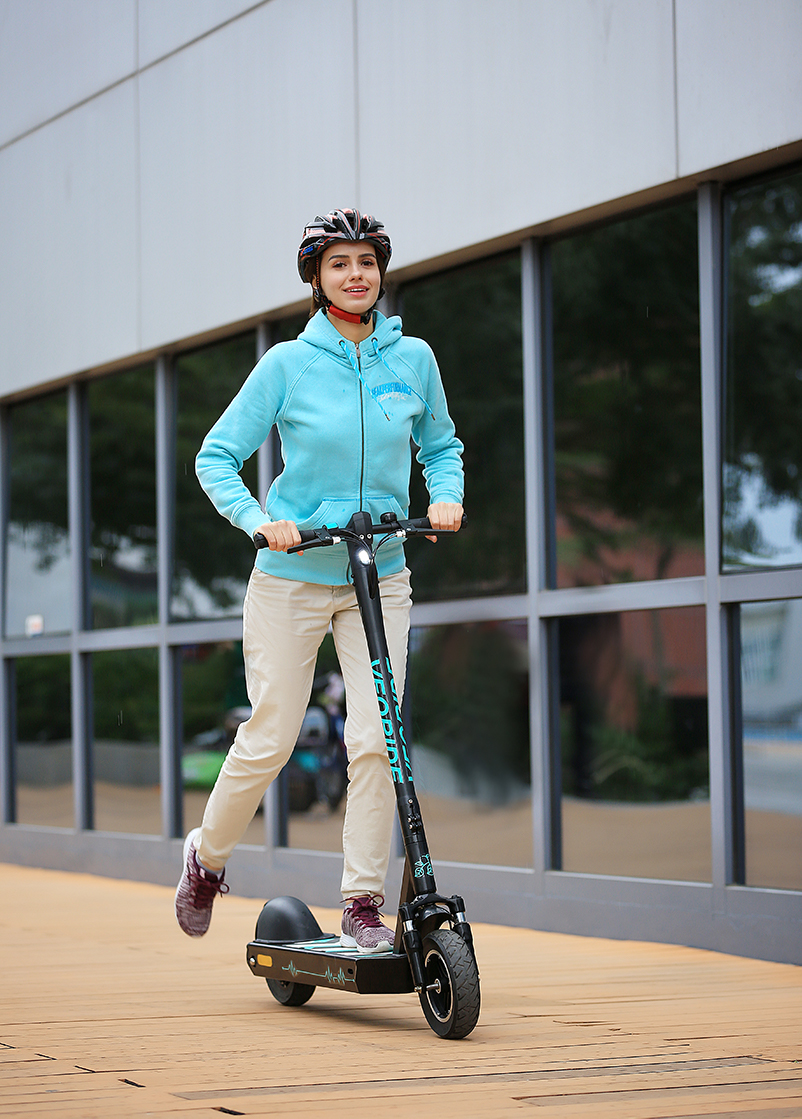
Source: Veoride.com
Electric-assist scooters will go "on trial" next month in Cedar Rapids, with a rental concession run by Veoride, the same firm that runs the bike share program. The timing is set to coincide with the start of fall classes at Coe College and Mount Mercy University. Thirty scooters will be available for a two-month period. The fees will be the same as for the bikes: $1 to unlock plus 15 cents per minute, with discounts for those who qualify for local, state or federal assistance programs.

If the bikes, which I've ridden a few times, are any indication, the scooters will be serviceable and durable if not glamorous. From the Veoride website:
Each VeoRide scooter features 10-inch wheels with a proprietary, shock-absorbent tire and comes equipped with a built-in sensor to detect road conditions and automatically engage the motor and braking system to slow the vehicle and protect the rider. The swappable battery located in the deck of the scooter creates a lower center of gravity, the motor positioned at the rear provides greater stability and keeps the vehicle from lurching forward, while the mountain-bike type suspension ensures a smooth ride. The speedometer lets riders know how fast they are traveling, and VeoRide can program and adjust scooter speed to meet a community’s standards.
Atlantic writer Robinson Meyer offers these additional tips, which you may not need, but for which I will be grateful if I ever find myself on one of these things: 
It’s best ridden with one leg on the platform and the other hanging off the side for emergency braking, or fleeing. For a classic scooter, all propulsion has to come from either gravity or the rider’s body, pushing off the ground with his foot. An e-scooter only needs you to push off when coming out of a stop. (After that, the engine takes over.) The push-off/scoot-forward/hit-the-throttle movement is the only real coordination required.
Meyer recommends riding in the bike lanes: Sidewalks are small, and are reserved for pedestrians, poor dears. Roads are big and have lots of space for us Big Scooter Adults. [SEE ALSO: Benjamin Schneider, "What Happened When I Rented an E-Scooter for (Almost) a Month," City Lab, 1 July 2019]


Bird reached agreement with Kansas City after starting there with a "guerilla drop"
(swiped from kansascity.com)
Scooter programs come highly recommended. Corridor Urbanism co-founder Ben Kaplan was nothing short of ecstatic after trying them out in Kansas City last year. They are amazing, he wrote. Every city should have them. All the good things you have heard about the scooters are true. He went on: They are cheap, fun, and useful. For one trip, I went two and a half freaking miles and it was delightful.

Meyer of the Atlantic says his three-mile commute to work in Washington, D.C. "had never gone so fast" as when he finally tried it by scooter. His main concern is that scooters are too "socially conspicuous" to endure, and will soon join the ranks of transition lenses, cargo shorts, and Camelbacks which "have never escaped their dorkiness." Ben replies: Are they dorky? Hell yeah. Will you care once you're on one? Hell no.

See the source image
Jenny Durkan, mayor of Seattle
Nevertheless, we must ask ourselves, are we doomed? If you're like me, you ask yourself this question all the time, anyway, so let's consider whether electronic scooter rental in Cedar Rapids--or your town, if you're not fortunate enough to live in the city SmartAsset rated #6 Best City of Living the American Dream--will exacerbate or mitigate this doom.

Concerns about scooter invasions fall into two categories: danger to the riders themselves, and danger or at least inconvenience to everyone else. Seattle mayor Jenny Durkan, before changing her position in May 2019, had long been opposed to scooter rentals in her city. She explained in an interiew:
It's so funny, every mayor who's got them says don't take them.... [E]very city that has scooters has had significant traumatic injuries. And one trauma doc was quoted as saying it's like we forgot everything about seatbelts, helmets, and other safety equipment. So, look, I know that some people think that scooters are fun. I think the danger of them, and the demonstrated danger of them and the liability of the City--cities now are paying out millions of dollars in judgments for people who are hurt, because you're the City saying here use a scooter. (Trumm 2018)
Nashville, Tennessee is suspending their pilot scooter program, which featured 4,000-odd scooters being rented by seven companies. The immediate stimulus was the death of a 26-year-old man last month; he was struck by a car while riding a scooter with double the legal maximum of alcohol in his blood, but complaints had been building for awhile (Short 2019).

Then there's the impact on everybody else. In April, an 81-year-old man was killed in a Paris suburb when he was hit by a scooter; Paris, too, is considering fewer scooters and more regulations (Prigent 2019). Also this month, in Oregon, the Multnomah County Sheriff's office found 57 rental e-scooters in the Willamette River near Portland. A Chicago friend and community activist of many years standing expressed exasperation on Facebook: Are there no rules of the road for the damn scooters? Her friends sympathized: Does not appear so.... Apparently not.... None. About 10 years ago when they first came out people were riding them and they were getting tickets. The city passed the law: no scooters. Now they are legal because I can rent them. One of them hashtagged "#rahmsrevenge," referring to the unpopular former mayor, Rahm Emmanuel, whose administration introduced the rental program.

Californians interviewed by the New York Times complained about scooters scattered willy-nilly on the sidewalks and blocking handicapped ramps, and sidewalk-riders terrifying the disabled and elderly (Bowles and Streitfeld 2018). As they did in Kansas City, Bird, LimeBike, and Spin began renting out scooters in Los Angeles, San Francisco and Santa Monica without consulting with the governments or the neighbors. "They just appeared," said a San Francisco official. "I don't know who comes up with these ideas or where these people come from."

Scooter safety tips, from Veoride.com
Is riding scooters dangerous? Maybe, if you're inexperienced, or drunk, but evidence from Kansas City Tacoma and Portland found relatively few injuries. Nashvilleans on scooters go to Vanderbilt Medical Center with injuries from crashes one or two times per day, but in the first three months of this year 7,859 motor vehicle crashes caused 2,145 injuries and 15 deaths (Short 2019). (See also Cortright 2019). As Chuck Marohn of Strong Towns Tweeted:
Some citizen complaints about scooters may be a response to their novelty. In Cedar Rapids, the scooters aren't here yet, but electric assist bike rentals began in May. Local TV station KCRG ran an arguably overblown story about rental bikes not being returned to rental stations, even though that is not required. (Riders are only instructed to lock the bike to end the ride, and to leave the bike in an upright position in a place that does not impede pedestrian or vehicle traffic, or access to private property.) The report quoted a downtown worker: I walk through Redmond Park every day to and from work and usually at the night time is when I'll see a bike or two there (emphasis mine). And, lest we forget, bike lanes freaked us out when they were introduced in 2013.

Alert the media! Dockless car blocking a driveway in New Bohemia

Wellington Heights: Where do the scooters go in this picture?
A huge part of the problem, to the extent there is a problem, is that Cedar Rapids, like most towns, has for decades built transportation infrastructure with one goal in mind: the speedy movement of motor vehicles. The realities of the 21st century, along with demand from some members of the public, have caused our city to adopt a complete streets policy, but accommodating multiple modes of transport with a network built for cars is no easy matter.


Education, and informational videos like this one, will help reduce accidents due to user error, and encourage cooperative mixing:


But when problems arise with the introduction of scooters in Cedar Rapids, and there will be problems, the people who watch this video will not be the ones causing them. The public will exaggerate the problems because we're used to cars and we're not used to scooters, but the problems will be real, because aggressiveness and opportunism are part of the human experience. The 21st century is requiring more sharing of space, even in spacious and sparsely-populated Iowa, which means there will inevitably more encounters with assholes using a variety of modes of transport.

Is enforcement the answer? I often hear complaints that cyclists and pedestrians aren't subject to law enforcement the way motor vehicles are. This is bunkum; anyone with eyes can see motor vehicle violations on a daily basis that aren't penalized, either. (For the tragic side of this, see Shill 2020.) The fact is, our streets are pretty much anarchic, and I have to admit for the most part it works. Should the police reallocate their resources to provide more traffic enforcement? If so, I pray it's done in an even-handed way, and not in a way that targets scooter riders, or young people, or poor minorities.

I am a transportation omnivore: I drive, cycle, walk, and take the bus. I would like to continue to do all those things without the fear of being struck by an errant scooterist, or (in my car) striking the scooterist. And if scooters as great as Ben says they are, then I want a chance to add them to my transportational toolbox.

Wednesday, July 3, 2019

Priests, prophets and the 4th of July

Swiped from Agence France Presse via washingtonpost.com
I hate, I despise your festivals, and I take no delight in your solemn assemblies.
Even though you offer me your burnt offerings and grain offerings, I will not accept them; and the offerings of well-being of your fatted animals I will not look upon.
Take away from me the noise of your songs; I will not listen to the melody of your harps.
But let justice roll down like waters, and righteousness like an ever-flowing stream.
--AMOS 5:21-24

We will be having one of the biggest gatherings in the history of Washington, D.C., on July 4th. Major fireworks display, entertainment and an address by your favorite President, me!
--DONALD TRUMP

Independence Day is Thursday, marking the 243rd anniversary of American independence from Great Britain, and our country's annual mid-summer holiday. I'm afraid I'm not feeling it this year. I'm often not feeling it on the Fourth of July, being ambivalent about crowds, loud sharp noises, and (often) excessive heat. This year, though, I'm really not feeling it.

America has a lot to celebrate, of course: our heritage of individual freedom, all the natural beauty preserved in our national parks and wilderness areas, all the people from the military to first responders to teachers to social activists to planners to writers and artists who have dedicated their lives to their communities and country. At our best we have been an example and inspiration to the rest of the world, the "city on a hill" to which the early settler John Winthrop aspired--and probably a better version than Winthrop and his Puritans might have produced on their own. The Founders of our country were flawed individuals--by our standards they were racist, sexist and elitist--but they created a framework that could be expanded and adapted. 

See the source image
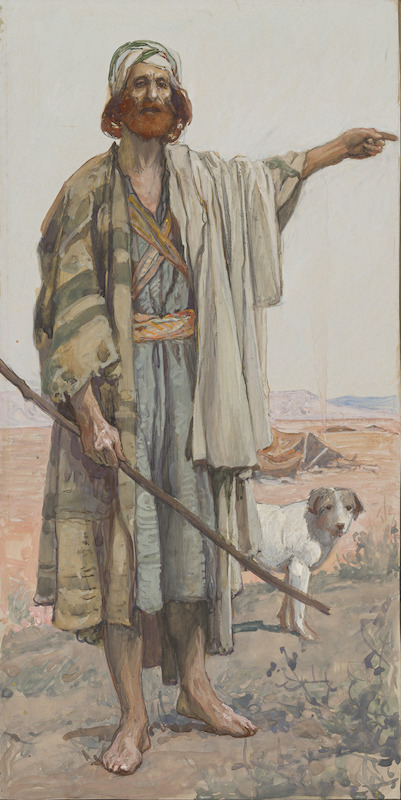
The prophet Amos (Wikimedia commons)
The Fourth of July is a holiday tailored to "priestly" celebration of America. I use the term "priestly" in the sense Martin E. Marty did when he visited Coe College nearly 30 years ago and did an impromptu lecture on civil religion in my class. Marty had just published Religion & Republic: The American Circumstance (Beacon, 1987) which included a chapter reflecting on "two kinds of two kinds" of American civil religion. The priestly-prophetic dimension particularly made an impression on me. Here's his explanation:
The priestly will normally be celebrative, affirmative, culture-building. The prophetic will tend... toward the judgmental. The two are translations of Joseph Pulitzer's definition of the compleat journalist or, in my application, of the fulfilled religionist: one comforts the afflicted, the other afflicts the comfortable. Needless to say, no adherent need always express only one side or kind... Thus a priest may judge and a prophet may and often does integrate people into a system of meaning and belonging. But the priest is always alert to the occasions when such integration can occur and the prophet is always sensitive to the fact that he may have to be critical of existing modes of such integration. (pp. 82-83, emphases mine)
For a priestly example, think of almost any American president, but maybe Ronald Reagan more than most, with his celebration of the mythos of small-town America. Or George W. Bush at a naturalization ceremony in 2008: Throughout our history, the words of the declaration have inspired immigrants from around the world to sail to our shores. These immigrants have helped transform 13 small colonies into a great and glowing nation (Tumulty 2019). For a prophetic example, think of Martin Luther King's speech to the March on Washington in 1963, noting despite the magnificent words of the Constitution and the Declaration of Independence... America has given the Negro people a bad check; a check which has come back marked "insufficient funds."

Americans should take pride in our heritage and what we have today. And yet the danger of being too self-congratulatory, too self-satisfied looms especially large this year. We need to set aside the self-praise of our priestly class for a spell, and give the fireworks a rest, and think about what we're doing.
Pictures of crowded detention camps from the Inspector General's report in the New York Times
The situation at the U.S.-Mexico border is so awful it defies description. Moreover, it's evil--evil because a problem we didn't ask for has been inflated many times by prejudice and fear. I've criticized the toxic politics of President Donald Trump, and as President he bears a lot of responsibility for these atrocities. But he can't make things happen on his own; there's been way too much cooperation, and way too little outrage, for anyone to claim that what's going on at the border is not itself a manifestation of America. Faced with an influx of refugees, the United States has responded by ignoring their claims, imprisoning them, threatening Mexico, and unbelievably, kidnapping their children, drugging them, and farming them out to commercial operators who are neglecting and abusing them. The New York Times reports:
A chaotic scene of sickness and filth is unfolding in an overcrowded border station in Clint, Tex., where hundreds of young people who have recently crossed the border are being held, according to lawyers who visited the facility this week. Some of the children have been there for nearly a month.
Children as young as 7 and 8, many of them wearing clothes caked with snot and tears, are caring for infants they’ve just met, the lawyers said. Toddlers without diapers are relieving themselves in their pants. Teenage mothers are wearing clothes stained with breast milk.
Most of the young detainees have not been able to shower or wash their clothes since they arrived at the facility, those who visited said. They have no access to toothbrushes, toothpaste or soap.... The border station in Clint is only one of those with problems. (Dickerson 2019)
If anyone doubts that these abuses are serious, the Brookings Institution offers a summary of research on the long-term impacts of bad hygiene, sleep patterns disturbed by lights on all night, minimal food and no exercise. Small children, forcibly separated from their parents for long periods of time, have in some cases been lost by either government or private operators. The Brookings writers wonder:
How can government lawyers argue that no soap, lights on all night, and minimal food are safe and sanitary conditions for children? Who have we become as a nation? (Hirsh-Pasek, Golinkoff, and Rauh 2019)
The situation has been worsening for at least a year ("Zero Tolerance" 2018, Miller 2018, Dickerson 2018, Chen and Ramirez 2018), and has been documented as well as the chaos and governmental evasions and cover-ups will allow. It has gotten renewed attention after the release of a report by the Department of Homeland Security's Office of Inspector General, after several members of Congress visited facilities in Clint and El Paso, Texas this week (Mettler, De Bonis and Thebault 2019), after investigative reporting by Pro Publica, the Associated Press, and several legal aid groups. President Trump and Vice President Pence leapt into action when the conditions came to light, only to blame the mess on congressional Democrats for not appropriating money. "We're doing a fantastic job under the circumstances," said Trump. What about leadership? "The President and I are going to stand strong, call on Congress to do their job," said Pence (Flynn 2019). The administration is all about ginning up fake crises, but when it comes to actual ones, they're helpless?

The mess at the border would be extremely difficult even if the administration hadn't inflamed the situation while evading their own responsibility. The proper solution is easier said than done: for the immediate term, treat the influx of refugees as the humanitarian crisis it is, as though it were a hurricane or a flood--get whatever resources are necessary to the scene, and treat people with compassion instead of contempt. For the long run, the U.S. needs to address situations in the countries of origin, particularly El Salvador, Guatemala and Honduras (see Medicins Sans Frontieres 2017, Kristof 2019). It does no good to be offended at the refugees, and apparently little good even flagrantly to mistreat them, if the situations they're fleeing are worse. Help them improve.

See the source image
Sherman Tank (Wikimedia commons)
Not included in our military parade because they're no longer made
Instead, we get rationalization and evasion of responsibility, while the priestly side of Independence Day is carried to a ridiculous extreme by a military pageant in Washington, D.C., complete with tanks and fighting vehicles. What would Amos, or Jeremiah, or Martin Luther King, say about that? Or about the Border Patrol Facebook site where they joke about migrant deaths and post obscene depictions of Latina lawmakers? Or people who are totally fine with all this, and contributed a record $105 million in the last three months to Trump's reelection effort?

The most destructive American public policy in my lifetime was the Vietnam War. Second, arguably, was the second Iraq war. The refugee mess on the Mexican border doesn't compare with those for magnitude. But those wars, however they're viewed in hindsight, at least had some plausible justification. The utter gratuitousness at the border, and the malice that informs it, make it more purely evil.

On this Fourth of July, America needs a prophetic call back to itself. And priestly celebration of its accomplishments. But mostly prophecy.

SEE ALSO:
Eugene Kiely, Robert Farley, and Lori Robertson, "Confusion at the Border," Factcheck.org, 3 July 2019
Jeremy Raff, "What a Pediatrician Saw Inside a Border Patrol Warehouse," Atlantic, 3 July 2019
"Eventually, We're Going to Have to Figure Out Immigration," 10 January 2019
"Fourth of July in Cedar Rapids," 5 July 2013 [I was in a more priestly mood that year]

RAICES logo
There are a number of organizations actively mitigating the situation at the border. I have been contributing to RAICES, which has a 30-plus-year presence in the region providing legal services to immigrants.

Wednesday, June 26, 2019

Bridging the bridge

In Czech Village, historic Sykora Bakery features pedestrian level windows and benches
[NOTE: Most of this essay was written before I saw a short item in today's Gazette reporting Sykora Bakery faces financial distress due to flood insurance premiums that are slated to double over the next three years. Substantial increases in premiums would be a game-changer for the district, and not in a good way. They would also render moot much of what follows.]

Czech Village and New Bohemia are two historic neighborhoods south of downtown Cedar Rapids. Since the 19th century, they were home to working people and their families--many of them recruited from central Europe to work in local factories like Sinclair Packing and Douglas Starch Works. The factories closed, and a lot of those homes were destroyed in the massive 2008 flood. Since then, government and private investment, along with an increased preference for urban living among young professionals and empty-nesters, have renewed the neighborhoods as walkable places with some interesting local businesses. (More on the history of the district here.)

The new condos notwithstanding, Czech Village and New Bohemia are mostly "drive-to urbanism," with businesses catering to people who live outside the district with bars, restaurants and specialty shops. The National Czech and Slovak Museum (current facility opened in 1995, moved to higher ground and reopened 2012) as well as the African-American Museum of Iowa (current facility opened in 2003 and reopened 2009) are nationally known institutions. For day-to-day needs, like groceries, pharmacies, hardware, and schools, residents of these districts must go elsewhere in the city. Auto traffic from elsewhere is accommodated with huge parking areas.

Source: Google Earth
Czech Village and New Bohemia share a common ethnic heritage, a contemporary identity as tourist destinations, and a Main Street organization: the Czech Village/New Bohemia Main Street District was created in 2009 to promote business development and historic preservation. Main Street also hosts events and sponsors building improvement grants. Abby Huff, a historic preservationist with previous Main Street experience, became the director of CVNB Main Street this year, following the long tenure of Jennifer Pruden, whose energetic leadership helped put the districts on a stable footing.

These synergies are limited by the semi-permeable barrier between them that is the Cedar River. The river is scenic, and is becoming less a potential menace as construction of flood protection proceeds. However, it is as wide as a large parking lot, which can create a disincentive to walk from one neighborhood to the other--at least enough to figure in most discussions of the district I've attended. To be exact, the 16th Avenue bridge is 228 steps across. (These are my steps. Your actual steppage may vary.)

Even from the outdoor tables at Kickstand Bike Bar, Czech Village seems a long way away
CityLab reported in 2015 on studies by Reid Ewing at University of Utah of factors affecting the choice to walk in New York City and Salt Lake City. The key factors in Salt Lake City were transparency, the ability of walkers to perceive human activity beyond the sidewalk (including busy buildings and parks, and a high proportion of windows), and imageability, something about the place that is distinctive and memorable (Bliss 2015, Jaffe 2015).

Cedar Rapids is close in size to Salt Lake City--population of the city proper is about 2/3 the size, though the metropolitan area is much smaller--so we'd expect the factors to be similar. New Bohemia (68) and Czech Village (71) have high Walk Scores, and score high on both of Ewing's dimensions.
So do newer stores like Soko Outfitters
On the New Bo side, the CSPS building houses Next Page Books and Frond Shop & Studio

Human activity in the outdoor seating area at Lion Bridge (Source: lionbridgebrewing.com)

Imageability: Clock tower by the bridge; behind it is the National Czech and Slovak Museum
Crowds gather for events at New Bo City Market
The bridge between them, the Bridge of Lions, constructed in 1910, is not uninteresting, either: it has periodic cutouts with benches and overlooks of the river. There's even human activity at times when people fish off the bridge.


Still, the river appears to be a barrier to pedestrian flow between Czech Village and New Bohemia. I expect it's mostly subconscious for most people. As City Lab writer Eric Jaffe points out, people don't choose whether and where to walk by "[s]tanding at a street corner calculating first-floor window ratios [which] would qualify as weird even by the outlier standards of New York City sidewalk behavior." Most people walk when and where they feel like walking--otherwise they walk somewhere else, or drive--and mostly those blocks turn out to be the ones with characteristics like the ones Ewing and his students identified.

The vast majority of people in Cedar Rapids, even those who frequent these trendy areas, get most places by driving cars. So it's easy to walk across 3rd Street from the New Bo City Market to get a beer at Parlor City, but walking over the river to Lion Bridge would never enter the mind as a conscious choice.

There are ways to make the barrier less superable. Attractions that are unique, or which somehow otherwise stand out as particular destinations, could prove impelling.
At 2nd St & 12th Av, Eduskate and 965 are one of a kind
The most obvious aspect of the barrier, though, is that neither side has built to the bridge. Recall that the Bridge of Lions is 228 Humble Blogger Steps (HBS) across. It is a mere 83 HBS from the bridge to Soko Outfitters on the Czech Village side, but 287 HBS on the New Bo side from the bridge to Little House Artifacts. Mad Modern might be marginally closer, but note well that it's farther from the bridge to the first non-bar attraction in New Bo than it is to get across the bridge. [Update: Mad Modern is closer to the bridge (233 HBS) than Little House Artifacts, but the distance to the bridge is still greater than the distance over the bridge.]

This is partly understandable, given the experience with flooding since 2008.

Sandbagging in New Bohemia, 2013
But the New Bohemia side carries buffering to an unnecessary extreme. The first thing you see coming over the bridge into New Bo is a vacant lot where there used to be a bar.
200 block of 16th Av SE: missing teeth? Punched in the mouth!
The next block in is also mostly vacant.
1300 block of 3rd St SE
Kickstand has opened across 16th Avenue since the South Side Tavern was taken down, and Little Bohemia and Tornado's are a little farther down, so maybe we don't need yet another bar on these blocks, but whoever owns this property needs to unclench their grip and let it happen. A small grocery would go far to making this area truly supportive of residences, and in turn the 24-hour life that would make real the vision of live-work neighborhoods on both sides of the river.

An alternative approach is to look at improving mobility across the river. Main Street Director Abby Huff likes to get across the bridge with the e-assist bikes newly available from Veoride.
Checking out the new bikes at the Market
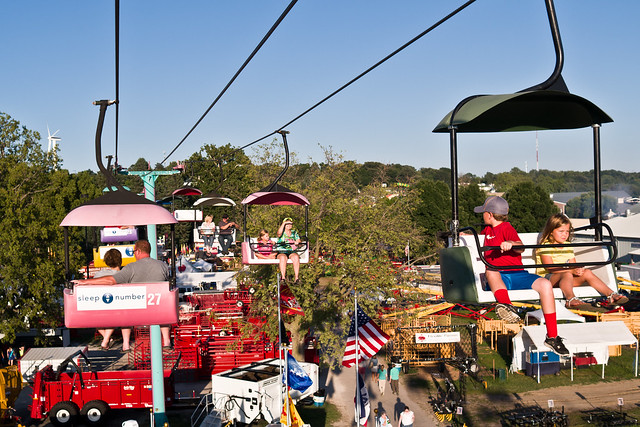
Or, thinking way out of the box, a Sky Glider like they have at the Iowa State Fair!
https://c2.staticflickr.com/6/5593/14795164398_bf4cf3e07a_z.jpg
Sky Glider Lift at the 2014 Fair (Source: flickr.com)
Put one end in Lot 44 and the other at the Kosek Bandstand. Why should Des Moines have all the fun?

Music to accompany this post:

SEE ALSO: Ben Kaplan, "A New Bohemian's Guide to New Bohemia," Corridor Urbanism, 3 August 2018

Monday, June 24, 2019

Where are the suburbs?

    1st Avenue west of Stoney Point Road: still Cedar Rapids, but definitely suburban
[NOTE: This post has been extensively revised in July 2020 due to numerous problems with the original data.]

A few years ago, I referred to the area around Stoney Point Road SW as "in the suburbs." The person I was talking to laughed, because, of course, Stoney Point Road is still within the city limits of Cedar Rapids, and anyhow this isn't like Chicago where they have The Suburbs.

However, there seems to be some analytical value in identifying differences in how and where people live, and it should be obvious to anyone who lives anywhere that we can do a lot better than corporate political boundaries. We can probably do a lot better than census tracts, too, but I'm not going to; at any rate they make a more finely-grained first crack.

City Lab recently reported on a working paper from the Harvard University Joint Center for Housing Studies that group analysis of the urban-suburban divide into three broad approaches:
  1. census-convenient: Urban means the principal city of a metropolitan area, as well as any other towns of more than 100,000 population; suburban means all other political entities in the metro. (By this definition, 70 percent of Americans live in suburbs.) (My Illinois readers will note this classifies the entire City of Naperville as "urban." I'll wait here while you finish laughing.)
  2. suburbanisms: Urban means places where the proportions of commuting by private car, homeownership, and single-family housing are below the average for the entire metropolitan area, or where any two of the three are below the metro average; suburban means where commuting by private car, homeownership, and single-family housing are more the norm. (By this definition, over 60 percent of Americans live in suburbs.) (That this is lower than definition #1 surprises me, because I live in Cedar Rapids, where much of the political city is actually suburban, but I imagine in more complex metropolitan areas like Chicago many areas outside the political boundaries of the city would also be considered urban.)
  3. typology: Urban means places where housing units are older and located more densely than the average for the entire metropolitan area; suburban means where housing units are newer and more widely spread. (By this definition, over 80 percent of Americans live in suburbs.) (That's a lot.)
A more finely-grained approach is going to allow us to see with more clarity the strength and duration of the apparent move "back to the city" that began about the middle of the last decade. (William H. Frey at the Brookings Institution is one among many skeptics.) It also enables us to imagine what combination of features might be most attractive to new residents, while also being financially and environmentally sustainable. (More on this soon.)

Uptown Marion: not in the principal city, but arguably urban

For now, here is how the three approaches define city and suburbs in the Cedar Rapids context. The data come from the U.S. Census Bureau via this website, which is way easier to navigate than the Bureau's own site.
  1. census-convenient: The City of Cedar Rapids is urban, with the rest of Linn County as suburban. The Census Bureau's Cedar Rapids Metropolitan Statistical Area (MSA) also includes Benton and Jones counties. That produces an urban population (2018) of 131,369, with 90,761 suburbanites in Linn County (136,955 suburbanites including the other two counties). The Cedar Rapids metropolitan statistical area is 49 percent urban.
  2. suburbanisms: In the Cedar Rapids metro area, 83.2 percent of workers commute alone by private car; 69.8 percent of housing consists of a single unit ("single-family detached"), 74 percent of housing units are owner-occupied. By these definitions, the 18 urban census tracts are
    1. below average on all three dimensions: 2.07, 7, 13, 18, 19, 27, 29
    2. below average on all except car commuting: 3, 5, 6, 8, 10.03, 11.02, 15, 26, 30.02
    3. below average on all except single-family housing: 22, 25. Collectively this includes the urban core of Cedar Rapids, excepting areas west of 10th St NW between E and O Avenues, as well as south of 1st Avenue, and Wellington Heights above 15th St SE. Outside of the core it reaches as far north as Blairs Ferry Road NE and includes the older sections of Marion; the areas around Kenwood Park on Cedar Rapids's northeast side and Cherokee Park on the northwest side; north of Washington High School on the southeast side; and from Jones Park on the southwest side as far south as 76th Avenue SW around Kirkwood Community College. That produces an urban population of 71,275; the metro is 26.6 percent urban.
  3. typology: The median housing unit in the Cedar Rapids metro area was built in the 1970s. There are 57 housing units per acre, because much of the three counties is farmland. By these definitions, the 20 urban census tracts are 4, 7, 8, 11.01, 12, 13, 14, 15, 16, 17, 18, 19, 22, 23, 24, 25, 26, 27, 28, and 29. This includes the urban core of Cedar Rapids, excepting only the area west of 10th St NW between O Avenue and the Cedar River. Outside of the core it includes the Puffer District adjacent to downtown Marion; the areas around Kenwood Park on Cedar Rapids's northeast side and Bever Park on the southeast side; north of Washington High School and the Rompot neighborhood on the southeast side; and the southwest side stopping at Jones Park. This yields an urban population of 72,691; the metro is 27.1 percent urban.
A large group of community members gather in the park.
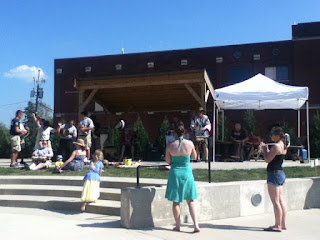
Wellington Heights neighborhood's Stop the Violence Picnic, 2019 (swiped from redmondpark.org)
Census tract 17 qualifies as urban under definition three (housing density 2400, median age 1939)
but not definition two (76.1% owner-occupied, 81% single-family).

The first definition includes a significant chunk of Cedar Rapids that doesn't qualify under the other definitions, while excluding parts of Marion that do. The second and third definitions agree on 11 tracts, but the second includes seven while excluding nine that qualify under the third definition. Since all of the city qualifies under the housing density part of the typologies definition, the disqualifier always is median age of housing. For example, census tract 30.02 includes a degree of rental housing around Kirkwood Community College unusual for the metro, but the median housing unit was built in 2001 (and 87.1 percent of commuters drive alone). 

The disqualifiers for the second list ("suburbanisms") vary for those who qualify under the typologies categories. All nine tracts have higher rates of single-family housing than the metro average; eight have higher rates of car commuting, and five have higher rates of owner-occupied housing. Four tracts miss on all three! These include census tract 4, northeast of downtown Marion, which is bounded by 7th Avenue, 31st Street, 29th Avenue, and 10th Street/Indian Creek Road. The tract has 2089 housing units per square mile, and the median year of construction is 1961. Its car commuting rate is 85 percent, 88.5 percent of residents own their own homes, and 87.5 percent of residents live in single-family housing.

Why does it matter how we draw the urban-suburban line? Public perception of the line certainly affects how specific areas of the metro are perceived, though I'm not sure the analysis-by-census-tract featured above is going to have much impact on public perception.

The very fluidity (and arguability) of these lines teach us that the terms "urban" and "suburban" are not binary, that they each cover a range of neighborhood types and contain a range of people. One thing we can agree on: political boundaries rarely reflect social realities.

"Welcome to Suburbia!"

Tuesday, June 11, 2019

Small towns, rural areas and state legislatures

2018 votes for Iowa Governor, by county
Source: CNN. Used without permission.

(6/11/2019) The divide between successful and unsuccessful places--often oversimplified as "urban vs. rural"--has emerged as a major fault line in contemporary American politics, along with the ever-present racial divide. Where the economic outlook of a place is less than positive, voters--at least white voters--have turned to the Republican Party's anti-government and traditional values ethos, recently overlain with restraints on trade and immigration. (Whether the Republicans, led by the ever-improvisational President Donald J. Trump, will overplay their hand, remains to be seen. For now they are speaking to voters in these places as Democrats and internationally-minded urban elites seem unable to.)

This is reflected in Iowa's political ride this decade, from purple to red. It's a predominantly white state, where most voters live in economically stalled-to-struggling areas, and Republicans have dominated recent state elections.

Iowa has 99 counties, reflecting its past where most labor occurred on farms, and small towns across the state served as market centers for those farms. In this decade, and for the last several decades, most of those counties have lost population. (In the absence of easily-obtainable economic performance data, I use population change as an indicator of strength, assuming that successful places need more workers, and workers are attracted to successful places where they can find a better choice of jobs. Economic success often funds cultural vitality, which is also attractive to people, particularly younger workers.)

According to the U.S. Census Bureau [with Governor Kim Reynolds's percentage of the two-party vote]:
  • 70 of Iowa's 99 counties have lost population between 2010 and 2018 [60.1% of 426,605 votes]
  • 11 counties gained marginally, less than 1 percent (Black Hawk, Boone, Cedar, Crawford, Jasper, Jones, Marion, Muscatine, Plymouth, Pottawattamie, Woodbury) [54.3% of 209,142 votes]
  • 6 counties gained at least 1 percent, but less than 2.9 percent, half the national growth rate (Bremer, Buchanan, Clarke, Davis, Lyon, Washington) [60.9% of 40,246 votes]
  • 5 counties gained at least 2.9 percent, but less than the U.S. growth rate of 5.8 percent (Dickinson, Dubuque, Madison, Scott, Sioux): one near Des Moines, two housing the central cities of Davenport and Dubuque, and two predominantly rural counties in northwest Iowa [54.4% of 140,523 votes]
  • only 7 counties gained population faster than the nation as a whole (Dallas, Jefferson, Johnson, Linn, Polk, Story, Warren): four around Des Moines and Ames, Cedar Rapids, Iowa City, and Fairfield... Fairfield?? [40.8% of 482,145 votes]
Republicans had a tough year nationally in 2018, and lost seats in the Iowa House, but actually increased their already-large majority in the Senate. So, this year, we once again have a legislature and a governor whose support came predominantly from less successful places. One might assume, then, the state would be pursuing policies to help those economies.

One would be wrong. Here is what the Iowa legislature achieved in the 2019 session, which ran from January to April (Gottburg 2019, Rodriguez and Opsahl 2019):
  • legalizing betting on sports events at casinos
  • legalizing growing hemp and loosening restrictions on medical marijuana
  • adding the right of individual gun ownership to the Iowa constitutions, and subjecting any restrictions to "strict scrutiny"
  • city or county property tax increases above 2 percent will require a 2/3 vote
  • prohibiting use of Medicaid funding for sex-reassignment surgery
  • barring Planned Parenthood from receiving federal sex education funding
  • requiring public college and university campuses to adopt "free speech" policies
  • giving the Governor greater influence on judicial selection
  • trespassing penalties for undercover investigations of farms
  • creation of children's mental health system
  • $15 million for flood recovery in western Iowa
Only the last two conceivably could help distressed people in small towns and rural areas, and one of those is a response to a short-term emergency. The rest is nutrition-free candy, mostly for their ideological allies, many of whom admittedly live in small towns and rural areas. I understand a lot of people love guns, and hate transgender people, Planned Parenthood, college faculty and administration, and "liberal" judges, but shouldn't they and their elected representatives also be pursuing constructive solutions to actual problems?

Nationally, a study by FiveThirtyEight found similar outcomes in other states with unified Republican governments (Bacon 2019). Those 22 state legislatures pushed looser gun laws, restrictions on "sanctuary" cities, restrictions on lower governments' abilities to divest from Israel, restrictions on abortion, "right-to-work" laws weakening labor unions, and work requirements for Medicaid recipients. All crowd-pleasing candy, nothing nutritious to help places grow.

No legislature, however well-intentioned, can bring back the 1950s, or whatever form of paradise white Iowans want to think the 1950s were. The future of the American economy is going to be predominantly metropolitan, although we can argue whether the locus of the action will continue the move back to central cities begun in the middle of the last decade (Frey 2019, Florida 2019, Hurley 2018). For example, the State of Arizona, which is growing faster than the U.S. as a whole, is seeing most of that growth near Phoenix and Tucson, and shrinkage elsewhere.

We also know our economic future is going to be primarily service-driven, not centered on farm work or manufacturing or resource extraction. Employment will be less stable, and whatever we do will have to accommodate the realities of diversity and climate change.

Successful places are those that have adapted to the post-industrial economy, but the cost of living, and the cost of doing business, in places like Seattle, San Francisco and Boston--and Chicago, Los Angeles, and New York--are becoming prohibitive, despite their attractions. Smaller places and their environs can position themselves to take advantage of this, and to be significant players in the economic future. BUT! this requires recognizing the realities of the 21st century, and enhancing the assets that are already in place, not playing to anti-elite resentments and culture wars nostalgia.


SOURCES

SEE ALSO:
"Iowa Losing Millennials, Needs Workers," 14 February 2019
"What is the Future of Iowa's Small Towns?" 3 July 2018

Friday, June 7, 2019

First impressions from our summer vacation

Jane and I just got back from a week in the desert southwest, mostly in search of places like this...
The Grand Canyon, from the South Rim Bright Angel Trail
...and this...
Wapitki Pueblo, Arizona
...but also spending time in towns.

Real knowledge of a place, of course, requires spending a lot of time in it. First impressions matter, too, though, at least I hope they do, because I'm going to spend some quality time sharing them with you. Take them for what they're worth--they are first impressions, after all.

We spent the most time, and were most impressed with, Flagstaff (pop 70000 [+11.9% since 2010], metro area 140000). Like most American cities of any size, it contains an older core as well as massive suburban development. The sprawl is what it is, but the core is of the highest quality. We stayed in a guest house near downtown, not far from the Lowell Observatory and Northern Arizona University. We were a short walk away from their high-quality library...

...and historic downtown.
Firecreek Coffee
Downtown and the surrounding neighborhood features a proper street grid and plenty of street trees, which I trust are climate-appropriate.

The day we visited there was a farmers' market, which was open to the public, as well as a Hullaballoo in the centrally-located Wheeler Park... behind a fence, so I'm ambivalent. The downtown is full of brewpubs and coffee shops, as well as the delightful Peace Surplus Store, where Jane scored some binoculars. There is less of a functional nature--for groceries or hardware you have to go to the stroads.

So, not perfect. But the cool dry air typical of summer days felt amazing after Iowa's soggy spring and the searing heat at lower elevations. What's not to like?

We flew into and out of Las Vegas (pop 650000 [+10.3% since 2010], metro 2.25 million), the Entertainment Capital of the World. Leaving aside what you or I might consider entertaining, or what we think of gambling, Las Vegas is an urbanist's nightmare. The Strip, the internationally-famous entertainment district, has wide streets, and buildings that are as exaggerated in style as they are massive.

The Strip gets points for having created a unique sense of place, but there's no walkable urbanism here. I think you're supposed to stay inside and gamble.

The downtown area north of the Strip features gridded streets and older buildings that have been through a variety of re-purposings, but with all the economy focused on the Strip and all the wealth out in the suburby areas, downtown is desolately squalid.

The vaster part of the city's area consists of suburban development, in a manner exaggerated as only Vegas can. Streets are way overbuilt with multiple lanes, with 45 mph speed limits that underestimate how fast people can and do actually drive--and who would not, with all this room?
Sahara Avenue, looking east toward Durango
The network of interstates and other limited access highways are worse: a lot of room, wide variation in speed, and sudden moves as exits appear and lanes disappear make it all thrilling. "Thrilling" is not a positive attribute in my worldview, by the way.

There are some starts toward light rail and bus rapid transit. I took the Sahara Express to the ballpark, but the advantages of BRT were limited by the lack of congestion (see above), as well as the driver taking a break at one of the stops to talk to a friend.

Las Vegas has made the desert bloom... which may not be a good idea, either. Our friends have lived there over 20 years, and commend the mild winters. Quite a lot of other people live here, too, and the city will shortly add the NFL Raiders to their NHL franchise, so they're going major league in more ways than just pop music and casinos. We were not there long enough for me to see the attraction, however, and the exigencies of the 21st century would seem to mitigate against this sort of development elsewhere.

[SEE ALSO: Lauren Wilder, "Why You Should Visit Las Vegas at Least Once in Your Lifetime," Culture Trip, 30 May 2019]

We passed through a number of other, smaller towns. The town that made the strongest impression was Colorado City (pop 4818 [+ 0.8% since 2010]), where we stopped for a timely coffee. There was something strange about the town--large residences, a lot of them vacant, and a mix of paved and unpaved streets, like a suburban subdivision under construction that hit 2008 and never bounced back. But a suburb of what?

Colorado City compound (photo by Jane Nesmith)

The story of Colorado City turns out to be much stranger, and I'll leave you to this Wikipedia article. A longer, autobiographical account can be found in the book Escaped by Carolyn Jessop (Broadway, 2007). Every town comes into existence for a reason, as a port, say, or a service center for small farms... or as a headquarters for a polygamist sect. The more we read, the creepier it felt to be there--definitely a sense of place, but of the wrong kind. The adversity faced by your average rural small town is nothing compared to the difficulty in figuring out how to overcome a past like Colorado City's.

Mama Cecile's Barista and Cafe is a charming coffeehouse, despite its inexplicable name, and for us was an oasis in the desert. I don't know if there's a real Cecile, or what tragedies her life story might contain, but the coffee was good, the refills were free, the WiFi was reliable, and there was a sizable children's playroom on the side away from the counter. I've not seen that in a coffeehouse before, but it suddenly seemed like a good idea; if you've always wanted to run a coffeehouse but your area seems saturated, you might aim for the young mother niche with a play area. That's how towns are built, or rebuilt, right? One opportunity at a time.

10th Anniversary Post: The Election and Our Common Life

  Your humble blogger with KGAN reporters on election night 2016 (from Eric Wylie's Facebook page) (11/6/2026)  A recent New Yorker  car...