Tuesday, January 30, 2018

Rehoboam and the State of the Union

King Rehoboam and his very powerful pinkie,
way more powerful than yours, or Kim Jong Un's,
from a painting by Hans Holbein the Younger (1497-1543)
It’s State of the Union week, and I’m thinking about King Rehoboam. I’ve been thinking about King Rehoboam a lot lately.

About 920 BCE, Rehoboam went to Shechem to become King of Israel following the death of his father, the famed Solomon. The dynasty begun by his grandfather David had placed the monarchy in the tribe of Judah, and by the end of Solomon’s reign the other tribes were complaining of mistreatment. Led by one Jereboam, leaders from the other tribes met with the new king to demand easier treatment: Your father made our yoke heavy. Now therefore lighten the hard service of your father and his heavy yoke that he placed on us, and we will serve you (I Kings 12:4, NRSV).

According to the nearly-identical accounts in I Kings 12 and II Chronicles 10, Rehoboam took three days to formulate his response. He sought advice from two groups, holdovers from Solomon’s court and his own contemporaries.
Then King Rehoboam took counsel with the older men who had attended his father Solomon while he was still alive, saying "How do you advise me to answer these people?" They answered him, "If you will be a servant to this people today and serve them, and speak good words to them when you answer them, then they will be your servants forever." But he disregarded the advice that the older men gave him, and consulted with the young me who had grown up with him and now attended him. He said to them, "What do you advise that we answer this people who have said to me, 'Lighten the yoke that your father put on us?' The young men who had grown up with him said to him, "Thus you should say to this people who spoke to you, 'Your father made our yoke heavy, but you must lighten it for us;' thus you should say to them, 'My little finger is thicker than my father's loins. Now, whereas my father laid on you a heavy yoke, I will add to your yoke. My father disciplined you with whips, but I will discipline you with scorpions.'" (I Kings 12:6-11)
So that was the answer Rehoboam gave to Jereboam’s group. Predictably, the other tribes rebelled, Rehoboam’s adjutant was killed, and the king retreated to Jerusalem to raise an army. A prophet named Shemaiah talked him out of that; neverthless, “there was war between Rehoboam and Jereboam continually” (I Kings 14:30), and the Kingdom of Israel was permanently divided.

I read this story as having a negative tone, and would like you to do that, too. My takeaway is a superiority complex leads to unwillingness to compromise leads to division leads to weakness. But the Biblical accounts are maddeningly ambiguous about this. Some commentaries note the writers are harder on the separatists than on the king. Rehoboam’s tone with the other tribes is called “harsh” (I Kings 12:13) but the message is not condemned, nor is the separation lamented. Rehoboam is scored an “evil” king (II Chronicles 12:14)—so is Jereboam—but it’s because of idol worship not the breakup of the kingdom. The southern kingdom of Judah endures, enjoying a single line of succession until the Babylonian conquest in 586. That’s more than three hundred years after the breakup; the United States is still a few decades short of that. Moreover, there’s indication the breakup was God’s idea to begin with (cf. I Kings 11: 9-13, 26-40)—punishment of Solomon but not necessarily of the whole country.

The run through Jewish history in the Book of Sirach is clearer:
Solomon rested with his ancestors,
    and left behind him one of his sons,
broad in[j] folly and lacking in sense,
    Rehoboam, whose policy drove the people to revolt. (Sirach 47:23a)

Either way there’s plenty of evidence that Rehoboam’s brash pronouncement left his country weaker and less secure. Take a look at this list of section headings covering the entire 300-plus-year history of the southern kingdom (Miller 2001):
  • Unstable beginnings
  • In the shadow of the Omnirides [Northern kingdom]
  • A century of instability and decline
  • Assyrian domination
  • Egyptian domination
  • Babylonian domination and the end of the Kingdom of Judah
It might have felt good to tell off Jereboam and his buddies, and clearly satisfied some intratribal constituencies, but the years that followed hardly saw Judah flourishing.


Which brings me to our contemporary Rehoboam, President Donald J. Trump. Trump’s 2015-16 campaign, his "nation of carnage" inaugural address, and his propensity for incendiary Tweets make him a flawed advocate for national unity. Nevertheless, on its face the long, rambling State of the Union address appeared to reflect a turn to the "older men," with inclusive statements like Tonight, I call upon all of us to set aside our differences, to seek out common ground, and to summon the unity we need to deliver for the people. This is really the key. These are the people we were elected to serve. References to urban "carnage" were replaced by basking in the glow of the surging economy, and why not? [Well, possibly because this, or this, but we digress.]

Of course, amidst prose that was often purple and occasionally incoherent, he made sure to push the right buttons--veterans, the troops, the police, the 2nd amendment, the flag, violent gangs of immigrants, Guantanamo Bay, Jerusalem, the UN, Communists (!), various absurd policies of his predecessor--for his core supporters. Repeal of the individual mandate underlying the Affordable Care Act was presented as a favor to the poor, and the border wall as a favor to immigrants, although no one's kidding themselves that those were or are likely to be supportive constituencies.

Our common life in the 21st century requires intelligent public policy by a government that recognizes necessities and knows its limits. This speech was short on policy aside from his four-point immigration proposal; certainly the section on infrastructure did not live up to the expectations the administration had set. It also requires a public sense of common destiny and maybe even common purpose. We're not likely to get meaningful contribution to that public sense from this President, no matter who writes his speeches. The more critical question is: Do we the people even want a sense of common destiny? The example of Rehoboam looms.

The text of the State of the Union address is here.

SOURCE: J. Maxwell Miller, "The Kingdom of Judah," in Bruce M. Metzger and Michael D. Coogan (eds), The Oxford Guide to People & Places of the Bible (Oxford, 2001), 165-169

SEE ALSO:
Stephen Lee Davis, "Eight Questions to Ask About Infrastructure During Tonight's State of the Union," T4America, 30 January 2018
Charles Marohn, "A Review of the White House Infrastructure Plan," Strong Towns, 29 January 2018
Karen Tumulty, Philip Rucker and Elise Viebeck, "Trump's Call for Unity Slams Into Reality of Washington's Political Divisions," Washington Post, 31 January 2018

Thursday, January 25, 2018

Hiking the (parking) crater

(1/25/2018) Many people have asked me, "Given the oversupply of parking near downtown Cedar Rapids, is it possible to walk from Coe College to the New Bo City Market entirely via parking lots?" All right, no one has ever asked me this, but I have always wondered myself. One day during a recent very cold snap, I was stir crazy enough to try it. I've been back over it a couple times to perfect the efficiency of the route. The online maps have the distance as 1.7 miles, but with all the angles we might cut it as short as 1.3.

Our hike begins at the parking lot near Dows Fine Arts Center. By no means is this the largest parking lot at Coe, but it is in the direction we're going, so here we start.

Getting across to Casey's General Store is tricky with 1st Avenue's average daily traffic count of 16,600, so the judges (me) are allowing the theoretical possibility of crossing here while in fact crossing at the corner where there's a walk light.

From Casey's we cross 12th Street to the parking lots behind Via Sofia's and Daisy's Garage...

...which serve as bridges to the Physicians Clinic of Iowa. PCI is in many ways the catalyst for the MedQuarter idea. In 2012 they planned a move out of a smaller facility on 8th Street; threatening to decamp to suburban Hiawatha got the city's attention, and they wound up with this larger space which apparently required closing two blocks of 2nd Avenue. We approach from the northeast.

Across 10th Street is their parking garage. We're going to have to go around it, but can pretend we're walking through it. In on the 10th Street side...

...and out onto 2nd Avenue!

Across 2nd Avenue:

From 3rd Avenue to 4th Avenue we walk through two adjacent parking lots, both serving medical facilities.

We continue across 4th Avenue at a slight angle--the judges hesitate but allow this--to make this connection:

Angling across this lot gets us to 8th Street. This lot gets us to 7th Street, within sight of the Post Office.

Cutting across 6th Avenue, the Post Office parking area and 6th Street gets us to the Post Office's vehicles which lot is fenced off.

So, once again, our hike will require imagining that we can pass through barriers like ghosts. Scoffers may well object to these technicalities.

But if you're still with me, we are ready to cross 7th Avenue.

A couple more parking lots get us to 8th Avenue, another thoroughfare with imposing traffic (ADC=13,700). So we'll look across the street to where we'd like to go...
...and take the way of discretion.

Angling across this block, used mostly by Horizon Family Services, gets us to the corner of 9th Avenue and 5th Street.

Two small adjacent lots get us to 10th Avenue. Stepping over the railroad tracks gets us close to the historic Cherry Building.... almost there! For the last block, though, I'll admit to pushing the envelope and trying the patience of the judges. We have to cross 10th Avenue (or the construction site) at quite an angle to get to the Cherry Building's parking area, which to my mind looks more like an alley than a true parking lot.


Nevertheless, if you're willing to accept that compromise, we made it!

(And, if your young and exuberant self is not tired yet, you can continue across The Depot parking lot to the Geonetric building.)

Now, if you're through checking your FitBit, can we reflect on what all these parking spaces mean?  Between our urban downtown and some traditional walkable neighborhoods is some severely suburban development, exemplified by PCI's shopping mall-like layout. The city street of the future (Davidson 2018) will look nothing like what's there now, nor what the MedQuarter contemplates building. While some of our hike's success relied on technical rulings by me a.k.a. the judges, or by crossing lots that were individually so small that no one could object to them, we've just trekked through a huge parking crater that creates a tangible boundary between downtown and the nearest core neighborhoods. This much empty space makes it difficult either to sustain a 24-hour downtown or to make connections between the neighborhoods and the burgeoning commercial areas in downtown and New Bo. At the same time, most of the crater is in private hands, and anyway is too far from downtown attractions to support for the nearby urban development with parking capacity.

At the same time, our hike shows the limits to how the MedQuarter can develop. If the success of these medical enterprises depends on the choices of people with cars they're going to need a great deal of surface parking, maybe more than this area can supply (Castleman 2018). At the same time, if medical "tourists" from the region matter more than people on foot from the immediate neighborhood, maybe the medical development should be and would be happier somewhere on the edge of town where real estate is cheap and expandable, the car can be king, and acres of surface parking don't put a crater in the urban fabric. Meanwhile, residential and commercial development along the route we just walked could support a larger walkable area than we currently have, room for families in the city center, affordable housing and--dare I say it?--a school or two. Maybe the solution to PCI's parking needs is not to subsidize their tearing down houses but to help them find a better location.

Tuesday, January 16, 2018

Acting for inclusion in a fearful world

Stacey  Walker
Stacey Walker (Source: Linn County)

Our institutions have a responsibility to bring relief to those who need it most, argued Linn County supervisor Stacey Walker at the 28th annual community observance celebration of MLK Day in Cedar Rapids last night at St. Paul's United Methodist Church. The political and justice systems in particular were called out by Walker and other speakers throughout the day for maintaining facial neutrality between white and black, rich and poor; urging those from disadvantaged groups just to try harder (the "bootstrap gospel"); or worse, in Walker's words, "preserving the status of the privileged."

Addressing realities on the ground became a major challenge almost immediately upon passage of major civil rights legislation in the 1960s. Those laws--particularly the Civil Rights Act of 1964, the Voting Rights Act of 1965 and the Housing Act of 1968--achieved breakthroughs that had eluded the civil rights amendments to the U.S. Constitution a century earlier, mainly by including enforcement mechanisms. But it quickly became apparent that middle-class whites, having built wealth and individual capacities with decades of better access to jobs and a variety of government programs, were far better equipped than other groups to deal with the economic changes ahead. One outcome of the marketplace is the winners can use their gains to buy advantages in the next round. Here's how it worked in housing:

And that has happened, of course, over and over again, which has served to reinforce not only economic advantages, but also public images of achievement and deviance. (Recall that it was a predominantly-black police department in Prince George's County, Virginia, that was responsible for the death of Ta-Nehisi Coates's friend Prince Jones.) If the face of law-abiding citizenship and professional success is white or Asian, it's easier to exclude blacks and browns from jobs, housing, immigration, and so forth--which replicates what happened in the bad old days.

Hence the emphasis yesterday on institutional responses to systemic racism and implicit bias rather than the explicit barriers of Dr. King's era. In a panel discussion before the event at which Supervisor Walker spoke, Jasmine Almoayed of the Cedar Rapids economic development office cited the need to facilitate access to resources for new residents; Ruth White, CEO of the Academy of Scholastic and Personal Success, the need for the city to address the housing stratification that directly affects resources for schools; and Rod Dooley, a local pastor as well as executive director of equity for the Cedar Rapids schools, the need for public schools to respond to changes in family structure and racial diversity that affect differentials in achievement and gradation rates.

Karl Cassell, CEO of Perhaps Today! Inc. and formerly director of the civil rights commission, urged his audience at Coe College to become politically involved in the struggle over economic inequality. Young people burdened by debt are understandably afraid to "upset the applecart," said Cassell, but while bearing such burdens are not truly "free to live your life." From the audience, long-time civil rights activist Bernard Clayton added "You may not like politics, but politics likes y'all."
Karl Cassell (Source: Perhaps Today! Inc)
Dr. King's eloquent words were summoned on behalf of these arguments, although at the presentations I attended I didn't hear the part of the "I Have a Dream" speech that is often quoted by civil rights conservatives to oppose institutional remedies: I have a dream that my four little children will one day live in a nation where they will not be judged by the color of their skin but by the content of their character.

Is it fair to assume that the removal of explicit racial barriers leaves nothing to judge between individuals but the content of their characters? The stories told over the course of yesterday point to barriers that remain and that require society-wide efforts to overcome, to life prospects that are dramatically different from birth depending on race and economic circumstance, to the need to reshape institutional and individual perceptions shaped by centuries of injustice before we get to a place where opportunity and justice are truly inclusive.

In this context it's useful to remember advice from another talk at Coe College, by Lauren Garcia of the University of Iowa center for diversity and enrichment. She reminded would-be allies to educate themselves about issues impacting the greater community, to listen before acting, and not to make the issue about themselves. The same advice could be directed at those who hear the whole conversation about these issues as attempts to make them feel guilty. To conclude with a point by Karl Cassell: as difficult as all this is, it's made moreso by economic dislocations that make everyone, even the relatively privileged, feel insecure.

Lauren Garcia
Lauren Garcia (Source: University of Iowa)
Her talk at Coe College had a lot of solid advice for would-be allies

Ellen and Allen Fisher accept the 2018 Percy and Lileah Harris Who is My Neighbor Award
Music from Johnson STEAM Academy, directed by Charrisse Martin-Cox

Book recommendations at Coe
The complete text of Walker's talk is here.

LAST YEAR'S MLK DAY POST: "Akwi Nji on Choosing Justice over Comfort," 18 January 2017
SEE ALSO: Mariah Porter, "Coe Celebrates Martin Luther King Jr.," The Cosmos (Coe College), 19 January 2018 [link coming soon]

Wednesday, January 10, 2018

Condition of the state 2018

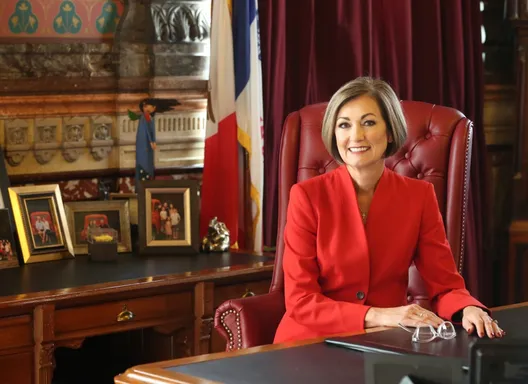
Iowa Governor Kim Reynolds
Gov. Kim Reynolds, from governor.iowa.gov

[The text of Governor Reynolds's address is here.]

Governor Kim Reynolds today presented a hopeful message to a joint session of the Iowa legislature, with a vision of an "Iowa overflowing with opportunity" where "everyone has a chance to succeed." The main policy message, though, is that we are continuing our transition to a low-tax, low-service state. Reynolds became governor less than a year ago when her predecessor, Terry E. Branstad, was appointed U.S. Ambassador to China by President Trump.

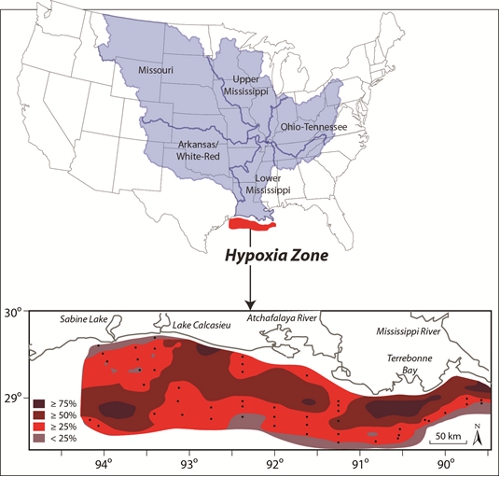
The policy part of the speech promised continuation of the mix of conservative ideology and shouts to constituent groups (lobbying for the national renewable fuels standard, e.g.) begun with Republican ascendance in Iowa earlier this decade. Any problems those policies have created so far were either mysteriously attributed--including the always-amusing phrase "mistakes were made" when Medicaid was privatized--or ignored altogether. She touted her balanced budget without mentioning it required tapping reserve funds after earlier tax cuts produced a revenue shortfall. Big moves were promised on water quality without mentioning why the state has a water quality issue. (Large-scale farming operations have saturated the soil with fertilizer, which gets into groundwater, municipal water supplies, rivers, and eventually into the Gulf of Mexico's ever-expanding dead zone. It is also impossible to overstate the importance of this constituency to Midwestern Republicans.) At least it got mentioned, though, unlike all other environmental problems.
Dead zone in the Gulf of Mexico (Source: USAPP)

The small towns that historically served the legions of small farmers have had a rough adjustment to an era of corporate agriculture, and face an anxious future. "When I go home," Reynolds notes, "I hear the disappointment and I share the frustration when another storefront closes." There is a role for government in managing the transition--Reynolds will appoint a task force to explore statewide broadband, and proposes various health care and education initiatives--but there are limits to what even an activist state can do. (And will there be some consideration of return-on-investment when we build broadband across the state?) Anyhow, government is mostly portrayed in the speech as as alien and unwanted: The primary response to rural and small town stagnation is to double down on tax cuts. (We're not Kansas, at least not yet.) Reynolds promised tax changes with the goal of reducing individual and eventually corporate rates. It's appealing to say "Iowans will keep more of their hard-earned money," but assumes those Iowans will not miss the government services that will be cut or eliminated.

West Branch, Iowa by Grant Wood
West Branch, Iowa painting by Grant Wood, 1931
(Creative Commons)

Reynolds lingered over the virtues of Iowa's small towns while virtually ignoring its cities. She claims "the heart, soul and spirit of Iowa will always remain in our small towns and rural communities," but, as in other states, urban areas are now where the Iowa economy happens. An increasing proportion of Iowans live in urban areas: 64 percent in the 2010 census. According to the U.S. Bureau of Economic Analysis, Iowa had just over 2 million jobs in 2016; over half of them are located in eight of our 99 counties. All of these eight have average wages or salaries at or above the statewide average, and even with widely varying performance among them their combined net migration in the 2010s is nearly double the state total. In other words, without these eight counties, Iowa loses population and is underwater financially. The governor thankfully omitted most of the culture war gunk (anti-immigration, repealing gay rights, crackdowns on violent crime, e.g.) in her address, but neither was there anything on affordable housing, public transportation, small business incubators or other ways to support Iowa's cities do their stuff (see Florida 2017). More emphasis on worker training could help develop the middle-level skills Iowa needs, but cutting state services, busting unions and rooting for the end of the Affordable Care Act won't help those workers deal with a likely future of uncertain, contract-based employment arrangements (Vinik 2018). Nor will they help Sioux City and Waterloo, two historic cities which lag behind in the post-industrial age. Nor will they help my city avoid having to close eight elementary schools.

From 2011-2015, Iowa lost population among key age and skill groups. Half again as many younger workers with college degrees left the state as moved in, with particular losses among those with high-level technical skills (Swenson and Eathington 2017, esp. Table 8 and Figures 2-16). Meanwhile, large cities across the country are seeing sharp increases in those aged 25-34 with four year degrees--even downtrodden cities like Detroit and Buffalo (Cortright 2018, Griffin 2018). Can the young educated people leaving Iowa be won back with a new round of  tax cuts? By partying like it's 1874? Will those workers and the firms that employ them be attracted by the legislative accomplishments Reynolds touted for 2017: voter ID laws, looser gun control, reformed collective bargaining, and defunding Planned Parenthood? Or were these accomplishments aimed at pleasing those who already live here and are nostalgic for some golden age before everything started changing?


(Source: "FY2019 Budget in Brief," State of Iowa Department of Management)

The opposition party typically keeps a low profile on Condition of the State days. (There aren't the silly canned responses that follow the U.S. President's State of the Union addresses.) Senate Democratic leader Janet Peterson praised Governor Reynolds's delivery and some of her proposals, but said legislative Democrats about how they would be funded given tax cuts and stresses on existing programs.

SOURCES:
"Iowa Community Indicators Program," Iowa State University: aggregated and original data as well as economic analysis
Joe Cortright, "Cities Continue to Attract Smart Young Adults," City Observatory, 2 January 2018
Richard Florida, "Anti-Urban States Aren't Just Hurting Their Cities," City Lab, 21 December 2017
Jennifer Griffin, "The Future Success of Cities Depends on Urban Kids," Strong Towns, 10 January 2018
Dave Swenson and Liesl Eathington, "Evaluating the Higher-Level Skill Content of the Iowa Workforce and Its Competitiveness with the Rest of the Nation," Department of Economics, Iowa State University, September 2017
Danny Vinik, "The Real Future of Work," Politico Magazine, January-February 2018

SEE ALSO:
James Q. Lynch, "Iowa Gov. Reynolds Focuses Speech on Solving Problems," Cedar Rapids Gazette, 9 January 2018
Joyce Russell, "Reynolds Touts Republican Achievements in Condition of the State Address," Iowa Public Radio, 9 January 2018

EARLIER POSTS ON HOLY MOUNTAIN:
"The Republicans' Tax Revolt," 22 December 2017
"Condition of the State," 14 January 2014

Monday, January 1, 2018

The future of religious spaces (IV)

50-4-cover
Source: faithandform.com
"Community-based sacred space" is a prominent theme in Faith and Form's 2017 International Awards for Religious Art and Architecture, which were announced in the current edition of that magazine. One of the jurors is quoted: "There seems to be more emphasis on what the role of the community is, and the sharing of liturgical space, and that is a breath of fresh air." Editor Michael J. Crosbie notes this trend possibly is connected to religious institutions' needs to adapt existing facilities as they face both declining membership rolls and tight budget constraints.

As I concluded my post on last year's awards I listed, off the top of my head, five functions religious buildings are expected to perform. These functions are at best complimentary and can often be contradictory in practice: are houses of worship places for action or contemplation? in the world or apart from it? familiar "home" or a place to welcome strangers? I mention these again because, as much as a blog devoted to promoting common life is looking for churches to be parts of or even anchors of their neighborhoods, it's important to remember that these places have other responsibilities as well. 

Having said that, a religious building, however beautiful or original, that is situated like this 2017 award winner for new facilities...
Liberty United Methodist Church, Liberty MO (Google street view capture)
...or this 2014 winner...
Watermark Community Church, Dallas TX (source: faithandform.com)
...is a place unto itself, accessible to members in cars but not to its neighbors if anyone actually lives nearby.

So we are pleased to take our hats off to this year's winners in the renovation and adaptive re-use categories, whose exterior pictures inevitably include sidewalks and nearby structures. These congregations have chosen not to flee to open spaces but to stay in their neighborhoods and be part of them--to consider them to be, to use Christian parlance, part of their ministry.

Here, for instance, is Westport Presbyterian Church (PCUSA) in Kansas City, Missouri, which won an award for renovation. They reopened in 2016 after the former, 107-year-old building was destroyed by fire in 2011.
BNIM
(Source: faithandform.org)
They adopted a resolution in 1983 that they call the Westport Declaration: We intend to use all resources available, without reservation, to minister to, with, and in the community defined as Westport (31st Street to Brush Creek, Troost to State Line). In the years since the church has been an important neighborhood resource, playing host to a variety of groups including Boy Scouts, senior meals, addiction services, child care, dance, choral music, hospice care, gays and lesbians, environmentalists, computer classes, a chess club and an investment club, as well as concerts and films. The current pastor has "worked with police to improve security in the area."

Their main entrance is up a long set of stairs, but there's an alternate entrance right off the street. The parking lot is behind the church, as it should be. The church presents the street with a mix of windows and walls, but on balance is interesting to see and inviting to enter.
Great approach from a side street (Google maps screen capture)
Redeemer Presbyterian Church (PCA) in Memphis, Tennessee, won an award for adaptive re-use/re-purpose:
archimania
(Source: faithandform.org)
The church was founded in 2006 by the Rev. Jeffrey Lancaster, who has a particular calling to plant churches in urban areas. Memphis is our home, they say on their website. We are privileged to live in one of America's most notable, influential, vibrant and storied cities. Its history, beauty, people and opportunities make Memphis our favorite city. Yet, like homes all over the world, she is not without her needs. Like every home inhabited by humans, she can be a paradox--joyful and sad, together and lonely, friendly and cruel, chaos and calm.

Note how the front door opens onto the street, the windows in the worship space provide an interesting view for the passer-by as well as "eyes on the street," and the parking lot is off a side street so neither worshiper nor passer-by has to negotiate a lot of pavement.

redeemer-hero-04
Another view, from redeemermemphis.org
Among other award winners, First Congregational Church in Bellevue, Washington, moved to this converted office building in 2016.
atelierjones, llc
(Source: faithandform.com)
The new building is embedded in the same neighborhood they've served for over 100 years. Its parking lot is on the side so neither pedestrians nor members have to cross a lot of pavement. Pictures of the interior are impressive, but their exterior presents a giant gray wall--a "snout house" at prayer?

SGI New England Buddhist Center in Brookline, Massachusetts, won an adaptive re-use/re-purpose award. Note the light coming from the many windows, particularly at street level. In the Google Street View, it must be said, the windows are all covered with blinds; they face south, so must be closed on sunny days.
Touloukian Touloukian Inc
SGI New England Buddhist Center, Brookline MA (Source: faithandform.com)
Congregation Kehilath Jeshurun in New York City won an adaptive re-use/re-purpose award for their synagogue chapel, but the exterior opens directly onto East 85th Street and passers-by will soon be intrigued by large window displays celebrating the five books of Moses.

Congregation Kehilath Jeshurun (Google Maps screen capture)
These buildings have won awards because they're artistically built. I salute those architects and their institutions for doing so while also enabling connection with the world outside their walls.

Which brings me to the end of my post, except I feel like I've been avoiding an important aspect of this topic. Prompted by Faith and Form's fascinating issue, I've been talking about buildings and how they play with each other and with their streets. But, as the cornball songwriters Richard Avery and Donald S. March put it back in the day, "The church is not a building, the church is not a steeple... the church is people." Just because the doors and windows are in the right places doesn't guarantee everyone will feel welcome, nor that everyone will be welcomed. It doesn't even ensure that the doors will be unlocked!

Religious institutions have varying ideas about community, and some are frankly more comfortable with including difference than others. And people outside the doors have varying degrees of comfort with religious institutions. That includes me, for whom gays and lesbians are the canaries in the contemporary religious coal mines. If they're not fully welcomed, valued for who they are, without qualification, then I'm not welcome, either. (So, why am I still a United Methodist? Gosh, this conversation is getting complicated.)

I go back to the fundamental premises of this project: that Americans in the 21st century are going to become more interdependent, whether we like it or not. Dealing with all the challenges that make it so requires an ongoing conversation which is open to everyone on a basis of equality. That means something other than a like-minded community, regardless of whether I'm sympathetic to its viewpoint. It says a lot for any group to choose to be part of a neighborhood, part of a city, and whoever they are, I will salute them and welcome them.

We all have things we can learn from each other, and there are some research findings that suggest inclusion can build on itself.

Friday, December 22, 2017

The Republicans' tax revolt

Senate Republican Leader Mitch McConnell (R-Kentucky) celebrates passage (swiped from nytimes.com)
There can be no more caviling about the accomplishments of the Republican-led federal government in 2017: the tax bill that cleared December 20, and was signed by President Donald J. Trump two days later, represents major policy change. Unfortunately, in addition to achieving some legitimate objectives the bill pushes policy in some very dubious directions.

First, the good news. The bill includes a long-overdue overhaul of corporate taxation. The U.S. relies to an unusual degree on business taxes, and the complex provisions of the tax code had pushed the top rate (which nobody really pays) far above that of other advanced democracies. The current bill closes some loopholes and reduces the top tax rate from 36 to 21 percent, making American business taxation more transparent and possibly more internationally competitive. Some advocates expect this to result in more hiring with higher wages. (I'm dubious, given that corporate profits have already been doing well for most of this decade, far outpacing wages.) The provision is not revenue-neutral, but could have been offset with higher individual rates. (It wasn't.)

I'm also fine with what's happened to the home mortgage interest deduction: the amount of debt on which interest is deductible was reduced from $1,000,000 to $750,000 for homes purchased after 2017, and nearly doubling the standard deduction drastically reduces the amount of people who will take it. This provision of the code has inflated prices, encouraged communities to sprawl and individuals to over-build (see Zuegel 2017 and Williamson 2017); the presumption that homeowners make better citizens was dubious from the start.

Other positives: Using chained CPI to make year-to-year adjustments should more accurately reflect the impact of inflation on taxpayers, even though it will mean lower benefits from, say, the Earned Income Tax Credit.... The child allowance has been increased for the first time in awhile, to $2000, albeit offset by eliminating personal exemptions. For low income filers, $1400 of that credit can be refunded in a sort of "negative income tax"... And some ideas got removed from earlier versions: reducing or ending tax credits for historic preservation, as well as provisions affecting higher education like taxing tuition benefits for employees of colleges and graduate student fellowships. (Maybe those last are neutrals rather than positives, since nothing was changed.)

If the bill had gone only that far, it might have been more widely supported, in and out of Congress, although that's hard to say given Washington's toxically partisan divide. But the sponsors had to go and:
  • skew the individual cuts to the wealthy. In part that's because the wealthy pay most of the income taxes in America, but that's not true of all taxes. (ITEP 2017 shows the distribution of tax payments by income level, and how that would have been affected by an early version of the 2017 tax bill.) This exacerbates an already-widening income and wealth gap in America. The skew does appear worse if you include the expiration of individual cuts after ten years, which was included to make the bill fit under budget caps, so a lot of opposition analysis focuses on 2027 numbers. In fact those cuts may or may not expire, but if they don't, they will clearly worsen the bill's impact on the deficit (discussed below.)
  • double the estate tax exemption, which was absurdly high even before Republicans tried to end it in their 2001 tax cut. The ability of the very rich, some but not all of whom got that way by doing socially-productive things, to pass on huge fortunes to their heirs, all of whom got that way simply by coming out of the right vagina, is absolutely contrary to an opportunity society. We're making the world safe for aristocracy, pure and simple. And since whites got several centuries' head start on making money, this approach does racial harm as well.
  • expand pass-through provisions, by which individual income can be taxed at the lower business rate. This option is not available to typical working people, of course, only to those in a position to declare themselves independent contractors. A special provision related to real estate partnerships will provide substantial benefits to the Trump family as well as Senator Bob Corker (R-Tennessee), a late convert to the yes column, all of which is giving cynics a field day.
  • retain the obscene carried interest loophole, whereby the income of financial wizards is taxed as capital gains rather than income, and therefore at a much lower rate. This has cost the government $18 billion over the last ten years, besides which it irrationally favors financial wizardry over any other work. Hello-o-o, 1 percenters!
  • run as much of a deficit as they legally could claim. The official estimate of revenue loss, $1.4+ trillion over 10 years, assumes a substantial economic stimulus effect, which as I said may or may not result, and steady and considerable economic expansion throughout the period. Otherwise the impact on the deficit is substantially worse. Fiscally stimulating the economy at all in the eighth year of a bull market with the country at or near full employment is hard to justify. The capacity of the federal government to deal with future events (natural disasters, security threats, economic downturns, funding for retirement and health care programs, maintaining infrastructure), not to mention regular disruption in our high-tech economy, has been damaged, which is inexplicable. In the near term, higher deficits would trigger funding cuts for Medicare and Medicaid.
  • add legislative matters to the bill. Republicans have repeatedly attempted over the years to repeal the individual mandate provision of the Affordable Care Act and open the Alaska National Wildlife Refuge to oil drilling, without success. Both are included in this bill. The ACA change cuts health care policy off at the knees--"We have essentially repealed Obamacare," President Trump proclaimed Wednesday--roiling individual insurance markets, without any recourse for the most vulnerable.
  • do all this in an all-fired hurry, without so much as a committee hearing. Senator John S. McCain (R-Arizona) complained last summer about his leadership's abandonment of "regular order" in considering legislation. This bill was a most egregious example, but he supported it anyway.
The tax bill does some good, but considering its effects on vulnerable individuals as well as American society as a whole, it does a lot more bad.

DATA STUDIES
Tax Policy Center: http://www.taxpolicycenter.org/publications/distributional-analysis-conference-agreement-tax-cuts-and-jobs-act/full
Institute on Taxation and Economic Policy: https://itep.org/finalgop-trumpbill/
American Planning Association: https://www.planning.org/blog/blogpost/9140260/
US Treasury Dept: https://www.treasury.gov/press-center/press-releases/Documents/TreasuryGrowthMemo12-11-17.pdf 

SEE ALSO:
William G. Gale and Leonard Burman, "Congress Missed an Opportunity to Reform the Corporate Tax," Up Front, 26 December 2017
Alejandro Ortiz and Kathleen Powers, "So, What's in the Tax Bill?" Vote Smart, 13 December 2017

Friday, December 15, 2017

Bill Byrnes on law enforcement and the black middle class

https://upload.wikimedia.org/wikipedia/en/1/18/Newgate_Prison_Sepia.jpg


Criminal justice policies that result in large-scale incarceration of young black men have spillover effects throughout the black population, middle class as well as poor, according to new research by Bill Byrnes of the Center for Research and Learning presented at one of the Center's Friday morning seminars last month. Byrnes's talk was entitled "Between a Rock and a Hard Place: The Black Middle Class and Mass Incarceration." My fellow middle-aged white men who can't understand what Colin Kapernick and the kneeling NFL players are on about would do well to draw near and give heed.

Byrnes's Ph.D. research is based on focus group interviews with blacks and whites in suburban Cook County, Illinois (the county that includes Chicago) concerning friends and family members who have been incarcerated as well as their own experiences with the police. It builds on existing research that traces dramatic increases in prison populations nationwide after 1978 not only to increases in violent crime from the late 1960s to the early 1990s but also the effects of de-industrialization, public calls for more policing, federal wars on crime and drugs, longer sentences and stricter parole rules. The United States already had imprisoned a greater percentage of its population than other advanced democracies, but now the discrepancy is huge. Moreover, it disproportionately affects people by social class, neighborhood and particularly race: in Cook County, blacks comprise 24.8 percent of the total population but 66.9 percent of the prison population.
Bill Byrnes
Bill Byrnes (Source: Center for Urban Research and Learning)
Byrnes's focus groups revealed that both blacks and whites suffer emotionally when friends and family members are incarcerated, but whites "seem on the whole better cushioned." Blacks are more likely than whites to know someone who has been incarcerated; to bear financial burdens for family members in jail; and to themselves have had some negative encounters with police. Byrnes's middle class black respondents "have to negotiate their safety in public spaces in ways whites don't have to," relying on extremely proper demeanor and professional clothing to get them through situations (although that doesn't always help, as witness the 2016 killing of Philando Castile in suburban Minneapolis).

Byrnes concludes that "mass incarceration is about resource allocation," redolent of Harold Lasswell's definition of politics as who gets what, when and how. Blacks and whites start from different social places, and their interactions with the state "are not equivalent." This not only puts an "unjust" burden on the poor--greater police presence means more incarceration and afterwards higher unemployment, persistent poverty, and lack of access to education and housing--but extends those burdens to the nascent black middle class, whose economic position does not insulate them from incarceration of friends and family, or from their own awkward interactions with police.

Why should this matter to people who aren't black? Byrnes cites three reasons:
  1. The economic costs of mass incarceration diverts state resources from other programs. "Million dollar block" is an expression for a neighborhood where the state is spending over a million dollars incarcerating its residents. "Do you want to know why it costs $40,000 to go to U[niversity] of I[llinois] now?" Byrnes asked rhetorically. He could have added: Or why we struggle to maintain transportation infrastructure or fund schools or treat the mentally ill? 
  2. Mass incarceration may endanger public safety as much or more as it protects it. Where areas of concentrated poverty are also areas of concentrated ex-inmates, the lack of economic opportunity as well as ongoing encounters with law enforcement breed desperation, which actually increases the likelihood of crime.
  3. Democracy itself is compromised by a policy approach layered on top of existing social and economic inequalities that creates "two-track citizenship" defined to a large extent by race. To this I would add that the era of economic mobility in America ended about 1973, just as black civil rights were beginning to be protected. The subsequent economic arrangements have frozen in place a wealth and opportunity gap that for historical reasons favored whites. The current House and Senate tax reform efforts, most egregiously the proposed end of the inheritance tax but going beyond that in many ways, can only add to the problem.
I will add a fourth reason. It has been a core assumption since the beginning of this blog project that we will not in the coming century be able to live as separately as we have been doing for the last 75 years. Whites are going to figure out how to live with blacks, and vice versa, and policy approaches that reinforce and extend racial inequalities are making that very very difficult.

SEE ALSO:
'The Latest Bad News and Our Common Life," 17 December 2014. For more from Holy Mountain, please choose "race" from the list of labels in the right-hand column.


Ta-Nahesi Coates's essay, "The Black Family in the Age of Mass Incarceration," which appeared in The Atlantic Monthly in 2015, is reprinted along with his own commentary/update as chapter 7 of his We Were Eight Years in Power: An American Tragedy (New World, 2017). It is particularly useful for his copious citation of sources. Coates was interviewed by Krista Tippett at the Chicago Humanities Festival, and that is here.

Michelle Alexander, The New Jim Crow: Mass Incarceration in the Age of Colorblindness (New Press, 2012)
Charles Marohn, "It's Time to End the Routine Traffic Stop," Strong Towns, 31 October 2017

Navigating homeownership

  Navigating homeownership panel (L to R): Jennifer Pratt, Stephanie Schumacher, Matt Skogman, Ann Roushar, Zach Kucharski (9/23/2026)  Pros...