Sunday, April 16, 2017
Can our alley be sustainable?
We had a lot of rain this weekend, a series of downpours beginning Friday afternoon and continuing off and on late into Saturday night. Our weather wasn't as severe as in northern Iowa, where there were reports of tornadoes, nor was the aftermath as notable as the standing water I noticed all over the Chicago area where I traveled last weekend.
Nonetheless, on my block we experienced a rather common occurrence after strong rains: loose gravel had washed down our alley and been deposited into Blake Boulevard.
I think the alley must be about 80 years old. That's the age of most of the houses on the block. It's paved, but hasn't been repaired in a long time, and shows quite a bit of wear.
The pothole-riddled surface requires careful walking, and is particularly tricky for bicycles (and, I would imagine, strollers). The sandbar at the intersection with the street is an obstacle for cycling, although eventually a city truck will scoop it clear.
I don't know if it's the result of an official policy, but the alley's neglected condition reflects a nationwide reality: Having overbuilt our auto infrastructure for decades, financially-strapped governments face increasing difficulty keeping up with maintenance. It may be rational in places to let some trafficways regress without maintenance. Strong Towns President Chuck Marohn heard former Iowa transportation director Paul Trombino say a couple years ago the state highway system was going to be downsized, although Trombino's subsequent statements suggest he was speaking about low-use roads in remote areas.
All other considerations aside, I might want the city to repave our alley, and hereafter provide regular maintenance. Alleys do have clear functionality in well-populated urban neighborhoods (Reardon and Storch 2005). They provide places for trash pickup away from the street itself, and access for cars that doesn't require a lot of curb cuts on the streets.
But all other considerations are not aside. The city of Cedar Rapids, like nearly all local governments in the United States today, is not flush with cash. And we want our city to do more than provide places for cars to drive. The public library, which could be a civic jewel of the region, has recently been forced to reduce its operating hours, and that matters to us, too.
Although it's operated separately, the school district has just floated a proposal to reduce the number of elementary schools in the city by more than a third. Just maintaining the existing level of public services is requiring difficult choices, leading to what some might call desperate solutions.
I'm not enough of an engineer to know what I'm looking for, but I'm thinking redoing the alley with a surface--packed gravel? permeable pavement?--that would resist erosion but be inexpensive to maintain. If it's not too difficult, we might regrade the alley so rainwater goes off to the side rather than flowing like a river to the street. We need to do what makes sense, in light of the functions the alley performs but also the many other things we need our city budget to do.
Wednesday, March 22, 2017
First Maple Syrup Festival in new digs
Last weekend's 34th annual Maple Syrup Festival was the first held at Indian Creek Nature Center's new location at 5300 Otis Road SE...
...and about the best-attended-ever as well. About 2500 people had been through the line by the time we got there late Sunday morning.
There were plenty of pancakes and...
...syrup (here, sap collecting from trees near the old barn)...
...but a sudden dearth of sausages stalled the line for about 20 minutes.
The natural amphitheater near the facility is named in honor of Rich Patterson, the visionary director whose long years of leadership helped make the Nature Center a community institution. He's pictured here with his wife Marian, who also served the community in many important ways, including as my son's first P.E. teacher.
The weather was sunny and seasonally pleasant, making for a great day to celebrate nature and the community, traditions and those who helped make them.
SEE ALSO: Cindy Hadish, "Sap Flows Early in Warm Winter as Indian Creek Nature Center Readies Maple Syrup Fest," Homegrown Iowan, 4 March 2017
LAST YEAR'S FESTIVAL: "Maple Syrup Festival 2016," 19 March 2016
...and about the best-attended-ever as well. About 2500 people had been through the line by the time we got there late Sunday morning.
There were plenty of pancakes and...
...syrup (here, sap collecting from trees near the old barn)...
...but a sudden dearth of sausages stalled the line for about 20 minutes.
Raptor demonstration
The weather was sunny and seasonally pleasant, making for a great day to celebrate nature and the community, traditions and those who helped make them.
LAST YEAR'S FESTIVAL: "Maple Syrup Festival 2016," 19 March 2016
Thursday, March 16, 2017
CR Transit moves cautiously in the right direction
CR Transit and the Corridor Metropolitan Planning Organization rolled out the changes to the bus system they will propose to the City Council, with implementation anticipated this summer. The changes are cautious, more limited than the most incremental model presented at last spring's open house (see link below). They are unlikely to attract new riders, which is unfortunate, but within the limits of their budget and political mandate they will improve the experience of many current riders.
The core features of the bus system remain: daytime only operation (5:00 a.m. to 7:00 p.m.), with lines running hourly out of downtown on looping routes to maximize the service area. However, in a few cases low-use areas have been trimmed, making for a more logical route. The two southeast side routes, pictured below, have been combined, making for a two-mile straight shot along high-traffic Mt. Vernon Road. The routes from the New Bohemia neighborhood near the river to the Mt. Vernon Road Hy-Vee Food and Drug Store, or from Washington High School to New Bohemia, will be far more direct than they are now--see current routes 2 and 9--though it will still be lengthy and tedious to go in the reverse direction.
| Route 2 on the southeast side (proposed) |
| West side route changes |
| Route 5 along 1st Avenue (proposed) |
| New circulator routes in Marion (light green) and Hiawatha (red) would replace current servic | e |
Revolutionary changes like extensive night service, express lines and multiple connections could make the system attractive to new riders,but are probably impossible without substantial infusions of funds. Significant geographic contraction could make the system more fiscally sustainable--possibly providing the basis for revolutionary changes--but would probably impact current riders who, while relatively few in number, depend on the bus. General Mills, Kirkwood Community College and employers around Westdale Mall are where they are, and it's hard to serve them without having extensive routes. For current riders, the virtues of the proposed changes are that they can still get where they need to go, and maybe by a less "scenic" route.
EARLIER POST: "Changes Planned for C.R. Transit," 30 April 2016
Friday, March 10, 2017
Race: A way through?
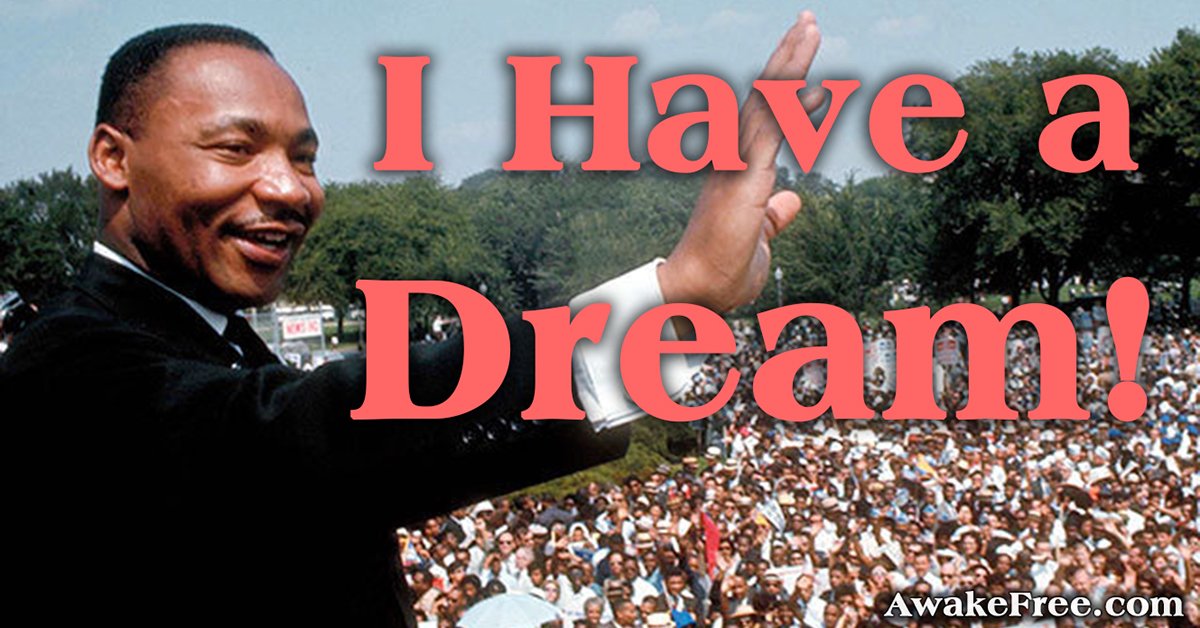
It is all very well to hope, as Dr. King did, that children "will one day live in a nation where they will not be judged by the color of the skin, but by the content of their character." How long does it take to judge the content of someone's character? It takes less than 1.8 seconds to assess the color of someone's skin. As long as race has been salient in American culture, which as Jelani Cobb points out is as long as there's been American culture, this has been hard to get past. So while acknowledging all the progress that's been made on civil rights and race relations, we seem stuck in a place far from where we'd need to be to make King's dream a reality, or to achieve the level of community we'll need in the 21st century.
A huge step individuals can take to help us across the racial divide may be to acknowledge to themselves the persistent reality of race, according to three presenters from the Iowa Department of Human Services who led a workshop at St. Paul's United Methodist Church in Cedar Rapids earlier this week. The workshop, entitled "Race: The Power of an Illusion," used the Public Broadcasting series of the same name as well as group discussions to ponder disproportionalities in social conditions, particularly for children. Black, American Indian and Hispanic or Latino children are far more likely to live in poverty, to be involved in the juvenile justice system, to be involved in the child welfare system, to age out of foster care, and to be treated differently in health care, both nationally and in Iowa.
| Source: Institute for Research on Poverty (irp.wisc.edu) |
The result is today's structural racism: facially neutral legal and economic systems that produce disparate outcomes because of the accumulated results of past injustices. Fortunately, I'd say, we can no longer afford not to have all hands on deck as we face the 21st century. We can't afford, either financially or ecologically, the infrastructure for people to live as far from each other as they'd like to. This means taking account of systems that don't offer equal opportunities and making those opportunities more equitable. Ways this can be done:
- Designing cities to be walkable, with spaces that accommodate diverse people and multiple uses. This benefits everybody to some degree, but particularly those who have been excluded from opportunities.
- Treating education, transportation and health care (and maybe housing?) as merit goods, not privileges, and as a society accordingly investing in them. The market can't make the investment in public transportation systems, and won't find the desired profit margins in middle-income housing or difficult students and patients.
- Allowing the possibility of our own subconscious bias, and building in reality checks to ensure decisions (like employment) aren't based on superficial characteristics and prejudices. The DHS presenters quoted Supreme Court Justice Harry Blackmun's opinion in the 1978 Regents v. Bakke case: "To get beyond racism we must first take account of race. There is no other way."
Thursday, March 2, 2017
Race, politics and reasons for hope
![]() |
| Dr. Jelani Cobb, from his Twitter page |
Beginning with the Declaration of Independence, which had an anti-slavery clause removed by the Continental Congress, and the U.S. Constitution, which contains three clauses protecting or incentivizing slavery, race is not a "side order" to the history of the United States but "permeates the entire country." And this reality is inescapable, even for those who are not black. Recent acts of racist violence in Kansas and Washington, D.C. have seen white Christians killed because they were in the way of an attacker targeting blacks; Indians in Kansas and Wisconsin were killed because the attacker thought they were Iranian Muslims. Cobb recalled Martin Luther King, Jr.'s observation that "we are bound by an inextricable link of mutuality." Race relations are not someone else's problem.
Themes of grievance and fear recur in American racial history. The "Southern sense of Confederate victimhood" preceded Northern white response to the mid-century Great Migration, as well as backlashes against the 1964 Civil Rights Act (Nixon's southern strategy) and the 2008 election of Obama (the Supreme Court's striking down the Voting Rights Act, among other things). A surprising percentage of whites tell pollsters that life is harder for them while blacks have it easy. (NOTE: My own brief digging found a CBS News poll from June 2014 on the subject of whether whites or blacks have a better chance of "getting ahead in today's society." Whites were more likely to say chances were equal; blacks were more likely to say whites were advantaged. Very few members of either race said blacks were advantaged.)
Rape has been an alarming meme through all this period. A (fictional) black-on-white rape is the pivotal moment in D.W. Griffith's 1915 film Birth of a Nation, recurring in arguments for the Chinese Exclusion Act of 1882, the resurgence of the Ku Klux Klan in the 1920s, Donald Trump's announcement of his presidency in 2015 ("They're bringing drugs, they're bringing crime, they're rapists"), and Dylann Roof's explanation to parishioners in Charleston, South Carolina of why he was shooting up their church. ("I have to do this, because you're raping our women and y'all taking over the world.")
Memes like All Lives Matter (in response to Black Lives Matter) reflect the majority's discomfort with our racial history and current reality and a desire to evade the real problem. "We may," he told someone during the Q-and-A after his speech, "spend the rest of our lives trying to undo what's being done now" in terms of poisonous presidential rhetoric and actual standing down from civil rights enforcement by the Department of Justice. And yet...
Along with the evasion, grievance and exploitation of fear, there has been throughout American history a "countervailing tradition... of people of conscience rising up in difficult times and standing for democracy." The National Association for the Advancement of Colored People grew out of a white race riot in Springfield, Illinois in 1909. Jane Addams's Hull House, the American Civil Liberties Union, the investigative journalists known as muckrakers and the civil rights movement of the 1950s and 60s all grew out of intense social crises, to substantial positive effect. Which brought Cobb, on Tuesday night, to the encouraging words with which he ended his talk. Who's to say what might happen next?
EARLIER POST: "Akwi Nji on Choosing Justice over Comfort," 18 January 2017
Tuesday, February 28, 2017
Why casinos?
![]() |
| Is a casino what this block needs? |
(2/28/2017) The required cooling-off period has passed since Cedar Rapids's casino proposal was denied by the Iowa Racing and Gaming Commission in April 2014, and three proposals have emerged to try it again (Morelli). The Cedar Crossing group led by Steve Gray, who created the 2013-14 proposal for a casino that would have straddled 1st Avenue West near the Cedar River, has resubmitted that version along with a smaller casino concept on 1st Avenue where it currently intersects with 4th Street NE, the railroad tracks and the Cedar River Trail. Wild Rose, which operates large-scale casinos in Clinton and Dubuque, has proposed a small casino on the second floor of a four-story building proposed in the 400 block of 1st Avenue SE.
Of the three I prefer the look of Wild Rose's proposal. It's an unpretentious building that works well with the rest of the block and doesn't impede walkability. My main beefs against the original Cedar Crossing proposal were that it was a gaudy building that wouldn't work with the street; that it was a self-contained pod of attractions that not only would provide no spillover benefits to nearby businesses but would actively compete against them; and that, compared to a contemporaneous proposal by MGM to Springfield, Massachusetts, the City of Cedar Rapids seemed to be getting very little out of the deal. I haven't seen the financial details of the current proposals, so can't compare them or assess their sufficiency.
I remain curious as to why a casino plays such a central role in our city's discussions of economic development. Some people enjoy them, some don't; I get that. And whether big- or modestly-sized, a new casino will make a noticeable splash when it opens. But as economic drivers casinos seem less effective than incremental urbanism. This admittedly is a pretty slap-dash way of demonstrating this, but let's look at the 400 block of 1st Avenue SE, where the Wild Rose hopes to build. The venerable Bever building, built in 1923, is pretty, but this is far from the hoppin'-est block in town. Using the Urban Three model of property tax comparison...
...we find that the taxable value per acre on this block vastly exceeds either of the region's most successful casinos. The taxable value per acre of the vacant lot where Wild Rose hopes to build is more than three times that of the Riverside Casino and Golf Resort!
However, as dubious a use of valuable real estate as I believe a downtown casino to be, I am done with the Iowa Racing and Gaming Commission. I would rather have the city make its own decisions, even if I disagree with them, about its future. The State of Iowa has shown an unbridled willingness to intervene in and overrule local decisions--from casino location to minimum wage to labor agreements to plastic bags to rental regulations, and now taking down the Des Moines Water Works--without any notable talent for doing it. Unless someone's rights are being violated, the governor and legislature should butt out. We can handle this. Do something you're good at, like ensuring gun rights for robots.
SOURCES
B.A. Morelli, "3 Cedar Rapids Casino Choices Meet Application Deadline," Cedar Rapids Gazette, 13 February 2017
Strong Towns, "The Walmart Index: Results of Our Big Box Data Collection Are In," Strong Towns, 3 August 2016
"G.O.P. Statehouse Shows the Locals Who's Boss," New York Times, 21 February 2017, A22
SEE ALSO:
Ben Seigel and Brooks Rainwater, "Preemption Prevents Innovation," US News and World Report,
"Value Capture and the Property Tax," Lincoln Institute of Land Policy, n.d.
EARLIER POSTS:
"No CR Casino... Now, What?" 17 April 2014
"Their Casino, Our Casino," 5 September 2013
Of the three I prefer the look of Wild Rose's proposal. It's an unpretentious building that works well with the rest of the block and doesn't impede walkability. My main beefs against the original Cedar Crossing proposal were that it was a gaudy building that wouldn't work with the street; that it was a self-contained pod of attractions that not only would provide no spillover benefits to nearby businesses but would actively compete against them; and that, compared to a contemporaneous proposal by MGM to Springfield, Massachusetts, the City of Cedar Rapids seemed to be getting very little out of the deal. I haven't seen the financial details of the current proposals, so can't compare them or assess their sufficiency.
I remain curious as to why a casino plays such a central role in our city's discussions of economic development. Some people enjoy them, some don't; I get that. And whether big- or modestly-sized, a new casino will make a noticeable splash when it opens. But as economic drivers casinos seem less effective than incremental urbanism. This admittedly is a pretty slap-dash way of demonstrating this, but let's look at the 400 block of 1st Avenue SE, where the Wild Rose hopes to build. The venerable Bever building, built in 1923, is pretty, but this is far from the hoppin'-est block in town. Using the Urban Three model of property tax comparison...
| NAME | ADDRESS | CITY | CTY | LAND VALUE | IMPROVE MENT VALUE |
TOTAL TAX VALUE | ACRES | VALUE PER ACRE | |||
| Albert Auto | 421 1st Av SE | Cedar Rapids | Linn | 154,600 | 155,800 | 310,400 | 0.296 | 1,048,649 | |||
| Bever Bldg |
417 1st Av SE | Cedar Rapids | Linn | 80,600 | 549,400 | 630,000 | 0.154 | 4,090,909 | |||
| Skogman Bldg |
411 1st Av SE | Cedar Rapids | Linn | 168,000 | 860,000 | 1,028,000 | 0.321 | 3,202,492 | |||
| Vacant Land | Cedar Rapids | Linn | 100,800 | 6,700 | 107,500 | 0.193 | 556,994 | ||||
| TOTAL BLOCK | 504,000 | 1,571,900 | 2,075,900 | 0.964 | 2,153,423 | ||||||
| Wild Rose Casino | 777 Wild Rose Dr | Clinton | Clinton | 2,935,000 | 21,065,000 | 24,000,000 | 28.6 | 839,161 | |||
| Riverside Casino & Golf Resort | 3184 Hwy 22 | Riverside | Wash ington |
5,343,500 | 65,930,100 | 71,273,600 | 381.23 | 186,957 | |||
...we find that the taxable value per acre on this block vastly exceeds either of the region's most successful casinos. The taxable value per acre of the vacant lot where Wild Rose hopes to build is more than three times that of the Riverside Casino and Golf Resort!
However, as dubious a use of valuable real estate as I believe a downtown casino to be, I am done with the Iowa Racing and Gaming Commission. I would rather have the city make its own decisions, even if I disagree with them, about its future. The State of Iowa has shown an unbridled willingness to intervene in and overrule local decisions--from casino location to minimum wage to labor agreements to plastic bags to rental regulations, and now taking down the Des Moines Water Works--without any notable talent for doing it. Unless someone's rights are being violated, the governor and legislature should butt out. We can handle this. Do something you're good at, like ensuring gun rights for robots.
SOURCES
B.A. Morelli, "3 Cedar Rapids Casino Choices Meet Application Deadline," Cedar Rapids Gazette, 13 February 2017
Strong Towns, "The Walmart Index: Results of Our Big Box Data Collection Are In," Strong Towns, 3 August 2016
"G.O.P. Statehouse Shows the Locals Who's Boss," New York Times, 21 February 2017, A22
SEE ALSO:
Ben Seigel and Brooks Rainwater, "Preemption Prevents Innovation," US News and World Report,
"Value Capture and the Property Tax," Lincoln Institute of Land Policy, n.d.
EARLIER POSTS:
"No CR Casino... Now, What?" 17 April 2014
"Their Casino, Our Casino," 5 September 2013
Saturday, February 18, 2017
Busting unions or governing?
![]() |
| Scott Walker, governor of Wisconsin 2011-2019 |
I grew up in the 1960s, in a conservative house in a conservative town in a liberal era. When I was growing up, conservatism stood for small, efficient, clean, government, and a cautious approach to social change. Even so, there was room in the conservative idea for public goods. The civil rights, environmental, consumer protection and campaign finance legislation that passed during the late 1960s and early 1970s passed with conservative input and support.
In serving as a counterweight to the era's liberal zeitgeist, conservatism was at its best, and made distinctive contributions to American political and social life. It reflected skepticism about government activity and spending, reminding us constantly that we couldn't regulate or spend every problem out of existence. It stood for traditional American values, stating as the ur-conservative, Edmund Burke, did that societies contain accumulated wisdom that it is dangerous to overhaul with radical change, even or maybe especially when change is well-intentioned. It provided a voice for the private sector, for the businesses and industries that are the engines of the American economy. And, perhaps most important, it provided limits on the ability of liberalism to work its will. "Checks and balances, Jefferson," proclaimed John Adams long ago, in a letter arguing against religious establishment on the grounds that any group of people would oppress others given the opportunity, and concluding, "Human nature, know thyself!" Conservatism provided the necessary checks to balance liberalism.
Some time in the 1980s, conservatism moved from being the counterculture to being the zeitgeist itself. Perhaps, as Alan Wolfe has suggested, that led to a concern for power over ideas. I think it's just difficult to adjust to having responsibility for government and for formulating policy programs.
Whatever the reason, conservatism has lost the moral and intellectual mooring it had in previous generations. Far too much of what passes for conservatism these days is political appeals based on fear and loathing of others, and a smug rejection of any information that challenges their rigid doctrine. Examples abound: the "Hell no!" strategy of congressional Republicans in 2009-10; the variety of bizarre rumors surrounding President Obama; and the anti-intellectual approach to accumulated data and experience on topics from climate change to the recession to economic inequality to government in general. Some programs surely waste money, but some programs produce social benefits far beyond their costs, and surely even rock-ribbed conservatives know this, but it's easier and flashier to say "Investment is just a Democrat (sic) word for spending."
State budgets are in a mess, to be sure. There's plenty of blame to go around. The budget-cutting strategy of our Iowa Republicans, however, seems more oriented to sticking it to groups they don't like rather than actually saving money. Besides going after teachers' unions and public employees' unions under the guise of budget savings, the state [Wisconsin then, Iowa now] targets family planning programs, public broadcasting, anti-smoking programs, railroads, preschools and even sabbatical leaves for professors at state universities. The savings from the last one are microscopic, but it sounds good, at least to those who think sabbaticals are paid vacations.
Conservative appeals today are based on fear and or loathing of unpopular groups. Around the country, there are bills to bust public employee unions, repeal gay marriage laws, and target immigrants, as well as congressional hearings this week on the menace lurking in Muslim mosques from undercover terrorists. This bilious pattern is based on no principle, but inflames suspicions, fans prejudices, and makes us less of one nation.
To, finally, the Wisconsin bill. This is not a positive example of functional government. It is an ugly, divisive political power play. Union-busting, in Wisconsin and the states like Iowa that hope to emulate it, achieves no public purpose. (The education budget savings in Wisconsin had already been agreed to, and were passed in a separate bill.) It targets a group, blaming them unfairly for state budget woes that were brought on by a collapsing economy and exacerbated by reckless tax cuts. Perhaps non-union members can be inspired to support this cause. (Perhaps not, from early public opinion polls.) More disturbingly,breaking a well-resourced Democratic-leaning interest group fits a pattern of extraordinary Republican efforts in the past decade to rig the system in their favor: denying black votes in Florida in 2000, recalling the governor of California in 2003, Texas's mid-decade redistricting, the Citizens United decision, and now this.
To participate constructively in the American political process, as they have for decades past, conservatives need to develop a vision for America, one based on achievement of ideals, not on narrow self-interest and sticking it to groups they don't like. Ronald Reagan had a vision in the 1980s, albeit a nostalgic one based on a misremembered past. Today's conservatives can't even claim that much.
They need to do another thing, too, which is to recognize that unchecked conservatism can't achieve everything society needs. It can make us more private. It can make us more armed. But it can't make the world more beautiful, unify the American people, provide public spaces and public goods, empower those who need opportunity, or secure the public from the occasional abuse of private power. For a lot of that government can help. And unions too.
SEE ALSO:
Allison Carr, "Framing the Labor Debate," Upside Down, 13 February 2017
Molly Duffy, "Iowa Teachers Rally Against Legislature's Collective Bargaining Bill," Cedar Rapids Gazette, 12 February 2017
Kathie O'Bradovich, "Collective Bargaining Smackdown Leaves Democrats Spoiling for Rematch," Des Moines Register, 17 February 2017
EARLIER POST: "Post #50: Who's a Liberal?" 11 August 2013
Subscribe to:
Posts (Atom)
10th Anniversary Post: The Election and Our Common Life
Your humble blogger with KGAN reporters on election night 2016 (from Eric Wylie's Facebook page) (11/6/2026) A recent New Yorker car...
-
(2/4/2016) The social movement we call urbanism is a forest with several species of trees. At the risk of losing the concept of the forest...
-
A very walkable block! (10/5/2026) For most of its one mile length, Washington Avenue SE is the very model of a walkable residential street...
-
President Donald Trump (Wikimedia commons) (9/17/2026) On September 24 I will present the concluding lecture in a four-part series on ...