Tuesday, October 24, 2017

Seattle public library

Seattle Central Library
Seattle Central Library (Source: Wikipedia)

(10/24/2017) The Seattle Public Library, built about 10 years ago and designed by starchitect Rem Koolhaas, is a wonderful space notwithstanding its bizarre shape. I was very curious to see the building, which is located on a city block defined by 4th and 5th Avenues, and Spring and Madison Streets, having heard both strongly negative and positive comments over the years. Count me among the positive.

I will grant that, seen from above, it looks silly, and that they probably paid way too much for the design. At street level, it's a different story. It plays well with the street. The sidewalk on 4th Avenue goes by the glass front and an inviting doorway.

4th Avenue entrance
I'm less taken with the ground floor, which has a sterile, industrial-basement feel.

The children's room, to the left, is warmer, but with what I take to be a sad sign of these times.


The rest of the library is a mix of warm and whimsical, but very functional. There are elevators for direct travel, escalators for scenic travel, and steps for strenuous travel.

The non-fiction books, on floors 7-9, are arranged in a spiral. Fans of the Dewey Decimal System will recognize this as the art section.

The upper floors provide comfortable and quiet reading areas...

...as well as views of the city--here, the federal appeals courthouse...

...and here, downtown looking towards Elliott Bay.


I come from a small city, where our very excellent library fits on just two floors, so I don't know how I would feel about scooting up to the 9th floor to retrieve history and biography books, but this is a big library in a big city and I think I'd get used to it.

James Howard Kunstler is a severe critic of the library, and of starchitects in general. His problem is less with the outside appearance than with the disorienting nature of the interior, which he says is contrary to the function of the public building i.e. to help ground people and help them make sense of the noisy world around them. I don't know what if any alterations the library has made in the 9 1/2 years since Kunstler's commentary (cited below), but I found it quite the contrary. The lower floors were well-used, but--like Yosemite National Park--the farther we got from the entrance the less crowded and more quiet it became, and the upper floors definitely were the sort of oases urban life requires. Wayfinding was rather easy.
 
I liked being in every part of the library, and I think if anything I'm unusually sensitive to noise and disorientation--maybe especially so the day I visited, because that day had started at 5:42 a.m. with some guy outside my window yelling about the Book of Revelation. If I lived in Seattle, I'd be here a lot.

The 1906 version looks grander and less absurd, but does it play as well with the street?

SOURCE: James Howard Kunstler, "The Seattle Public Library and Other Award-Winning Disastrous Architecture," Kunstler Cast #05, 13 March 2008

MANY MANY MORE PHOTOS: https://www.yelp.com/biz/the-seattle-public-library-central-library-seattle 

Wednesday, October 18, 2017

The scary side of urbanism

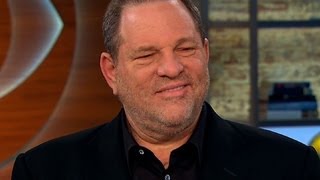
Harvey Weinstein (Source: videomovie.in)
Film mogul Harvey Weinstein's resignation-in-disgrace has unleashed a social media campaign, MeToo, in which women have reported experiences of sexual harassment or worse. The basic version says:
Me too.
If all the women who have been sexually harassed or assaulted wrote "Me too" as a status, we might give people a sense of the magnitude of the problem.
Please copy/paste.
Several posters, with commendable courage, added personal stories. The clear impression is that verbal or physical harassment is widespread, and affects a huge swath of American women. (Several posters included a rhetorical question asking if any women were exempt.)

Sexual harassment is of particular interest to urbanists in part because it violates the spirit of community. Recall the words of Isaiah that inspired the name of this virtual space: "They shall neither hurt nor destroy on all my holy mountain." One person hurt is one too many, but it's clear that so many incidents occur and so regularly that it represents an epidemic. This must not go on.

Another pressing concern is that, while sexual harassment can occur anywhere, many women's stories show that urban living can increase the danger. Urbanists commend density and street life because they are more economically and financially sustainable, better for business, more intellectually stimulating and more fun. But the more unplanned encounters occur on urban streets, without something changing rather drastically for the better, the more incidents of harassment will occur. And public transportation! It's an essential element of a successful urban place, but I've read any number of accounts of groping on buses and trains (not including the train scene in an episode of the Netflix series Master of None). I'm all in on urbanism, but it's no good if it makes women less safe. (See below for other potential costs to some people of even the good aspects of urbanism.)

Clearly we need to strengthen the norm against sexual harassment. But, for goodness' sake, how is it not already strong? I realize gender roles have changed, but that was mostly in the 1960s and 1970s. People like me, in my sixth decade of life, have never known an America where women were not publicly equal to men. Is the problem isolated individuals-with-problems? Subcultures where the value of women's equality has not taken hold? A general fear/respect/awe of financial power that is stronger than our sense of what is right? Low expectations/standards for male behavior?

This problem is clearly widespread, and attention must be paid, for the sake of women everywhere, and for the sake of the community we must be building.

SEE ALSO:
"Peace and Quiet," Holy Mountain, 22 July 2013
Charles Marohn, "Autism, PTSD and the City," Strong Towns, 28 August 2017
Tamara Coffman Wittes, "#I Will? What I Learned From My Week As An Online Activist," Brookings, 19 October 2017

Monday, October 9, 2017

The struggle for justice

National Portrait Gallery
National Portrait Gallery (Wikimedia commons)

When Jane and I were in Washington last weekend we visited the National Portrait Gallery on the mall. Among their permanent and traveling exhibitions I was particularly moved by "The Struggle for Justice," an ongoing exhibition that 
...showcases the determined men and women--from key nineteenth-century historical figures to contemporary leaders--who struggled to achieve civil rights for disadvantaged or marginalized groups. (from the webpage).
The presentation implies, with some justification, that America's perennial effort to live up to its own ideals has been largely focused on inclusion of excluded groups of people. The premise is that the Framers of our Constitution got a lot right when they designed a political system "of the people, by the people, for the people" (quoting the Gettysburg Address). Injustice happened because they, and many Americans over the years, have had a crabbed understanding of who counts as people.

The stories of abolition, black civil rights and women's rights have been often told, and justly so. What is so moving is to see representatives of each movement here. mixed in with advocates for gays, the mentally handicapped, farm labor and Native Americans. It's quite a gathering--check the slide show on the museum's web page and imagine the whole bunch at the same bar--and to these could be added advocates for prisoners, survivors of violent crime, Catholics, religious minorities, transgendered, the physically handicapped and the mentally ill. Each of them stood up at one time or another to shout "We count, too!" They are truly American heroes. The tragedy is that the shouts needed to be made at all, not to mention how long it took for them to be heard over the steady drone of ignorance and prejudice.

"By Parties Unknown" by Hale Woodruff (1900-1980), at the Phillips Gallery in Washington DC
Inclusion isn't the promised land where all our social problems are solved. Inclusion is the baseline for national conversations over how our society will manage its common life. Without everyone having the opportunity to participate in that conversation, we create issues of legitimacy as well as effectiveness. Furthermore, I believe we are at a time in history where we don't have the option of living in separate spheres. The economy, the budget and the environment are forcing us together, whether we like it or not. We need to get used to that idea, and when we do, we'll find it is good for our souls, too.

Although the principle of inclusion is straightforward, it doesn't always provide clear decision rules on, for example, what to do about the class of immigrants known as the Dreamers. Moreover, it can be complicated or co-opted in practice. The week I saw the exhibit, the Trump administration issued a rule change allowing businesses not to provide female birth control coverage in employer-provided health insurance. Vice President Pence walked out of an NFL game in a surely-orchestrated protest against protesting players. In both cases, the officials sought to avoid the issue of inclusion either by claiming greater victimhood (do employers have a right-to-decide employees' health coverage that the government is violating?) or by simply changing the subject (respect the flag!). Meanwhile, a Seattle coffee house owner evicted some customers because prior to coming there they had been distributing anti-abortion pamphlets (Bollinger 2017). Not everyone is covered by the provisions of the Civil Rights Act, but the same principle of inclusion means we can have deeply-held disagreements without being enemies. According to the article, which is written from the hard-to-swallow perspective that the eviction was justified, the coffee house owner is gay, and surely has known exclusion I never have experienced. Still, we all have to live together. All of us.

The Smithsonian exhibit is optimistic, depicting an America living ever truer to its ideals--"striving upward towards perfection," to take one of my favorite John Wesley quotations somewhat out of context. May it be so.

SEE ALSO: "Strength Through Diversity," 1 March 2014


Sunday, October 1, 2017

Book review: "The Well-Tempered City"


I grew up in the suburbs, but I was drawn to nearby New York City because it was gritty and alive with what the architect Robert Venturi called "complexity and contradiction... messy vitality," throbbing with street life and jazz, blues, and rock and roll.--Rose (2016), p. x

Planner Jonathan F.P. Rose has produced a prodigious book detailing the interwoven nature of the many facets of cities. The inspiration and model is Johann Sebastian Bach's The Well-Tempered Clavier (1722, 1742), described as both a musical composition and a work of persuasive rhetoric. Bach was promoting a new system of tuning notes that--unlike that which had been in place for 2000 years--enabled harmonization across keys. In the work "Bach moves through all twenty-four major and minor keys in a series of preludes and fugues, weaving them together into a sublime ecology of sound" (p. xi). Just as a masterful composition like The Well-Tempered Clavier requires harmonization of notes and themes, individuals "over the long run will benefit more by contributing to the success of the larger system" than by pursuing narrow self-interest (p. 11).

Cities, like composers, can either blend the many dimensions of human well-being or (as in the Pythagorean system of tuning) set them against each other. Rose argues in his first chapter--a conviction familiar to any reader of Holy Mountain--that global megatrends like globalization, connectivity, terrorism and migration have made harmony urgently important. Probably it always has been, but in the period of economic growth following World War II, it was easy to ignore. Now things have gone VUCA, an American military acronym standing for "volatility, uncertainty, complexity and ambiguity" (pp. 14-15).

Most of the book builds a model of a well-tempered city describing five qualities that, taken together, should see us through whatever lies ahead:
  1. coherence, "integrating systems" (p. 66) that connect humans with each other, with nature and with ultimate reality into a coherent whole. American zoning and sprawl produce the opposite of this
  2. circularity, thinking in terms of regeneration instead of linearly, particularly when it comes to consumption of scarce resources like food, water and oil
  3. resilience, ability to respond to stress and volatility by changing to a more adaptive mode
  4. community, "a deeply interconnected metabolic web of families, communities and cognition" (p. 277), including adequate housing and economic opportunity. He cites Putnam's ideas of bonding capital and bridging capital as well as Woolcock's addition of linking capital that connects people across different social classes
  5. compassion, a "desire to relieve the suffering of all beings" through which we find an overarching purpose such as improving the lives of children or the health of nature
Rose's book is replete with historical examples and draws on a wide range of knowledge to show that, in a VUCA world, cities need to be ready for anything, which means recognizing how things are connected before it's too late.
  • Chapter 1: New Delhi suffered a massive power outage in 2012 because climate change has led to hotter summers and less rainfall, so less water is available to produce food and hydro-electric power just as a larger and more well off population is demanding more of it, requiring more coal-fired power which exacerbates climate change not to mention air pollution. Add in poor infrastructure and an inefficient government and you have a recipe for disaster, which in fact is what occurred.
  • Chapter 10: Freddie Gray grew up poor in housing whose historically rigid segregation was actually named "the Baltimore idea" after his native city. Even as racism became less overt, the barriers to opportunity it had created replicated themselves as substandard conditions and interracial suspicion. Young Freddie's exposure to lead paint left him contributed to developmental disabilities and behavioral problems that led to his tragic encounter with the police.
The book covers enough topics that it could serve as an introduction to urbanism, but the associations and connections make it rewardingly provocative for the seasoned urbanist as well. For example, in Cedar Rapids our school district is facing a financial imbalance substantial enough that it is considering closing up to a third of our elementary schools. There are arguments for this strategy, such as cost savings can refit the other schools or even build new ones as was recently done in Kansas City. But reading Rose makes me immediately skeptical of such a siloed approach. How will this affect housing patterns (will anticipating sprawl reinforce it?) and the most vulnerable children? How much will transportation to the new schools cancel the cost savings from closing the old ones? How resilient will these decisions prove 20 or 40 years into a VUCA future? Are there better ways for our community to promote the well-being of all children? Can the city and the school district find ways to cooperate to achieve resilience in the face of unreliable state funding? Note that none of this is possible without the connectedness and compassion he commends, without which we're merely scrambling for short-term advantage.

The Well-Tempered City" blog: http://www.welltemperedcity.com/blog/

Sunday, September 10, 2017

Imagine Mound View


Imagine Mound View, the Cedar Rapids neighborhood festival organized by Corridor Urbanism, drew a steady and significant crowd to a normally empty block of the northeast side Saturday afternoon. They found an array of food and craft vendors, political candidates, and representatives from non-profit and government agencies. Competing as we were against the annual Iowa-Iowa State football game (if that doesn't impress you, you're not from here), we showed the appetite here for good urban development that includes food options, bike trails and other recreational opportunities--if nothing else we learned that Cedar Rapids needs more skateboard facilities, stat--as well as just plan old street life.
We arranged for the 1600 block of F Avenue NE to be closed for the day
Decorated crosswalk
Candidates for November's City Council elections were available


A soap box was available (here used by mayoral candidate Gary Hinzman)


More people used the idea boards
The skateboarders were tireless (installation by EduSkate)

Demonstrations of curling and new styles of bikes

While the skateboarders occupied the trail, cyclists were invited
to try out a pop-up protected bike lane with various types of treatments
City staff were on hand to solicit people's input about development


A variety of food and drinks were available from vendors like
Keepin' Up With the Jones's
More vendors: Lightworks Coffee, KB Woodworking, Fiddle Sticks
Non-profit booths at Imagine Mound View
So, what happens next? This depends entirely, as it should, on the responses of individuals. Ideally, entrepreneurs notice the opportunities available in an area which currently is served by some outstanding bars but not much else. Homeowners as well as the two colleges are amenable to a variety of new commercial and housing endeavors. Owners of low-performing properties are encouraged by rising values to sell to people with big plans. The city can help by form- rather than function-based zoning, and by contributing urban-friendly infrastructure. I don't think we're looking for a "home run" like a heavily-subsidized Google or Amazon facility, though.  Mound View has the good bones and access to colleges and downtown that should make it attractive to private investment, all other things being equal.

F Avenue on an ordinary afternoon

Tuesday, August 29, 2017

Three futures for Mound View

Mound View neighborhood as seen from Clark Field at Coe College
When Imagine Mound View, Corridor Urbanism's street fair-cum-tactical urbanism event, occurs in early September, it will bring people to one of Cedar Rapids' most historic, walkable and centrally-located neighborhoods. The event is intended to highlight the potential of this area, and to promote principles consistent with prosperity, inclusion and resilience. But what will actually happen in Mound View over the next 25-100 years will result from the uncoordinated decisions and actions of many people and institutions, much of them taken in an environment currently unpredictable.
The Tic Toc, 17th St and E Av: once a renowned neighborhood gathering place,
awaits a new life in better times
Mound View is the historic name of a working-class neighborhood on Cedar Rapids' northeast side. Its official boundaries are 1st Avenue, 20th Street/Prairie Drive, K Avenue and Oakland Road/College Drive. These are mostly intuitive boundaries, but K and Oakland don't really demarcate anything, so it may make more sense to include the area between Mount Mercy University and the interstate in our mental map. This corresponds to the city's land use map, where it is all designated "urban-medium intensity" while nearby areas on the northeast side are designated "urban-low intensity." On the other side of the interstate is Cedar Lake, a former industrial site being reclaimed by a very hopeful group of people.
Oakland Road approaching G Av. Mound View's streets are an interesting mix of residential,
commercial and light-industrial uses


Mound View grew up around small factories and stores, as well as St. Luke's Hospital and Coe College, welcoming Mount Mercy Junior College (now Mount Mercy University) in 1928. The family of the future artist Grant Wood moved here in 1901; he attended the old Polk School and spent his young winters sledding down the steep hill in the 1800 block of B Avenue. (The Mound View Neighborhood Association offers an online walking tour of Wood-related sites.)

Grant Wood lived on 14th St early in the 20th century
Mound View retains a lot of advantages of traditional urban form: mixed residential and commercial uses (with some light industrial), a street grid, sidewalks, older styles of houses with porches, a large park, and several gathering places. The two colleges are less than a mile apart, and both have a large number of events and facilities open to the public. Garfield Elementary School and Franklin Middle School are within walking distance. A biking/walking trail was recently constructed that connects on both ends to an emerging county trails network. This stretch of the trail...


...passes through the Imagine Mound View location, and will be the site of e-bike and skateboard demonstrations as well as a pop-up coffee shop.

From that location, the walking distances to:
 Daniels Park splash pad 5 minutes
 Dick's Tap and Shake 5 minutes
 Dairy Queen 6 minutes
 J.M. O'Malley's 6 minutes
 Garfield Elementary School 8 minutes
 Hennessey Recreation Center at Mount Mercy 11 minutes
 Clark Racquet Center at Coe College 12 minutes
 Franklin Field 12 minutes
 Hy-Vee (supermarket) 13 minutes
 Regis Middle School 16 minutes
 Franklin Middle School 16 minutes
 McLeod Run Trail Park 17 minutes
 Brewed Awakenings Coffeehouse 19 minutes
 Cedar Lake 21 minutes
 Brucemore National Historic Site 25 minutes
 Shaver Park (disc golf course) 28 minutes
 U.S. Cellular Center 33 minutes
 Cedar Rapids Public Library 36 minutes
 City of Cedar Rapids 37 minutes

As was the case in a lot of core urban neighborhoods, the last part of the 20th century was not kind to Mound View. Center Point and Oakland Roads were re-designed as one-way, multi-lane throughways. A lot of the factories closed or downsized, as did many of the small stores. (The last grocery store in the area, Hy-Vee, was saved from closing by a $1 million renovation grant from the City of Cedar Rapids in 2000.)

As industrial jobs disappeared, people left the area, and what had been single-family housing became vacant or was converted to short-term rentals. A lot of new construction along 1st and A  Avenues used suburban-style large parking lots separating the buildings from the street. Coe College bought and knocked down a couple blocks' worth of housing in the middle of the last decade in preparation for an anticipated expansion. Polk School, which began to experiment with a "year-round" schedule in the late 1990s, was closed and converted to an alternative education center about ten years later.
Polk's playgrounds and basketball courts remain important neighborhood resources
The location and design advantages of Mound View co-exist with very low real estate prices, suggesting there is a rent gap here which could attract future investment. That is in fact what drew the attention of Corridor Urbanism. But investment doesn't occur automatically, nor when it does occur is it always benign.

Future 1: Deterioration of assets. Cedar Rapids is not New York or San Francisco. Regional land prices are low, and there are no mountains or oceans to block physical expansion. Construction of the Highway 100 extension has just opened up many acres at the edge of the city for development. As long as energy prices remain low, there may not be the incentives for private investors in older areas of the city. The remarkable emergence of New Bohemia since 2008 is inspiring to the other core neighborhoods, but probably not specifically replicable. The colleges have heavily invested in their campuses, but neither is flush enough to fund neighborhood development, nor is the city. The school district's radical proposal to close all existing elementary schools and build new ones means their investment in this area is likely to decrease rather than increase. In the absence of private investment, existing long-term homeowners will continue to hold on, but they won't live forever, and "generational replacement" (social science euphemism) would likely bring dramatic disinvestment to this area within 25 years.

Future 2: Gentrification with displacement. On the other hand, it's possible that developers will see a potential market in upscale housing here: college or MedQuarter employees, or fitness enthusiasts attracted to the trails and college-based facilities. Mound View could see a surge in condo construction such as New Bohemia and Kingston Village have experienced, and/or new home construction replacing "tear-downs." An increase in property values would be welcome, and a fair amount of housing stock certainly is dilapitated, but would likely price many existing homeowners and renters out of the area. Peter Moskowitz's recent How to Kill a City (Public Affairs Press, 2017) provides some particularly egregious examples from other parts of the country of government's use of incentives and condemnations in ways that facilitate displacement.

For this reason, I take a strong stand against rebranding Mound View as the College District. I know the colleges are substantial assets just waiting for the neighborhood to leverage them. But rebranding shows lack of respect, not only for the neighborhood's history, but for long-term residents as well.

Future 3: Gentrification, gently. The best outcome for Mound View will result from investment that improves the neighborhood while allowing it to remain true to its current assets including its people. The city has begun addressing obstacles to walkability: adding bike lanes to key streets, improving trails and, in the next couple years will be converting Oakland and Center Point Roads back to two-way albeit only above H Avenue. I'd like to see improved connection to Cedar Lake, either by making H Avenue less dangerous for cyclists and pedestrians where it meets the interstate, or better yet by punching through a connection around E Avenue. The strange intersection north of Coe College could be improved as well, slowing cars but accommodating multiple directions, while improving connection through Coe College to the MedQuarter and downtown with a sidewalk along Coe Road.
Center Point Road was blocked in the late 1960s;
the two segments are one-way streets, in opposite directions

What it looks like on a map
The worst of the housing stock should be replaced, but there should still be places for low-income people to live. People should be able to walk to school, shopping and work. Corner stores, small shops and bars would provide public gathering places as well as jobs. New housing construction should fit well with existing stock as well as their streets. Allowing accessory dwelling units would provide a non-disruptive way of increasing density. The school district should commit to keeping a school within walking distance of Mound View children; Coe College should be encouraged to do something with its empty land. 

A lot of what's needed to mitigate the negative effects of gentrification requires policy decisions at the state or national level [see Richard Florida, The New Urban Crisis, Basic Books, 2017, pp 191-215] but strong expectations established by both city government and neighborhood residents couldn't hurt. If we know what we want, and understand the trade-offs involved, we might get it.


THANKS to Imagine Mound View sponsors:
Legion Arts
Acme Electric
Benchmark Construction
Coe College
Dick's Tap and Shake Room
King's Material
Mount Mercy University
Valenta Plumbing and Heating

NOTES:
For earlier posts on the theme of gentrification, click on the link under "labels" in the right column.

City Data report on Mound View.

SEE ALSO: Phillip Platz, "Urbanism Advocacy Group Stages Festival in Cedar Rapids' 'Next New Bo'," Corridor Urbanism, 25 August 2017

Tuesday, August 22, 2017

Urbanism review


(8/22/2017) I've been invited to give a number of public talks this summer and fall, and at least a couple of them will allow me to spread the word about urbanist design. Urbanism (sometimes new urbanism, but it's not new anymore) is the set of ideas I along with many non-planners first encountered in the 1990s with James Howard Kunstler's critique of post-war development, The Geography of Nowhere (Atlantic Monthly Press, 1993).
Geography of Nowhere cover

Kunstler's thorough, slashing prose made such intuitive sense to me that I wonder if I've always been an urbanist, and only lacked the conceptual vocabulary to articulate it. Not everyone swallows the premises of the urbanist argument so quickly, however, as I was reminded last fall when one of my students praised Cedar Rapids's Collins Road strip for having every store you could possibly want. I look at an endless sea of franchises arrayed thusly...

...and I see unwalkable form and hideous appearance, not to mention the intensity of infrastructure is costly. It does have a lot of stores, though.

For a starting point, then, we turn to two questions from the Strong Towns Strength Test, plus one I made up, that establish a baseline picture of any city. (The other eight strength test questions are good, too, but these are things someone could answer off the top of their head.)
  1. Take a picture (or a mental picture) of your town at midday. Does the picture show more people than cars?
  2. Is it safe for children to walk or bike to school and many of their other activities without adult supervision?
  3. I'm visiting your home. You're going to show me one of the best places in your town. How do we get there?
Marion's Novak School lies across busy 29th Street, which has a left-turn lane but no crosswalk

The answers to these questions matter. Here's why. For most of the last 75 years, America has built cities to facilitate the movement...

...and storage of cars.

"Sprawl" has hollowed out downtowns and neighborhoods, and made it difficult-to-impossible to get most places without a car. That means (see sources below especially Duany et al chs 1-2, 4 & 7, Calthorpe and Fulton ch 1, Kellbaugh ch 1):
  • Isolation of individuals: youth and elderly have difficulty getting around, social groups don't encounter each other, no one gets exercise unless they intentionally work out
  • Unattractive civic spaces;
  • Areas of concentrated poverty disconnected from economic opportunities and civic life;
  • Traffic congestion, as single-occupancy vehicles travel the same paths as people go about their daily business;
  • Deaths and injuries in auto crashes;
  • Environmental costs, starting with wasted energy, as well as air pollution and climate change from auto emissions;
  • Financial liabilities of governments at all levels to maintain the infrastructure;
  • Financial costs to individuals who must have a car to get around; and
  • Less opportunity for local businesses because potential customers are whizzing by them (or struggling by them on congested roads)
To address these consequences, urbanists seek a return to the traditional neighborhood model of urban growth (Duany et al. ch. 4; Calthorpe and Fulton chs 1 & 2, Hester). This means designing places that are:
  1.  walkable and human-scaled: safe for bikes and pedestrians, interesting (signs of human activity), and creating a sense of enclosure with street trees and buildings constructed to engage people on the street (neither "towers in the park" nor "snout houses") 
  2. diverse in population: economic class, race, gender and sexual preference, religion, ethnicity, you name it
  3. varied in uses: residences, shops, offices and schools close to each other... sometimes in mixed-use buildings
  4. inclusive of public spaces that serve as community centers and landmarks, attract different kinds of people and foster a sense of commonality
"Chicago Street," painting by Michael Broshar, Waterloo, Iowa
Such places are productive because they foster economic activity without requiring a great deal of public infrastructure or subsidy. Another benefit is they sprout third places, usually commercial establishments that serve as informal meeting spots. Author Ray Oldenburg describes them as "public places that host the regular, voluntary, informal and happily anticipated gatherings of individuals beyond the realms of home and work" (1989: 16).

Happy hour at The Lounge, 97 3rd Avenue SE
There are many reasons to be an urbanist: communitarian, environmental, financial, health/safety or sheer personal preference. We can do a lot better on all these scores than we're currently doing.

SEE ALSO:

"The Urbanism CLEF," 4 February 2016 (four approaches to urbanism arranged to form a memorable mnemonic)
"The Parking Dilemma," 31 July 2013 (focus on the work of Donald Shoup)
"Biking in the 21st Century," 28 June 2013 (focus on the work of Jeff Speck)
"Gleanings from the New Urbanism," 19 April 2013 (introduction)

MORE ON URBANISM:

Ben Kaplan wrote this primer on urbanism, "What is Urbanism?" (Corridor Urbanism, 13 April 2015), particularly addressing the inexact relationship between urbanism and population density

The best first book about these ideas remains Jane Jacobs's The Death and Life of Great American Cities (Random House, 1961). Her fluent, accessible language shouldn't conceal the power of the thoughts behind it. She analyzes how cities work, what makes them succeed and fail, and most importantly conventional misconceptions about cities that lead to disastrous policy choices.

More recently has come a cartload of books on design and its impacts. For me the earliest and most influential include:
Peter Calthorpe and William Fulton, The Regional City: Planning for the End of Sprawl (Island, 2001)
Andres Duany, Elizabeth Plater-Zyberk and Jeff Speck, Suburban Nation: The Rise of Sprawl and the Decline of the American Dream (North Point, 2000)
Randolph T. Hester, Design for Ecological Democracy (MIT Press, 2006)
Douglas S. Kellbaugh, Repairing the American Metropolis: Common Place Revisited (University of Washington, 2002)
Ray Oldenburg, The Great Good Place (DaCapo, 1999)
Donald Shoup, The High Cost of Free Parking (Planners Press, 2005)
Jeff Speck, Walkable City: How Downtowns Can Save America, One Step at a Time (Farrar Straus Giroux, 2012)
Jeff Speck speaks in Cedar Rapids, 2015

10th Anniversary Post: The Election and Our Common Life

  Your humble blogger with KGAN reporters on election night 2016 (from Eric Wylie's Facebook page) (11/6/2026)  A recent New Yorker  car...