Thursday, June 27, 2013

Climate change and the dysfunctional Congress

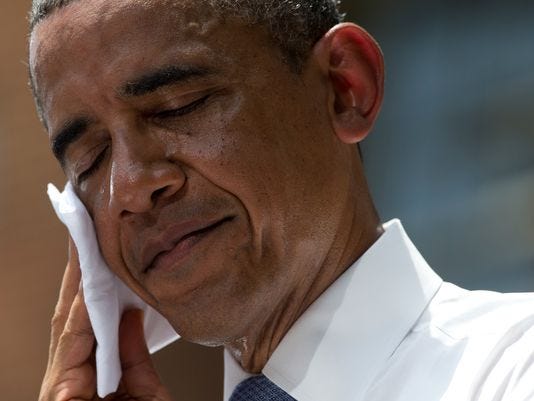
 (Obama at Georgetown University, swiped from usatoday.com.
Will his handkerchief become as iconic as Jimmy Carter's cardigan?)

President Obama spoke Tuesday on the issue of climate change, announcing a number of administration initiatives to combat it. The keystone is a coming executive order regulating carbon dioxide emissions by electric utilities. He also promised more federal support for alternative energies and financial assistance to cities threatened by rising sea levels. And he stated a vague and possibly insuperable standard for approving the Keystone XL Pipeline. More details and commentary is available all over the web, including the Atlantic Cities blog and Andrew Revikin's Dot Earth blog.

Reaction has been varied, depending on one's views of climate change and towards Obama himself. Congressional Republicans, unsurprisingly, have alleged Obama is waging a "war on coal." On the optimistic side, a New York Times op-ed Wednesday praised Obama's move as "a politically difficult step." A number of people concerned about all that carbon in the atmosphere--including Michael Wara of Stanford, who is quoted at length in the Dot Earth blog--are skeptical about Obama's commitment to the issue, and fear this is the latest round of sporadic attention with little concrete to show for it.

Assuming Obama's speech this week heralds substantive action, it's the right thing to do at the right time. But, as Jason Bordoff and Michael Levi point out in the Times op-ed linked above, it's a poor substitute for congressional action, say, to pass a cap-and-trade law on greenhouse gases. More broadly, it's the latest episode of presidents being forced--or feeling forced--to act on their own when Congress is deadlocked. Richard Nathan described, in The Administrative Presidency (1983), Richard Nixon's 1960s strategy to deal with a hostile Congress, which culminated in the regulatory reform efforts of Ronald Reagan and George H.W. Bush.

An administrative, go-it-along presidency may be the short-term solution in this case, but it is bad in the long run. Our Constitution provides for checks and balances, on the grounds that one person acting alone is fraught with dangers. We get better deliberation when all the institutions of government are involved. And laws are more stable than executive orders; what can be promulgated with a stroke of a pen can be undone with a stroke of a pen.

But policy making through normal, constitutional channels can't happen if Congress doesn't work. That will require, for starters, Republicans in the House and Senate to take responsibility for policy making, and not to let coal interests, or their antipathy to Obama, or whatever else is blinding them to ever-higher piles of evidence that we are playing a dangerous game with energy consumption provide excuses to block everything.

Monday, June 24, 2013

The future is exciting and scary

Cover of Disruptive Technologies report

"I have seen the future, and it's a place about 70 miles east of here, where it's lighter."
--LAURIE ANDERSON, "LET X EQUAL X"

McKinsey and Company, the renowned business consultants, have just published a fascinating, comprehensive look at the likely impact of technology on society between now and 2025. Disruptive Technologies: Advances that will Transform Life, Business and the Global Economy is available as a free .pdf, or you can download it for e-reader.

The report's tone is somewhere between positive and giddy, and well it might be. When you think about all the cool stuff that's been brought to our doorsteps in the last, say, 20 years, it's exciting to think about what the next big thing might be. Some of these, like mobile Internet, are already pretty widespread, but will become even moreso; others, like driverless cars, are now largely in the prototype stage. Given the likelihood of interaction effects between the burgeoning technologies, it just gets cooler.

Without further ado, their list of the 12 emerging technologies that are likely to have the biggest impact in the next 12 years. Each gets its own chapter, which discusses opportunities for its use as well as barriers and risks:
  1. mobile Internet ($3.7-10 trillion impact): there will be more ways to be wired on-the-go, and these devices will be cheaper, with users increasing from 1.1 billion to 3-4 billion
  2. automation of knowledge work ($5.2-6.7T): tasks that currently require college-educated humans could be programmed, such as research or institutional technology support (Box 6, p. 41)
  3. the Internet of Things ($2.7-6.2T): more ordinary objects, like shipping containers or hospital beds (p. 51) will have sensors that are connected to the Internet, and could even have actuators that take certain actions when indicated
  4. Cloud technology ($1.7-6.2T): delivery of computer services over a network or the Internet through a shared pool of resources (p. 62), increasing convenience for users and accessibility for small businesses
  5. advanced robotics ($1.7-4.5T): not just for assembly lines anymore, robots could take on tasks currently done by college-educated humans, such as assisting with surgery (Box 7, p. 69)
  6. autonomous and near-autonomous vehicles ($200B-1.9T): cars that run on their own... discussed in "Freakonomics" podcast #128
  7. next-generation genomics ($700B-1.6T): genetic analysis becomes easier and cheaper, and design becomes possible and maybe even mainstream
  8. energy storage ($100-600B) for future use, like super-batteries
  9. 3D printing ($200-600B): not just for gun-making anymore, printers will be able to do a lot of low-cost manufacturing
  10. advanced materials ($200-500B) with special functions or unusual strength
  11. advanced oil and gas exploration and recovery ($100-500B): economical ways of finding and getting at fossil fuel supplies that are currently too expensive to extract [n.b. opinions vary as to how affordable this is going to get, in terms of both direct costs and pollution externalities]
  12. renewable energy ($200-300B) like wind and solar become more widespread as they become more viable
As business consultants, their first concern is with the commercial impacts. Firms that are well-placed to take advantage of these waves stand to benefit big-time. And, for that matter, who needs a firm? Quoth McKinsey: "A new wave of unprecedented innovation and entrepreneurship could be in the offing as a result of falling costs and rapid dissemination of technologies" (p. 16). They elaborate with a combination of encouragement and warning (p. 21):
Business leaders need to be on the winning side of these changes. They can do that by being the early adopters or innovators or by turning a disruptive threat into an opportunity.... Top leaders need to know what technologies can do and how to bend it to their strategic goals. Leaders cannot wait until technologies are fully baked to think about how they will work for—or against—them. And sometimes companies will need to disrupt their own business models before a rival or a new competitor does it for them.
While entrepreneurs and business owners (leaders?) face the choice of whether to be on this train or underneath it, and consumers revel in piles of ever-newer, ever-cooler stuff accumulated throughout ever-longer lives (p. 15), there remain some rather sticky social questions. The report does not overlook these, though the prospective costs don't nearly get the attention that the benefits do. The rest of this post consists of my observations, concocted from selective reading of Disruptive Technologies.

(1) There will be a significant role for government in managing the impact of the "disruptive technologies." To hear some tell it, America already suffers from too much government. Perhaps it would be more accurate to say there's too much in some areas and not enough in others? In any case, McKinsey's report does not neglect to mention that the brighter day of 2025 will not arrive unless government effectively manages some aspects of the evolution:
  • providing new, high-level technical skills to the workforce, as existing jobs become obsolete at a faster pace than ever (p. 15)
  • addressing how to deal with increasing inequality between individuals and nation-states (p. 16)
  • balancing the benefits of new technologies and the necessary freedom to innovate with risks to individual and national security from hacking, leaks &c. (p. 19 and #2 below)
  • providing the regulatory framework, for example, for driverless cars
  • funding research 
  • developing better ways of measuring the value of technological innovation that go beyond GDP and employment/unemployment (p. 22)

(2) The more wired we are, and the more connected we are, the more our security is at risk in ways it is difficult for the individual to comprehend. In 2006, when I attended a conference on Internet security at Principia College, the main concern was individual hackers. They're still a concern, as companies like (lately) Facebook deal with security breaches, and Internet commerce remains vulnerable to the capture of encrypted personal data. To which add violent criminals: this weekend I heard a radio report about child molesters using location data on Facebook pictures to target their victims. (Did I know that the pictures I upload have their location tagged?)

Beyond rogue individuals, as we've seen recently with reports of leaks of national security information by contractor Edward Snowdon (on the lam, reportedly in Russia, as of today), both governments and businesses have mounds of our personal data at their fingertips. They promise not to misuse it, but, shoot, if the government can't keep their own secrets out of the Washington Post, why should we trust them with ours? Given the leaps forward coming in electronic connectivity, chances are we ain't seen nothin' yet. And Snowdon may be a hero to some (not me, by the way), but surely we should be given pause that an uncontrolled individual had the opportunity to do even greater damage with the data to which he had access.

Most people seem to me rather sanguine about all the piles of their data in various places, because, I think, they perceive that the costs of opting out of the digital world are greater than the present danger to themselves from others having access to their personal data. Will that continue to be the case?

(3) Most importantly for this blog's concern with 'how we are going to live together,' economic opportunity for many--most?--people is going to be even more up in the air than it is now. The global economy is ever more competitive and productive, at least from a labor perspective. (By 'productive' is meant that more stuff can be produced by fewer workers, thanks to improvements in technology.) In a winner-take-all world, a few successful firms can drive the rest out of business, as we've seen with, for instance, airlines, book and record stores, credit cards and discount stores. That means fewer places for people to work, and, thanks to those improvements in technology, less need for even successful firms to hire. Note that, not only has the unemployment rate been persistently high since the worst of the last recession, which has a depressive effect on most people's incomes, but wages were slipping even during extended economic growth between 2001 and 2007.

These are the people who are going to be most disrupted by Disrupting Technologies. That "millions of people will require new skills" (p. 15) is a refrain we've been hearing for decades. The industrial policy advocates of the early 1990s, like Robert Reich, saw retraining and education as the solutions to displaced blue collar workers. We continue to hear this in President Obama's call to make post-secondary education available to everyone. The assumption is there's a place for everyone in the new economy if only they have the right skills. I don't buy it. I certainly don't sense in the poorer areas of my town that people feel any sense of economic opportunity at all. And even if there were, not everyone is able to take advantage of post-secondary education to become a well-compensated knowledge worker.

But now, McKinsey predicts, software and robotics are going to be taking the jobs even of knowledge workers. Now we're not talking about people who couldn't or didn't get college degrees, we're talking about people who did. Of course, the premise of liberal arts colleges like the one where I teach is that college is not vocational education, that you learn and develop skills that you can take to a succession of careers. But, along the way, how much retooling is it reasonable to expect? As Paul Krugman writes in The New York Times:
The woolworkers of 18th-century Leeds addressed this issue back in 1786: “Who will maintain our families, whilst we undertake the arduous task” of learning a new trade? Also, they asked, what will happen if the new trade, in turn, gets devalued by further technological advance? And the modern counterparts of those woolworkers might well ask further, what will happen to us if, like so many students, we go deep into debt to acquire the skills we’re told we need, only to learn that the economy no longer wants those skills? Education, then, is no longer the answer to rising inequality, if it ever was (which I doubt).
Krugman's answer is to cushion the periods of retraining between jobs with a substantial safety net, including a minimum income and health care. I doubt that a health care system based on employer-provided insurance can be viable in an era when employment is uncertain. I doubt that a retirement system based on employee contributions can be viable when people are going to be tapping those savings to get through periods of unemployment. Will unemployed 60-year-old knowledge workers stand any chance of getting rehired? And how much inequality can society tolerate?

My earlier posts envisioning a reconnected Cedar Rapids with a core stretching from Mound View and Wellington Heights through to the Taylor Area Neighborhood are questionable if the residents of Mound View, &c. are going to be marginalized. In a global economy with accelerating technological change, neither ordinary individuals (atomized, insecure, replaceable, lacking political or economic power, with varying skill levels) nor governments (starved for resources, publicly mistrusted, vulnerable to business decisions, paralyzed by partisan deadlock) are well-positioned to effect the changes necessary for Americans to live well together. I'm not as pessimistic as James Howard Kunstler:
Young people, harken: prepare for careers in agriculture and activities that support it. Consider moving to small towns in parts of the country where farming is possible and get ready to rebuild a very different economy.  Also, consider repudiating your college debt en masse, since the fantasy of repayment is but another mental shackle holding you back from your future.
But I am anything but sanguine about living well together in the future.
Thursday, June 20, 2013

Pocket parks

(6/20/2013) Some time ago, when I mentioned proposals for pocket park(s) in the MedQuarter district, a friend pointed me to information about Paley Park in New York City, an early prototype completed in 1967. Having a particular idea of pocket parks in my head, I was surprised at the variety.

According to the article at the University of Washington's encyclopedic "Open Space Seattle 2100" site the definition of pocket park is pretty broad: urban open space at the very small scale... usually only a few house lots in size or smaller. They can be generalist, "scaled-down city parks," but more often specialize in a few functions. Article author Alison Blake lists "small event space, play areas for children, spaces for relaxing or meeting friends, taking lunch breaks, etc." They work best when they're tied into a neighborhood, and when people aren't fighting over which function takes precedence.

Other information on pocket parks:

Initiative to create pocket parks can be taken by community activists, municipal governments or public-private partnerships. Philadelphia's pocket parks were created by the city after buying lots at sheriff's sales. Paley Park in New York City was created by the foundation of former CBS president William S. Paley. Anderson Park in Cedar Rapids was in existence before, but was developed and improved about 15 years ago thanks to grass-roots efforts by people in the surrounding neighborhood.

When I think of "pocket park," I think of a small neighborhood park with a play area. This is Monroe Park in Cedar Rapids, located on 30th St SE.
Monroe Park

It is adjacent to Monroe School, which was recently closed. It's very shady, which is a plus; a potential criticism is the playground is hard to see from the street.

This is Tomahawk Park, near where we used to live:
Tomahawk Park

Anderson Park, mentioned above:
Anderson Park

Northview Park:
Northview Park


There are other kinds of pocket parks. Central Park on the northeast side was created on the site of a Chinese takeout place that closed and then burned. (There were rumors about that fire.) It has some trees and benches.
Central Park
There is a play area nearby, at the former Polk School.

Huston Park has a rose garden, which is not currently in bloom:
Huston Park

This parklet is across the river from Czech Village, near the New Bo district;
Cedar River Trail stop

I think it's called Masaryk Park, after the first President of Czechoslovakia, but didn't see signage. Occasionally I'll see people eating their lunches there.

And what of Krebs Park? It's necessitated, really, by a weirdly-shaped intersection that leaves a spot of ground too small to build on. It's bounded by busy streets, and I've never seen anyone there.
Krebs Park

I was struck at the MedQuarter District open house that the picture of the pocket park showed only adults chatting on pavement. That type of pocket park might be appropriate to a commercial sector where you only expect adults to congregate, sort of like the Healing Garden by St. Luke's Hospital:
(A young couple was seated at the far end of the garden when I took this picture, but I didn't know if they wanted to be blog stars.)

My hope for the MedQuarter is that it will be integrated into a larger urban zone at the core of Cedar Rapids. And that will require playground equipment. But even if the only reason to go to the MedQuarter is to seek medical care or to visit someone in the hospital--if things are going this direction, please don't tell me yet--youngsters still need some place to run around, right?

Monday, June 17, 2013

A pause in sprawl?

I was walking this morning on Pioneer Avenue SE in Cedar Rapids, where I've followed development for a number of years. I was struck this morning that building on this edge of Cedar Rapids seems to have stopped. There are many vacant lots laid out, but no building is in progress on any of them. The finished houses are in clumps located here and there amid the vacant lots.

(two vacant lots, with a very large house in the distance)


In the development pictured above, of the first five lots off 44th St two are vacant and two have finished houses for sale.

I chose to take this as a hopeful sign. It probably doesn't matter, really, if the lots are developed or not: the road's laid out, the sewer and electric lines laid. But maybe it means that the ever-outward push is slowing down, and is a cautionary note to future developers of sprawl that there's an oversupply of great big houses far from town with no places to walk or bike to?

I don't know if this pause, if real, is due to changing tastes, government policy, or the scuffling economy (though the rich aren't scuffling, and building here continued through the worst years of the downturn). It would be refreshing if society wasn't donating so many resources to sprawling.

Wednesday, June 12, 2013

An urbanity playlist


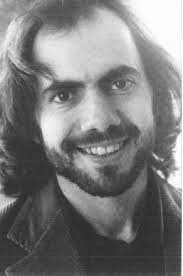
 (singer Steve Goodman, swiped from http://steve-goodman.hegewisch.net/good.html)

Steve Goodman came up on my iPod the other day, and inspired me to compile a playlist of songs that celebrate urbanity, or at least put me in an urbanish mood. I tried to stay away from songs that celebrate specific cities, although I was not always successful. I also haven't tried out this playlist from beginning to end, so there may be some unintentional jacks in there. Additional ideas welcome!

1. Men Who Love Women - Steve Goodman
2. Downtown - Petula Clark
3. Club at the End of the Street - Elton John
4. Summer in the City - Lovin' Spoonful
5. Give Me the Night - George Benson
6. Spanish Harlem - Aretha Frankln
7. City of Immigrants - Steve Earle
8. Games People Play - Spinners
9. Five O'Clock World - Vogues
10. Got to Give It Up - Marvin Gaye
11. Sultans of Swing - Dire Straits
12. Night Train - James Brown
13. Beautiful Noise - Neil Diamond
14. Walk Between the Raindrops - Donald Fagen
15. Master Blaster - Stevie Wonder
16. It's Saturday Night - Proclaimers
17. Babylon - David Gray
18. Where Everybody Knows Your Name - Gary Portnoy
19. Betty's Diner - Carrie Newcomer
20. Mortal City - Dar Williams

Tuesday, June 11, 2013

America's climate century

In November 1989, then Senate Democratic Leader George Mitchell of Maine proposed an amendment to the Clean Air bill then under consideration by the Environment and Public Works Committee. It was, as far as I know, the first significant legislative proposal to address climate change. The measure would have raised the fuel efficiency requirements to 50 miles per gallon by 2003. It was vigorously opposed by the administration of George H.W. Bush, on the grounds that fuel efficiency requirements made American cars less marketable and less safe. The committee agreed to remove the provision, and a floor amendment to the Clean Air bill brought by Senators Richard Bryan of Nevada and Slade Gorton of Washington was blocked by a filibuster in April 1990.

That may have been the right decision for that time. Even without climate change provisions, the Clean Air Act of 1990 was a major piece of legislation. Including the provision over the President's objection may have led to a veto instead of a law, and prevented much progress on sulfur dioxide and nitrous oxides. Moreover, evidence on climate change was still emerging.

Nearly a quarter-century later, a consistent and growing body of evidence has accumulated that increased concentrations of atmospheric carbon and methane have passed a dangerous threshold; that this increase is attributable to human activity; and that the effects, while mostly in the future, are starting to be felt, from melting ice caps in the polar regions to increased incidence of floods, droughts and severe weather elsewhere. It stands to reason, if we believe that actions have consequences: more people burning more things create more carbon dioxide in the atmosphere (NOAA data: nearly 400 ppm now, up from 320 ppm 50 years ago), and more and more carbon dioxide is eventually going to affect something.

(carbon dioxide concentration over time, swiped from NOAA website:

In an ideal world, U.S. policy makers would have taken note of this phenomenon and the risks it poses. Conservatives and liberals, with their differing political philosophies, would produce a variety of different measures with various levels of intensity to address it. And, given the prevalence of divided government during this period, the result would be a mix of market mechanisms, regulations and subsidies.

This is not, however, an ideal world. The U.S. Congress is in the grip of climate change deniers, such that if anyone is tempted to propose meaningful legislation they haven't bothered. The fuel efficiency requirements--about which I'm ambivalent, but never mind--will finally get above 50 mpg in the mid-2020s, and we have new energy-saving light bulbs. Any serious conservation measures are pipedreams for the foreseeable future. Meanwhile, today's Gazette, for some reason, included an op-ed by someone from the misnamed International Climate Science Coalition. It's the usual stuff--none of this is settled, there's a lot of uncertainty, people are mean to skeptics, and attributing climate change to Al Gore and writer Bill McKibben while ignoring the 99+% of climate scientists who have done the research on which Gore and McKibben opine. The writer violently misstates the state of argument, and otherwise sows confusion. There's not a datum in the piece.

So thank God for people like Rob Hogg who are willing to take up the case for climate change action, and to take it up repeatedly and relentlessly. Hogg, who represents me in the Iowa Senate, has just published America's Climate Century, a small, handy review of what we know and what we should do about it. It's easy to read, and easy to find what you're looking for. Chapter 2 summarizes research on what has already happened to the atmosphere; chapter 3 discusses likely future atmospheric changes given what's happened already; chapter 4 talks about what this will mean for human life on earth. Subsequent chapters discuss what individuals can do in lifestyle changes and policy advocacy. The appendix lists 18 common objections to climate change data, most of which will be familiar to anyone who reads this. It makes for a quick reality check for those times when you've been rhetorically spun once too often.


A key piece of advice Hogg states several times throughout the book is "a Doubting Thomas today can be a leader for climate action tomorrow." It's important to remember this in any political discussion. People who disagree with us aren't our enemies, or America's enemies. Snarkiness and hostility don't get us anywhere. We all have to live together, remember. Even if you're talking with someone who is resistant to persuasion, someone might be listening who is persuadable.

My only complaint about Hogg's book is that it is very light on references, although there are clues for the curious to follow (such as the names of numerous professional organizations that have endorsed climate change policy action). References to studies would be helpful for those who want to dig more deeply into the science. On the other hand, lists of references would have made the book longer and more expensive to produce.

If we Americans are going to live together, we need to deal with the world as it is, not the world as we wish it would be. We can and should try to make the world a better place, but that requires starting with what is. There is room for plenty of debate about climate change: its extent, its effects, policy responses, and how the costs of response should be spread are all up for grabs. But to deny that human production of greenhouse gases doesn't have any impact on the world, and that the vast preponderance of data so far point to exactly that, requires a ferocious desire not to believe it. I understand that people wish climate change weren't real. Heck, I wish climate change weren't real. But wishing something doesn't make it true. We need to start with the best information we have--understanding that we could always have more and better information--and work from there.

SOURCES:

Senator Rob Hogg, America's Climate Century: What Climate Change Means for America in the 21st Century and What Americans Can Do about It. Zion, 2013.

Tom Harris, "Why We Need 'Calm' Approach to Climate Change," Cedar Rapids Gazette, 10 June 2013, 6A.

Cindy Hadish, "Book Review: America's Climate Century," Homegrown Iowan blog, 28 April 2013 [http://homegrowniowan.com/book-review-americas-climate-century/].

"Fuel-Efficiency Effort Defeated in Senate," CQ Almanac 46 (1990): 279-281.

Sunday, June 9, 2013

Public vs. private sector

Amitai Etzioni
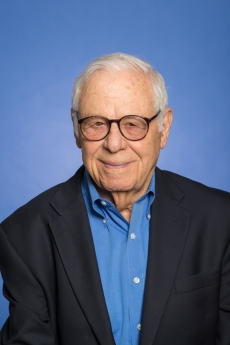
Etzioni, from the GWU website

Amitai Etzioni has a pertinent article in the latest Political Science Quarterly. Etzioni is a professor of international relations at George Washington University, possibly best known for articulating a communitarian political philosophy. In the 1990s he was an editor of the journal The Responsible Community, to which I subscribed for awhile.

In his latest piece, Etzioni takes aim at a tendency prominent in the American political conversation today to state an opposition between the public (government) and private (business) sectors, and to blame one or the other--usually, government--for the woes of America. Etzioni "argues that the frequently employed distinction between the public and the private realms is becoming increasingly obsolete because the two realms are intertwined, move in tandem, and seem to be codetermined [i.e. interaction between them drives both, rather than either driving the other] (p. 39)." The real world looks quite different from libertarian and socialist (or, for that matter, Republican and Democratic) discourse. He cites other scholars--including historians William J. Novak and Elisabeth S. Clemens, and economist Karl Polanyi--who make a similar case. In Novak's words:

The most compelling analyses of American power have always refused to split the problem along a single either-or, public-private binary (for example, the people vs. the interests; public good vs. private right; the state vs. the individual; regulation vs. the market). Instead, realistic and pragmatic approaches to American state development emphasize the interpenetration of public and private spheres--the convergence of public and private authority in everyday policymaking ("The Myth of the 'Weak' American State," American Historical Review 113 (2008), 769-770, quoted by Etzioni on p. 45) .

Etzioni cites four contemporary digital-age examples in support of his argument: use by the private sector of government-issued social security numbers as individual identifiers; government use of information on individuals gathered by private firms, including contracts with data mining firms Choicepoint and SesInt; policy making, or the lack thereof, for cybersecurity; and the formation of individual value preferences. Imagining a public-private divide, he concludes, was a "very useful fiction" at the dawn of the modern age when concepts of individual liberty were being formulated. Using it as the basis for your whole worldview, however, "now obscures the underlying social dynamics, the powers that drive history, and the ways in which they may be redirected" (p. 61).

Etzioni's argument makes a lot of sense to me, so much so that I had it in the back of my mind to blog about the problem even before his article appeared. No government policy today is formulated without the hands of business being all over it, and very few are implemented that way. (I can't think of any offhand, but there may be some.) Individual entrepreneurship is not diminished by the fact that government has for generations been intricately involved in the national economy. The 2012 campaign kerfuffle over Obama's saying "You didn't build that" was simply and shamelessly disingenuous.

(Denver International Airport, from commons.wikipedia.org)

That government vs. business was a phony distinction struck me as early as the 1990s, when humongous cost overruns at the new Denver Airport were widely touted by conservatives as evidence that government couldn't function. Of course the contractors that the airport authority was overpaying were private businesses, which surely shared the blame for the dysfunction.

Similarly, the widespread phenomenon of metropolitan sprawl--a subject of many entries in this blog--is not the product either of government or private enterprise run amok. Governments and developers have been collaborating at this for a long time, which may have at one time seemed socially but is now clearly dangerous and darned hard to change. Developers build subdivisions for the most part because they're profitable, and federal and local government tax policies and subsidies support their construction.

For that matter, the coming health care regime is not "government-run health care" as conservative propagandists would have it. If it were, it wouldn't be so complicated! It is a series of regulatory and incentive-oriented patches on the existing health care system, which is a complicated mix of private, public and non-profit institutions and funding. Someone named Wayne Madsen wrote in an op-ed in today's Cedar Rapids Gazette: "What's generally termed Obamacare wasn't the brainstorm of President Barack Obama, but a 'witches' brew' concocted in 2010 by Senate Majority [Leader] Harry Reid and then House Speaker Nancy Pelosi with generous advice from Big Pharma, Big Insurance and the AARP." Snarky, but accurate. Even if his wish for a single-payer insurance system comes true some day, it will still rely on market mechanisms, if not actual private firms.

Independent entrepreneurs striving honorably to solve the needs of all until they are undone by feckless government officials--that's a story Americans like to tell themselves. Not to say it doesn't occasionally happen: Not all regulation is cost-effective, and government can be awfully slow to respond to negative feedback. But by the same token, if business just charges processing fees without substantive value (the 21st century business model?) then you wind up with the pre-Obama student loan program.

In the real world, figuring out solutions to public problems starts with clearly recognizing that much of American public life today is an intertwining of the three (public, private, non-profit), where there is tension but not pure opposition between them. There's probably good reason for this: For the most part, it's been shown over a long period of time to work. Socialist experiments have in the past spectacularly failed, and libertarian worlds either exist mostly as myth (the American frontier) or failed too (American commercial structure before the Great Depression). Anyone who pretends otherwise is blowing smoke, or selling something, or both.

SOURCE: Amitai Etzioni, "The Bankruptcy of Liberalism and Conservatism," Political Science Quarterly 128:1 (Spring 2013), 39-65.

Navigating homeownership

  Navigating homeownership panel (L to R): Jennifer Pratt, Stephanie Schumacher, Matt Skogman, Ann Roushar, Zach Kucharski (9/23/2026)  Pros...