Wednesday, May 1, 2013

Please rise, remove your hats, and pay attention to this commercial

Yesterday I took advantage of a lovely afternoon and got out to my first Kernels game of the year. The Kernels are a low minor league affiliate of the Minnesota Twins, having just switched affiliations after 20 years with the verbosely-named Los Angeles Angels of Anaheim. They play in Veterans Memorial Stadium on the city's southwest side maybe two miles from downtown. The stadium is located in an area devoted to sports facilities, containing in addition the ice arena, the football stadium shared by all the city's high schools, and some tennis courts. (The idea of such special districts is to separate functions that really can't be integrated into a neighborhood structure, although there are neighborhoods right around the area that surely have to deal with parking and noise issues.) The official name of their facility actually is Perfect Game Field at Veterans Memorial Stadium, which allows us to honor veterans while simultaneously selling naming rights. The Angels aren't the only ones who tend to the verbose, I guess!

(In this picture, swiped from www.kernels.com, we are looking more or less south. Rockford Road runs along the left side. The ice arena appears at the top of the picture. The circly thingy between the ice arena and the stadium is the veterans' memorial. You can see the tennis courts along the right side of the picture. Kingston Stadium is across the parking lot. Note the proximity of houses at the bottom of the picture, across 8th Avenue. A similar neighborhood is across 15th Street from Kingston Stadium.)

The Kernels won, and I ran into two people I hadn't seen in awhile. Kernels' uber-prospect Byron Buxton beat out an infield hit, hit a mammoth home run, and laid down a sacrifice bunt; he's hitting .392, and Twins fans may justifiably salivate for the day he arrives in the majors..

Some post I should talk about baseball, and baseball parks as places. (One of my conversations yesterday, with former Lisbon HS teacher Greg Carter, touched on that very subject.) But today I want to complain about one aspect of an otherwise pleasant experience.

I've been attending baseball games for almost 50 years, and have seen many changes in how they're presented. By now I've gotten used to advertising on the outfield wall, commercials between innings and naming rights for everything that moves (none of which were features of the Wrigley Field of my childhood). I understand that baseball is a business, and that underneath the transplendent experience I had yesterday is some rather vigorous commerce. I get that. I'm OK with that.

I'm not OK with sponsoring the national anthem.

The national anthem ("The Star-Spangled Banner") has been sung at major and minor league baseball games since the 1940s, when the feature was added in hopes of buttering up the U.S. government enough to be allowed to continue to operate during World War II. It's a civil religious exercise that is a little silly on some level, but don't tell that to fans at a minor league baseball park. Minor league baseball and American civil religion go together like hot dogs and buns. When it's time for the anthem, the announcer doesn't need to tell us (though he does anyway) to stand at attention and remove our hats. 

Which is all the more reason NOT TO SELL ADVERTISING ON THE NATIONAL ANTHEM. (I'm sorry, was I shouting? I didn't mean to.) I've seen a lot of minor league games around the country, and the Kernels are the ONLY TEAM I KNOW THAT DOES THIS!! (Oops. I did it again.) The current sponsor is Cedar Memorial Cemetery. So we rise, remove our caps, and get a commercial for the cemetery before the anthem is played. Before Cedar Memorial, the sponsor was Wendy's Restaurants, with the spiel delivered by a retired military officer in uniform. Talk about wrapping commerce in the flag!
(Pledging allegiance to Cedar Memorial Cemetery, 5/20/2013)

The advantage to the sponsor is obvious. Of all the companies that sponsor ads on the outfield wall, goofy goggles races, or ads that play on the video screen before the game and between innings (which everyone born since 1950 has long-since learned to tune out), Cedar Memorial is the only one who is guaranteed a totally attentive audience. This may be great for the cemetery, and the Kernels if they're getting an appropriate premium price for this ad, but it seems grossly unfair to me. Maybe 'business ethics' is an oxymoron. Maybe we should accept the logic of the market, and the superior judgment of the Job Creators, but this seems to cross a line of grotesqueness. They are taking advantage of people's feelings of patriotism, and the reverent behavior that flows from that, to pitch them a product.

I don't know how to act when the commercial is showing. I hate being manipulated, and this manipulation is so blatant I feel duty bound not to go along with it. But how? I've refused to stand during the commercial, but I feel conspicuous, which shouldn't be bad, since I'm standing up (well, sitting down) for my convictions, but as a college professor I feel suspect enough already when it comes to civil religious observations. AND I still have to pay attention to the damned commercial, so I'll know when it's time to stand for the actual anthem
. 
I am dust, and to dust I will return. When I do, it occurs to me I could go far towards securing the financial future of my loved ones by having commercials at particularly sensitive points in the memorial service. Dairy Queen, are you interested? My church, I'm sure, would never go for this, but I bet Cedar Memorial would be fine with it!


Saturday, April 27, 2013

Sacred Space

People looking for the intersection between geography and religion could do worse than Roger W. Stump's comprehensive The Geography of Religion: Faith, Place, and Space (Rowman and Littlefield, 2008). Stump, a geographer at the State University of New York, Albany, considers multiple ways in which geographical concepts illuminate religious belief and practice, including how adherents are distributed geographically (ch. 2), belief and practice in physical context (ch. 3) and territoriality (ch. 4).

My main interest is in chapter 5, which discusses sacred space; this was the subject of some talks I gave last month, which I unfortunately had to do before I was able to procure a copy of Stump through interlibrary loan. He defines sacred space as "manifestation of the cosmos defined in [believers'] religious worldview," especially "crucial points of contact with superhuman domains." He then lists seven categories of sacred space (Table 5.1, p. 302), seven forms of sacred space, and four ways believers interact with sacred space. Did I mention he is comprehensive? He is a man after my own heart, a maker of lists!

As a first pass, this is brilliant, though as I shall suggest I think there are some other aspects of sacred space he doesn't discuss. Here are Stump's seven forms of sacred space:

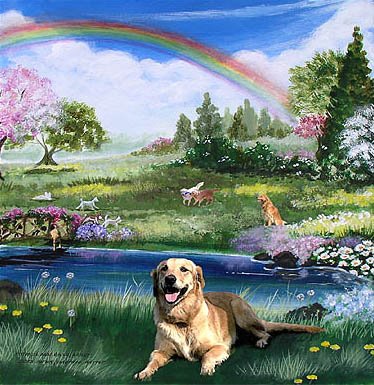
(1) cosmic, elements of the universe, tangible (earth) and imagined (heaven)
("Doggie Heaven," swiped from fortheloveofhistruth.com)

(2) holy lands, territory that is significant because of its role in defining the group, usually though not always in terms of its traditional history, such as the land God promised to Abraham in Genesis 12
(Biblical "Land of Israel," from Wikipedia Commons)

(3) natural spaces, where the supernatural power is reflected in nature in some meaningful way, especially but not exclusively by animists and polytheists... Doesn't this look like a fun read?

(4) sacred cities, which are significant by association with key events (Mecca, Bethlehem), sacred figures, rituals, pilgrimages (Santiago de Compostela) or religious organization (Rome)
(Santiago de Compostela, Spain, from Wikipedia Commons)

(5) ordinary local spaces, churches, synagogues, mosques and other humanly constructed places of worship associated with the everyday practices including communal worship and many other functions
Former location of Mt. Zion Baptist Church, Cedar Rapids

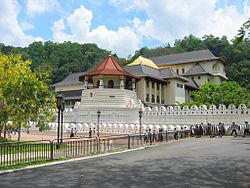
(6) unique local spaces, same as above but applying to those with special association with central functions (the Great Mosque of Mecca, St. Peter's in Rome), sacred events (Lourdes) or relics
(Temple of the Sacred Tooth, Kandy, Sri Lanka, swiped from en.wikipedia.org)

(7) microscales, sacred objects such as icons, altars, or in some cases bodies
(Our Mother of Sorrows Grotto, Mt Mercy University, Cedar Rapids,
swiped from www.mtmercy.edu)

Altar and Re table, Lovely Lane United Methodist Church, Cedar Rapids

Stump's book focuses on religious groups, particularly Christianity, Islam and Judaism, and given that's quite a large chunk to bite off, it is a prodigious work. Nevertheless, by doing this he mostly overlooks (except for the discussion of microscales) the individual's relationship to the sacred. I would say that besides personal shrines, individuals may experience three types of sacred space.

First, there are places where one feels the presence of God (or ultimate reality, or whatever is your preferred term). This is different from saying places where God is present, because all western religions believe God is omnipresent. Though God may be "a very present help in trouble," it is usually quiet places where we sense God's presence. Perhaps quiet liberates our mind to wonder at Creation. During a troubled summer in Louisiana, I was shocked back to myself one morning upon seeing the sunrise through the trees near my apartment. Also, quiet, particularly in natural places, allows us to notice God instead of whatever might be stressing us. Here we can, in the words of John Denver's great song, "Talk to God and listen to the casual reply."

Another place we encounter the supernatural is in a beloved community. This is for me far more likely to be the case than when I "come to the garden alone," because I'm not a particularly spiritual person. I also generally don't like meetings. But at some times with some groups of people I feel a sense of the transcendent. When I discussed this with my Sunday school class, my friend Margaret mentioned the song "Betty's Diner" by Carrie Newcomer. The song describes the various hurts and frustrations of the diner patrons, but somehow together they find a caring community that brings out their own better selves:

Here we are all in one place
The wants and wounds of the human race
Despair and hope sit face to face...

Interestingly, the song does not mention God or any other spirit. It is clear, though, from Newcomer's corpus of songs that spiritual concerns are at the core of her songwriting, and so reasonable to infer a sense of spirituality in this community as well. And then there's the bridge:

You never know who'll be your witness
You never know who grants forgiveness
Look to heaven or sit with us

(The Faith Issues class at Lovely Lane serves as a spiritual community for me)

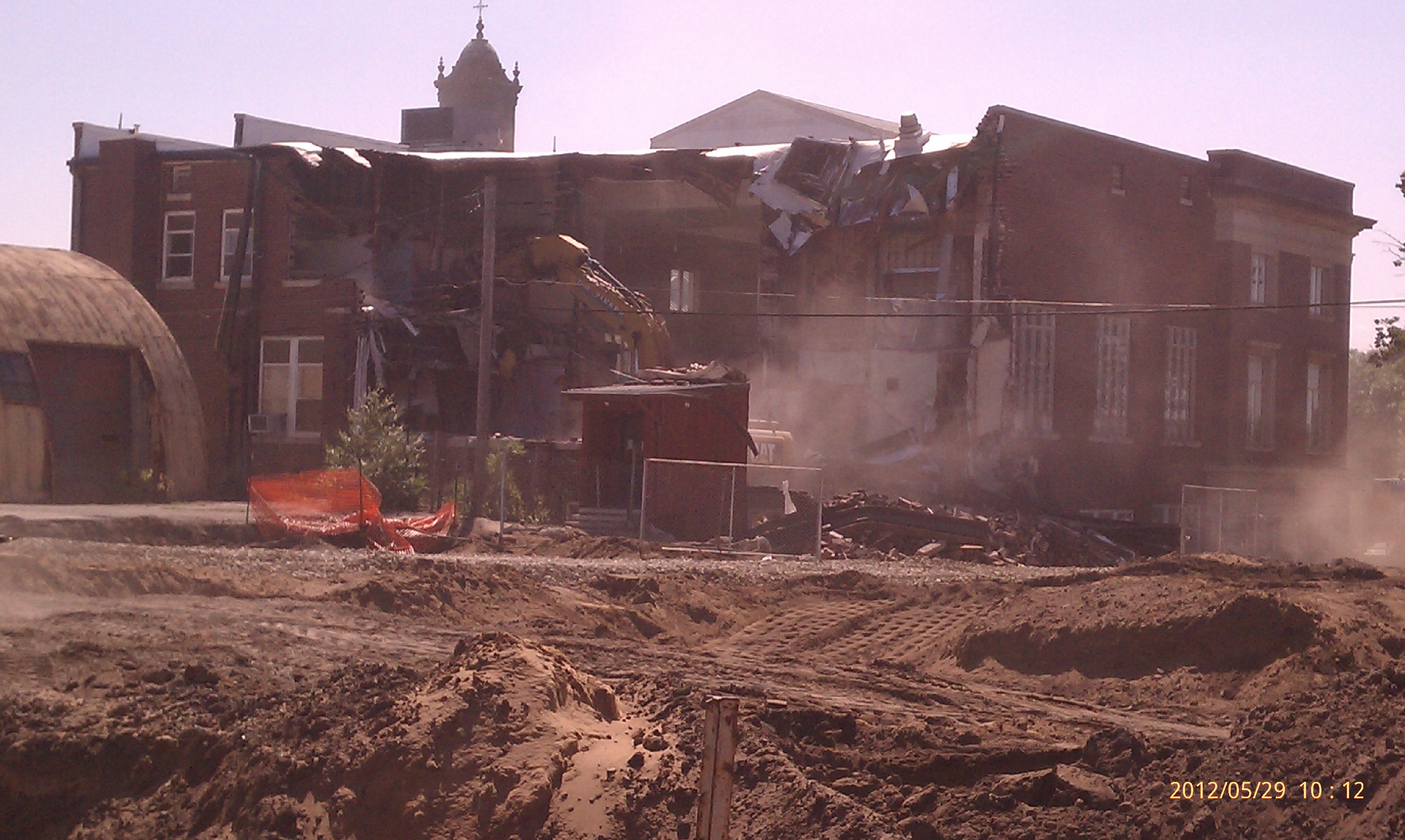
A third type of sacred place that relates to individuals is a place that is or should be inviolate. This may or may not be your church. Several congregations in Cedar Rapids have moved in recent years, including Buffalo United Methodist, Central Park Presbyterian, Maranatha Bible Church, People's Church and St. Mark's Lutheran. Still I read sad stories about churches closing, so I know it happens. But individual attachment to places that reaches the level of sanctity is hard to predict. There was much fuss in 2002 when construction of our town's new baseball required moving the veterans' memorial, and the local preservationist group Save CR Heritage formed in part in response to the destruction of two historic downtown church buildings. And Chicago media are full of public concern that the new Cubs' ownership may alter Wrigley Field in some way, or even--quelle horreur!--move the Cubs to the suburbs. I frankly don't know how much of this relates to sacredness and how much relates to other concerns. And I'm having trouble coming up with personal examples, too. If my church moved out of our roughly 50-year-old building, I don't think I'd mind, but if development threatened the Sac and Fox Trail there'd be blood in my eye.

(Demolition of First Christian Church, Cedar Rapids, May 2012,
swiped from savecrheritage.org)

Another dimension altogether is the effort of religious institutions to create a sense of sacredness in their worship space. That seems worthy of a separate post.

Wednesday, April 24, 2013

What price urbanity?

Preston Lauterbach's 2011 book, The Chitlin' Circuit and the Road to Rock 'n' Roll (W.W. Norton) is an interesting history of the origins of rock, with an interesting argument: Rock originated in black communities across the South, in the music we used to call "rhythm and blues," and country-western had very little to do with it. The honor of being the first rock song, conventionally accorded to "Rock Around the Clock" by Bill Haley and the Comets, in his view should go to "Good Rockin' Tonight," recorded in 1949 by Roy Brown. I'm OK with that: "Good Rockin' Tonight" is a better song and, despite being recorded six years earlier, has a more contemporary sound than "Rock Around the Clock."


Most of the book is spent on the argument, and the personalities and lineages that moved black popular music from the 1920s to the 1950s. Quite clearly, though, rock's origins have to do with the places they inhabited: the vibrant, somewhat scary districts in many southern cities known as "Bronzevilles." Bronzevilles were cauldrons of innovation and entrepreneurship, partly because they put creative people in close proximity to one another while attracting others from outlying areas, and partly because rigid segregation of the races meant even the most talented blacks had no other place to go. By the 1970s, bronzevilles had fallen victim to both urban renewal (which "cleaned up" the ghettos by knocking them all down) and desegregation (which allowed those with talent and education to go elsewhere).

Lauterbach's descriptions show the positive and negative aspects of what the New Urbanists call "urbanity," which is what makes cities exciting places to be. The book needs a CD soundtrack to accompany it, but even without one you can imagine what a thrill it would have been to be there when B.B. King or James Brown or Johnny Ace made their debut. It would be cool to live within walking distance of such happening places. The New Bo area in Cedar Rapids is sort of happening, and even so is three miles away from my house.

Some of the descriptions, however, are positively harrowing. Sometimes the excitement must have been too much, and the resourcefulness that fueled the area's businesses worked around the law rather than with it. Lauterbach quotes Errol Grandy, a piano player in the Sunset Ballroom on Indiana Avenue in Indianapolis:

"Every time I was there I wished for a bulletproof vest," Avenue pianist Errol Grandy recalled. "I didn't have one, but I wished for one." A former [numbers racket] player and Sunset regular named Joe Hester concurred. "Everybody carried a gun in there," Hester said. "I had my little .32," he added, a revolver that fit just as neatly in the palm of the hand as into the inside pocket of a man's coat. Denver [Ferguson, owner]provided a security force, as Hester recalled. "Brawny motherfuckers, grab you by the shoulders and deposit you on the street, say, 'Get out!' (p. 61)

An extended description of the West Dallas Avenue strip by a reporter for the Houston Informer (pp. 96-97) is longer but well worth reading, the lyric of shocked innocence. "The loser goes to the hospital," he says describing a dice game gone horribly wrong, "The winner goes to jail. What a street!" Bandleader Walter Barnes, all of his band except one, and more than 200 others died in a fire at Indianapolis's rickety Rhythm Club (pp. 66-72). Singer Jimmy Liggins was shot on stage in Memphis (p. 194). Prostitution was rampant; violent deaths were common.

The story of the cities on the chitlin' circuit are instructive, though the institutionalized racism that bred them is I hope in our past. There's probably a porous boundary between excitement and danger, and at the same time another porous boundary between interesting urbanity and soulless schlock. Too much regulation, governmental or societal, kills innovation and makes for a dull, lifeless world. Too little regulation is scary, and justifiably so. I'd rather not be bored, but I'd rather be bored than knifed to death.

There's also something to be said for small, cautious steps in change. Urban renewal succeeded by destroying what it set out to save. From across five decades comes the prophetic voice of Jane Jacobs:

But look what we have built with the first several billions [of dollars of urban renewal spending]: Low-income projects that become worse centers of delinquency, vandalism and general social hopelessness than the slums they were supposed to replace. Middle-income housing projects which are truly marvels of dullness and regimentation, sealed against any buoyancy or vitality of city life. Luxury housing projects that mitigate their inanity, or try to, with a vapid vulgarity. Cultural centers that are unable to support a good bookstore. Civic centers that are avoided by everyone but bums, who have fewer choices of loitering place than others. Commercial centers that are lackluster imitations of standardized suburban chain-store shopping. Promenades that go from no place to nowhere and have no promenaders. Expressways that eviscerate great cities. This is not the rebuilding of cities. This is the sacking of cities. (Jane Jacobs, The Death and Life of Great American Cities [New York: Random House, 1961), p. 4)


(Cabrini Green housing project, Chicago; swiped from happyspacesprojectblog.wordpress.com)

The smart people that pushed urban renewal and suburban sprawl don't look so smart today. The New Urbanism is timely, has chosen its enemies well, and at least from what I've read seems to have learned the lessons from prior design and policy failures.

Sunday, April 21, 2013

Cedar Rapids development news

Two stories in today's Cedar Rapids Gazette raised issues of development. As a small city, we can get away with ignoring some issues that, say, Atlanta cannot, but probably we shouldn't.

The more compelling concerns development of Tower Terrace Road north of the city. It is an east-west route than runs off and on between Hiawatha and Marion. The proposal would include creating an interchange on I-380, widening the road and completing it all the way through to state highway 13 on the east side of Marion. The towns of Marion, Robins and Hiawatha very much want to do this; the City of Cedar Rapids is rather hostile, and is using its weight on the Corridor Metropolitan Planning Organization to obstruct it. They have proposed funding trails instead, and while I love trails and $4 million could build a whole bunch of them, I think this is a red herring.

There are two things at the crux of this controversy. First, the completed Tower Terrace Road would enable a good deal of commercial development in the three outlying towns, which would get them some nice property tax revenue and possibly make them more attractive to future residents. Assuming there is commercial development waiting to happen, there is a zero-sum game when it comes to property taxes: Businesses in Cedar Rapids pay taxes to Cedar Rapids, businesses in Marion pay taxes to Marion, and so forth. It's a competition, in which revenue that goes to Cedar Rapids doesn't go to Marion, and vice versa. Secondly, to the extent that the development is successful, it will add to the existing sprawl of the Cedar Rapids metropolitan area. It's worth mentioning that the financial contribution of the CMPO would be a small percentage of the total project cost; it would essentially be some skin in the game to leverage financing by the state and federal government. A couple posts ago I mentioned how national government policy has contributed in a large way to sprawl around the country, and here is a prime local example.

The Gazette editorial notes the valid concerns of the City of Cedar Rapids, but concludes it would be unfair to deny the aspirations of the outlying towns. "[W]e think," they write, "Cedar Rapids must temper its own preferences with the needs of its growing neighbors. It needs to tamp down its natural competitive instincts and consider the good of the region, especially in its dealings with the CMPO. The ultimate goal should be a comprehensive transportation system that helps the region grow and thrive. We think both of these priorities [trails and the project] fit that objective."

This is on the right track. I prefer "win-win" solutions to "win-lose." It doesn't address either the finite pot of money available, or the long-term unsustainability of sprawl. I think a better "win-win" solution would be to support the Tower Terrace Road project, while leveraging it to create a viable regional plan. This would include a meaningful urban growth boundary, regional property tax sharing, and a no-poaching agreements among all area municipalities. (I'd make them take the casino, too, but that's just me joking, ha ha.) The additional sprawl created by Tower Terrace Rd would be a small price to pay for a serious effort to cap future sprawl. I'm for drilling in ANWR and building the XL Pipeline, too, if they can be used to leverage a serious approach to future energy policy, like a serious gasoline tax.

Less controversially, John Smith of CRST International has proposed building a multistory commercial building on the river side of 1st St SE, where the First Street Parkade was formerly located, and where there is currently a surface parking lot. City Manager Jeff Pomeranz is appropriately psyched: "We think it's going to be a signature building, meaning it's going to be a very attractive addition to the downtown skyline."


(current parking lot, facing Alliant Building, 4/22/13)


(architects' drawing of proposed building)

I agree with Pomeranz that this is an exciting idea, and I hope it comes to pass, and I hope it connects to the Skywalk System. I'm thrilled that a heavyweight like Smith wants to invest in our downtown. The stickler seems to be the lost parking lot; Smith has suggested building underground parking for 250-300 cars. That reminds me that one way our country subsidizes auto use is through acres and acres of parking spaces. A recent "Freakonomics" podcast estimated there are 800,000,000 surface parking spaces in the U.S., not counting driveways and parking garages. We sure do pave a lot so we can drive a lot. Do I have a better idea? No. Go for it, Mr. Smith.


SOURCES

Dave DeWitte, "CRST Plans Major Headquarters Expansion in Cedar Rapids." Cedar Rapids Gazette,  23  March 2013 [http://c27980.r80.cf1.rackcdn.com/business380.com/135179/crst-rendering2.jpg].

"Metro Pathways." Cedar Rapids Gazette, 21 April 2013, 9A, 12 A [http://thegazette.com/2013/04/21/metro-pathways/].

Rick Smith, "CRST Wants to Join Downtown Skyline." Cedar Rapids Gazette, 21 April 2013, 1A, 7A [http://thegazette.com/2013/04/21/crst-looking-to-join-downtown-skyline/].

Rick Smith, "Tower Terrace Road Becoming a Battle Line." Cedar Rapids Gazette, 9 April 2013 [http://thegazette.com/2013/04/09/tower-terrace-road-becoming-a-battle-line/].

Dominion over the Earth


In Genesis 1:28, God gives to his newest creation, human beings, "dominion over the fish of the sea and over the birds of the air and over every living thing that moves upon the earth." Then in the next verse God gives humans plants for food, although in verse 30 this is also given to animals and birds. The dominion thing has been a stumbling block for some Christians who interpret it as a mandate to exploit the earth for our own benefit. Just as when you give a dog a chewy toy, you don't expect the dog to preserve and sustain it, God by this interpretation is giving us something to play with and maybe clean our teeth.

The key word here is "dominion" (unless you don't regard the Bible as authoritative, in which case none of what follows is going to be of more than trivial interest). If I had studied Biblical languages, I could tell you what the original word was and how it relates to the two passages I am about to cite. But I didn't, and so shall plunge directly on to...

The Two Biblical Models of Kingship

The Chew Toy Model. In I Samuel 8, Israel demands that the prophet Samuel appoint a king for them. Samuel doesn't want to, but God, while taking the demand as a personal rejection, suggests Samuel do it anyway, after explaining to the people exactly how awful kings really are. So Samuel does:

These will be the ways of the king who will reign over you: He will take your sons and appoint them to his chariots and to be his horsemen, and to run before his chariots; and he will appoint for himself commanders of thousands and commanders of fifties, and some to plow his ground and to reap his harvest, and to make his implements of war and the equipment of his chariots. He will take your daughters to be perfumers and cooks and bakers. He will take the best of your fields and vineyards and olive orchards and give them to his courtiers. He will take one-tenth of your grain and of your vineyards and give it to his officers and his courtiers. He will take your male and female slaves, and the best of your cattle and donkeys, and put them to his work. He will take one-tenth of your flocks, and you shall be his slaves. 

When the Israelites remain unconvinced, Samuel adds this kicker:

And in that day you will cry out because of your king, whom you have chosen for yourselves; but the Lord will not answer you in that day.

The Good Steward Model. Quite a different picture of kingship is described by the prophet Isaiah, who could at other times be as grumpy as Samuel. But in Isaiah 9, he waxes rhapsodic about the good king to come. This king does not see the kingdom as his personal chew toy, but uses his reign to benefit all:

The people who walked in darkness have seen a great light; those who lived in a land of deep darkness--on them light has shined. You have multiplied the nation, you have increased its joy; they rejoice before you as with joy at the harvest, as people exult when dividing plunder. For the yoke of their burden, and the bar across their shoulders, the rod of their oppressor, you have broken as on the day of Midian. For all the boots of the tramping warriors and all the garments rolled in blood shall be burned as fuel for the fire. For a child has been born for us, a son given to us; authority rests upon his shoulders; and he is named Wonderful Counselor, Mighty God, Everlasting Father, Prince of Peace. His authority shall grow continually, and there shall be endless peace for the throne of David and his kingdom. He will establish and uphold it with justice and with righteousness from this time onward and forevermore.

I don't think it takes that subtle a reading of the Bible to discern which model has scriptural sanction, and which does not. This is particularly true for Christians, who interpret Isaiah 9 as referring to the coming of Jesus Christ. Reading this interpretation of "dominion" back to the Creation story suggests that God surely expects more from us than exploitation of His creation.

Friday, April 19, 2013

Gleanings from the New Urbanism

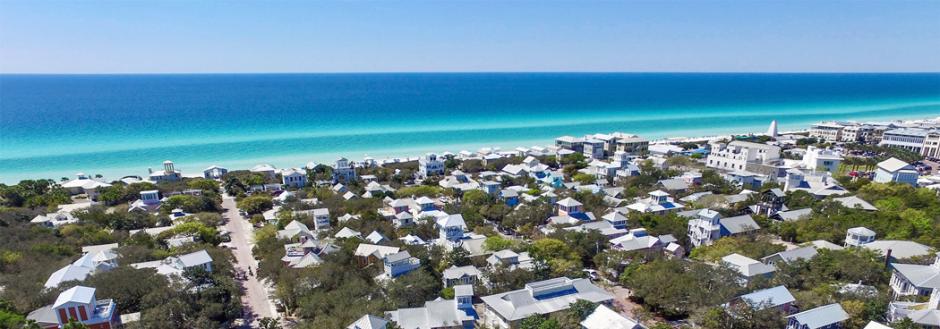
The New Urbanism is a movement in city design that seeks to enhance the livability of cities while keeping an eye on issues of sustainability. I first encountered the term when the town of Seaside, Florida (designed by the team of Andres Duany and Elizabeth Plater-Zyberk) got a lot of attention. Seaside is a development that is redolent of traditional small towns. Columbia, Maryland, is another example. My first impression was that this movement is well-intentioned, lovably idealistic, and relevant to no one except mobile idealistic rich people.
Around Town
Swiped from seasidefl.com

Since then I've read a good bit about the New Urbanism, particularly this semester with my sense-of-place research. I am happy to report that it is much more than a passing fancy; it is a way of thinking that is broadly applicable, even to well-established localities. The following is a synthesis, drawing heavily on the books referenced at the end of the post.

The core problem that the New Urbanism addresses is sprawl, from which numerous other evils spring. Sprawl occurs when a metropolitan area develops over a large area, relying on low-density housing developments, located far from places to work, connected by vast networks of highways. Atlanta, Houston and Los Angeles are probably the most famous loci of sprawl, but it's plenty visible in older cities like Chicago, and certainly has occurred albeit on a smaller scale in Cedar Rapids.

picture of Scottsdale AZ
Scottsdale AZ (Wikimedia creative commons)

Sprawl has happened because since the 1940s Americans have assumed there will be eternal flows of cheap oil. Lower up-front costs, along with promises of low crime and privacy, have made suburban living attractive, and developers and suburban government officials and the highway lobby have been very willing accomplices. But the whole process has been made possible by very bad policy decisions by the national government, which has subsidized the building of large homes through unlimited tax deductions for home mortgage interest, energetic highway construction and a transportation aid formula that pays states based on the raw amount of vehicle miles traveled. These policies may have made sense at some time, but they have long since become dysfunctional.

The evils of sprawl are, as I said, numerous: traffic congestion and air pollution, highway deaths and injuries, waste of taxpayer dollars, individual spending on transportation, and disinvestment in core cities. The last has meant poverty and marginalization for those unable to follow their better-off neighbors out of urban (and older suburban) ghettos. Society loses from the lack of public spaces or time to spend in them: people have less contact with people different from themselves, including those who live nearby, spending time isolated in their cars, or with similar and like-minded friends ("gated communities of the mind," in Douglas Calthorpe's phrase). Individual rationality is collective irrationality, and then the individuals find themselves on an accelerating hamster wheel with no way to get off.

Addressing these problems requires shifting our policy focus to metropolitan regions and individual neighborhoods. Metropolitan problems need to be handled by metropolitan governments with the ability to make decisions (highways, urban growth and urban service boundaries) in the best interests of the whole region, not just of individual municipalities. Zoning in particular needs to change, allowing for integrated planning, and ditching the current system which require physical separation of different uses and ridiculous amounts of parking while indifferent to how a place looks and operates.

Their most intriguing recommendations have to do with how neighborhoods should look. The "traditional neighborhood" idea common to New Urbanism thought consists of streets that are walkable and human scaled (narrow so they're safe for bicycles and pedestrians, architecturally pleasant), diverse in population, varied in uses, and shaped around public spaces ("centers") that are meaningful and memorable. These centers provide loci for the "everyday and sometimes random casual meetings that foster a sense of community" (Calthorpe and Fulton ch 2). Many places should be reachable in a five-minute walk. Walkable and bikeable streets should support an appropriately-scaled system of public transit (Calthorpe and Fulton ch 9).

Revitalized cities would be able to provide the advantages of "urbanism" without miserable areas of concentrated poverty. People who wanted different kinds of lifestyles would have different options, but without incentives to push ever-outward. More people could get to work, shop, recreation and back home with a reasonable amount of time and effort, without destroying the atmosphere and depleting resources. More contact between people might well bring a greater sense of common purpose and common destiny.

All the authors recognize that there are powerful forces arrayed against attainment of these goals. Wealthy interests are heavily invested in the current system, and individualism is everywhere rampant. Imagining trying to convince Naperville not to sprawl into Will County, or to do some infill, is enough to convince one of the hazards of this project. Then imagine trying to convince Naperville that its destiny is any way tied to that of 63rd Street in Chicago (other than keeping it as far away as possible). The authors are, thankfully, politically realistic, and offer some ideas about how to persuade. (Hester is particular puts a great deal of emphasis on inclusive participation, but they all do to some extent.) They remain convinced that we don't have the resources or the public funds to sustain sprawl, and that communities cannot flourish with so much of their population miserable and marginalized.

In future posts I hope to illustrate some of the specific aspects of the New Urbanism, as well as some of the challenges in making them come alive.


SOURCES

                Calthorpe, Peter, and Fulton, William. The Regional City: Planning for the End of Sprawl. Washington: Island, 2001.

     Duany, Andres; Plater-Zyberk, Elizabeth; and Speck, Jeff. Suburban Nation: The Rise of Sprawl and the Decline of the American Dream. New York: North Point, 2000.


         Hester, Randolph T. Design for Ecological Democracy. Cambridge: MIT Press, 2006.

    Kelbaugh, Douglas S. Repairing the American Metropolis: Common Place Revisited. Seattle: University of Washington Press, 2002.


Tuesday, April 16, 2013

Race matters, damn it


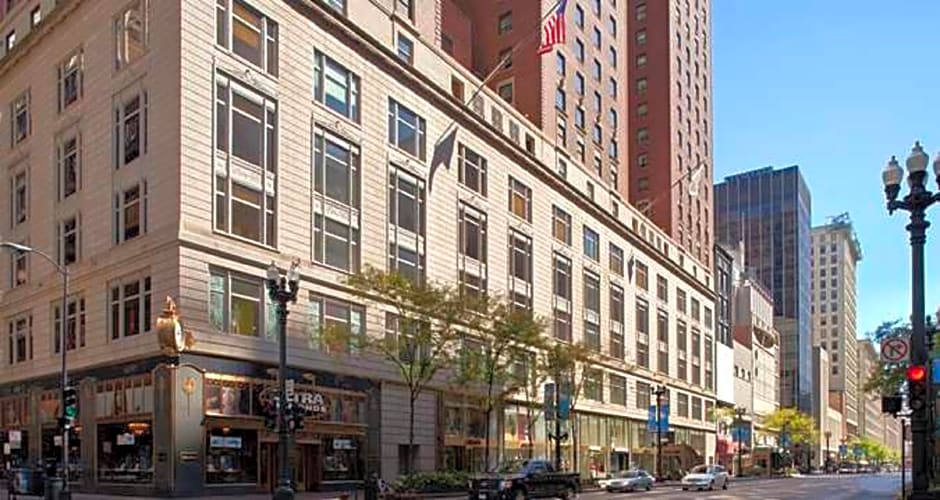
large hotel building, corner shot
Palmer House Hilton, site of the Midwest Political Science
Association conference

Among the panels I attended at last weekend's Midwest Political Science Association conference was one entitled "Geography and Political Behavior." Three of the four papers dealt in some way or other with the effect of race on people's actions. One of the participants recalled the quote, "If you're a scholar of American politics sooner or later you become a scholar of race politics."

I have taken quite the opposite view. For all race mattered through America's long, sad history of slavery and Jim Crow, most people alive today were born since the passage of the Civil Rights and Voting Rights Acts and the institution of affirmative action. They are used to seeing blacks in positions of prestige and authority, residing in middle class neighborhoods and attending top colleges. The real American divide, in my view, was social class. (Not the only divide, of course... I do study religion and politics, after all.) We live in an era of ever-widening inequality, with economic groups living more and more apart from each other, evolving different norms of behavior and signs of identification. I vividly illustrated this last fall in a class discussion: Imagine, I instructed the class, I'm walking down the street with a black colleague, and we pass a house where a few white drunks are throwing bottles off the porch and shouting racial epithets. Am I suddenly going to identify with my white brothers? I think not!

And yet, in spite of my naivete and bad hypotheticals, some pretty careful research concludes that race is very much with us. Jason Anastasopoulos of UC-Berkeley presented "The Big Sort: Diversity, White Flight and Polarization in Neighborhoods and Cities." He tracked the impact on neighborhoods in Houston, Texas, of the influx of hurricane refugees from New Orleans in 2005-07. As the mostly black refugees moved in, a sizeable portion of existing residents, mostly white, relocated out of those neighborhoods. Relocation decisions were predictable by ideology--conservatives moved, liberals didn't--resulting in a more liberal neighborhood overall. This supports the argument of authors like Bill Bishop (The Big Sort, 2008) that Americans are moving to be with like-minded people, resulting in strongly conservative and liberal areas that elect strongly conservative and liberal representatives who then have trouble agreeing on policy decisions. The racial lesson is ambiguous: any influx that massive is likely to be destabilizing for the neighborhoods, and it's certain (given how the damage affected different areas of New Orleans) that the refugees were mostly lower class.

Findings in "The Primacy of Race in the Geography of Income-Based Voting" by Clayton M. Nall of Stanford and Eitan Hersh of Yale are more difficult to explain away. Nall and Hersh analyze the relationship between family income and a voter's choice of candidate. (Survey research going back to the 1930s shows the probability of voting Republican increases with with income, though the relationship has been less strong since the 1960s.) In congressional districts that are predominantly white, income remains strongly predictive. But for whites in racially-mixed districts, the wealthy still vote Republican but the less-well-off tend not to vote Democratic as much as similar voters in predominantly white districts (or blacks in racially-mixed districts); this is particularly true in the South.

Race, then, still motivates political behavior. Perhaps one can explain nonwhite racial solidarity by the legacy of discrimination and minority status. For whites, though, that reason doesn't wash. We--particularly people like me who have been rather naive about the topic--need to acknowledge the lingering presence of racial motivations in American political behavior. And we should commit ourselves to working for a better life for all, rather than acting to protect ourselves from spurious threats.

Bruce

Navigating homeownership

  Navigating homeownership panel (L to R): Jennifer Pratt, Stephanie Schumacher, Matt Skogman, Ann Roushar, Zach Kucharski (9/23/2026)  Pros...