Thursday, July 8, 2021

Dear America brings light in the heat

 Dear America cover

Jose Antonio Vargas, Dear America: Notes of an Undocumented Citizen. New York: Dey St, 2018.

The U.S.-Mexico border right now is a mess, which is not new. America has for decades winked at the movement of undocumented workers, families, and asylum seekers, while demonizing it and making it more dangerous.  Border crossings slowed during and after the 2008 recession, but ongoing anti-immigrant politics fueled a policy of gratuitous cruelty during the Trump Administration

President Biden has brought refreshing change in many respects, but the problems at the border persist. (For a critique of Biden administration policy, see Chacon 2021.) May 2021 saw the most Border Patrol encounters in over 20 years, while conditions at detention facilities remain bad. Republicans see immigration from Mexico as a potential political goldmine: border governors Greg Abbott (R-TX) and Doug Ducey (R-AZ) have called for states to send National Guard troops, with eager responses from Kim Reynolds (R-IA) and Ron DeSantis (R-FL). South Dakota governor Kristi Noem is sending that state's Guard, too, funded by a grant from Willis and Reba Johnson's Foundation. Meanwhile, Democrats are split on policy and hence over the administration's response. "The [Biden] administration is making Democrats look weak," said Rep. Henry Cuellar (D-TX), while Rep. Alexandria Ocasio-Cortez (D-NY) wants increasing immigration from the South and terms the administration's ambivalence "disappointing" (Jaffe 2021).

A Quinnipiac Poll taken shortly after Biden's inauguration found only 20 percent of respondents preferring that undocumented people in the United States be required to leave, even lower than the 25 percent four years earlier. More than half of respondents to a 2019 Gallup Poll said Central American refugees should be allowed to stay in the U.S. (Polling Report data on immigration opinion are here.) Such data suggest there's room for maneuvering on policy, but the politics on the ground definitely lean to the restrictive.

Amidst the speeches and deployments, it is easy to forget that undocumented residents and asylum seekers are actual human beings. One man who's made it his mission to keep this in front of people's awareness is Jose Antonio Vargas, an independent journalist who is himself undocumented, albeit from the Philippines not Mexico. Vargas uses his personal story to describe the complexity of the larger situation, not aggressively but in a three-dimensional way that often goes beyond our country’s two-dimensional political talk. Dear America is a model of presenting a very personal topic with more light than heat.

Along the way, he raises many other issues worth discussing in themselves: in Part I ("Lying") he talks about  family (ch 2), being the new and different kid in school (ch 3), having responsibility at a young age (ch 7), and life choices (coming out, in ch 8). In Part II ("Passing") he talks about curiosity (ch 1), writing (ch 2), seeking and accepting help (chs 2-3 & 9), moral dilemmas (chs 4 & 6), identity (chs 5 & 10), and resourcefulness (chs 7 & 10). The themes of Part III ("Hiding") include home, belonging, and the privileges that come with fame. His snappy style makes for easy reading, but the issues he raises are not easy.

Two of the book’s themes in particular touch on our common life: the meaning of citizenship, and the struggles created for individuals by complicated legal frameworks.

Vargas discusses "citizen" as a role you practice, not as a status you possess.

If I was not considered an American because I didn't have the right papers, then practicing journalism--writing in English, interviewing Americans, making sense of the people and places around me--was my way of writing myself into America. (58)
He describes a "citizenship of participation:" Citizenship is showing up. Citizenship is using your voice while making sure you hear other people around you. Citizenship is how you live your life. Citizenship is resilience (199-200). That sounds a lot like a common life. And when FOX News provocateur Bill O'Reilly asserts to Vargas "You and the other people here illegally don't deserve to be here," Vargas asks himself, "What has O'Reilly done to 'deserve' to be here?" (151-152). O'Reilly was born in the United States, and thus by constitutional right is a citizen, but how does what he does contribute to our common life?

City planners, developers, and business owners contribute greatly to our common life, against strong headwinds of regulations. When it comes to dealing with absurd legal complexities, though, no group has anything on immigrants. As Vargas's profile rose in the 2010s, his undocumented status began to be seen as willfulness by those with whom he sparred. "It's something I want to fix," he explains to one man who confronts him on a plane, "and there's no way to fix it." The man is incredulous: "You want to get legal?" "Of course," Vargas responds. "Why would I want to be like this?" (160) After another encounter on FOX News, "I wanted to keep repeating: there is no line [in which to wait for legal citizenship]. I wanted to scream, over and over again: THERE IS NO LINE! THERE IS NO LINE! THERE IS NO LINE!" (154)

[I]n April 2017, [Bill] Maher told me he was confused. "I just don't understand," he said, "why you just can't fix this thing," as if "this thing" is a chipped tooth or a dent in a Tesla. If Maher, of all people, doesn't understand how even someone high profile like me can't just "fix this thing," then it shouldn't be a surprise that most people, regardless of political affiliation, have no idea how the immigration system works. (131)
The legal process he needs literally does not exist, unless he returned to his birth country for ten years (82). (Even legal avenues were closed off by the Trump administration; see Rampell 2020.) Other technicalities frustrate him. When he finds out he could have been adopted by his (documented) grandparents, he has passed the maximum age of 16 (65). When President Obama announces Deferred Action for Childhood Arrivals (DACA) in 2012, Vargas is four months too old to be eligible. Even for those of the right age, "DACA is temporary and not everybody qualifies," and filing costs nearly $500 (146). Meanwhile, the tax laws certainly are flexible enough that undocumented workers pay substantial amounts in payroll and income taxes (124-126).

A common life involves laws, and boundaries, but it also requires seeing each other's humanity, and a set of laws that ordinary people can understand and follow. Vargas's snappy prose helps point the way.

SEE ALSO: "Eventually, We're Going to Have to Figure Out Immigration," 10 January 2019

Thursday, July 1, 2021

Housing Policy

More like this? Rooming houses in the MedQuarter district

(7/01/2021) The Cedar Rapids Gazette headline Sunday ("41K in Iowa Fear Eviction as Moratorium Nears Its End") is overblown, but the reality is scary enough. According to the U.S. Census Bureau Housing Pulse Survey, about 11000 Iowans say they're very likely to be evicted from rental housing in the next two months, 21000 say they're somewhat likely to be evicted, and 9000 say they're somewhat likely to be foreclosed on property they own. Even 11000 is a lot of homeless people, relative to available housing stock in our state. Similar results are posted for other states. How about 1.2 million for a national figure? All told about 7 million renters owe accumulated back rent that has been estimated in a range of $11-53 million, according to Mary Cunningham of the Urban Institute (Urban Institute 2021, slides 16 & 19).

Despite a surge in construction both of single-family and multi-family dwellings in the last couple of years, the United States remains about 3.8 million units short of where it needs to be, and existing housing has accumulated $45 billion worth of needed repairs, according to the annual report just published by the Harvard Joint Center for Housing Studies (Sisson 2021). Rapidly rising home prices (Nicholson, Merrill, and Sam 2021) have helped existing owners while creating obstacles for first-time homebuyers and renters; other issues include racial and generational inequities and lack of housing near jobs.

The Census Bureau and Harvard Center reports testify to the persistence of housing issues in America, as well as to their complexity. Those challenges can be sorted into three or four buckets: affordability (supply of housing at the right price points); connections to jobs and the larger city, and the avoidance of concentrations of poverty; and stability amidst threats of job loss or displacement through gentrification. The physical condition of existing housing might be a fourth set of issues.

1. Affordability/Supply

Nationally, the home price-to-median income ratio is rising; currently it's 4.4, though that contains a wide range of differences. San Jose, California, leads the country with a ratio of 10.9, and cities like that face a different set of problems than cities like Cedar Rapids, where it's about 3 metro-wide, or Iowa City where it's about 4 (Hermann 2018). Everywhere the market for for-sale homes is "red hot," said Daniel T. McCue of Harvard at the report's June 16 rollout, with demand overwhelming supply as millennials enter the market, resulting in higher real prices than any time this century. 

Rental prices are also up nationwide as well, with well over half of those making less than $50,000 a year paying more than a third of their income on rent, meaning they're one setback away from eviction. Rental vacancies have increased in high-rent urban areas, though that seems to have peaked. Sociologist Matthew Desmond, author of Evicted [Crown, 2016] showed a chart at a Bipartisan Policy Council webinar showing that median rents have doubled in the last twenty years while incomes are steady: 
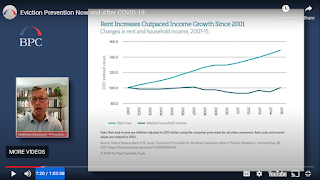
BPC webinar screen capture
I can't get this chart out of my head...

In locations like Cedar Rapids, discussions of housing affordability focus on people at the low end of the pay scale, those with disabilities, and those with criminal records. A 2017 forum noted federal funding Section 8 vouchers don't come close to covering all those eligible, local resources for those experiencing homelessness are limited, and non-profits like Habitat for Humanity have limited production capacity. Those landlords who do accept Section 8 vouchers are subject to extra mandates and inspections, and might could use funding to help them with repairs and updates. Beyond this, there might still be different kinds of issues higher on the income scale; unlike in San Jose, teachers and firefighters in Cedar Rapids can afford homes, but do they face different financial issues once they've bought them?

Urbanists have long advocated making accessory dwelling units (sometimes called "coach houses" or "granny flats") legal; Chicago enacted a three-year trial run this year with impressive response so far. Narrower streets would allow more land to be put to productive use (Merrefield 2021)--among many other benefits. Cambridge, Massachusetts passed an Affordable Housing Overlay ordinance in 2020 that loosened zoning restrictions on construction citywide (Gibbs 2021).

Shane Phillips argues increasing supply while maintaining affordability and stability requires some form of government intervention in the housing market:

A well-regulated private housing market can serve a large portion of our population, and tenant protections paired with rental housing preservation can assist even more. But there will always be people who are left behind by these efforts—sometimes temporarily, sometimes permanently. Acting through the collective will of our local, state, and federal governments, we have a responsibility to provide support to those who need it and to live up to our professed belief that housing is a human right. This may take the form of rental assistance, publicly subsidized housing construction and acquisition, and a host of other programs (2020: 33).

Awareness of policy consequences is important: Cities can avoid San Francisco's infamous tenant protections that are blamed for constraining supply, but prices--and displacement--have also risen in less restrictive cities like in Texas and Washington even though housing supply has increased (Phillips 2020: 24-28).

Anthony Simpkins of Neighborhood Housing Services of Chicago told an Urban Institute panel that rental housing won't close the racial wealth gap, but homeownership policies will.

Affordable rental housing does not generate generational wealth. It's never going to close the racial wealth gap.... Today, in a high-cost city like the City of Chicago, a homeowner can pay less for their mortgage than they pay for rent. But when you look at the rules and regulations [related to affordable housing policy], they all skew towards supporting rental housing. There's very little room and very little ability to use these resources to build and expand homeownership among people of color.... It's all about access to capital (Urban Institute 2021, at about 59:48)]

2. Connection

A great deal of the new construction is in the suburbs and in non-metro areas, where it's easier to develop by the batch, and where zoning favors single family homes. You can also get more home for the money, although the savings can get eaten up by transportation costs; in metropolitan Chicago, for example, the closer a median-income household is to the city center, the less their total housing-plus-transportation costs. (See also the interactive maps at the Center for Neighborhood Technology website, including total driving costs by location, housing + transportation affordability index, and access to jobs by transit.) 
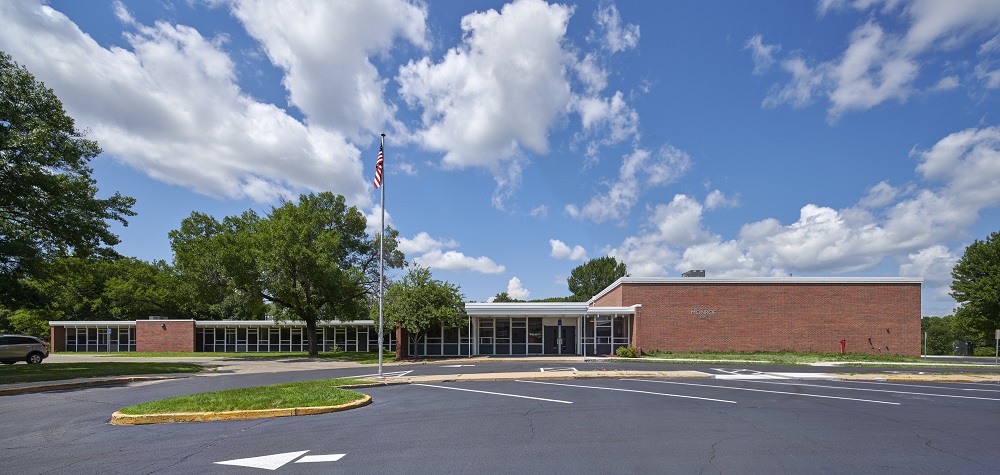
Monroe Place
Apartments in the former Monroe School rent for $695 a month,
but the Walk Score is 34

Residential concentrations of poverty are problematic for children, who do less well in life than those raised in more socioeconomically mixed areas (Chetty, Hendren and Katz 2016). They are problematic for adults, who have less access to economic opportunity as well as lower life expectancy (Ludwig 2014). Distance from affordable housing to jobs creates the transportation nightmares particularly for the poor and near-poor that Steven Higashide (2019: 92) calls "mobility redlining." 

Simpkins talked about "building communities that have been left behind" as an essential part of remedying the racial wealth gap (Urban Institute 2021, at about 1:01:50). Most areas of concentrated poverty have not gentrified since the 1970s, but in fact have gotten worse off (Cortright et al. 2014). Can cities provide incentives to locate jobs that pay well near low-income areas, and discourage large corporate campuses in remote locations? Or to encourage developers to build affordable housing near areas of economic growth? 

Options for cities include zoning reform that allows a greater variety of housing in a given area (Cortright 2017); Inglewood, California is planning zoning changes to allow more housing and commercial space near Metro rail stops (Sharp 2021). (See this post from 2017 for more on these issues.)

Welllington Heights 4plex
This four-plex is four blocks from my house.

So is this two-plex. If they were even closer, would I be less wealthy?

Cities can reform zoning codes to allow the production of small fourplex apartment buildings ("missing middle" housing) in residential neighborhoods (Holeywell 2016, McGlinchy 2017). Access to capital can provide "ladders" for those with very low income, as well as attracting middle class people to disinvested neighborhoods (Simpkins, in Urban Institute 2021). The national government can revisit the mortgage interest income tax deduction (Quednau 2017), as its value for most filers was eliminated by the 2017 tax act. 

Local transit connections can be improved almost everywhere, and certainly could be in my city. Dharna Noor (2021) points out "investing in public transit isn't just a good idea for the climate and commute times. It's also a good way to ensure everyone has access to opportunity, including the opportunity to relax. Imagine if access to parks and lakes weren't limited to those who can afford to buy, maintain, and park their cars. That could go far in improving access for exploited, poor communities who are disproportionately harmed by highway pollution." 

But is a ridership model compatible with where Cedar Rapids is currently building affordable housing (Pioneer Avenue, Johnson Avenue, Blairs Ferry Road, e.g.)? I would think not.

3. Stability and Gentrification

As land values rise, and incomes do not, evictions have soared: Desmond cited a figure of seven evictions per minute nationally in 2016 (Bipartisan Policy Council 2021). Annually there are more than a million more evictions than there had been foreclosures at the height of the housing crisis, with many associated bad effects on individual lives. Black [and Latinx] renters have about twice as high a rate of evictions as white renters. Evicted renters bounce from place to place because (quoting Desmond) they "are already living at the bottom of the market, in places they can't afford."

Stagnant incomes are one cause of housing instability; another is gentrification. Gentrification occurs where some circumstance has changed raising the potential value of housing far above its actual price (known as a "rent gap"). Recently middle-class demand for urban living has risen as amenities have improved, crime has decreased, and frankly fashions have changed. Gentrification can be good for places, and the people that live in them; at best it improves economic opportunity, public services and facilities, and the tax base. At worst it raises costs for those who stay, and drives others to less connected and less-well-off places (Florida 2015b; see this post from 2016 for a more detailed review of the debate). (For an argument that a focus on gentrification misidentifies the cause of problems with affordability and stability, see McMillan 2021.)

As rents go up, or property taxes rise on homes, some residents are forced to move to more affordable areas. Shane Phillips recounts one California experience: "A $5 billion stadium was proposed in Inglewood and rents and home values skyrocketed nearly overnight; even if the city had allowed for infinite development to meet the growing demand, thousands of households would be displaced before relief ever arrived. These changes were entirely outside the control of local residents, and yet they were the ones to suffer the consequences" (2020: 13). 

The Heart of the City cover

Alexander Garvin's book about downtown areas discusses the displacement of people along the way to prosperity: "Increasing demand led to increasing rents and the inevitable gentrification. The rental tenants, who had pioneered loft living and could not afford to remain in the area, were replaced by occupants who demanded and received better fixtures and services for their higher rents. But condominium occupants either remained in a much-improved neighborhood or profited from selling their residences at the appreciated value" (2019: 37). Increasing housing supply might mitigate gentrification "if the citywide housing supply is increasing faster than population growth" (2019: 159), but resurgent value of districts like Cincinnati's Over the Rhine seems to depend to a frustrating extent on getting rid of the "undesirable people" (2019: 134). Either way, as places gentrify, their former residents are going somewhere, and where they go should not be a matter of indifference to policy makers.

Rising values create incentives for property owners like MidCity Financial Corporation in Maryland to convert low-income housing developments into mixed-income mixed-use (Milloy 2021). At the Harvard report rollout, Gary Anthony of the National League of Cities argued that construction of one- and two-bedroom apartments is not an answer for families who have been priced out of their single-family homes, and advocated for "race-specific anti-displacement policy."

Cities could improve access to transportation and other amenities more broadly, to reduce the value premium on accessible places (Florida 2015a). Washington, D.C. is redeveloping a closed hospital in the Congress Heights neighborhood with affordable housing as well as an entertainment facility anticipated to create jobs (Steuteville 2021). Other options include inclusionary zoning requiring developers to include below-market-rate housing (S. Williams et al. 2016, Kaplan 2014); improving housing choices by loosening zoning restrictions in order to provide more options like living above your shop (Marohn 2015); limiting increases on property taxes (T. Williams 2014); and mitigating culture clashes by facilitating communication between the recently-arrived and long-term residents (Saunders 2016).

Conclusion

Shane Phillips argues for balancing the many interests involved in housing policy: 

We must design pro-housing policies that target development where it will benefit the most people (such as where housing costs are highest or job concentration is greatest) and that discourage it where it may do the most harm (such as on sites where dense concentrations of renters already live, especially in lower-income communities and communities of color). 
We must design pro-tenant policies that protect renters living in affordable homes while ensuring that development remains a profitable venture on sites where tenants aren’t threatened and it can do the most good. 
We must increase spending on rental assistance and affordable housing construction, and complementary zoning reforms and renter protections must be in place to make sure those funds are spent effectively (2020:42-43).

But he makes an exception to all that balancing by prioritizing affordability, even though, for many current owners, increased supply threatens the value of their property. It is an inescapable fact that home equity represents the major if not the only source of retirement savings. "Owning a home is integral to financial security for most families in the United States, and rising home values continue to give the government cover for skimping on retirement programs such as Social Security and pensions," but "ever-growing property values are completely incompatible with long-term housing affordability" (2020: 61). So, at the fundamental level, focus on broad affordability and the many social and quality-of-life benefits that would bring, and figure out some other way for people to accrue wealth.

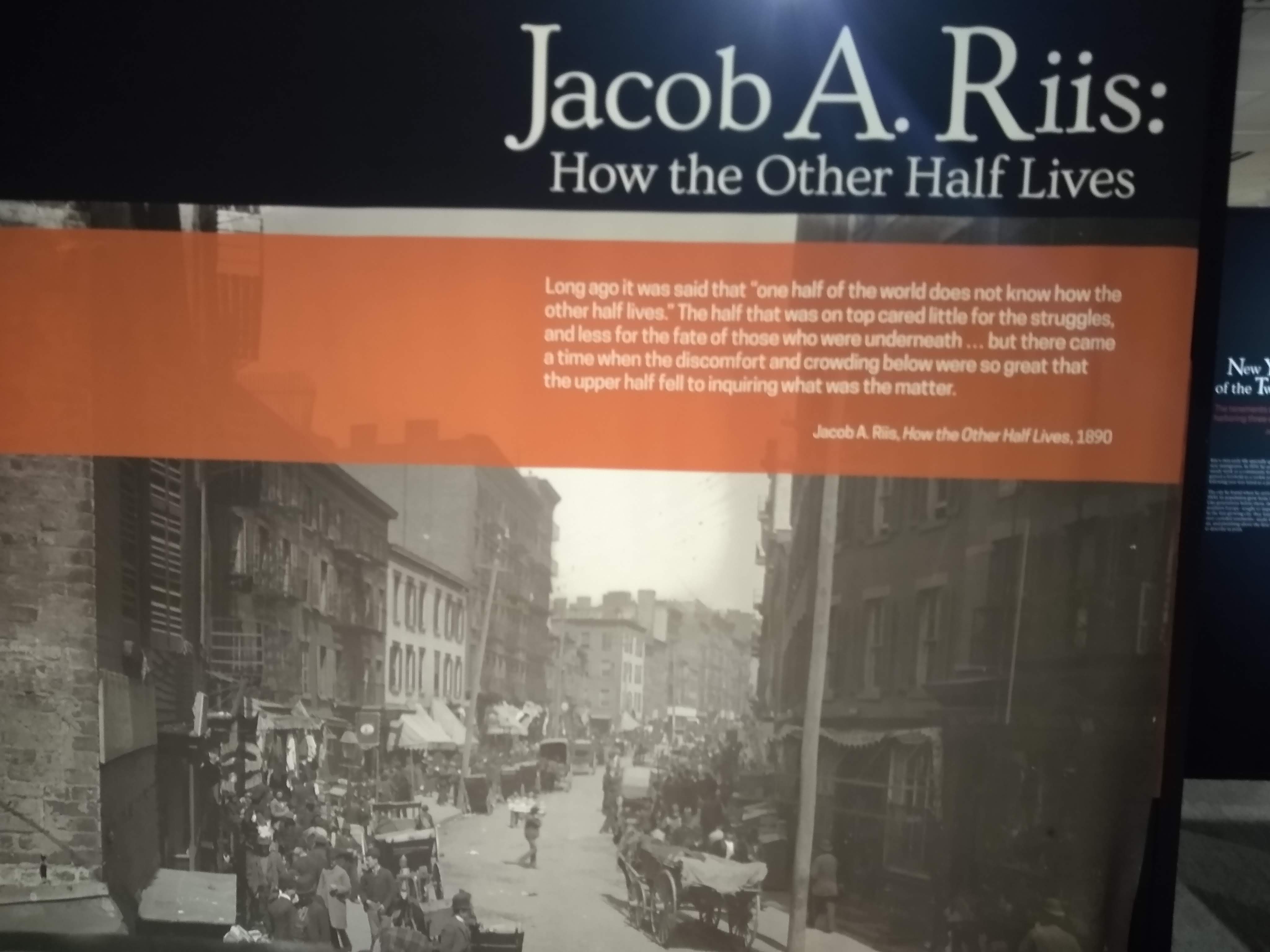
In the 19th century, Jacob Riis depicted squalid housing conditions in New York City.
An exhibit of his photographs is now at the National Czech and Slovak Museum and Library
in Cedar Rapids.

SEE ALSO

Bipartisan Policy Council, "Eviction Prevention Now and After COVID-19" [webinar], 23 June 2021 #harvardhousingreport

Alexander Garvin, The Heart of the City: Creating Vibrant Downtowns for a New Century (Island, 2019)

Annie Gowen, "She Wanted to Stay. Her Landlord Wanted Her Out," Washington Post, 28 June 2021

Steven Higashide, Better Buses, Better Cities: How to Plan, Run, and Win the Fight for Effective Transit (Island, 2019)

Norman Van Eeden Petersman, "Could You Move in Next Door?" Strong Towns, 23 June 2021

Shane Phillips, The Affordable City: Strategies for Putting Housing Within Reach (And Keeping It There) (Island, 2020)

Prevention Institute, "Healthy Development Without Displacement: Realizing the Vision of Healthy Communities for All," July 2017

Urban Institute, "Stable Housing is a Critical First Step Toward Racial Equity" [webinar], 29 June 2021 #liveaturban

Monday, June 28, 2021

Rollin' Recmobile brings the fun


Cedar Rapids Parks and Recreation's Rollin' Recmobile started its week of fun this morning at Redmond Park in the Wellington Heights neighborhood. The Recmobile van was there at 9:30, and staff had unloaded various balls, an inflatable play area...


...hula hoops, and so forth. There were also some people from Linn County Elections, with booths for mock elections, as well as information and registration forms for real elections.

Voter outreach coordinator Valerie Smith said they would be joining every Recmobile stop this week and next, and then will return for the last week in with more information on absentee ballots. (Don't tell the legislature!)

For awhile, we had the park to ourselves, but towards 10:00 the first little boys arrived. After 10:00 more people came, mostly supervised small children, but the Elections people had some business, too. There were three blonde boys with their dad doing impressive things with the soccer balls, especially considering at their age I didn't know what soccer was. The splash pads went on, though they had few takers on a morning that was cool for June.

As of 10:30, with another hour to go, I counted 14 children, about half horsing around with the balls near the splash pad, and about half gathered around the staff near the van. 

Another van pulled up just then with what looked like coolers, which might have been the lunch promised for 11:30.

How do you assess the success of a program like this? It wasn't terribly crowded at Redmond Park this morning, but that might have been more amenable to some. (It would have been for little me.) Did it get children to the park who wouldn't otherwise have been there? Did children play together who wouldn't otherwise have met? I'm not sure about actual or potential publicity, because I'm not plugged into what young families might be plugged into.

The Recmobile makes 15 stops throughout the week at 13 parks (hitting Redmond twice, as well as Cleveland Park). It also serves as a Wifi hotspot and a Neighborhood Resource Center. It runs through early-to-mid August. This year it is funded in part by a grant from the National League of Cities.

Monday 9:30 Redmond, 1:30 Jacolyn
Tuesday 9:30 Daniels, 1:30 Hayes, 4:30 Reed
Wednesday 9:30 Delaney, 1:30 Cedar Valley, 4:30 Cleveland
Thursday 9:30 Time Check, 1:30 Greene Square
Friday 9:30 Hidder, 1:30 Bever
Saturday 10 Kenwood, 12 Redmond, 2 Cleveland

Saturday, June 19, 2021

The crisis of authority and our common life

 What does this...

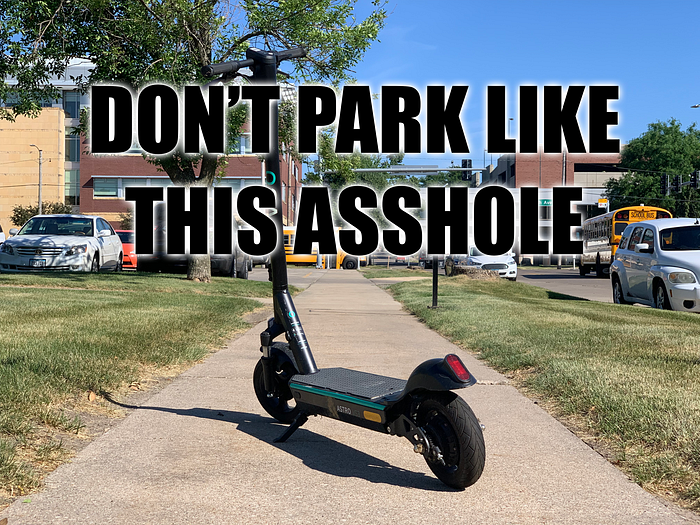
badly parked scooter
Scooter on sidewalk in Iowa

...have to do with this?

National Guard going apeshit in Oregon

This week, Corridor Urbanism co-founder Ben Kaplan published a blog post about the local controversy over motorized scooters. It's a good piece, which explains the conflicting and complementary interests involved, while gently calling out both those who heedlessly ride-and-dump their scooters and those motorists who claim an absolute right to unobstructed driving. We can accommodate the different interests, Ben argues, and become "a city of quiet streets, with strong local businesses, where we invest in our neighborhoods, and create locally."

I think we can recognize that there have been issues with the scooters, most of which is the bad behavior of a minority of scooter users, and a lack of cultural norms surrounding how they’re supposed to be used, while also realizing that the scooters can be a huge asset to our community.... We can learn, as a community, to park them properly, ride them in the bike lanes, and signal our turns. We can build rules and a culture around scooting that make scooting less annoying. We can build more bike lanes, so scooting is safer and more practical. We can scoot boldly into a brighter future, carried by the soft hum of an electric motor.

Ben sees the main obstacle to this happy resolution being cultural resistance to change, which is hard to argue with. We live in a state where bike lanes were weird just ten years ago, where demand for COVID-19 vaccines is so low we decline the vaccine shipments, and where passenger rail is a sign of creeping Eurocommunism. But beyond that, I worry about how "we can learn, as a community," to do anything. "How can I," asked the Ethiopian eunuch in Acts 8:31, "unless someone guides me?"

Who is going to guide that boy away from scootering on the sidewalk, or tell that driver not to be aggressive in pedestrian areas (or the dog-walker to leash and pick up after their dog, or would-be DJs to turn down the music, or explosives enthusiasts to cool off the nightly fireworks, or...)?

Americans' obsession with individualism makes me skeptical that we're amenable to being guided towards norms. "If somebody had the swine flu right now, I would have them cough on me," bleated radio provocateur Glenn Beck in 2009. "I would do the exact opposite of what the homeland security says" (McNeil 2009). Republicans were then a third less likely than Democrats to say they would get the vaccine, and flu deaths by state that year rose with the percentage of Republicans (Kristof 2020, citing Baum 2011). That was eleven years before mask wearing became such a big deal.

It doesn't help that authority in America is in tatters. A new report from Pro Publica finds only ten confirmed cases of police officers being disciplined in several dozen documented incidents of excessive actions against protesters in 2020 (Simon 2021). One officer who punched a protestor six or eight times in six seconds received a written reprimand. Two fired Atlanta officers were subsequently reinstated. Weirdest of all, the National Guard, Minnesota State Patrol, and the Minneapolis Police Department all denied employing the officers who fired paint balls at someone's home.

The State of Iowa, predictably, backs the blue in a way that furthers rather than repairs the cultural rift. You don't build community by threatening people with fines and imprisonment. You build community by building public trust, and by taking accountability for your actions. For a short-term political jones, we and others across our nation have abandoned the tough but necessary work of building communities. In this environment, "the scooter problem" is not just an annoying blot on our day; it's a symptom of our collective inability even to be a community.

Tuesday, June 8, 2021

Summer Reading from Island Press


(6/8/2021) When Island Press has a sale, I'm interested, especially if they're $5 each, and even if they're e-books. Founded in 1984 as a non-profit publisher focusing on environmental issues, Island has published some fine works on urbanism, including Cities for People by Jan Gehl (2010) and The Regional City by Peter Calthorpe and William Fulton (2001). I think if I had unlimited time, space, and funds, I might buy their whole catalogue!

Reader, I did not buy their whole catalogue, but I picked a few which speak particularly well to our common lives in these times.


Shane Phillips, The Affordable City: Strategies for Putting Housing Within Reach (and Keeping it There) (Island, 2020).

Phillips addresses the shortage of affordable housing in many of America's cities by taking on what we might call Cortright's Paradox: increasing access to shelter in places with access to opportunities threatens the value of existing housing in those places. (For many households, the home they own is their major investment for retirement.)

Such a complicated problem has not yielded a slam-dunk solution, and Phillips does not pretend that it will. His approach is to seek joint gains for current homeowners, future homeowners, current and future renters, landlords, developers, and local governments. Like Matthew Desmond in Evicted [Crown, 2016], he describes a world not of clear saints and sinners, but all kinds of people mostly trying to do their best in uncertainty. A helpful introduction for non-practitioners is provided in the appendix, "Development and Real Estate Economics 101."

Phillips identifies three broad, complimentary interests: supply of places to live, stability of living situations, and subsidy by government to compensate for market failures. Under these goals he offers 40 specific policy proposals, which is a lot. They aren't a single indivisible package, though he urges governments not to adopt them piecemeal, or only to adopt the ones with particular ideological appeal. Whatever policies are pursued should be done with a joint gains strategy. For example, if housing is going to be a secure investment, it must increase in value, which makes it less and less affordable (pp. 63-64). Allowing the supply to rise to meet demand may reduce the valuation of existing homes, but it will also allow property taxes to remain manageable, and while the owner's descendants may not benefit as much from inheriting it, they will likely benefit more from being able to afford to buy their own homes when the time comes.

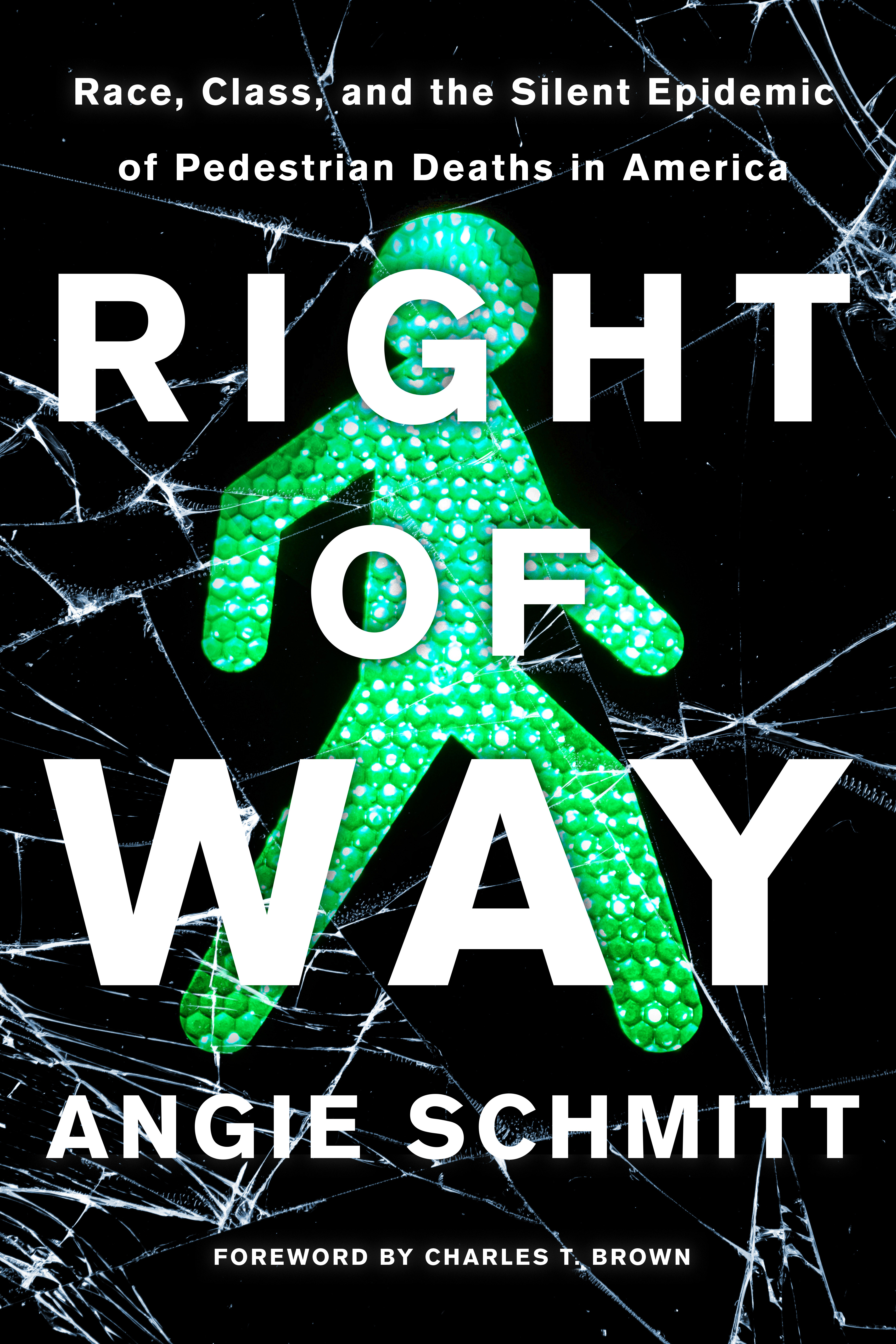
Right of Way cover

Angie Schmitt, Right of Way: Race, Class and the Silent Epidemic of Pedestrian Deaths in America (Island, 2020).

This was a difficult book to read, not because of the writing, which is excellent, but because of the subject matter. I can't imagine the strength of character it took to write it. Schmitt analyzes the available data and secondary sources on the thousands of pedestrian deaths each year, and comes to the inescapable conclusion that America has been willing to put up with carnage on the streets for the sake of unobstructed driving ("throughput," ch. 6) and auto industry profits (ch. 5).

Other research (chs 1-2) shows that pedestrian deaths are not random, but occur disproportionately in the new cities of the South and Southwest, on stroads where auto speeds are fast and pedestrian infrastructure is poor, and in lower-income and nonwhite neighborhoods. Pedestrian deaths are disproportionately caused by sport utility vehicles which are getting taller and heavier and consequently deadlier. (As I was reading this GMC introduced its new 9000 lb Hummer EV.) Older people and children are the most common victims. The picture this book paints of American materialism and indifference to others is bleak indeed.

She concludes on a hopeful note, that thanks to activism there has been increased awareness of the systemic nature of the problem, and that has led to design improvements in some places: better sidewalks, better street lighting, curb ramps, bus stops in safe places, longer traffic signals, more crosswalks with features to get the attention of drivers (p. 154). But even in New York City, the least car-dependent city in America, it required grieving parents to form Families for Safe Streets to get the government's attention. Making this right is going to be a long process.

Five Rules for Tomorrow's Cities cover

Patrick M. Condon, Five Rules for Tomorrow's Cities: Design in an Age of Urban Migration, Demographic Change, and a Disappearing Middle Class (Island, 2019).

Condon combines positivity (we can do this!) with urgency (we must do this!), in view of climate change and persistent economic and demographic trends. His five rules are:

  • following Jane Jacobs, see the city not as a set of isolated problems (e.g. solve parking shortage by building more parking lots) but as an integrated and complex system;
  • following Christopher Alexander ("A City is Not a Tree," Architectural Forum, 1965), see the city as a "semi-lattice" series of patterns that fail when all are run through the city center;
  • make infrastructure lighter, greener, and smarter, because the principal reason we have such a maintenance backlog is that we've been profligate in building the stuff in the first place;
  • use affordable housing design that accounts for the need for financing, social resilience, change over time, and accommodating an aging population; and
  • adapt to new economic realities "where stagnant salaries are the norm, secure employment increasingly rare, large student loan obligations common, and elevated housing costs nearly universal" (p. 135).
Not much in here will shock urbanists, but it's nice to have examples of successful adaptations, from the olden days (the traditional grid pattern, 1920s Vienna's scheme for building quality affordable housing through tax policy) as well as recent innovations (removing a highway and uncapping a river in Seoul, hiving or allowing subdivision of housing parcels in Vancouver, transforming big box stores into commercial bazaars or other arrangements appropriate to immigrant cultures). The important underlying theme seems to be that problems can be solved if we accept reality and want to solve them.


Steven Higashide, Better Buses, Better Cities: How to Plan, Run, and Win the Fight for Effective Transit (Island, 2019).

Higashide, who grew up with the CTA and now works for New York-based TransitCenter, is an unabashed supporter of buses, not only as an alternative to one-passenger cars but also as the disrespected cousin of commuter trains. This is a good, up-to-date survey of research on bus transit. He argues that between those who take the bus out of necessity and those who will never leave their cars for any reason there is a sizeable group that would take the bus if it were only serviceable. Improving bus service to lure them on would, incidentally, also improve service for those who use it out of necessity.

In a decade in which people moved "back to the city," overall bus ridership in America actually dropped 17 percent. Bus riders in the United States average half the national median income, while bus riders in Germany (and in cities like Seattle with strong systems) average the same income as everybody else. Moreover, in cities like Los Angeles with weak systems, even the poorest predominantly use other forms of transportation (p. 28). On the other hand, "Most transit systems have a large pool of customers who have experienced transit but have not committed to frequent use" (p. 30), and in places like Houston and San Francisco where leaders have actively sought to improve bus service, ridership has risen (p. 14)

To attract riders, bus systems need to be designed to be:
  • frequent, so that a bus will come within 10 minutes (ch. 2); 
  • fast and reliable, freed from auto traffic and obligated to make fewer stops, so that you can get to your destination in a reasonable and predictable amount of time (ch. 3); 
  • walkable/dignified, so you can wait in a shelter, and can get safely from your stop to your destination (ch. 4);
  • fair/welcoming payment systems, with special attention to marginalized communities (ch. 5).
The book concludes with advice to activists on how to make things happen.

The D6 was our "magic bus" when we lived in DC

10th Anniversary Post: Paying Attention to the Suburban Development Behind the Curtain

  (Google Maps screenshot) (9/5/2026)  Ten years ago, we in the United States were engaged in a presidential election campaign that would br...