Thursday, June 20, 2013

Pocket parks

(6/20/2013) Some time ago, when I mentioned proposals for pocket park(s) in the MedQuarter district, a friend pointed me to information about Paley Park in New York City, an early prototype completed in 1967. Having a particular idea of pocket parks in my head, I was surprised at the variety.

According to the article at the University of Washington's encyclopedic "Open Space Seattle 2100" site the definition of pocket park is pretty broad: urban open space at the very small scale... usually only a few house lots in size or smaller. They can be generalist, "scaled-down city parks," but more often specialize in a few functions. Article author Alison Blake lists "small event space, play areas for children, spaces for relaxing or meeting friends, taking lunch breaks, etc." They work best when they're tied into a neighborhood, and when people aren't fighting over which function takes precedence.

Other information on pocket parks:

Initiative to create pocket parks can be taken by community activists, municipal governments or public-private partnerships. Philadelphia's pocket parks were created by the city after buying lots at sheriff's sales. Paley Park in New York City was created by the foundation of former CBS president William S. Paley. Anderson Park in Cedar Rapids was in existence before, but was developed and improved about 15 years ago thanks to grass-roots efforts by people in the surrounding neighborhood.

When I think of "pocket park," I think of a small neighborhood park with a play area. This is Monroe Park in Cedar Rapids, located on 30th St SE.
Monroe Park

It is adjacent to Monroe School, which was recently closed. It's very shady, which is a plus; a potential criticism is the playground is hard to see from the street.

This is Tomahawk Park, near where we used to live:
Tomahawk Park

Anderson Park, mentioned above:
Anderson Park

Northview Park:
Northview Park


There are other kinds of pocket parks. Central Park on the northeast side was created on the site of a Chinese takeout place that closed and then burned. (There were rumors about that fire.) It has some trees and benches.
Central Park
There is a play area nearby, at the former Polk School.

Huston Park has a rose garden, which is not currently in bloom:
Huston Park

This parklet is across the river from Czech Village, near the New Bo district;
Cedar River Trail stop

I think it's called Masaryk Park, after the first President of Czechoslovakia, but didn't see signage. Occasionally I'll see people eating their lunches there.

And what of Krebs Park? It's necessitated, really, by a weirdly-shaped intersection that leaves a spot of ground too small to build on. It's bounded by busy streets, and I've never seen anyone there.
Krebs Park

I was struck at the MedQuarter District open house that the picture of the pocket park showed only adults chatting on pavement. That type of pocket park might be appropriate to a commercial sector where you only expect adults to congregate, sort of like the Healing Garden by St. Luke's Hospital:
(A young couple was seated at the far end of the garden when I took this picture, but I didn't know if they wanted to be blog stars.)

My hope for the MedQuarter is that it will be integrated into a larger urban zone at the core of Cedar Rapids. And that will require playground equipment. But even if the only reason to go to the MedQuarter is to seek medical care or to visit someone in the hospital--if things are going this direction, please don't tell me yet--youngsters still need some place to run around, right?

Monday, June 17, 2013

A pause in sprawl?

I was walking this morning on Pioneer Avenue SE in Cedar Rapids, where I've followed development for a number of years. I was struck this morning that building on this edge of Cedar Rapids seems to have stopped. There are many vacant lots laid out, but no building is in progress on any of them. The finished houses are in clumps located here and there amid the vacant lots.

(two vacant lots, with a very large house in the distance)


In the development pictured above, of the first five lots off 44th St two are vacant and two have finished houses for sale.

I chose to take this as a hopeful sign. It probably doesn't matter, really, if the lots are developed or not: the road's laid out, the sewer and electric lines laid. But maybe it means that the ever-outward push is slowing down, and is a cautionary note to future developers of sprawl that there's an oversupply of great big houses far from town with no places to walk or bike to?

I don't know if this pause, if real, is due to changing tastes, government policy, or the scuffling economy (though the rich aren't scuffling, and building here continued through the worst years of the downturn). It would be refreshing if society wasn't donating so many resources to sprawling.

Wednesday, June 12, 2013

An urbanity playlist


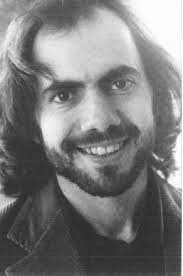
 (singer Steve Goodman, swiped from http://steve-goodman.hegewisch.net/good.html)

Steve Goodman came up on my iPod the other day, and inspired me to compile a playlist of songs that celebrate urbanity, or at least put me in an urbanish mood. I tried to stay away from songs that celebrate specific cities, although I was not always successful. I also haven't tried out this playlist from beginning to end, so there may be some unintentional jacks in there. Additional ideas welcome!

1. Men Who Love Women - Steve Goodman
2. Downtown - Petula Clark
3. Club at the End of the Street - Elton John
4. Summer in the City - Lovin' Spoonful
5. Give Me the Night - George Benson
6. Spanish Harlem - Aretha Frankln
7. City of Immigrants - Steve Earle
8. Games People Play - Spinners
9. Five O'Clock World - Vogues
10. Got to Give It Up - Marvin Gaye
11. Sultans of Swing - Dire Straits
12. Night Train - James Brown
13. Beautiful Noise - Neil Diamond
14. Walk Between the Raindrops - Donald Fagen
15. Master Blaster - Stevie Wonder
16. It's Saturday Night - Proclaimers
17. Babylon - David Gray
18. Where Everybody Knows Your Name - Gary Portnoy
19. Betty's Diner - Carrie Newcomer
20. Mortal City - Dar Williams

Tuesday, June 11, 2013

America's climate century

In November 1989, then Senate Democratic Leader George Mitchell of Maine proposed an amendment to the Clean Air bill then under consideration by the Environment and Public Works Committee. It was, as far as I know, the first significant legislative proposal to address climate change. The measure would have raised the fuel efficiency requirements to 50 miles per gallon by 2003. It was vigorously opposed by the administration of George H.W. Bush, on the grounds that fuel efficiency requirements made American cars less marketable and less safe. The committee agreed to remove the provision, and a floor amendment to the Clean Air bill brought by Senators Richard Bryan of Nevada and Slade Gorton of Washington was blocked by a filibuster in April 1990.

That may have been the right decision for that time. Even without climate change provisions, the Clean Air Act of 1990 was a major piece of legislation. Including the provision over the President's objection may have led to a veto instead of a law, and prevented much progress on sulfur dioxide and nitrous oxides. Moreover, evidence on climate change was still emerging.

Nearly a quarter-century later, a consistent and growing body of evidence has accumulated that increased concentrations of atmospheric carbon and methane have passed a dangerous threshold; that this increase is attributable to human activity; and that the effects, while mostly in the future, are starting to be felt, from melting ice caps in the polar regions to increased incidence of floods, droughts and severe weather elsewhere. It stands to reason, if we believe that actions have consequences: more people burning more things create more carbon dioxide in the atmosphere (NOAA data: nearly 400 ppm now, up from 320 ppm 50 years ago), and more and more carbon dioxide is eventually going to affect something.

(carbon dioxide concentration over time, swiped from NOAA website:

In an ideal world, U.S. policy makers would have taken note of this phenomenon and the risks it poses. Conservatives and liberals, with their differing political philosophies, would produce a variety of different measures with various levels of intensity to address it. And, given the prevalence of divided government during this period, the result would be a mix of market mechanisms, regulations and subsidies.

This is not, however, an ideal world. The U.S. Congress is in the grip of climate change deniers, such that if anyone is tempted to propose meaningful legislation they haven't bothered. The fuel efficiency requirements--about which I'm ambivalent, but never mind--will finally get above 50 mpg in the mid-2020s, and we have new energy-saving light bulbs. Any serious conservation measures are pipedreams for the foreseeable future. Meanwhile, today's Gazette, for some reason, included an op-ed by someone from the misnamed International Climate Science Coalition. It's the usual stuff--none of this is settled, there's a lot of uncertainty, people are mean to skeptics, and attributing climate change to Al Gore and writer Bill McKibben while ignoring the 99+% of climate scientists who have done the research on which Gore and McKibben opine. The writer violently misstates the state of argument, and otherwise sows confusion. There's not a datum in the piece.

So thank God for people like Rob Hogg who are willing to take up the case for climate change action, and to take it up repeatedly and relentlessly. Hogg, who represents me in the Iowa Senate, has just published America's Climate Century, a small, handy review of what we know and what we should do about it. It's easy to read, and easy to find what you're looking for. Chapter 2 summarizes research on what has already happened to the atmosphere; chapter 3 discusses likely future atmospheric changes given what's happened already; chapter 4 talks about what this will mean for human life on earth. Subsequent chapters discuss what individuals can do in lifestyle changes and policy advocacy. The appendix lists 18 common objections to climate change data, most of which will be familiar to anyone who reads this. It makes for a quick reality check for those times when you've been rhetorically spun once too often.


A key piece of advice Hogg states several times throughout the book is "a Doubting Thomas today can be a leader for climate action tomorrow." It's important to remember this in any political discussion. People who disagree with us aren't our enemies, or America's enemies. Snarkiness and hostility don't get us anywhere. We all have to live together, remember. Even if you're talking with someone who is resistant to persuasion, someone might be listening who is persuadable.

My only complaint about Hogg's book is that it is very light on references, although there are clues for the curious to follow (such as the names of numerous professional organizations that have endorsed climate change policy action). References to studies would be helpful for those who want to dig more deeply into the science. On the other hand, lists of references would have made the book longer and more expensive to produce.

If we Americans are going to live together, we need to deal with the world as it is, not the world as we wish it would be. We can and should try to make the world a better place, but that requires starting with what is. There is room for plenty of debate about climate change: its extent, its effects, policy responses, and how the costs of response should be spread are all up for grabs. But to deny that human production of greenhouse gases doesn't have any impact on the world, and that the vast preponderance of data so far point to exactly that, requires a ferocious desire not to believe it. I understand that people wish climate change weren't real. Heck, I wish climate change weren't real. But wishing something doesn't make it true. We need to start with the best information we have--understanding that we could always have more and better information--and work from there.

SOURCES:

Senator Rob Hogg, America's Climate Century: What Climate Change Means for America in the 21st Century and What Americans Can Do about It. Zion, 2013.

Tom Harris, "Why We Need 'Calm' Approach to Climate Change," Cedar Rapids Gazette, 10 June 2013, 6A.

Cindy Hadish, "Book Review: America's Climate Century," Homegrown Iowan blog, 28 April 2013 [http://homegrowniowan.com/book-review-americas-climate-century/].

"Fuel-Efficiency Effort Defeated in Senate," CQ Almanac 46 (1990): 279-281.

Sunday, June 9, 2013

Public vs. private sector

Amitai Etzioni
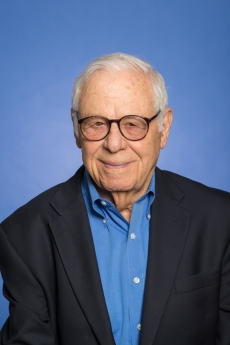
Etzioni, from the GWU website

Amitai Etzioni has a pertinent article in the latest Political Science Quarterly. Etzioni is a professor of international relations at George Washington University, possibly best known for articulating a communitarian political philosophy. In the 1990s he was an editor of the journal The Responsible Community, to which I subscribed for awhile.

In his latest piece, Etzioni takes aim at a tendency prominent in the American political conversation today to state an opposition between the public (government) and private (business) sectors, and to blame one or the other--usually, government--for the woes of America. Etzioni "argues that the frequently employed distinction between the public and the private realms is becoming increasingly obsolete because the two realms are intertwined, move in tandem, and seem to be codetermined [i.e. interaction between them drives both, rather than either driving the other] (p. 39)." The real world looks quite different from libertarian and socialist (or, for that matter, Republican and Democratic) discourse. He cites other scholars--including historians William J. Novak and Elisabeth S. Clemens, and economist Karl Polanyi--who make a similar case. In Novak's words:

The most compelling analyses of American power have always refused to split the problem along a single either-or, public-private binary (for example, the people vs. the interests; public good vs. private right; the state vs. the individual; regulation vs. the market). Instead, realistic and pragmatic approaches to American state development emphasize the interpenetration of public and private spheres--the convergence of public and private authority in everyday policymaking ("The Myth of the 'Weak' American State," American Historical Review 113 (2008), 769-770, quoted by Etzioni on p. 45) .

Etzioni cites four contemporary digital-age examples in support of his argument: use by the private sector of government-issued social security numbers as individual identifiers; government use of information on individuals gathered by private firms, including contracts with data mining firms Choicepoint and SesInt; policy making, or the lack thereof, for cybersecurity; and the formation of individual value preferences. Imagining a public-private divide, he concludes, was a "very useful fiction" at the dawn of the modern age when concepts of individual liberty were being formulated. Using it as the basis for your whole worldview, however, "now obscures the underlying social dynamics, the powers that drive history, and the ways in which they may be redirected" (p. 61).

Etzioni's argument makes a lot of sense to me, so much so that I had it in the back of my mind to blog about the problem even before his article appeared. No government policy today is formulated without the hands of business being all over it, and very few are implemented that way. (I can't think of any offhand, but there may be some.) Individual entrepreneurship is not diminished by the fact that government has for generations been intricately involved in the national economy. The 2012 campaign kerfuffle over Obama's saying "You didn't build that" was simply and shamelessly disingenuous.

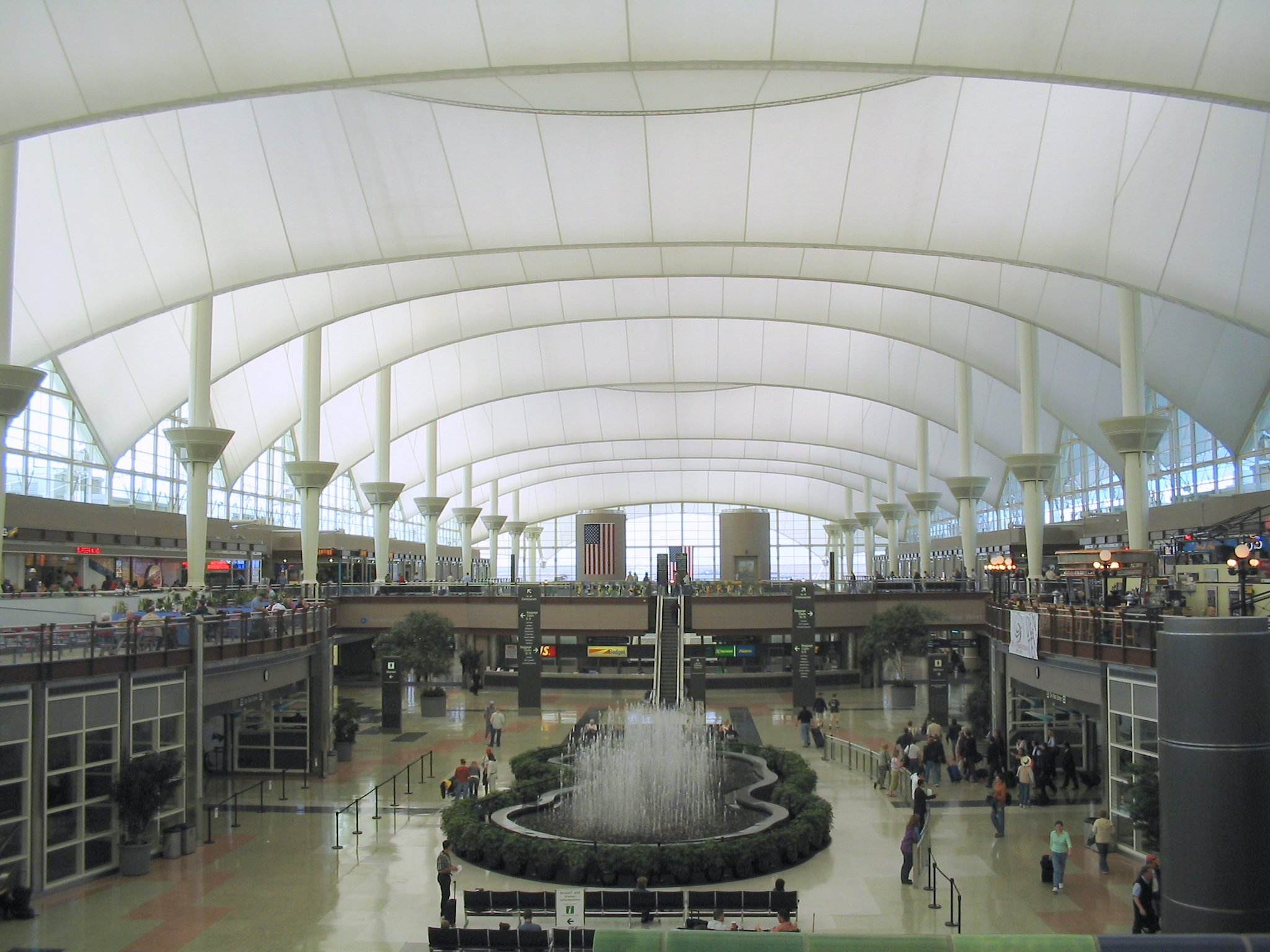
(Denver International Airport, from commons.wikipedia.org)

That government vs. business was a phony distinction struck me as early as the 1990s, when humongous cost overruns at the new Denver Airport were widely touted by conservatives as evidence that government couldn't function. Of course the contractors that the airport authority was overpaying were private businesses, which surely shared the blame for the dysfunction.

Similarly, the widespread phenomenon of metropolitan sprawl--a subject of many entries in this blog--is not the product either of government or private enterprise run amok. Governments and developers have been collaborating at this for a long time, which may have at one time seemed socially but is now clearly dangerous and darned hard to change. Developers build subdivisions for the most part because they're profitable, and federal and local government tax policies and subsidies support their construction.

For that matter, the coming health care regime is not "government-run health care" as conservative propagandists would have it. If it were, it wouldn't be so complicated! It is a series of regulatory and incentive-oriented patches on the existing health care system, which is a complicated mix of private, public and non-profit institutions and funding. Someone named Wayne Madsen wrote in an op-ed in today's Cedar Rapids Gazette: "What's generally termed Obamacare wasn't the brainstorm of President Barack Obama, but a 'witches' brew' concocted in 2010 by Senate Majority [Leader] Harry Reid and then House Speaker Nancy Pelosi with generous advice from Big Pharma, Big Insurance and the AARP." Snarky, but accurate. Even if his wish for a single-payer insurance system comes true some day, it will still rely on market mechanisms, if not actual private firms.

Independent entrepreneurs striving honorably to solve the needs of all until they are undone by feckless government officials--that's a story Americans like to tell themselves. Not to say it doesn't occasionally happen: Not all regulation is cost-effective, and government can be awfully slow to respond to negative feedback. But by the same token, if business just charges processing fees without substantive value (the 21st century business model?) then you wind up with the pre-Obama student loan program.

In the real world, figuring out solutions to public problems starts with clearly recognizing that much of American public life today is an intertwining of the three (public, private, non-profit), where there is tension but not pure opposition between them. There's probably good reason for this: For the most part, it's been shown over a long period of time to work. Socialist experiments have in the past spectacularly failed, and libertarian worlds either exist mostly as myth (the American frontier) or failed too (American commercial structure before the Great Depression). Anyone who pretends otherwise is blowing smoke, or selling something, or both.

SOURCE: Amitai Etzioni, "The Bankruptcy of Liberalism and Conservatism," Political Science Quarterly 128:1 (Spring 2013), 39-65.

Tuesday, June 4, 2013

Local businesses

When I'm at Coe, and feel the need to get out of the office for a cup of coffee, the choice is obvious: Brewed Awakenings Coffeehouse is just across 1st Avenue and offers an impressive selection of coffee as well as a nice atmosphere.


Starbucks doesn't tempt me, as the nearest of their stores is nearly four miles away. (The PUB in Coe's Union sells Starbucks Coffee, but that's a quite different type of place.) But what if the situation was reversed? What if Starbucks was right across the street, and the nearest local option was, say, Blue Strawberry downtown, which is over a mile from Coe?

My heart says go with the local business, defining Brewed Awakenings as "local" because its two stores are both in Cedar Rapids, and Starbucks as "national" because it is headquartered in Seattle and has zillions of stores all over the world. But are there some data to support my preference? I know, for example, that the Starbucks Corporation has been using much of the same international tax sheltering that Apple has been criticized for, but that distracts from the central question: Does it really matter which coffee place I choose? Or does it depend on the terms of franchising?


Changing the subject to ice cream highlights the conundrum. The closest ice cream place is Dairy Queen, located two blocks from Coe's campus. For awhile, following the same prejudice that leads me to choose against Starbucks, I traveled across town to the Kool Moo. Lately, we've been going to the Dairy Queen on 16th St NE. Laura and Todd Henderson, who own it, are great people who live two blocks from their store and are very active in the community. The people in line with me represent a cross-section of the city, and I often recognize people I know. Dairy Queen is a national brand, but the 16th Street Dairy Queen seems very local.

This Sunday's Gazette business section had an article noting that Cedar Rapids has a shortage of upscale retailers like Nordstrom's and Whole Foods. Is this bad? Our vibrant array of local coffee places flourishes because Starbucks was very late in moving in here. Could there be local businesses doing what Nordstrom's does? Would that be better for Cedar Rapids?

Am I blue


The City of Cedar Rapids is participating in the Blue Zones Project, a nationwide initiative run out of Tennessee by Healthways Inc., and sponsored in Iowa by Wellmark Blue Cross Blue Shield (by far the largest health insurance provider in the state). Blue Zones promotes healthy living through exercise, dietary choices and positive attitudes. (The Blue Zones folk tend to longer lists, like the Power 9 list of healthy lifestyle habits, and the 11 Blueprint sections at last night's open house. Anyone who's taken my classes knows that a list of more than five things makes me woozy, so I have condensed it down to three major areas.)

Monday night there was an open house at Coe College. Volunteers from Blue Zones, the city, and maybe other organizations solicited opinions from visitors. Look at all the blue t-shirts!


Blue Zones operates a wide range of initiatives, seemingly on the theory that if they can start people talking about a variety of dimensions of healthy living, and achieve results on even a few of them, they will have done a great deal of good. I like that theory.

City design is one of their areas of interest, as indeed it is one of mine. From their website:

A community's streets, sidewalks and trails help people bike and walk more. Many cities have used the same techniques as the Blue Zones Project™ does to increase pedestrian and bike safety in roads, expand and build bike lanes and maintain sidewalks. These kinds of improvements allow for great sources of exercise for individuals and makes a community more livable overall.

Many people in Cedar Rapids are already using such pathways to get some exercise--some just because they feel like it, and a greater number because they own dogs. This is definitely something to be said in favor of dogs, who need walks throughout the year, and not just when it's nice out as it is now.

In trying to get more people to exercise, Blue Zones focuses on persuasion as well as more/better pathways. That may not work, though, for many people who don't own dogs and aren't self-motivated to walk. What they need is some place to go that's easiest to get to on foot. A lot of areas in any city as sprawled as Cedar Rapids don't have anything like that. Even in my close-in neighborhood, the only place within a five-minute walk is Brucemore (which admittedly is pretty special). Better city design needs not only more sidewalks and bike lanes, but more places to walk and bike to. [As I waited to write on the comment sheet, I noticed the woman in front of me was the first one to mention needing places to walk. Points for her! But then she used the example of the walking area at the proposed redesign of Westdale, which will in fact be a walking area you can only get to by car. Arggh.]

Along the same lines, Blue Zones encourages work places to provide exercise areas for employees and time to use them. Coe rocks in this area, with our pool, racquet courts, and two workout rooms. We are a college with traditional-age students, after all. But I think businesses can help a lot just by where they choose to locate. To pick unfairly on one business, Aegon USA might well have all that stuff, but they're on their own huge campus a long way from anywhere. Just to get across the parking lot is a long walk. Contrast that with CRST, which is locating their new office downtown. Even if they don't have fancy exercise equipment, they're close to restaurants, coffee houses and other places people can walk to on their lunch hours a lot more easily than they can drive anywhere.

One of the interesting walking ideas Blue Zones is promoting is the "walking school bus," where parents and/or community volunteers escort children to their neighborhood school.
(a "walking school bus" in action, from the Blue Zones website)

I think this is a great idea, and if I didn't typically have to be at work before school starts I would cheerfully volunteer. One problem is schools like the recently-built Viola Gibson School, located on busy and unwalkable Blairs Ferry Road. Another problem, in fact the problem in my own neighborhood, is that parents tend to opt out of Johnson School, even though it's about three blocks away, because it has been designated a School In Need of Assistance. So they drive their children to schools farther away.

Conversations about healthy living are conversations worth having. A lot can be done without persuasion, which some may consider to be scolding, if we pay attention to what Hester (Design for Ecological Democracy, 2006) calls "impelling form."

Justice in the World Today

  Hope he gets some of that coffee: Statue of Thucydides in Vienna, Austria (7/31/2026)  A long time ago, according to the ancient Greek his...