Monday, June 10, 2024

Riding the Districts 2024

Cyclists and bicycles under cloudy skies
Gathering under cloudy skies at Prairie Park Fishery

This year's Districts ride featured clement weather, two of Cedar Rapids's arguably bikeable destinations, and the latest information on trails development. The ride was hosted by the city's Parks and Recreation Department. The roughly 15-mile ride began and ended at the Prairie Park Fishery, with stops along the route at Indian Creek Nature Center and Bever Park. 

map of the route

Bever Park is along what will become the Interurban Trail from Cedar Rapids to Lisbon. Randy Burke, who has been with Linn County Conservation since 1979, said the trail has been in the works almost that long! There remain land acquisition issues, negotiations of the route with the towns of Bertram and Mt. Vernon, decisions about how to get under the north-south highway (US151/SR13), and "a lot of little things [and] design stuff... it's going to end up being a very expensive project." Ron Griffith, a traffic engineer with the city, said the Cedar Rapids section had federal funding through the Corridor Metropolitan Planning Organization that will allow completion of that portion in 2029.

Interurban Trail map

Posters at the Fishery showed trail development progress across the metro. I was glad to see updates on the CeMar and Grant Wood Trails, although sorry to see their expected completion has been pushed back about six months in both cases, so it will be 2026 before the CR-to-Marion loop will be all finished.

CeMar and Grant Wood Trails final connections

Ron Griffith said the Morgan Creek Trail on the city's west edge has been completed as far as Covington Road, and they are seeking bids on the next phase, which will be followed by fundraising.

Morgan Creek Trail progress

The ride itself was mostly pleasant and occasionally complicated. I counted between 40 and 50 riders. Stephanie Schrader and Doug from the Parks Department got things going--I almost said "rolling"--at the Fishery, a relatively new facility on land donated just a few years ago by the Martin Marietta Corporation which had been the most recent owner of a long-used quarry. It now boasts a 1.7 mile trail loop around the lake, connection to the Sac and Fox Trail, and fishing piers three of which are ADA-accessible. 

speakers address biking throng

They introduced City Council member Ashley Vanorny, who also welcomed the group, and gave a shout out to former mayor Brad Hart who was a fellow rider. Then Ron Griffith talked about the route and trail safety.

Nearly all of the four mile ride to the Indian Creek Nature Center was done on Otis Road, because the trail along the river was partly flooded with all the rain we had in May. We met at the Penningroth Barn, the dairy barn that served as the nature center's headquarters from 1973 until 2016, with which I have many fond associations.

cyclists approach the old barn
arriving at the barn

They still have a few of the old exhibits.

woman speaking, door to the building, pile of bark on a table
Sarah Botkin and a pile of bark

Sarah Botkin, manager of the new headquarters down the road, explained the center's mission as "nature based education and land restoration." She said many other interesting things, too, but I was distracted by the dense squadron of mosquitoes, which embraced all of us like long lost friends. I guess the nature center is lower, wetter, and more wooded than my house!

Penningroth Barn at Indian Creek Nature Center
Penningroth Barn

Most of the five-plus miles to Bever Park were on the Sac and Fox Trail, mostly okay, but occasionally soupy or sandy. A few of us had trouble maintaining balance, but no one was hurt. The crushed limestone surface held up under our tires, too. Eventually the trail will lead directly into Bever Park, but for now we did the same subdivision-plus-brutal-hill that the MPO Ride took in May. I know a better route, at least for individual riders, and next time I am resolved to take it.

At Bever Park, there were snacks...


...and the aforementioned news. And more snacks. Also water of various types.

I rode home from Bever Park. I live right down the street from the park, so I had started my morning by riding the planned final leg from Bever to the Fishery. I did a modified version of their route, via Memorial Drive, McCarthy Road, and Otis Road. None was difficult on a Saturday morning, but I would be leery of cycling that route on a weekday when there is a lot more traffic.

Most riders drove their bikes to the Fishery...

Prairie Park Fishery parking lot
Prairie Park Fishery parking lot is spacious

...which for all its wonderful features is far from a low-traffic street or a transit stop. Same goes for Indian Creek Nature Center. So much of our trail development is car-dependent i.e. it assumes you will drive to the trail. The missing links on the CeMar and other trails can't be fastened too soon!

Wednesday, June 5, 2024

Book review: City Limits


City Limits cover


Megan Kimble, City Limits: Infrastructure, Inequality, and the Future of America's Highways (Crown, 2024)

I can't believe there was a day when people were like, you know what we should do? Tear down all the businesses and houses around our downtown. That seems smart. Let's do that.
--BETH OSBORNE, Transportation for America (Kimble 2024: 202)

This is an even better book than I expected. At its heart it is the story of grass-roots movements in three Texas cities--Austin, Dallas, and Houston--in opposition to Texas Department of Transportation plans to widen interstate highways through the centers of their towns. Those stories are well-told, including accounts of public hearings and interviews with participants on all sides. Results of their efforts were mixed, but demonstrated the importance of community input.

Megan Kimble
Megan Kimble (from her website)

Besides that, City Limits has two features that make it valuable to those of us who don't live in Texas. (Remarkably, I have not been to any of the three cities!) The first is to describe early in Part I the context in which the current controversies exist, that being the story of the Interstate Highway System. President Dwight D. Eisenhower famously championed that system, but explicitly as an inter-city road network. Apparently without his knowledge, the program aggressively included highways built through cities as well, including all three of the Texas cities discussed (see pp. 27-34). 

The intra-city highways typically obliterated many blocks of existing black neighborhoods and lowered the quality of what remained. This experience was seen with I-90/94 in Chicago, I-94 in Minneapolis-St. Paul, and probably your town as well. 

old pictures of houses and stores
"Before" picture from Dan Ryan Expressway hologram
(my photo at National Museum of American History)

(In Cedar Rapids, without a substantial black population, I-380 plowed through a working-class white neighborhood, and its huge right of way remains an obstacle to development on the west side of the river.) She also discusses highway removals in San Francisco and Rochester, with possibly more to come.

The second feature of the book that is relevant to readers in and out of Texas is hearing directly from those affected by intracity highway construction and expansion; these conversations make up much of Part II. We meet Lockridge Wilson, whose Dallas neighborhood was cleaved by I-45, which he now uses to get to work; Elizabeth Wattley, who managed restoration of Dallas's historic Forest Theater before she found it in the path of I-45 expansion; Elda and Jesus Reyes of Houston, who rally their mostly Spanish-speaking neighborhood to defend their homes against I-45 expansion; Angel and Michael Leverett, who live in the Austin suburb of Kyle, reliant on I-35 while choosing employment that will somewhat minimize their commutes; and dozens more. Their stories add dimension to the policy problem, and though neither you nor I are likely to meet any of these people, there are stories just like theirs in the places where we live.
street facing grass berm leading up to highway
Berm view: 3rd St SW, looking up at I-380

Kimble concludes the book on a hopeful note, but there really are no clear signs of what the future will bring for intracity highways. We need to stop doing what we've gotten used to doing, as well as undoing some of the damage where we can. Their social and environmental costs are hard to ignore, and their financial costs are prodigious, though maybe not as visible as other areas of government budgets. ("I don't think federal taxpayers should be subsidizing the costs of [mass-transit] systems," Baruch Feigenbaum of the Reason Foundation tells a congressional hearing (p. 99), conveniently overlooking that highway infrastructure too is "subsidized.") Land costs, too: outside of the city, but the junction of Interstates 80 and 380 was recently redone to correct a serious problem with the original design, and the footprint of the new interchange is at least as large as the entire downtown area of Cedar Rapids including Kingston Village. (I have it 1.35 square km for the interchange... 


...1.3 square km for downtown-plus-Kingston including the river.)


However, the obstacles to change are huge. It seems expressways are one policy where powerful economic interests are at one with the cultural interests of the Republican party base. This is particularly true in Texas, where private motor vehicles are as sacred as teaching Christianity in public schools, opposition to abortion, closing the border, and free access to heavy weapons (see page 12 of the Texas Republicans' new party platform; for perspective on that platform, see Tumulty 2024.) Neither Texas Governor Greg Abbott nor Transportation chair J. Bruce Bugg have a background in transportation, but they know what they like, and it involves adding lanes (p. 9).  Heck, even in New York, there are limits to how much the interests of local residents can match up with those of commuters.

pictures of highway protests from 1960s
1960s highway protests in Washington, ultimately successful
(my photo at Anacostia Museum)

A recent Supreme Court ruling penned by Justice Samuel Alito (cf. Howe 2024), though it dealt with congressional districting, raises a lot of doubts about whether disparate racial impacts can stop highway expansion as they were in Houston, without an explicit statement from planners that the highway was intended to harm blacks. The costs we've sunk into building expressways also inhibit change: in the long run, public transit is more scalable and less harmful, but at present adding highway capacity is easier.

We've been making a mess of things for 75 years, and now we've built our cities and our lives around coping with it. The way forward is far from simple or clear, but Megan Kimble has given us a good introduction to the issues involved.

SEE ALSO: Dan Allison, "Lawsuits Against YOLO 80," Getting Around Sacramento, 4 June 2024
Joe Cortright, Driven Apart: How Sprawl is Lengthening Our Commutes and Why Misleading Mobility Measures are Making Things Worse (City Observatory, 2010)
Freeways Without Futures 2023 (Congress for the New Urbanism)

Monday, June 3, 2024

10th Anniversary Post: West Side Greenway


trees, lawn, sidewalks
Time Check post-flood, June 2014

Ten years ago this month, the City of Cedar Rapids had an open house at the Flamingo Events Center on the near northwest side to discuss plans for a greenway along the river where some of the worst flood damage had occurred in 2008. The greenway would stretch from Ellis Park, one of the largest and oldest parks in the city, to Czech Village, about four miles in length. Some of the ideas that were floated at the time included basketball courts, one or two boat launches, disc golf putting green, an ice rink, and a ropes course, as well as improvements to the riverside bike trail. At the time I concluded: The special elements... will serve as "demand goods" [term I cribbed from Jane Jacobs], drawing people from all parts of the city and beyond. But the ongoing success of these projects depend on the ability of planners to coordinate effectively with neighborhood and commercial development.

2024: distant view of Ellis Flats, 1618 Ellis Blvd NW
across field planned for trail, water play, skate/skills park

Federal support for west side flood protection was not approved until 2018, and only last week did the City Council approve the final version of the greenway plan. The next step is fundraising from the federal government and other sources (Payne 2024). The plan is divided into short-term (next five years) and medium-term (next ten years) phases. 

The future impact section of the plan anticipates 1-2 million annual visitors to the parks, with the middle estimates projecting $250-500 million in new investment, $60 million a year in economic benefit, and creation of 1300 jobs (p. 86). (These numbers should be taken with a grain or perhaps a pillar of salt. Does anyone ever go back and check these numbers later?) 

grassy area with flood wall and elevated highway
1st St and 1st Av NW: plans for whitewater rafting course

parallel sidewalks between street and river
1st St and E Ave NW: plans for trail improvements,
Fallen Forest nature play area

Plans for the middle section ("Riverfront Park," discussed on pp. 59ff. of the plan) do not discuss its interface with the latest casino proposal. (See "Cedar Rapids Casino" 2022.) That may be prudent, because approval of the casino at the state level is by no means certain, but it's worth noting the current 1st Street NW will be rerouted and converted into a park road, and that the footprint of the park, particularly near the proposed nature play area and dog run, intrudes upon the footprint of the casino. This is fine with me, since I wish the casino would go far away, but if two would-be tourist destinations are to exist cheek-by-jowl in what used to be a residential neighborhood, it will require some thinking.

intersection, plastic fencing, grassy area
1st St and F Ave NW: dog run, parking for whitewater rafting... and casino?

wide street with cars, buildings in background
1st Ave at 1st St W: still a wide, high speed highway
through the center of town 

The chain of park areas provides a number of potential benefits to nearby neighborhoods; it will be interesting to see how these considerations are balanced with the expectation of being a tourist magnet. The Time-Check Park is adjacent to development along Ellis Boulevard NW as well as existing residential areas to the west. Ellis could be a challenge for small children to cross, but overall the park should be easily accessible on foot to a lot of people. 

house with anti-development signs
Not this neighbor, though: 1426 1st St NW (and others?)
stand in the way of the canoe safari and picnic grove

Ditto the gardens, water play area, toddler area, and roundhouse in the Czech Village Park on the southwest side. Its area also has planned residential redevelopment, existing residences, and a challenging through street (C Street SW, in this case). I hope there will be some routine play equipment for the littles, but the bigs ought to find more places to explore than in a typical city park. 

grassy area with houses in distance
approximate site of B St SW woonerf
plans for toddler park, water play, playground

Accessible green spaces that are somewhat wild provide benefits to individuals as well as the overall ecology (Galle 2023). This all adds to the attractiveness of the neighborhoods. In a best-case scenario, the neighborhoods would provide steady use of the parks, with folks from farther out adding their own energy without overwhelming things, and the city will be committed to ongoing maintenance and improvement.

The big question remains from 2014: Will the Greenway project be able to evolve along with the neighborhood, while accommodating visitors from elsewhere, like our city's flagship parks? Or will it be primarily a "destination," separated and alienated from the place where it's located, like the baseball stadium, New Bo City Market, and the proposed casino (though any of these may change in time)?

MAIN SOURCES

Marissa Payne, "Cedar Rapids Will Seek Funding to Bring Greenway Plan to Life," Cedar Rapids Gazette, 29 May 2024, 1A, 8A

Greenway Parks Plan Update (City of Cedar Rapids)

Saturday, May 25, 2024

The Future of American Democracy

This week, I was invited by the Linn County Democrats to talk to their monthly gathering about democracy, specifically about the book Tyranny of the Minority by Steven Levitzky and Daniel Ziblatt, which I have not read, so this is what resulted, plus pictures added for your entertainment, loyal reader.

How Democracies Die book cover

But I'm stubborn as those garbage bags that time cannot decay
I'm junk but I'm still holding up this little wild bouquet
Democracy is coming to the U.S.A.
--LEONARD COHEN, "DEMOCRACY"

Steven Levitsky and Daniel Ziblatt, How Democracies Die (Crown, 2018)

Steven Levitsky and Daniel Ziblatt are professors of government at Harvard University. Their book,
How Democracies Die, analyzed American democracy in light of the unconventional–to say the least–actions of the Donald Trump administration. (For their comments on the Trump verdict and official Republican reaction, see Ellison and Dawsey 2024.)

The topics they covered–the nature of democracy, its value, its vulnerabilities–are not new. You can find those in Plato’s Republic, which was written nearly 2400 years ago... 
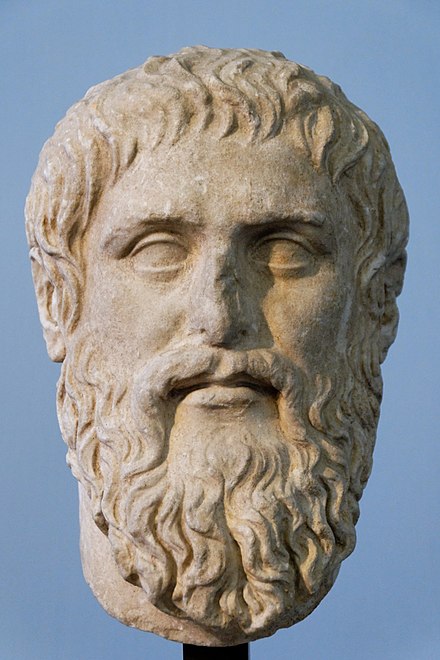
bust of Plato
In Book 8 of Plato's Republic (c. 380 BCE), he argues democracy descends to tyranny
when the masses seek a powerful leader to advance their interests [Wikimedia commons]

...and Sinclair Lewis’s novel You Can’t Happen Here, written in the depths of the Great Depression, argued America was not immune to the fascism then engulfing much of Europe.

What’s new in How Democracies Die is the sense of urgency, coupled with the notion that American democracy would go, not with a bang like the revolutions some imagined in the 1960s, but with a whimper after a long period of erosion. Levitsky and Ziblatt have subsequently published Tyranny of the Minority [Crown, 2023], extending the argument to concerns that anti-majoritarian features of the American constitution may enable regressive forces to obstruct the emergence of a truly multiracial democracy.


I’ve read How Democracies Die, and have taught it in my Contemporary Political Theory class at Coe College.

I have not read Tyranny of the Minority, which is too bad, because I think the arguments of the second book may have some interesting things to say to the arguments of the first book.

But I’ll stick to How Democracies Die in what follows, as well as drawing on other important contemporary works like Strong Democracy by Benjamin Barber [California, 1984/2004] and The Future of Freedom by Fareed Zakaria [Norton, 2003].
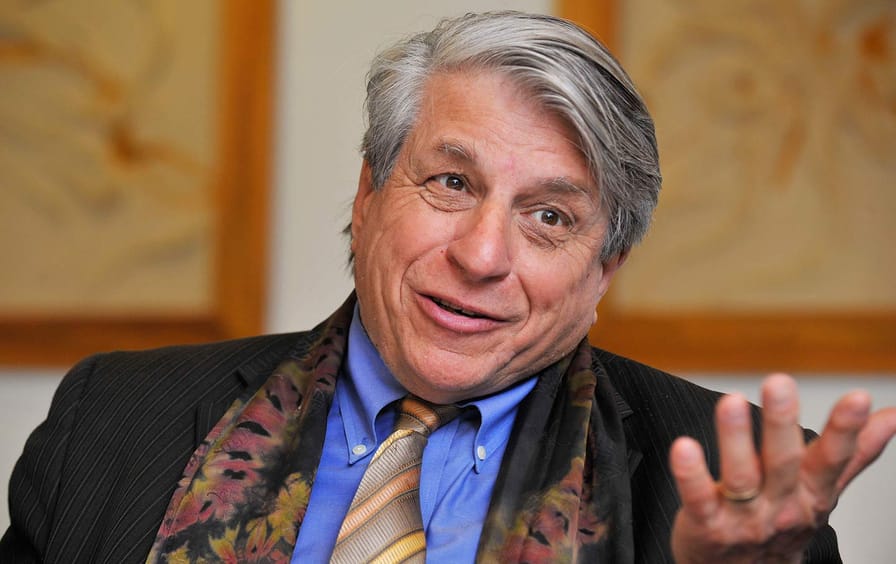

Benjamin Barber
Benjamin Barber (1939-2017) wrote extensively about "strong" democracy
with more public participation and consensus-seeking


I want to highlight two arguments in How Democracies Die that remain relevant for us, for the foreseeable future at least.


1. The first is that authoritarian regimes tend to insinuate themselves into democratic cultures, rather than immediately overpowering them. In chapter 4, the authors describe the small steps that led to autocracies at various times in places like Peru, Turkey, Venezuela, Russia, and Hungary:

  1. Taking legally sanctioned steps in the name of some public objective

     e.g. combating corruption or violent groups or economic crisis

  2. “Capturing the referees,” including packing the courts and gaining control of law 

    enforcement

  3. Sidelining key opponents through favors, false criminal charges, and/or lawsuits

  4. Changing the rules of the game by reforming the constitution, electoral system, 

    and other institutions in ways that disadvantage or weaken the opposition… 

    again this can be done in the name of some unquestionable good like limiting 

    voter fraud

It can take many years, and a lot of this kind of insinuation, to get to the point where democracy exists only in name.

federal troops firing in Portland OR
Portland 2020: federal agents "restoring order in the streets"

Anti-democratic statements are reprehensible in themselves, not to mention signs of bad judgment since a prospective leader ought to know better than to make them… but more importantly, they are warning signs of creeping authoritarianism that needs to be snuffed out before the real trouble begins. Levitsky and Ziblatt cite historical examples from Britain, Costa Rica, the United States, and other states where moderates successfully closed ranks across partisan divides to marginalize authoritarians.


Marine Le Pen
Marine Le Pen (b. 1968): She, like her father, has (so far) been
kept from power in France by a coalition of elites [Wikimedia commons]

Our authors highlight the lesson that political leaders across the spectrum need to take immediate alarm at authoritarian challengers, and to head them off right away. Elites need to react at once whenever would-be leaders reject in words or action the democratic rules of the game, deny the legitimacy of opponents, tolerate or encourage violence, and/or indicate a willingness to curtail the civil liberties of opponents or news media–especially when, in the case of Donald Trump since 2015, they do all of those things.


2. Which brings us to their second argument: that democracy is an absolute good. Most people in politics do politics in part to achieve some public policy changes. (Trump is an exception to this, but he is unusual in this and many other ways.) For myself I would cite things like economic opportunity that is equal and inclusive, sustainable development that limits the damage from pollution and climate change, an end to dependence on motor vehicles for transportation, and government financial responsibility. 


What Levitsky and Ziblatt would yell in my ear is that maintaining democracy is at least as important as any of these, so I should resist all shortcuts to my happy place policy outcomes. Democracy is not just a means to these ends, it is a goal in itself. 


riders on bike trail
Would I trade democracy for better bike routes? Public housing?
Climate change mitigation?

Democracies, they stress in chapter 5, rely on the “thin tissue of convention” including strong democratic norms, mutual toleration, and restrained use of institutional prerogatives. These are the “guardrails” that protect democratic systems. Here their argument relates to Barber calling for active participation that goes beyond voting, and Zakaria insisting that majority rule without strong guardrails is a recipe for disaster.


Making democracy a priority starts with us, which is where things get tricky. Norms, inconveniently, are not fixed: Great Presidents like Abraham Lincoln, Theodore Roosevelt, and particularly Franklin Roosevelt took important actions in times of acknowledged emergencies in order to move America forward. In the process, norms of their times–about the role of the President and the scope of the federal government–were in shattered pieces everywhere. Lincoln famously said in response to calls for institutional forbearance that the Constitution is not a suicide pact. I think we’d mostly agree that he was right.


But norm-breaking also got us into Vietnam, Watergate, and destructive proxy wars in Central America. Recently, Presidents have used executive authority in ways that make me extremely uncomfortable, in the face of congressional paralysis. When Democrats controlled the House of Representatives, they removed some Republicans from committee assignments including the January 6 committee… for arguably good reasons, in cases like Marjorie Taylor Greene and Jim Jordan, but still contrary to norms.


Congressional deadlock has led to unilateral executive action
on immigration, student loan debt, health care, ...

Putting their advice into practice gets even trickier when we live, as we do, in polarized times. Mutual toleration and institutional forbearance require a mutual trust that may no longer be possible, and may no longer be warranted. Which runs us into the argument of Tyranny of the Minority, the second book in the series. Constitutional reforms to make the Senate and House of Representatives more representative, and fixed terms for the Supreme Court, would arguably make the system more reflective of majority opinion, not to mention inclusive of a variety of perspectives. But at what cost to the system’s precious guardrails?


A Democratic Party with a diverse coalition faces some serious choices in the next several elections.

    Do they make a priority of democracy, protecting the guardrails of the American political system? Or do they use it as a talking point against their clearly compromised opponents, seeking an electoral advantage that can deliver policy wins?

    Do they put preservation of the American democratic system ahead of, say, national abortion rights or making the tax system more progressive or stricter environmental regulations?


Levitsky and Ziblatt in chapter 9 argue that making democracy an absolute value does not require giving up entirely on policy outcomes: They use the example of seeking economic measures that would benefit working class whites as well as, not instead of, blacks and other groups that have suffered discrimination. Redefine success as joint-gains (inclusive) rather than zero-sum, I think is their message. 


"Fixing health care" panel, May 2018:
Are there joint-gains solutions to wicked problems?

An approach to another policy conundrum might help illuminate their point: A housing policy that increases supply and lowers prices is going to have some seriously negative effects on households for whom their house is the lion’s share of their retirement savings. So we should also be about working on a retirement system that doesn’t rely on some people being un- or under-housed. (See Shane Phillips, The Affordable City: Strategies for Putting Housing Within Reach (and Keeping it There) (Island, 2020)).


It gets more difficult when we contemplate remedying past injustices.

    I’ve become convinced over the years that opportunity in America is heavily conditioned on race, and that remedying that is going to require some reparations.

    Making movement in America equitable, safe, and environmentally and fiscally sustainable is going to require getting a good bit of our land area back from motor vehicles.

Can we even imagine getting to either place while remaining true to all the safeguards of democracy commended by Levitsky and Ziblatt?


SEE ALSO: "Deliberation and the Shutdown," 3 October 2013


Theodore Johnson, "American Democracy is Fine. It's the Republic That's in Trouble," Washington Post, 23 May 2024

Thursday, May 23, 2024

Hy-Vee is a symptom of a deeper problem


1556 1st Avenue NE in 2014. It will close June 23.
(Taxable value per acre $1,204,012 on 1.89 acres)

(5/23/2024) I come not to bury Hy-Vee, but to praise it. It will be faint praise, but nonetheless, I think the impending the store closure highlights a broader problem with which we should be dealing.

Hy-Vee's announcement earlier this month surprised and outraged a lot of people, which is understandable. This is the only full-service grocery store in the core area of Cedar Rapids, located as it is at a major intersection in the Mound View neighborhood, just across 1st Avenue from Wellington Heights. It draws a lot of customers from both neighborhoods, including considerable foot traffic. I was impressed, while doing some observations at Redmond Park ten years ago, how many people were walking through the park on their way to Hy-Vee. Mayor Tiffany O'Donnell stated:

Generations of customers have relied on this store for their basic needs. It is unfortunate the company is leaving at a time when the nearby neighborhoods are seeing significant improvements and public investment.... We know that access to fresh, affordable food is crucial for our community's well-being, and we will work with local agencies to meet the needs of those impacted most by this closure. (Quoted at Murphy 2024)

City Council member Dale Todd called it "an abandonment of some of our community's most vulnerable," while State Representative Sami Scheetz said "its closure betrays the community's trust and investment." The local activist group Advocates for Social Justice organized a protest at the store's Oakland Road location for this Sunday. A few of my friends have posted their intention to move their grocery lives elsewhere--though of course Aldi, Fareway, and New Pioneer Co-op don't have presences in the core either.

This outrage is not without cause. Besides moving out of the core, many people recalled when Hy-Vee sought to close the 1st Avenue location in 2000, the City responded with subsidies and tax benefits to keep it there. This time the announcement appeared to catch city officials off guard. "[I]nstead of working with us to address the inherent challenges," said Todd, "this feels like an abandonment and a complete run for the hills" (all quotes at Murphy 2024). Those hills have increasingly been larger stores with large parking lots at the city's edge; closing 1st Avenue completes Hy-Vee's abandonment of walkable neighborhoods.

Hy-Vee, 5050 Edgewood Road NE, Black Friday 2021 (built 2005)
(Taxable value per acre $801,144 on 11.36 acres)

There is definitely something to be said for corporate social responsibility, but we're not going to say it here. There's a more important point to be made. If we are successful at rebuilding the core of the city, businesses will want to be here, because of the profits will be made. Being in such a primo location will be incentive enough. Put another way: We can't build a strong city on charity. We need to be attractive to profit-seeking businesses. Hy-Vee made a "business" decision, as frankly did the school district; how can we develop the city's core in ways that business decisions are to locate here?

Hy-Vee is only the latest institution to leave the city's core, in spite of significant residential construction and city investment in downtown, New Bohemia, Czech Village, and Kingston. The Cedar Rapids Community School District is in the process of closing most of its core schools. Even McDonald's and Subway have closed their 1st Avenue locations, and two of the four chains in the College Commons have left. The lovely new building at 1445 1st Avenue SE has never had a tenant. And that's just the first two blocks away from the Hy-Vee store. The efforts that have gone into rebuilding the city from the center out are for some reason(s) not computing for some people.

It's ok to be mad, and to vent that anger at the corporate giant that is Hy-Vee. But then we need to have some serious conversations about the core of the city. What do we, and I include the public as well as the private sectors, need to do to make this an attractive place to live and do business?

I have some thoughts on this, but at this point they're mere opinions. I think we're dealing with:
  1. an unbalanced national/global economy where a relatively small number of people have an outsized share of spending money, which has distorted commerce as well as social relations; 
  2. the ease of car driving in most of the metro has led people to develop "drive-to" urbanism based on boutique shopping in much of the core;
  3. nothing that looks like the transect can emerge out of the city center because we've walled it off with the MedQuarter, I-380, and the proposed casino; and 
  4. better development is inhibited because the property tax system incentivizes "land banking" by unscrupulous property owners.
As I say, though, these are just one observer's opinions. We need to have some serious, informed, intense conversations about the reality that Hy-Vee has helped expose.

SOURCE FOR ALL QUOTATIONS: Erin Murphy, "First Ave. Hy-Vee to Close, Leaving C.R. Grocery Gap," Cedar Rapids Gazette, 10 May 2024, 1A, 10A

SEE ALSO: "Hy-Vee Releases Statement on Closures, Offers Ways to Help People Living Nearby," kcrg.com, 22 May 2024

CNU 34 Diary: Northwest Arkansas

Historic sign found downtown Wednesday, May 13, 2026 I don't know what it must have felt like for a medieval peasant to visit Rome, but ...