Friday, November 28, 2025

Black Friday Parking 2025: Northeast CR


It felt like it! (And on the Celsius scale, it actually was.)

Consumer confidence may be down at COVID levels, and Black Friday ads are increasingly oriented to websites, but it's still Black Friday. If you give a boy a parking lot, he's going to want to take a picture of it. At least it was warmer than last year, though at first not by much. Eventually the sun came out and it was all right.

Along the way, I saw this marquee.

What sound does a turkey's phone make?
Question, 224 Collins Road NE

The riddle was not funny, which weirdly reassured me I was not becoming hypothermic.

Wing-wing-wing
Answer, 224 Collins Road NE

Strong Towns started Black Friday Parking in 2013; my first year was 2015, covering roughly the same territory as this year. For the record, I also wore the same Garfield School sweatshirt. The Parking Reform Network has taken over the promotion, but the point remains the same: to document excess surface parking, even on what is arguably the busiest shopping day of the year (Lefebvre 2025).

I started a little past 9:00 at the bus stop on Twixt Town Road, close by the Collins Road Square shopping plaza. It was maybe one-third full.
shopping plaza parking lot
 Collins Road Square, looking towards Petco

shopping plaza parking lot
 Collins Road Square, looking towards Michael's

Across Collins Road is Lindale Mall, which dates from the early 1960s, but the Collins Road side has gotten quite the facelift. Its many parking lots were half-full, maybe more.
mall entrance and parking lot, viewed from across the highway
Lindale Mall, parking lot facing Collins Road

Hobby Lobby had the fullest parking lot I saw, easily 60 and maybe 75 percent full...
plenty of cars parked at Hobby Lobby
180 Collins Road, looking towards Hobby Lobby

...but even that plaza had plenty of empty spaces.
180 Collins Road NE, other side of the plaza
180 Collins Road, other side of the plaza

There were no cars parked in the huge lot on the other side of Collins Road. It has been vacant since the Hy-Vee grocery store. I don't know for a fact that Hy-Vee is retaining ownership of the building and just leaving it vacant, but I wouldn't put it past them; they tried that at their Mound View store, which also remains vacant anyhow.
empty parking lot at vacant ex-grocery store
empty parking lot at vacant building, 279 Collins Road
(utility pole cleverly used to block sun)

Across Northland Avenue from the former grocery store, however, Northland Square plaza's parking lot was well used, being at least 60 percent full. 
Northland Plaza and a lot of cars
Northland Square from the east

But even today, there were plenty of parking spots going unused.
Northland Square, section of the parking lot with few cars
Northland Square, middle of the plaza

I cut across the Collins Aerospace parking lot--mostly empty, with a skeleton crew working today--and ended up at the Blairs Ferry Road Target. It had a lot of shoppers, and its parking lot was at least two-thirds full...
Target and the very full parking lot
Target parking lot, east edge

...but a great big parking lot is hard to fill.
empty part of Target parking lot
Target parking lot, west edge

I've said most years that I don't think these particular parking lots are driven by mandates in the zoning code (though those do exist). It's just how we develop commercial strips. Collins Road may be the ghastliest such strip in our city--though the Westdale area gets some votes, too--but it's just one example of development we shouldn't be doing. The parking lots themselves are just part of the damage, but they do more damage in town than they do on the suburban edge. I'll have more to say about that in a future post.

In a Strong Towns post entitled "What Comes Next After Abolishing Parking Mandates?" Tony Jordan of the Parking Reform Network argues that repealing such mandates is the first step on road to truly walkable cities:
To build the type of cities we want, to take advantage of zoning reforms that re-legalize compact, walkable, and transit-rich neighborhoods, we have to continue to pursue comprehensive parking reforms that go beyond repealing minimums and actively combat car dependency. Fortunately, these additional reforms and strategies are also simple, impactful, and fiscally advantageous. Cities should price their curbs to manage demand and spend the revenue on infrastructure and programs that improve safe, convenient, and equitable access to our communities for people traveling by any mode, not just in their cars. (Jordan 2022, italics mine)

Tuesday, November 25, 2025

Thinking positively about Marjorie Taylor Greene


Marjorie Taylor Greene and microphone

I don't know quite what to make of the whirl of events surrounding Rep. Marjorie Taylor Greene (R-GA), third term member of the U.S. House until recently known for a series of inflammatory statements that made her one of President Trump's most vocal supporters in Congress--and, however weirdly, one of the most effective at rallying the base and getting under the skin of Democrats: "Once greeted with derision by Washingtonians as a shrill and zany show pony, she is now seen more as a savvy operator who understands the conservative base like few others" (Draper 2025).  

I also don't know what to think about the Epstein files, information related to the superpedophile Jeffrey Epstein, who died in 2019. Releasing the files won't get anyone fed or access to health care, nor will they help us mitigate climate change. Nevertheless, the Trump administration has been turning themselves into pretzels to keep them under wraps, so I can only conclude there must be something in there that Trump needs us not to know.

Yet, while Attorney General Pam Bondi, House Speaker Mike Johnson, and Sassmonger in Chief Karoline Leavitt have done what they can to protect the President from Epstein revelations, Greene was one of four Republican House representatives to sign a discharge petition directing the files be released by the Justice Department. All four personally resisted Trump's calls to unsign the petition, which passed both houses and then was signed by Trump. Shortly thereafter, Greene (alone among the four hardheads) announced she would resign her congressional seat after the first of the year.
[A}ccording to interviews with friends and associates... she had become politically isolated, feeling betrayed by Mr. Trump, disgusted with her own party and friendless among the Democratic opposition. When Mr. Trump announced on Truth Social last week that he had had enough of Ms. Greene’s apostasies, labeling her “Marjorie Traitor Greene” and threatening to run a primary opponent in her district, Ms. Greene felt blindsided. Terrified by the ensuing wave of death threats aimed at her and her family from apparent supporters of Mr. Trump, she could no longer see any upside to duking it out in the political arena. (Draper 2025)
I am not imagining that Greene has had a road to Damascus experience, and that she will now be advocating for abortion rights and citizenship for immigrants, or that she will join a holy order like Duke Frederick at the end of As You Like It. If she is a candidate again, or if she attempts conservative media stardom (Drenon 2025), I expect she'll be the same old MTG. (Call it the Megyn Kelly rule?) I don't feel at all sorry for her; she is reaping the whirlwind that she herself sowed. I am, however, impressed that she found her moral core, a line across which she would not take her partisan hackery.

In our city, we're not going to agree on everything, and on some things we will find ourselves to be strongly opposed. But I for one can respect, and deal with, people who find some core values that are more important to them than partisanship or financial advantage.

Friday, November 14, 2025

10th anniversary post: I Still Believe in the City

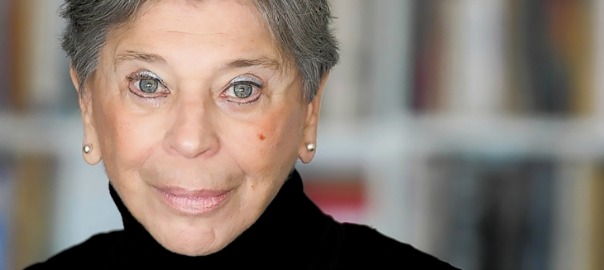
Vivian Gornick
Vivian Gornick (b. 1935)

Vivian Gornick, The Odd Woman and the City: A Memoir (Farrar, Straus and Giroux, 2015), 173 pp.

He strikes a match and holds it to his cigarette.

 "I'm not the right person for this life," I say.

"Who is?" he says, exhaling in my direction. (36) 

Ten years ago this month, I reflected on the defeat of a local referendum to raise the library tax, and read Vivian Gornick's celebration of life in New York City, while the world around me was showing gun violence, terror attacks, and anti-Muslim sentiment. This month, Cedar Rapids voted down bonds that would have funded public school capital projects ("Cedar Rapids Schools Thank" 2025), and a white nationalist cadre is fueling the Trump administration's tear-gas attacks on American cities and their terror campaign against immigrants (cf. Schulze 2025, Carrasquillo 2025). Seemed about time I revisited Vivian Gornick.

Ready to read, at Brewhemia in New Bohemia

On second reading, her segmented essay proved to contain so much more than I'd caught the first time through. She indeed celebrates the life around her in her long-time hometown, but out of need more than pleasure. Like Thomas Merton, her days have included both dark nights and promising dawns. Parker Palmer (2011: 36-38) would describe hers as a "heart broken open," with love born from pain. 

As I reread The Odd Woman and the City, I found myself underlining and circling, marking passages with abandon. It's worth noting that I almost never do this. Some people do. U.S. President John Adams engaged in a running dialogue with whatever he was reading, at least once scrawling "Fool! Fool!!" at some work that displeased him. I wasn't arguing with her, though, just trying to keep up with the numerous dimensions in her reflections, as she jumped around in time, and roped in exemplars from street people to other writers. There is so much I wanted to show you in this book that I didn't discuss in 2015. It would probably be easier on you, me, and Gornick, though, if you just read it.

"The City" is, after all, only part of the title. "The Odd Woman" is Gornick herself, which she announces early (p. 4), but without telling us why or how. In time she tells us that, growing up in the Bronx, she and her friends were already walkers, and what she saw as she walked up and down the streets of Manhattan showed her what she anticipated would be her life (p. 11, p. 51). But it was not to be, despite advanced degrees, relationships, and jobs. She simply could not--would not?--fit in anywhere. Her longtime friend Leonard tells her:
"Fifty years ago you entered a closet marked 'marriage.' In the closet was a double set of clothes, so stiff they could stand up by themselves. A woman stepped into a dress called 'wife' and the man stepped into a suit called 'husband.' And that was it. They disappeared inside the clothes. Today, we don't pass. We're standing here naked. That's all." (36)
Freedom from traditional roles had become freedom from any role, intolerable because "no one wanted freedom" (p. 121), an insight she attributes to Henry James. She identifies with Mary Barfoot, the main character in George Gissing's novel The Odd Woman; Rose, the mother in the musical Gypsy; and John Dylan, an actor whose stroke left him with a speech impediment that he used to disturbing effect in a public reading of a work by Samuel Beckett.

Gornick's oddness, and her "inability to make peace with" herself (p. 19), is survivable only in the city. Walking becomes a sort of therapy once "nothing turned out as expected" (p. 14), but it is even more than that. It is her connection to people: Leonard, with whom she converses so intently that time becomes unreal (p. 17); the active residents of Manhattan's West Side, which she prefers to the "calmer, cleaner, more spacious" East Side (p. 94); and even the men in line at a soup kitchen, who remind her of journalist's line about "ruined faces worthy of Michelangelo" (p. 152). "It's the voices I can't do without" (p. 173), like the three she samples in rapid succession on pp. 37-38, but she is also comforted by all the nearby presences as she goes to bed at night (p. 21).

Frank O'Hara
Frank O'Hara (1926-1966)

Along the way we meet her mother, ex-lovers, other friends, and any number of writers on these themes, including the poet Charles Reznikoff (p. 38), the novelist Isabel Bolton (p. 79; see also Bloom 2016), and Frank O'Hara, who wrote: I can't even enjoy a blade of grass unless I know there's a subway handy, or a record store or some other sign that people don't totally regret life (p. 42). Once you allow for the possibility of oddness, it's everywhere.

Gornick is still with us at 90; she turned 80 the year The Odd Woman and the City was published. In old age, she seems satisfied she's figured out what her problem is. But it continues to be the people of her city who make the "odd" life satisfying. She concludes:
I am home, having dinner at my table, looking out at the city. My mind flashes on all who crossed my path today. I hear their voices, I see their gestures, I start filling in lives for them. Soon they are company, great company. I think to myself, I'd rather be here with you tonight than with anyone else I know. Well, almost anyone else I know. I look up at the great clock on my wall, the one that gives the date as well as the hour. It's time to call Leonard. (175)

SEE ALSO: 

Sam Adams, "Why a 26-Year-Old John Prine Song is Suddenly Everywhere," Slate, 7 November 2025

Parker J. Palmer, Healing the Heart of Democracy: The Courage to Create a Politics Worthy of the Human Spirit (Jossey-Bass, 2011)

S International Market: New Grocery Store in Oak Hill Jackson

  Entrance, 803 3rd Avenue SE (approaching intersection with 8th Street) Nearly a year after the closing of the 1st Avenue Hy-Vee , Waterloo...